

The information in this article is for educational and informational purposes only. It is not intended as veterinary advice, diagnosis, or treatment for any medical or health issue your pet may have.
Always consult a licensed veterinarian before making any decisions about your pet’s health, diet, medications, supplements, training, or care. Never disregard or delay professional veterinary advice based on content from this website.
BarkleyAndPaws.com and its authors assume no responsibility or liability for any errors, omissions, or outcomes resulting from the use of this information.
Your dog does not need words to tell you when something feels off. The stiff tail at the dog park, the quick lip lick when a child leans in, the loose wiggly body when you grab the leash – these moments are communication, not random quirks. A good dog body language guide helps you catch those signals early, before stress turns into barking, snapping, hiding, or shutdown.
Most behavior problems look sudden to humans, but dogs usually give a series of small warnings first. The challenge is that many of those signs are subtle, and some are easy to misread. A wagging tail is the classic example. It can mean excitement, but it can also show tension. Context matters just as much as the tail itself.
How to use this dog body language guide
Think of your dog like a whole-body communicator. One signal on its own can be misleading, but patterns are more reliable. Look at the eyes, ears, mouth, tail, weight shift, and movement together. Then ask a simple question: is my dog getting looser and more comfortable, or tighter and more conflicted?
Loose usually suggests comfort. Tight often points to stress, uncertainty, fear, or overarousal. That does not always mean danger, but it does mean your dog may need space, a slower introduction, or a different setup.
Dogs also communicate differently depending on breed, age, coat type, and body shape. A floppy-eared hound and a pointy-eared shepherd will not show ear movement in the same way. A senior dog with pain may show less obvious signals than a young, social dog. That is why your own dog’s normal baseline matters.
Relaxed and comfortable signals
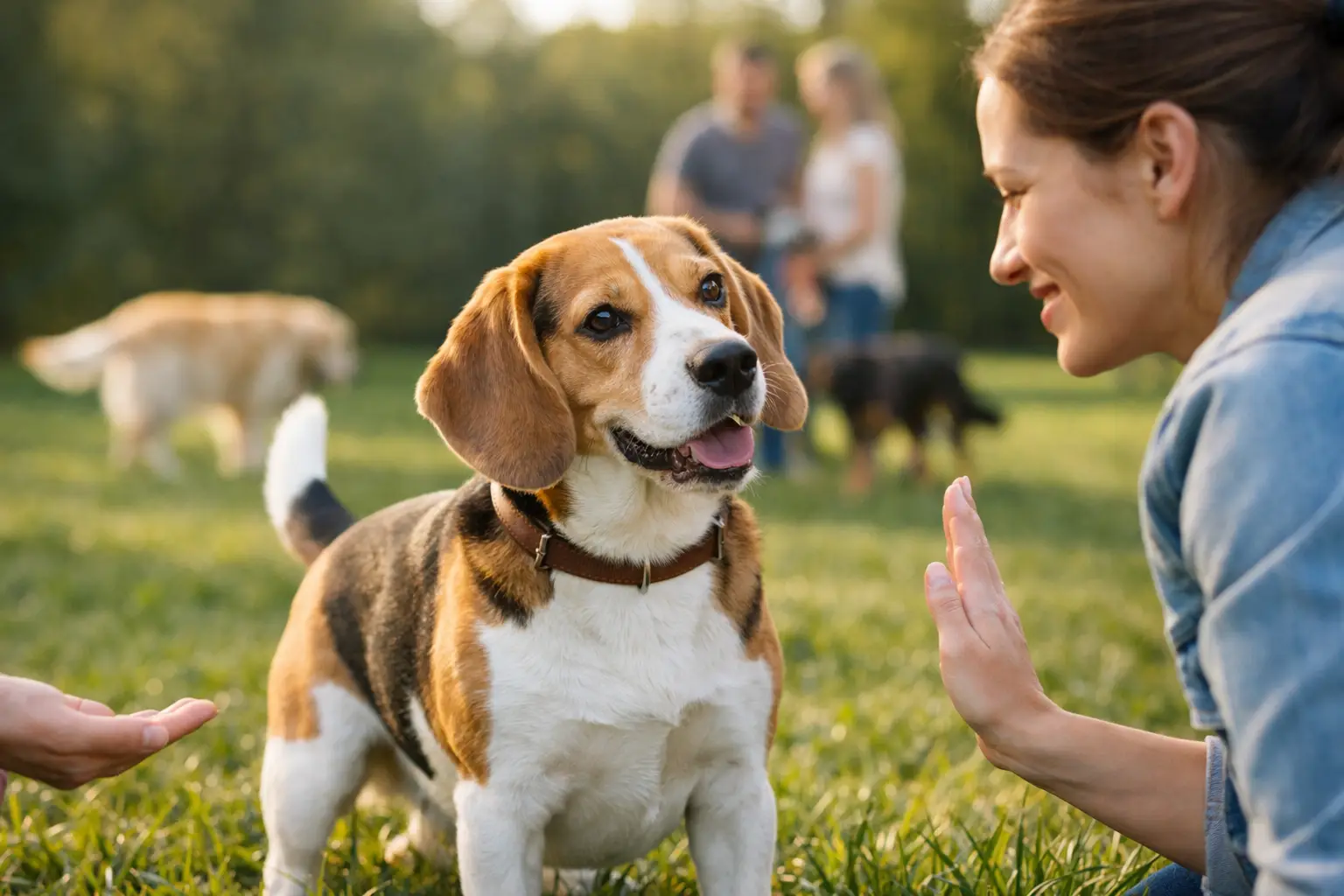
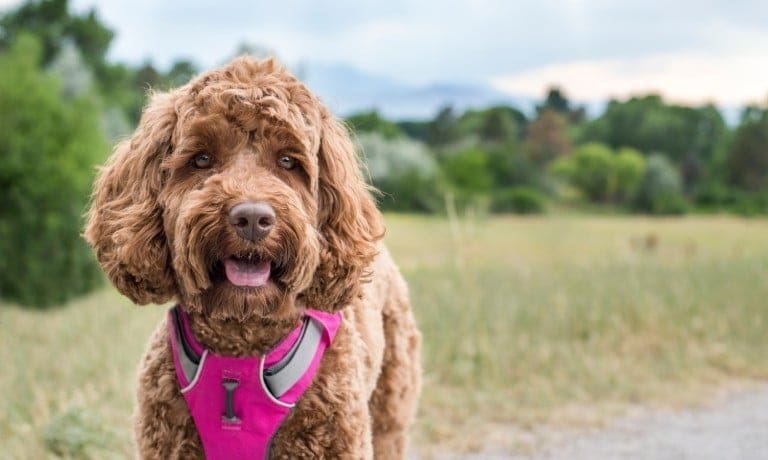
A relaxed dog usually looks soft rather than posed. The body appears loose, the mouth may be gently open, and the eyes look normal rather than wide or hard. The tail can wag in broad, easy sweeps or rest in a neutral position. Movement tends to look curved and fluid instead of direct and rigid.
This is the dog you want to see at home after a walk, during a calm greeting, or while resting near family. Some dogs show comfort by leaning lightly against you, rolling onto a hip, or offering a play bow with springy movement. Others are more understated. Not every happy dog is wildly expressive.
One trade-off to remember: high excitement and true comfort can look similar at first glance. A dog spinning at the door may be thrilled, but if the arousal gets too high, that same dog may struggle to listen, jump on guests, or mouth hands. Happy does not always mean regulated.
Stress signals owners often miss
Many dogs show stress in quiet ways before they escalate. Common early signs include lip licking when no food is present, yawning when not tired, sniffing the ground suddenly, turning the head away, lifting a paw, shaking off as if wet, or moving in a slow arc instead of approaching directly.
These are often called calming signals or displacement behaviors. They can mean your dog is trying to reduce tension or avoid conflict. If your dog starts showing several of them during handling, grooming, greetings, or training, that is useful information. The situation may be too intense, too fast, or too confusing.
A tucked tail is easy to recognize, but stress is not always that obvious. Some dogs freeze. Some get silly and hyper. Some suddenly become interested in a leaf on the sidewalk because avoiding eye contact feels safer than engaging.
When you notice these signals, the best response is usually to reduce pressure. Create distance, pause the interaction, lower your voice, and give your dog a clear way out. Pushing through rarely builds confidence.
Fear, defensiveness, and when to back off
Fearful body language often includes a lowered posture, weight shifted back, ears pinned or pulled back, dilated pupils, a closed mouth, and a tail tucked tightly or held low. Some dogs crouch and retreat. Others freeze in place. Both deserve caution.
Defensive dogs may show the whites of the eyes, sometimes called whale eye, along with a still body and tight face. A hard stare, lifted lip, growl, or baring teeth are not signs of a bad dog. They are distance-increasing signals. The dog is saying the current situation feels unsafe.
This matters most around food bowls, resting spaces, toys, handling, and crowded greetings. If a dog stiffens when someone reaches toward them, respect that message. Children in particular need help learning that not every dog wants hugging, face-to-face contact, or surprise petting.
If your dog frequently freezes, growls, or snaps, do not punish the warning. Punishment can suppress communication while leaving the fear intact. That can make a bite seem to come out of nowhere later. Instead, focus on management, space, and professional guidance if needed.
Dog body language guide to play vs. tension
Play can be noisy and rough, which is why owners sometimes worry when things are actually fine. Healthy play usually includes loose bodies, bouncy movement, role reversals, brief pauses, and self-handicapping. You might see one dog chase, then switch and be chased. There is often a play bow, with the front end lowered and the rear up.
Tension looks different. Bodies get taller and stiffer. Movement becomes more linear and less wiggly. One dog may repeatedly pin or pursue without breaks, while the other tries to leave. The tails may be high and tight rather than loose. Vocalization alone is not the best clue. Plenty of playful dogs growl. The key is whether both dogs remain willing participants.
A short pause is helpful when you are not sure. Cheerfully call the dogs apart and see what happens. If both re-engage with soft, loose bodies, that is a good sign. If one dog avoids, hides, or looks relieved, the interaction probably needed a break.
What the tail, ears, eyes, and mouth can tell you
The tail gives useful information, but position and speed matter more than wagging alone. A neutral tail that moves loosely often suggests comfort. A high, fast, tight wag can signal arousal or tension. A low or tucked tail often points to fear or uncertainty.
Ears can be forward from interest, back from worry, or neutral when relaxed. Again, breed shapes change how obvious this is. Focus on change from your dog’s usual position.
Eyes are especially revealing. Soft eyes with normal blinking tend to go with comfort. Wide eyes, a fixed stare, or visible whites can suggest stress. Squinting can mean discomfort, but it can also appear during relaxed affection. Context helps sort that out.
The mouth tells a similar story. A relaxed dog may have an open mouth with a soft jaw. A closed, tight mouth often appears when a dog is assessing something. Heavy panting can mean heat or exertion, but if the room is cool and the activity is light, it may reflect stress.
Reading context at home, on walks, and with guests
The same signal can mean different things in different settings. Panting after fetch is normal. Panting when the vacuum comes out may be anxiety. A tail held high on a hike may reflect alert curiosity. The same tail during a hard stare at another dog deserves more caution.
At home, watch for patterns around routine events. Does your dog leave the room when guests arrive, stiffen when touched while resting, or lick their lips during nail trims? These are not minor details. They help you adjust the environment before your dog feels pushed too far.
On walks, many dogs look reactive when they are actually worried. Lunging and barking can be a strategy to make scary things go away. If your dog locks onto triggers, leans forward, closes the mouth, and stops taking treats, you are likely too close. More distance often helps more than more commands.
How to respond when your dog is talking
Start by slowing down. Give your dog space from whatever is causing tension. Avoid looming, hugging, cornering, or insisting on greetings. If your dog is comfortable, reward calm behavior and offer choices. Choice builds confidence.
It also helps to keep a simple mental note of triggers and signals. You do not need a full behavior log for every pet, but patterns matter. If your dog repeatedly shows stress around handling, strangers, other dogs, or busy environments, that is your cue to change the setup rather than expecting them to just get over it.
For more serious concerns, especially freezing, guarding, repeated growling, or sudden behavior change, check with your veterinarian. Pain, sensory decline, and medical issues can change body language and tolerance. Training can help, but it works best when health factors are ruled out first.
Learning canine communication is one of the kindest skills a pet owner can build. The more fluently you read your dog, the easier it becomes to prevent problems, support confidence, and make everyday life feel safer for both of you. Your dog has been speaking all along. Now you can answer a little better.