


The information in this article is for educational and informational purposes only. It is not intended as veterinary advice, diagnosis, or treatment for any medical or health issue your pet may have.
Always consult a licensed veterinarian before making any decisions about your pet’s health, diet, medications, supplements, training, or care. Never disregard or delay professional veterinary advice based on content from this website.
BarkleyAndPaws.com and its authors assume no responsibility or liability for any errors, omissions, or outcomes resulting from the use of this information.
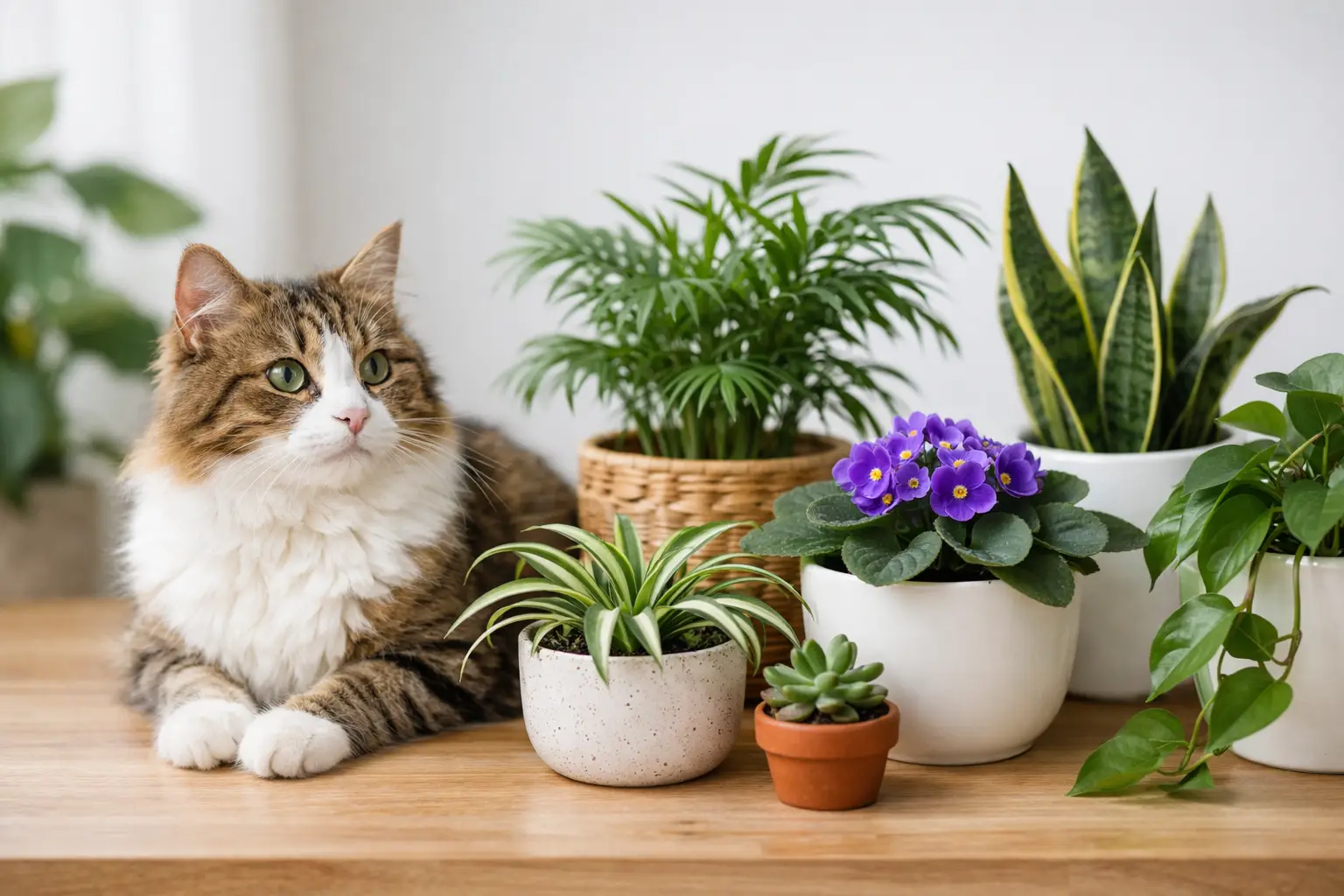
A cat that ignores your new plant for three weeks and then takes a bite at 2 a.m. is being very on-brand. That is why choosing safe houseplants for cats matters so much. Even careful pet owners can end up with a risky plant in the living room, especially when common favorites like lilies, pothos, and philodendrons are sold everywhere.
If you want greenery without the constant stress of “is this toxic,” the good news is you have solid options. The best cat-friendly plants are attractive, easy to keep indoors, and far less likely to turn a curious nibble into an emergency vet visit. The key is picking the right species and setting realistic expectations, because “non-toxic” does not always mean “great to eat in large amounts.”
What makes houseplants safe for cats?
When pet owners search for safe houseplants for cats, they usually mean plants that are considered non-toxic if a cat chews a leaf or two. That is a useful starting point, but it is not the whole story. Even non-toxic plants can still cause vomiting, drooling, or mild stomach upset if your cat munches enough of them.
Texture matters too. Some cats are drawn to grassy blades, dangling fronds, or soft leaves. Others ignore broad-leaf plants but obsess over anything with movement. So the safest plant is not just one that is non-toxic on paper. It is one that fits your cat’s behavior, your light conditions, and your willingness to keep tempting leaves out of reach.
12 safe houseplants for cats worth bringing home
Spider plant
Spider plants are one of the easiest starting points for cat owners. They tolerate a range of indoor conditions, grow quickly, and have arching leaves that look great in a hanging basket. Cats often find them interesting because the long leaves move easily.
That curiosity is the trade-off. A spider plant is generally considered cat-safe, but many cats will still chew it if they can reach it. If your cat likes batting at foliage, hanging it high may save the plant while still keeping your home pet-friendly.
Areca palm
If you want something fuller and more dramatic, the areca palm is a smart pick. It brings height and softness to a room without the toxicity concerns linked to some other indoor palms and palm-like plants.
It does need decent light and a little space, so it is not ideal for every apartment. But for bright corners and larger rooms, it adds a lush look without creating the same level of worry as more hazardous greenery.
Parlor palm
The parlor palm works well for homes that do not get intense direct sun. It is forgiving, classic, and one of the better options for pet owners who want a low-fuss plant that still feels elegant.
Because it grows more slowly than some houseplants, it also tends to be easier to manage in smaller spaces. That makes it a practical choice for cat parents who want greenery but do not want to keep repotting oversized plants every year.
Calathea
Calatheas are popular for their patterned leaves, and many varieties are considered safe around cats. They are a great option if you want something more decorative than a standard green plant.
Their downside is care. Calatheas can be fussy about humidity and water quality, so they are not always the best choice for a first-time plant owner. If you already know your way around indoor plants, though, they can be a beautiful cat-safe addition.
Prayer plant
Closely related to calatheas in look and care style, prayer plants offer bold leaf patterns and a compact shape that works well on shelves or tabletops. They are especially nice if you want color variation without flowers.
Like calatheas, they prefer consistency. If your home runs very dry or you forget watering for long stretches, this may not be your easiest plant. Still, for many pet owners, the visual payoff is worth it.
Boston fern
Boston ferns bring texture and a softer, more natural look than many modern houseplants. They are widely recommended as a safer option for cat households and can look especially good in bathrooms or other humid spaces.
The catch is maintenance. Ferns can shed, dry out, and get scraggly if conditions are not right. If you love the look and do not mind a bit of upkeep, they are a solid pet-friendly choice.
Baby rubber plant
The baby rubber plant, often confused with the toxic rubber tree, is an excellent example of why exact plant names matter. This smaller plant has thick, glossy leaves and tends to be easier to care for than fussier tropical options.
It is a good fit for desks, shelves, and side tables. If your cat tends to ignore upright leafy plants, this one can be both practical and stylish.
Peperomia
Peperomia is really a broad group, not just one plant, and many varieties are considered safe for cats. They come in different leaf shapes, textures, and colors, which makes them useful if you want variety without increasing risk.
Most stay relatively compact, so they suit apartments well. They also tend to be a better match for owners who want low-maintenance greenery rather than a demanding statement plant.
African violet
If you want flowers, African violets are one of the better indoor options for cat households. They stay small, bloom indoors, and add color without the severe toxicity concerns tied to some flowering plants.
They do best with careful watering and bright indirect light. For many homes, that is manageable, and the small footprint makes them easier to place away from curious paws.
Orchid
Many orchids can work well in cat homes and offer a cleaner, more sculptural look than leafy houseplants. They are especially popular for people who want a flowering plant that feels polished rather than bushy.
The trade-off is that orchids are not always as easy as they look. Some thrive with neglect, others struggle fast if overwatered. If you can match the plant to your space, though, they are a strong choice.
Cast iron plant
The cast iron plant earns its name. It is tough, tolerant, and one of the more forgiving options for busy pet owners who do not want a dramatic houseplant relationship. It can handle lower light and occasional missed watering better than many tropical plants.
It is not flashy, but that can be a benefit. If your main goal is safe greenery that does not create extra stress, this is one of the more practical picks on the list.
Cat grass
Cat grass is a little different from the others because it is meant to be nibbled. If your cat constantly chews leaves, offering a designated plant can sometimes reduce interest in your decorative ones.
That said, cat grass is not a magic fix. Some cats will still sample everything else in reach. Think of it as a helpful redirect, not a guarantee.
A few popular plants to avoid
This is where many cat owners get tripped up. Some of the most common indoor plants are also some of the riskiest. Lilies are the biggest red flag because they can be extremely dangerous to cats. Pothos, philodendron, snake plant, ZZ plant, aloe, and certain rubber plants can also cause problems.
Names can be confusing, especially when stores use casual labels instead of botanical ones. If you are unsure, do not rely on appearance alone. A plant that looks similar to a cat-safe variety may belong to a very different group.
How to make a cat-friendly plant setup actually work
Plant choice is only half the job. Placement matters just as much. A non-toxic plant on a wobbly shelf can still end up shattered on the floor, and a safe trailing plant can still become your cat’s favorite toy.
Try to think about access from your cat’s perspective. Window ledges, bookcases near jumping points, and low tables are all prime investigation zones. Hanging planters, heavier pots, and dedicated plant corners often work better than simply hoping your cat loses interest.
It also helps to give your cat an alternative. Scratching posts near sunny windows, cat grass, puzzle feeders, and regular play can reduce boredom-driven plant chewing. A cat that has things to do is often less interested in redecorating your fern.
When “safe” still calls for caution
Even with safe houseplants for cats, watch for signs that your pet is eating more than a casual nibble. Repeated vomiting, diarrhea, drooling, pawing at the mouth, or unusual lethargy should never be brushed off just because the plant is labeled non-toxic.
There is also the issue of fertilizers, leaf shine products, and pest treatments. A cat-safe plant can become a problem if it is coated in chemicals or planted in soil mixed with additives your cat wants to dig through. For that reason, the whole setup matters, not just the plant itself.
If your cat eats a plant and you are not completely sure what it is, call your veterinarian right away. Quick identification can make a big difference.
Choosing the best plant for your home
The best cat-safe plant is usually the one you can keep healthy and your cat can mostly ignore. For some households, that means a sturdy cast iron plant in a low-light corner. For others, it means a hanging spider plant, a small peperomia on a shelf, or a pot of cat grass near the window.
You do not need to turn your home into a jungle overnight. Start with one or two proven options, see how your cat reacts, and build from there. A pet-friendly home should feel calm for both of you, and the right greenery can absolutely be part of that.