

The information in this article is for educational and informational purposes only. It is not intended as veterinary advice, diagnosis, or treatment for any medical or health issue your pet may have.
Always consult a licensed veterinarian before making any decisions about your pet’s health, diet, medications, supplements, training, or care. Never disregard or delay professional veterinary advice based on content from this website.
BarkleyAndPaws.com and its authors assume no responsibility or liability for any errors, omissions, or outcomes resulting from the use of this information.
A backyard pool can make sunny days feel easier, happier, and a lot more fun for the whole family. With the right tips, you can keep your dog safe around the in-ground pool and enjoy the outdoor space without turning every splash into a worry. A little planning, steady training, and close attention can make pool time safer and more relaxed.
Start With a Pool Plan
A backyard pool can turn ordinary days into something special, especially when your dog loves being outside with the family. Still, water adds responsibility. Some dogs swim well, some panic near deep water, and some jump in before you can react. A few smart habits can help your dog enjoy the yard while you keep pool time safe and relaxed.
Start by watching how your dog behaves near the pool. Does your dog step carefully, chase toys, run along the edge, or try to drink the water? Those small details can tell you where to focus first. A safe setup starts with your dog’s real behavior, not what you hope your dog will do.
Teach Pool Boundaries
Your dog needs clear rules around the pool. Train your dog to wait before entering the pool area, stay back from the edge, and come when called. Practice these commands when the pool feels calm, not during a party or a busy afternoon.
Use treats, praise, and short training sessions to build reliable habits. Keep the tone positive so your dog associates pool rules with calm behavior. If your dog gets excited around water, use a leash during early training. That extra control helps you guide your dog before excitement turns into a risky sprint.
Add a Safe Exit
Every dog that enters the pool should know how to get out. Stairs, ledges, and ramps can help, but your dog needs practice finding them. Get in the pool with your dog and guide your dog to the exit several times. Repeat the lesson from different spots in the water.
This step carries real weight because dogs can tire quickly when they don’t know where to go. Even strong swimmers can struggle if they circle the pool in search of a way out. Keep exit practice calm, steady, and familiar.
Supervise Every Swim
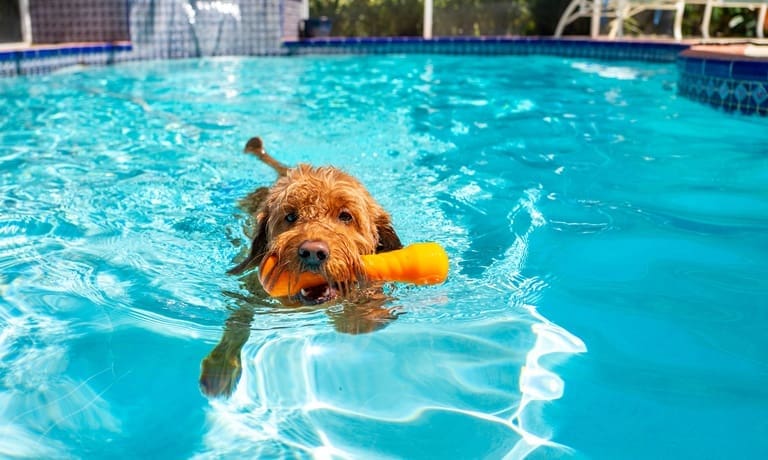
In-ground pools are beneficial for family fun, exercise, and outdoor relaxation, but dogs still need close supervision around them. Don’t rely on swimming ability alone. A dog can slip, get tired, swallow too much water, or chase a toy into the deep end.
Stay close whenever your dog has access to the pool area. Put your phone down during swim time and watch your dog’s body language. Heavy panting, frantic paddling, wide eyes, or slow movement can signal that your dog needs a break. End pool time before your dog gets worn out.
Use Barriers and Gear
A fence, pool cover, or self-latching gate can provide strong protection when you can’t supervise. Choose barriers that match your yard and your dog’s size, energy, and jumping ability. A determined dog may push through weak gates or squeeze through small gaps, so check the setup regularly.
A dog life jacket can also help, especially for puppies, senior dogs, small breeds, and dogs with short legs or flat faces. Choose a snug fit with a top handle so you can guide your dog quickly if needed.
Keep Pool Water off the Menu
Some dogs try to drink from the pool, especially after running in the heat. Offer fresh water nearby so your dog doesn’t drink chlorinated or treated water. Rinse your dog after swimming to remove pool chemicals from the coat and paws. Dry the ears gently, too, since trapped moisture can bother many dogs.
Make Safety Feel Normal
Pool safety for your dog works best when it becomes part of your routine. Teach boundaries, practice exits, use strong barriers, and stay present during swim time. Your dog doesn’t need complicated rules to stay safer around an in-ground pool. Your dog needs consistency, patience, and a yard setup that supports good choices. With those pieces in place, pool days can feel fun, calm, and easier for everyone.