

The information in this article is for educational and informational purposes only. It is not intended as veterinary advice, diagnosis, or treatment for any medical or health issue your pet may have.
Always consult a licensed veterinarian before making any decisions about your pet’s health, diet, medications, supplements, training, or care. Never disregard or delay professional veterinary advice based on content from this website.
BarkleyAndPaws.com and its authors assume no responsibility or liability for any errors, omissions, or outcomes resulting from the use of this information.
The moment you hear the low growl and see your cat flatten into the sink, bath time can feel like a terrible idea. The good news is that learning how to bathe a cat is usually less about scrubbing and more about setup, timing, and keeping your cat from feeling trapped.
Most cats do not need frequent baths. Healthy adult cats are excellent self-groomers, and many will go their whole lives needing only spot cleaning, regular brushing, and the occasional wipe-down. But there are times when a bath makes sense – if your cat got into something sticky, has diarrhea on the coat, is dealing with fleas, cannot groom properly, or has a skin issue your veterinarian wants treated with a medicated shampoo.
According to the ASPCA, cats benefit from gentle grooming support, especially when age, coat type, or health gets in the way of normal self-care. The American Veterinary Medical Association also emphasizes that grooming and skin concerns should be handled with pet-safe products and veterinary guidance when needed. If your cat has open sores, severe matting, or a sudden skin problem, a bath may not be the first step. A vet visit is.
When a Cat Really Needs a Bath
A practical question matters more than technique: does your cat actually need one? If the coat just looks a little dusty, brushing may solve the problem. If the fur is greasy, smells bad, has feces stuck to it, or is contaminated with something unsafe, then a bath is more justified.
Long-haired cats, senior cats, overweight cats, and cats with arthritis often need more hands-on grooming help than short-haired, healthy adults. Kittens may also need cleanup help, but they chill easily, so warmth and speed matter more than a deep wash. On the other hand, a very stressed adult cat with a minor mess may do better with spot cleaning than a full bath.
That trade-off is worth remembering. A perfect bath is not the goal. Safely cleaning the problem area with the least amount of stress is.
Before You Bathe a Cat, Set Up Everything
If you want to know how to bathe a cat successfully, the prep work is half the job. Once your cat is wet, that is not the moment to go looking for a towel.
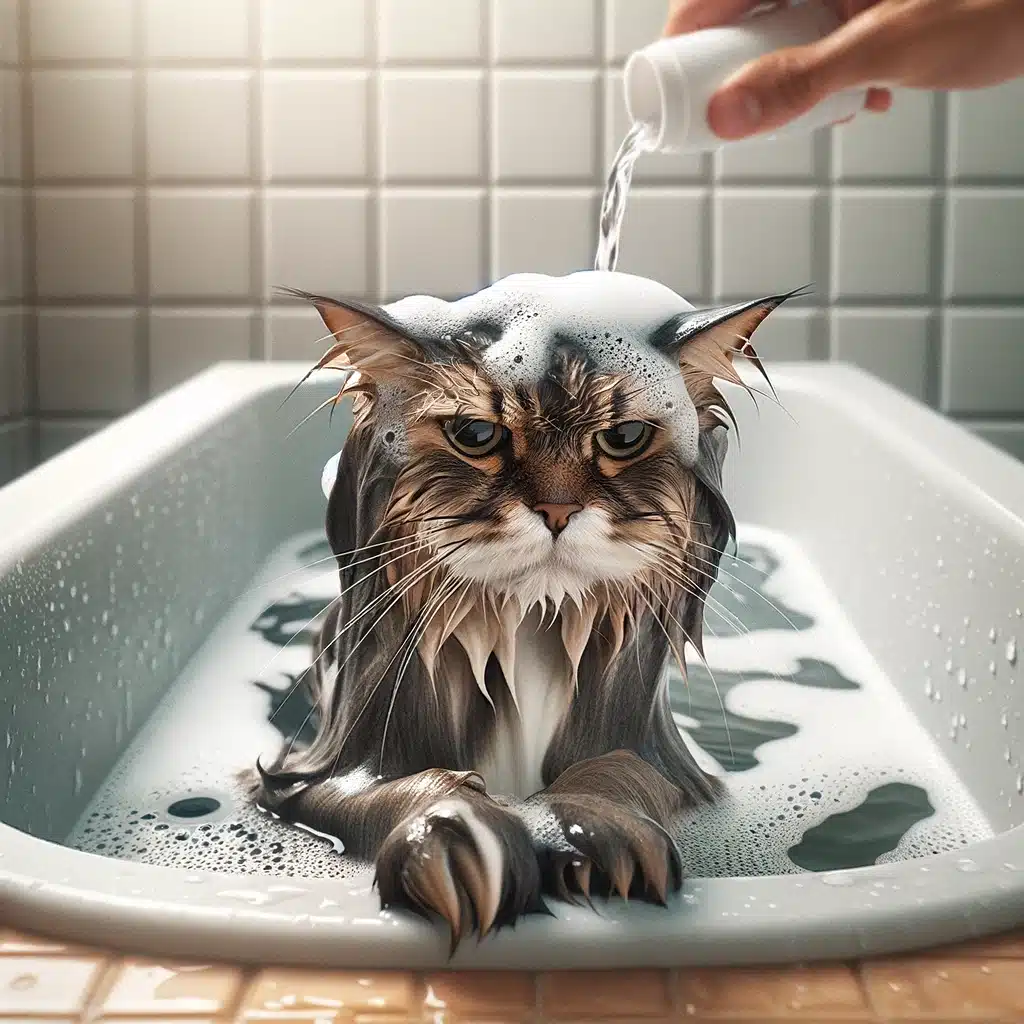
Choose a small, quiet room with the door closed. A bathroom usually works better than a kitchen because there are fewer escape routes. Use a sink for small cats and kittens, or a bathtub for larger cats. Put a towel or rubber mat on the bottom so your cat has traction. Slipping makes cats panic fast.
You will want cat shampoo, a cup or gentle sprayer, two or three dry towels, and a washcloth for the face. Use lukewarm water, not hot. Fill the sink or tub with just a few inches of water before bringing your cat in. Running water can be startling, and many cats do better if the room is calm and the bath area is already prepared.
Brush your cat first if the coat allows it. This removes loose hair and helps with small tangles, but do not yank through mats. Severe matting often needs professional grooming or veterinary attention. The ASPCA warns against using shampoos or treatments meant for people or dogs, since some ingredients can irritate a cat’s skin or be toxic if licked off later.
How to Bathe a Cat Step by Step
Keep your voice low and your movements steady. Cats read tension quickly, so moving with purpose helps more than excessive soothing.
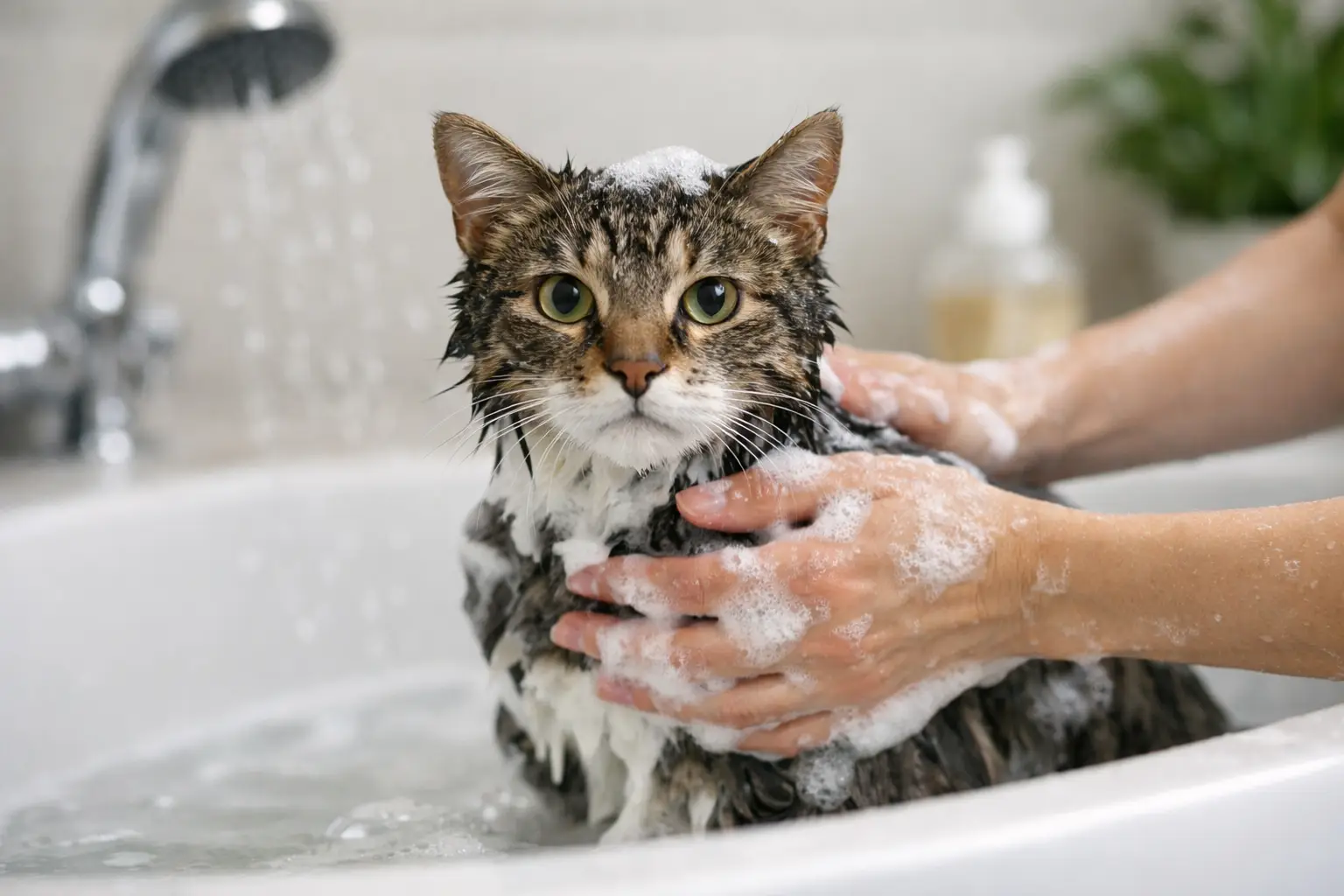
Start by placing your cat gently into the sink or tub and letting the paws settle. One hand should stay on the body for reassurance and control. Wet the coat slowly from the neck down using a cup or low-spray nozzle. Avoid the face, ears, and eyes. A drenched head is one of the fastest ways to turn mild annoyance into full protest.
Apply a small amount of cat shampoo and work it through the coat with your hands. Focus on the dirty areas rather than creating a huge lather. If your cat has something sticky on the fur, you may need a little extra time to loosen it, but keep the session brief if possible.
Rinse thoroughly. This matters more than many owners expect. Leftover shampoo can irritate the skin and make the coat feel dull or greasy afterward. Keep rinsing until the water runs clear and the fur no longer feels slippery.
For the face, use a damp washcloth with plain water unless your veterinarian has given different instructions. Wipe gently around the cheeks and chin. Never pour water over your cat’s face, and never get water into the ears.
Then wrap your cat in a dry towel right away. Pat rather than rub if the coat is prone to tangling. Some cats tolerate a second towel after the first gets damp. Most do best being kept in a warm room until fully dry.
How to Bathe a Cat That Hates Water
This is where realism helps. Some cats will tolerate a bath. Some will not. If your cat is escalating from tense to frantic, forcing the process can lead to scratches, bites, and a cat that fights even harder next time.
For nervous cats, shorter is better. Clean only the area that needs cleaning if you can. A rear-end wash, paw rinse, or belly cleanup may solve the problem without a full bath. Using a pitcher instead of a loud sprayer often helps. So does having one calm person do the bathing while another quietly hands over supplies.
Trims and baths are not the same thing, but the handling principle is similar: support the body, avoid scruffing unless specifically directed by a veterinary professional, and do not restrain more than necessary. Fear tends to build when cats feel cornered.
If your cat has a history of panic, aggression, or extreme stress, talk with your veterinarian before the next bath. Fear-free handling strategies, grooming plans, or medication may be appropriate in some cases. PetMD and other veterinary resources commonly note that stress reduction is part of safe care, not an optional extra.
Shampoo, Water Temperature, and Drying Tips
The safest shampoo is one clearly labeled for cats. Fragrance-heavy products can be irritating, and flea shampoos are not a casual substitute for proper parasite treatment. If fleas are the reason for the bath, ask your veterinarian which products are appropriate for your cat’s age, weight, and health status.
Water should feel lukewarm to your wrist. Too cool and your cat gets chilled. Too warm and the skin may become irritated. This is especially important for kittens, seniors, and thin cats.
Drying depends on the cat. Many cats do fine with towel drying alone, especially short-haired cats in a warm home. A blow dryer can work for some cats if it is quiet and set to low heat, but for many cats it is simply too loud and stressful. If your cat hates the sound, skip it. A stressed cat is more likely to injure itself or you than a slightly damp cat resting in a warm room.
Special Cases: Kittens, Long-Haired Cats, and Messy Emergencies
Kittens need a gentle approach and careful temperature control. They lose body heat quickly, so use minimal water, work fast, and dry them thoroughly. If the mess is small, warm damp cloths may be the better choice.
Long-haired cats can look clean on the surface while trapping grime deeper in the coat. They often need more brushing before and after bathing, and a rough towel dry can create tangles. In some cases, sanitary trims around the rear are more practical than repeated baths.
For emergencies, think safety first. If your cat gets into paint, oil, chemicals, or something poisonous, do not experiment with home remedies. Call your veterinarian or a pet poison resource right away. Some substances should not be washed off without instructions, and others need immediate removal using a specific method.
Mistakes That Make Bath Time Harder
A few common mistakes turn a manageable bath into a wrestling match. Waiting until your cat is already upset, using too much water, skipping the pre-brush, or reaching for human shampoo are the big ones. Another is trying to make the bath overly long in the name of thoroughness.
Cats usually respond best to efficient handling. Get in, clean what needs cleaning, rinse well, dry off, and be done. A treat afterward can help if your cat is food-motivated, but do not expect it to erase a rough experience. Consistently calm handling does more than any single reward.
If you are ever unsure whether your cat needs a bath, a medicated product, or a groomer instead, that pause is smart. Thoughtful care is often less dramatic and more effective than doing the most aggressive version of the task.
Bathing a cat will probably never become your pet’s favorite activity, but it does not have to become a household crisis either. With the right setup and a little restraint on your own expectations, you can make it quick, safe, and a lot less chaotic the next time your cat decides to roll in something unforgettable.