

The information in this article is for educational and informational purposes only. It is not intended as veterinary advice, diagnosis, or treatment for any medical or health issue your pet may have.
Always consult a licensed veterinarian before making any decisions about your pet’s health, diet, medications, supplements, training, or care. Never disregard or delay professional veterinary advice based on content from this website.
BarkleyAndPaws.com and its authors assume no responsibility or liability for any errors, omissions, or outcomes resulting from the use of this information.
In Part 1 of this article, we talked about how to choose a pet
Food:
Under no circumstances should a
Chins also require a constant supply of fresh timothy hay, also available at feed stores. Packaged hay can be fed, but is generally not fresh, and is many times more costly than buying a bale from a feed store.
Treats are not necessary for chins, but if you wish to give them a raisin or a Cheerio from time to time, they will love you for it! Just remember to limit their treats to one raisin, twice a week or less. More can cause severe illness, and does not contribute to their nutritional needs.
A bottle of fresh water must be available at all times, preferable not tap water, which can contain chemicals and bacteria which are dangerous for small animals.
Handling:
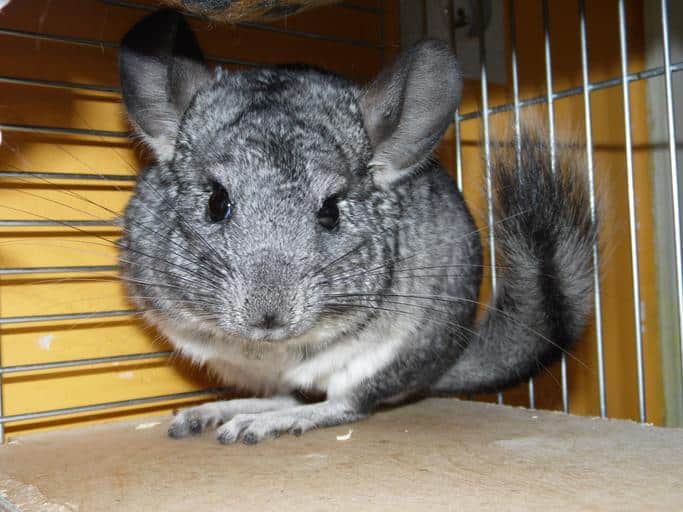
Chinchillas love playtime, and some will learn to jump into their owners’ hands once their cage door is opened. Most prefer not to be cuddled, but will always appreciate being allowed into a chin-proofed area to play. Remember that chins will chew on anything they can get their teeth on, so make sure the area where they play does not have loose wires, accessible electrical outlets, or Grandma’s heirloom table! Also make certain your little friend cannot escape from the area, and supervise his playtime whenever he is out of his cage. If you are fortunate, you will have a chin who loves to cuddle and be scratched and petted. Enjoy this! It is an honor for him to trust you so well.
Health and hygiene:
Despite your best efforts, things can still go wrong with your chin. One of the worst conditions that is found in chinchillas is malocclusion, which occurs when the animal’s back teeth begin to overgrow. They can grow up and down into the chin’s jaw and eyes, and if it is not caught early, will spell death for a chin. Observe your pet, and look for signs of discomfort. These can include refusal to eat, drooling, wet chest, eye pus, etc. Chins can also be prone to bloat, infection, and a host of other conditions. Locate a good veterinarian, with experience treating chinchillas. These visits can be expensive, so make sure you will have access to the funds needed to pay a vet in case your friend becomes ill.
One of the most important things you can do for your pet to ensure its good health, besides feeding it a fresh, healthful diet, is to provide it with a dust bath. You can find
Place the dust into the container, and place the container into your chin’s cage, or even into the bathtub. You pet will go inside and roll around in the dust, which besides being highly comical to watch, also helps them to keep their coats in top condition.
Breeding:
There are few things more adorable than a baby
The best single piece of advice I can give to a prospective
I hope the information in this article has helped you to make an informed decision about acquiring a
Enjoy your pet, and love him well. He will repay you for years to come.