

The information in this article is for educational and informational purposes only. It is not intended as veterinary advice, diagnosis, or treatment for any medical or health issue your pet may have.
Always consult a licensed veterinarian before making any decisions about your pet’s health, diet, medications, supplements, training, or care. Never disregard or delay professional veterinary advice based on content from this website.
BarkleyAndPaws.com and its authors assume no responsibility or liability for any errors, omissions, or outcomes resulting from the use of this information.
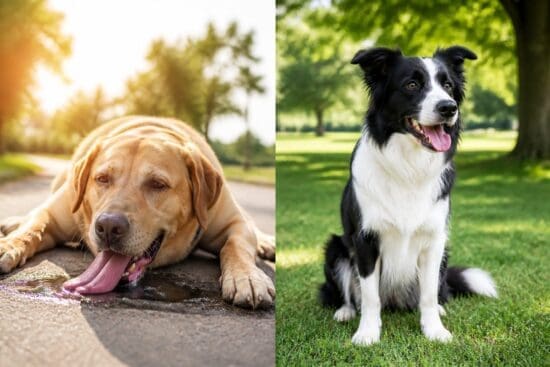
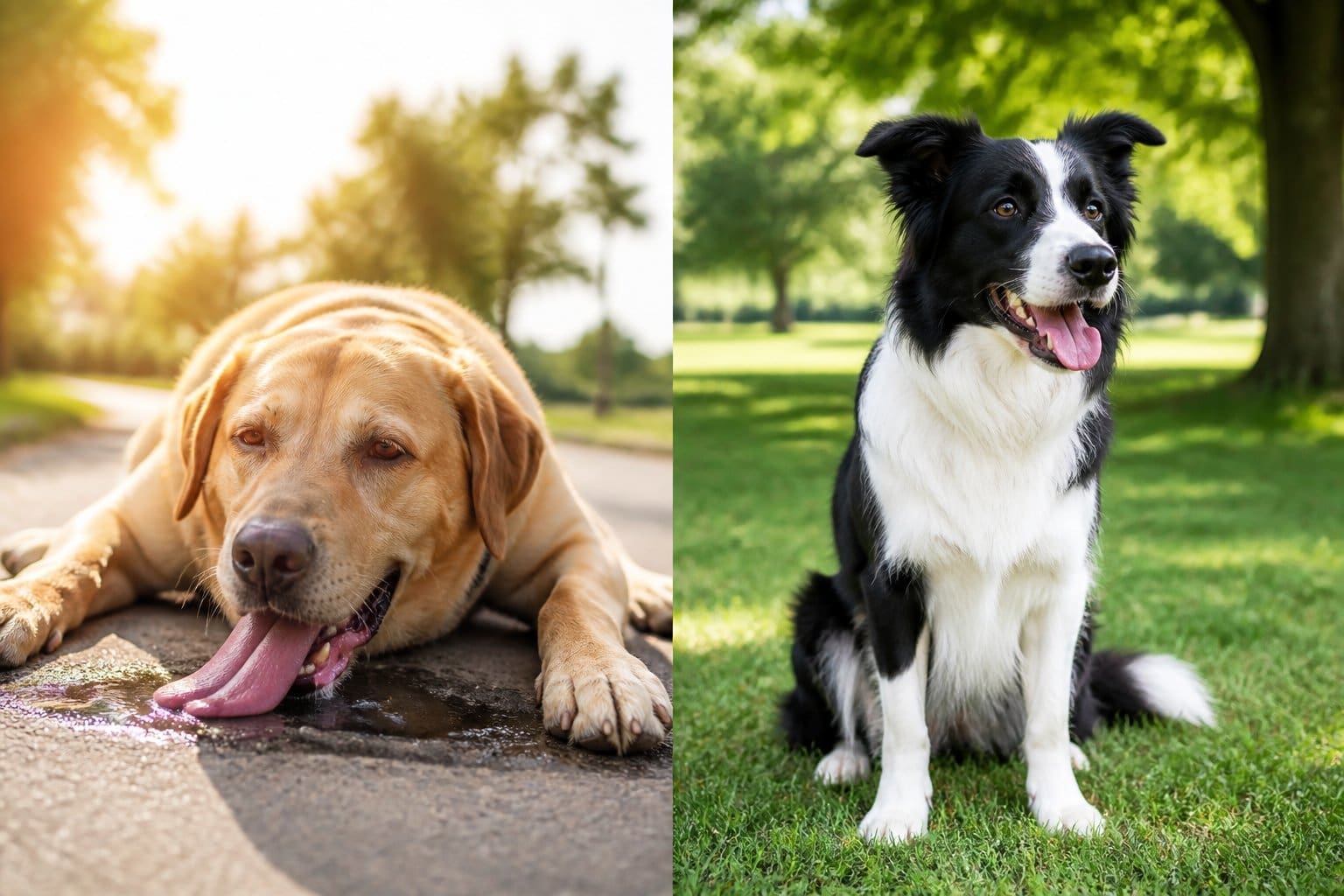
Panting is about as natural as tail-wagging for dogs. After a run around the yard or a sunny stroll, that open mouth and lolling tongue are just part of the picture.
You expect to see your dog’s chest rising and falling, mouth wide, tongue flopping. But every so often, something about the panting feels different—too hard, too fast, or it just doesn’t let up.
Knowing how to tell normal cooling from the early signs of heatstroke in dogs could be the difference between a close call and a genuine emergency.
Most dogs pant to regulate their body temperature. They can’t sweat through their skin like we do, so panting is really their main way to cool off.
It usually works well enough, unless the heat or humidity gets out of hand. When that happens, panting just can’t keep up.
Key Takeaways
- Normal panting settles down with rest and shade, but panting that worsens or comes with other symptoms is a warning worth acting on fast.
- Certain dogs, including flat-faced breeds, seniors, and overweight dogs, can reach dangerous temperatures far more quickly than the average healthy dog.
- Cooling your dog before you reach the vet has been shown to significantly improve survival odds, so knowing what to do in the first minutes matters.
How To Tell Normal Cooling From Danger
The clearest way to separate normal panting from early signs of heatstroke in dogs or heat exhaustion in dogs is to watch what happens when your dog stops moving and gets into shade or a cool space. Healthy panting slows; dangerous panting does not.
What Normal Panting Usually Looks Like
Normal panting has a steady rhythm. Your dog’s mouth is open, the tongue hangs out, and the breathing sounds smooth and even.
After exercise or time in the sun, this is completely expected. The key marker is recovery.
If you move your dog to a cooler spot and offer water, normal panting should begin to ease within a few minutes. Their gums stay pink and moist, their eyes look alert, and they’re still curious about what’s happening around them.
What Makes Panting Concerning
Panting becomes a concern when it is constant, louder than usual, or visibly labored. If your dog is breathing in fast, shallow bursts rather than steady breaths, that’s a shift worth noting.
Watch the gums. According to the AKC, a dog’s normal body temperature sits around 101 to 102.5 degrees Fahrenheit.
Once it climbs above 104 degrees, the gums may shift from pink to bright red or pale. That color change is an early warning that your dog’s body is losing the cooling battle.
Also keep an eye out for thick or sticky drool instead of normal watery saliva. That shift can signal early dehydration.
Why Humidity And Exertion Change The Picture
Panting cools dogs through evaporation. But when humidity is high, evaporation slows dramatically.
Your dog may be panting hard and getting almost no cooling benefit from it. This is why a dog can seem fine at 80 degrees with low humidity but struggle on a 75-degree day that’s very humid.
Exertion raises core body temperature faster, and when the environment can’t help the body shed heat, trouble can arrive quickly. Even short walks can put certain dogs at risk in these conditions, as noted by PetMD.
Warning Signs That Point To An Emergency
Heatstroke in dogs doesn’t usually hit out of nowhere. It builds through recognizable stages.
Dog heatstroke signs often look like normal exhaustion in the early phase, which is exactly why so many owners miss the window to act. Learning to read these escalating clues gives you a real advantage.
Early Clues Owners Often Miss
The first signs of heatstroke in dogs are easy to explain away. Your dog may seem more tired than usual after a shorter-than-normal outing.
They might drink water eagerly but seem unsettled or restless rather than simply relaxed. Watch for a subtle change in their expression.
A dog in early heat distress may seem glazed or unfocused, even if they’re still standing. Some dogs stop wanting to move or become unusually clingy.
These quiet signals often come before more obvious symptoms by several minutes.
Signs That Suggest Heat Exhaustion
Heat exhaustion is the middle stage between normal overheating and full heatstroke in dogs. At this point, your dog may show:
- Excessive panting that does not slow with rest
- Thick, ropey drool
- Visible weakness in the back legs
- Mild vomiting or soft stool
- A slightly elevated body temperature, but still under 104 degrees Fahrenheit
The gums may still look roughly normal here, but the dog is no longer recovering on their own.
Red-Flag Symptoms Of Dog Heatstroke
Once signs of heatstroke in dogs escalate to the red-flag level, you’re dealing with a medical emergency. PetMD lists the critical symptoms as including:
- Bright red or pale, dry gums
- Body temperature above 104 degrees Fahrenheit
- Vomiting or diarrhea, sometimes with blood
- Stumbling, disorientation, or collapse
- Seizures
At this stage, organ damage can begin very quickly. Dog heatstroke can become fatal in under an hour in severe conditions.
Do not wait to see if your dog improves. Call your vet or head to an emergency animal hospital immediately.
When Fast Panting Is Not Just About Heat
Not every episode of rapid, distressed panting on a warm day is purely about temperature. Some dogs have underlying airway conditions that make hot weather far more dangerous and that can mimic or accelerate heat-related distress.
Recognizing these look-alikes helps you act faster and give your vet the right information.
Breed And Airway Risks In Hot Weather
Flat-faced breeds, often called brachycephalic dogs, already breathe through narrower airways than other dogs. This includes Bulldogs, Pugs, French Bulldogs, Boston Terriers, and similar breeds.
They can’t move air as efficiently, which means panting is less effective as a cooling tool even under normal conditions. In hot weather, these breeds can overheat faster than any other type of dog.
Their panting may sound louder, raspier, or more labored even when they’re not yet in danger. This is their baseline, but it makes reading the warning signs harder.
Laryngeal Paralysis And Breathing Strain
Laryngeal paralysis is a condition where the muscles controlling the opening to the airway stop working properly. The airway partially collapses during breathing, making it harder for air to move in and out.
It’s most common in older, large-breed dogs. In warm weather, a dog with laryngeal paralysis may pant frantically with very little airflow actually moving through.
PetMD notes that laryngeal paralysis is a known risk factor for heatstroke. If your older Labrador or Golden Retriever seems to be working extremely hard to breathe in the heat, this condition may be contributing.
Tracheal Collapse And Other Look-Alikes
Tracheal collapse is another airway condition that causes a honking cough and breathing difficulty, especially during exertion or excitement.
Small breeds like Chihuahuas, Pomeranians, and Yorkshire Terriers are commonly affected. In hot weather, tracheal collapse can make a dog look like they’re panting heavily when they’re actually struggling to breathe adequately.
Anxiety, pain, and cardiac issues can also cause fast panting that resembles heat distress. If your dog’s panting doesn’t match the level of heat exposure, or if it comes with unusual sounds or postures, veterinary evaluation is the right call.
What To Do Right Away If Your Dog Is Overheating
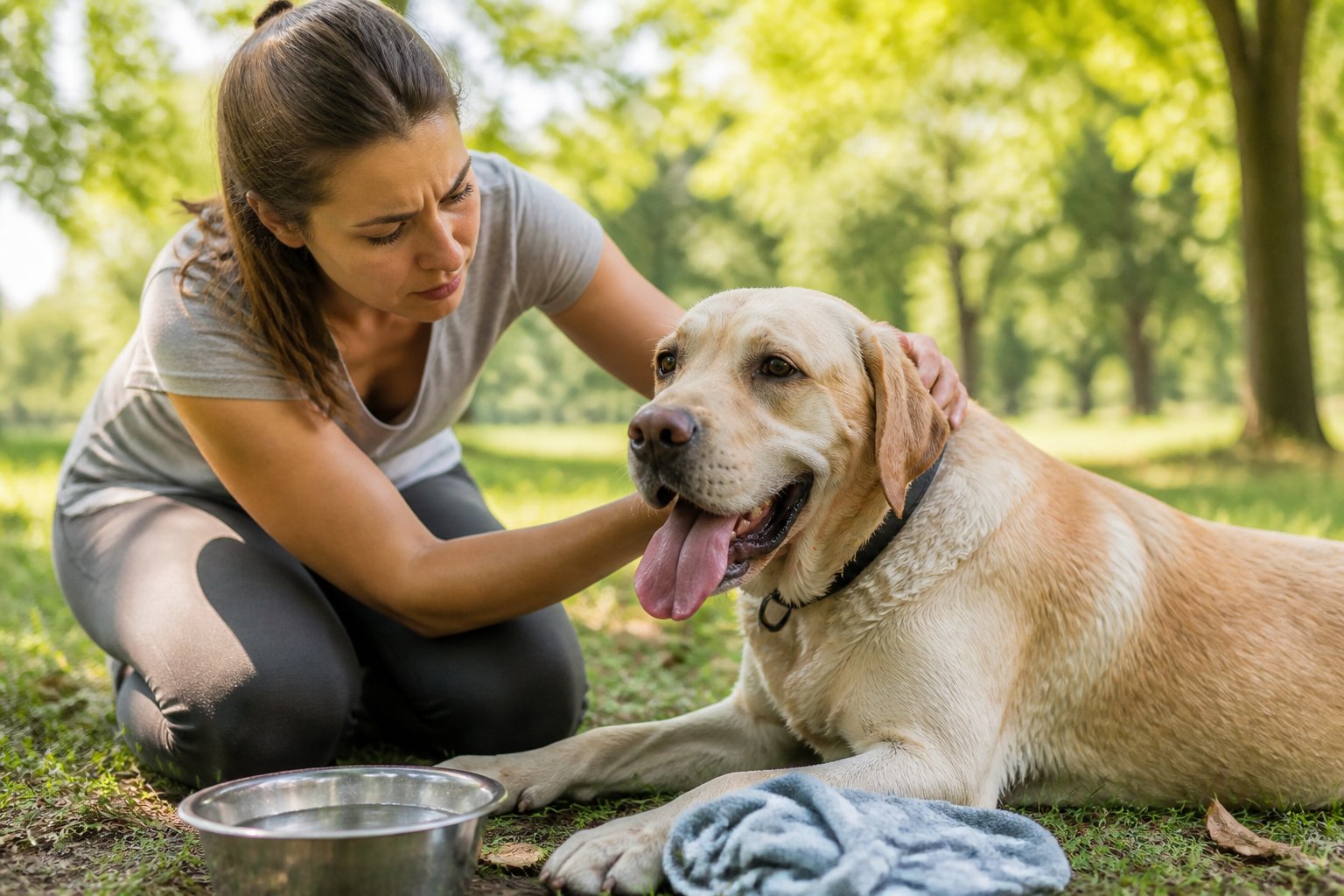
Speed matters when dog heatstroke or heat exhaustion in dogs is suspected. The steps you take in the first five to ten minutes can meaningfully change your dog’s outcome.
And honestly, a few of those steps are easy to get wrong. Stay calm, act systematically, and keep your vet on the line if possible.
Move, Cool, And Monitor Safely
Get your dog out of the heat right away. Move them to a shaded spot, an air-conditioned room, or even just near a fan—whatever’s fastest. Airflow really helps the body shed heat.
Start cooling with room-temperature water, not cold water. Wet your dog’s coat, focusing on the neck, armpits, groin, and paw pads, where blood vessels are close to the surface.
PetMD recommends draping wet towels over the back of the dog during transport to the vet. Offer small amounts of cool water to drink if your dog is conscious and able to swallow.
Keep an eye on their breathing and gum color every few minutes. Don’t assume they’re fine just because they’re quiet—watch closely.
What Not To Do During First Aid
Don’t use ice or ice water. It might sound logical, but cold temperatures actually cause the blood vessels near the skin to constrict, trapping heat inside and raising the risk of shock.
Don’t wrap your dog tightly in towels, since that insulates them. Never leave them unattended, either.
And don’t wait around at home to see if cooling works—get to the vet as soon as possible.
When To Head To The Vet Immediately
If your dog shows red or pale gums, vomiting, collapse, or any neurological signs like stumbling or unresponsiveness, go to an emergency vet right now. Don’t wait it out.
Even if your dog seems to bounce back at home, a vet visit the same day is smart. Internal organ stress from heat exhaustion can sneak up hours after the visible symptoms fade.
Dogs At Higher Risk In Warm Weather
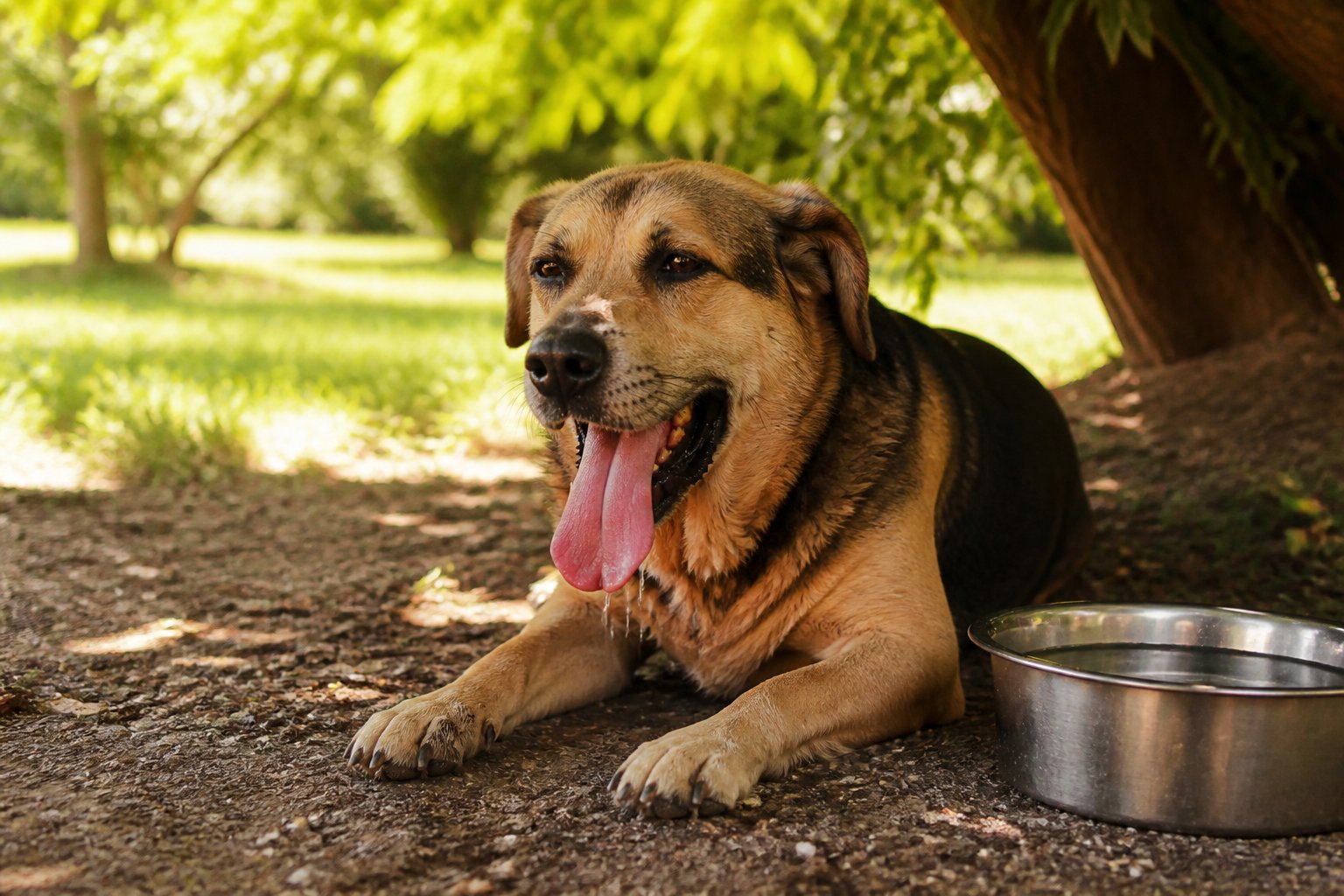
Heatstroke can hit any breed at any age, but some dogs are just more vulnerable. Knowing if your dog is high-risk means you can act faster and take precautions before things spiral.
Flat-Faced, Senior, And Overweight Dogs
Flat-faced breeds can’t move air efficiently, which makes every warm day riskier. Senior dogs have less cardiovascular and respiratory reserve, so their bodies just take longer to compensate when it gets hot.
Overweight dogs carry extra insulation and put more strain on their heart and lungs. Vets Now notes that flat-faced, overweight, and older dogs are consistently among the highest-risk groups for heatstroke.
Medical Conditions That Raise The Risk
Certain health conditions make dogs much more likely to develop heatstroke, including:
- Laryngeal paralysis: Restricts airflow, reduces panting efficiency
- Tracheal collapse: Limits breathing capacity during exertion
- Heart disease: Reduces the body’s ability to circulate blood and manage heat
- Dogs on diuretics or beta-blockers: These medications can affect the body’s temperature regulation
If your dog has any of these, treat warm weather as a serious risk factor. It’s not just a mild inconvenience for them.
Why Some Dogs Overheat In Minutes
Healthy dogs usually have a bit of a buffer before heat becomes dangerous. But for high-risk dogs—especially those with laryngeal paralysis or brachycephalic airway syndrome—things can go from fine to critical in a flash.
PetMD reports heatstroke can be fatal in under an hour when conditions are extreme. For vulnerable dogs, that window may be even shorter. Sometimes, just a short walk, a brief car ride, or time in a hot yard with no shade is enough.
Smart Habits For Hot Days
Building a few habits into your warm-weather routine is honestly the best way to prevent heatstroke before it turns into a crisis. Small tweaks to timing and environment can make a big difference.
Safer Walk Timing And Activity Planning
Walk your dog early in the morning or after sunset, when the pavement and air are coolest. Midday and early afternoon are the riskiest windows—even if it’s only partly cloudy.
Try the five-second pavement test: press the back of your hand against the pavement for five seconds. If it’s too hot for your hand, it’s too hot for your dog’s paws. Hot pavement also radiates heat up at your dog, which can make things worse even if the air feels okay to you.
Shorten walks on humid days, even if the temperature isn’t sky-high. Humidity makes panting way less effective for cooling.
Home, Car, And Yard Safety Basics
Never leave your dog in a parked car, not even with the windows cracked or for “just a minute.” PetMD notes car interiors can heat up by an average of 40 degrees Fahrenheit per hour. A 70-degree day can turn into a 110-degree car in no time.
Make sure outdoor dogs always have fresh water and shade. Wading pools and cooling mats can help for dogs who like the yard. Indoors, keep the AC or fans running during peak heat hours.
How To Prevent Heatstroke In Dogs
Preventing heatstroke in dogs really comes down to three things: limit exposure, keep them hydrated, and know your dog’s normal. When you know what your dog usually looks and sounds like after a walk, you’ll notice faster when something’s off.
Carry water on walks, keep an eye on your dog throughout—not just at the end—and take high-risk dogs out for shorter, less frequent outings during heat waves. Prevention is always easier than scrambling in an emergency. Cornell University’s College of Veterinary Medicine advises extra caution for overweight, elderly, and dogs with heart or breathing conditions when it’s hot.
Frequently Asked Questions
How can I tell if my dog’s panting is normal or a sign of overheating?
Normal panting usually eases up after a few minutes in the shade with water. If the panting stays intense, gets louder, or comes with red or pale gums, sticky drool, or weakness, that’s not just regular cooling anymore. The real question is whether your dog is bouncing back or getting worse.
What are the earliest warning signs of heat exhaustion in dogs?
Early heat exhaustion often looks like unusual tiredness after not much activity, plus panting that just doesn’t slow down. You might see your dog gulping water, moving slower than usual, or seeming distracted and out of it instead of alert.
What symptoms indicate a dog may be progressing from heat exhaustion to heatstroke?
Watch for gum color changing from pink to bright red or pale, vomiting or loose stool, stumbling or muscle weakness, and a body temperature over 104 degrees Fahrenheit. If you see these signs together, it’s time to act—don’t wait and see.
Can a dog still develop heatstroke even after cooling down, and what delayed signs should I watch for?
Yep. Internal organ stress can keep brewing even after your dog seems better. Keep an eye out for vomiting, lethargy, less urination, or weird behavior in the hours after a heat event—these can mean kidney or liver trouble that needs a vet.
What should I do immediately if I suspect my dog is overheating before I can reach a vet?
Move your dog to a cool area as fast as possible and apply room-temperature water to the neck, armpits, and groin. Offer small sips of cool water if they’re conscious and swallowing. Don’t use ice, and don’t put off calling your vet while you try to cool your dog at home.
What is the survival rate for dogs with heatstroke, and which factors affect the outcome?
According to PetMD, cooling a dog before getting to the vet can bump survival rates from about 50% up to 80% or so. That’s a pretty big difference if you ask me.
The odds really hinge on how high the dog’s temperature got, how long it stayed up there, and how fast you managed to get professional help. If a dog shows up at the hospital and multiple organs are already involved, things don’t look great—prognosis drops off fast in those cases.