

The information in this article is for educational and informational purposes only. It is not intended as veterinary advice, diagnosis, or treatment for any medical or health issue your pet may have.
Always consult a licensed veterinarian before making any decisions about your pet’s health, diet, medications, supplements, training, or care. Never disregard or delay professional veterinary advice based on content from this website.
BarkleyAndPaws.com and its authors assume no responsibility or liability for any errors, omissions, or outcomes resulting from the use of this information.
A coat that slides sideways, presses into the armpits, or leaves your dog’s lower back uncovered is not doing much good. A reliable dog coat size guide starts with your dog’s actual measurements, not the size they usually wear or the breed printed on a product label. Even two dogs of the same breed can have dramatically different chests, necks, and body lengths.
A well-fitted dog coat should give your pup warmth or weather protection without limiting normal movement, rubbing the skin, or creating a snag hazard. Here is how to measure carefully, read a brand chart, and tell whether the coat you brought home is truly comfortable.
Dog Coat Size Guide: The Three Measurements That Matter
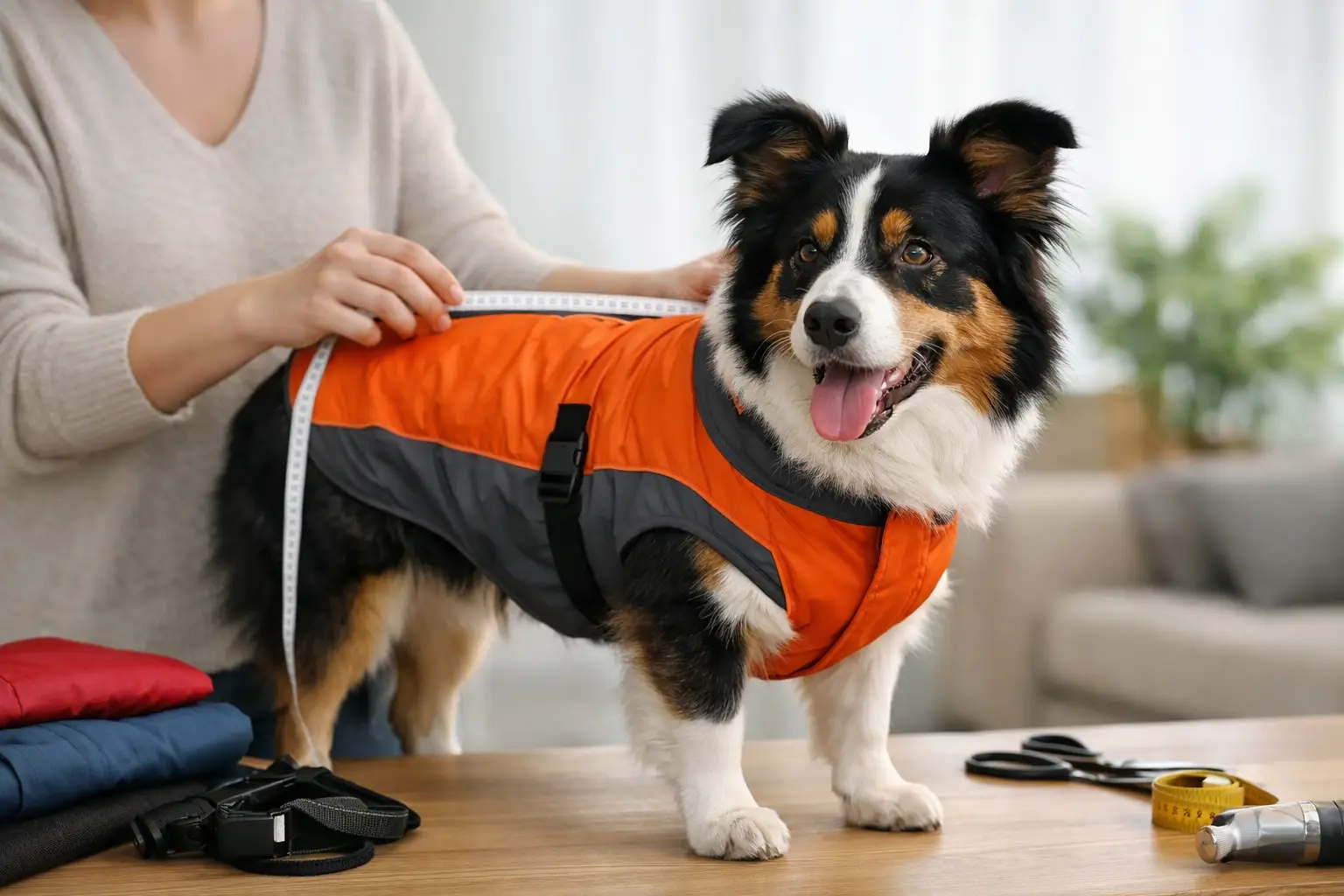
Most dog coat brands use a combination of back length, chest girth, and neck circumference. Grab a soft measuring tape, a few treats, and measure while your dog is standing naturally on a level floor. Measuring a curled-up dog on the couch is a quick route to an inaccurate number.
1. Measure back length
Back length is usually the first number on a dog coat size chart. Place the end of the tape at the base of your dog’s neck, where the collar naturally rests between the shoulder blades. Run the tape along the spine to the base of the tail.
Do not measure from the top of the head, and do not include the tail. If your dog falls between back-length sizes, check the chest measurement before sizing up. A slightly longer coat can work well for a lean dog, but an oversized chest panel may shift, twist, or catch on their legs.
2. Measure chest girth
Chest girth is the circumference around the widest part of the rib cage, usually just behind the front legs. This is often the deciding measurement for barrel-chested breeds such as Bulldogs, Boxers, French Bulldogs, Pugs, and many mixed-breed dogs.
Keep the tape comfortably snug rather than pulling it tight. You want the finished coat to lie close enough to keep out wind and rain, yet leave room for a full breath, a meal, and natural movement. If the chart lists a chest range, your dog’s measurement should fall within it rather than right beyond the edge.
3. Measure the neck
Measure around the base of the neck, at the same spot where a collar sits. This number matters most for coats with high collars, hoods, or fixed neck openings. Dogs with thick necks and narrow bodies, including many terriers and bully breeds, can otherwise end up with a coat that fits the torso but feels restrictive at the throat.
For coats with an adjustable collar opening, you have a little more flexibility. Still, the neckline should never be so loose that cold air pours in or a leg can slip through it.
How to Read Dog Coat Size Charts
There is no universal small, medium, or large in dog clothing. One brand’s medium might suit a 20-pound slender Whippet mix, while another’s medium is made for a compact 35-pound dog. Weight can be a useful secondary reference, but it should never replace measurements.
Start by matching your dog’s chest girth to the chart, then confirm that the back length and neck range work too. Chest is generally the least forgiving area because a tight chest can affect movement and comfort. A coat with adjustable belly straps, hook-and-loop closures, or a broad chest panel can be more forgiving for dogs that land between sizes.
When your dog is between sizes, the better choice depends on the coat design. For a thick insulated winter coat with little stretch, sizing up is often safer if the larger size can be tightened at the belly and neck. For a lightweight raincoat with generous adjustability, the closer size may provide better coverage without flapping in the wind.
Pay attention to the chart’s unit of measurement. US brands may use inches, while some specialty brands list centimeters. One inch equals 2.54 centimeters, so convert before ordering instead of estimating.
A Coat Should Fit the Dog, Not Just the Numbers
A size chart gets you close. Your dog’s body shape and the coat’s cut determine the final fit. Long-backed Dachshunds, deep-chested Greyhounds, short-legged Corgis, broad-shouldered retrievers, and fluffy double-coated dogs often need more than a standard measurement match.
For a long-bodied dog, prioritize coverage from the neck to the tail base without choosing a coat so wide that it drapes over the legs. For a deep-chested dog, look for styles designed with an extended chest panel or multiple adjustment points. A narrow-waisted, sighthound-shaped dog may be more comfortable in a contoured coat than in a boxy rectangle.
Coat thickness matters, too. A fleece layer usually has some give, while a waterproof shell or heavily insulated jacket may have a stiffer fit. If you plan to layer a sweater underneath, measure your dog with that layer on or choose a roomier coat with adjustable closures.
Check the Fit Before Heading Outside
Once the coat is on, let your dog walk around the room, sit, lie down, turn, and take a few treats from the floor. A dog should be able to move through all of these everyday motions without the coat pulling forward, bunching up, or shifting to one side.
Use the two-finger test at the neck and around the belly strap. You should be able to slide two flat fingers under the coat, but there should not be a large gap. Check that the front edge does not press into the throat and that the strap sits behind the front legs rather than directly in the armpits.
Watch for these common signs that a coat does not fit correctly:
- The coat twists or slides sideways during a normal walk.
- The chest panel pulls tight when your dog sits or lowers their head.
- The belly strap rubs the armpits or leaves indentations in the fur.
- The back panel ends far short of the tail base or drapes over the rear legs.
- Your dog freezes, scratches at the coat, or refuses to walk after it is put on.
A little initial fussing is normal for a dog new to clothing. Persistent discomfort is not. Remove the coat if your dog seems distressed, overheated, or unable to move freely.
Choosing Coverage for Weather and Activity
The right size also depends on why your dog needs a coat. A rain jacket should cover the back and shoulders while leaving the underside open enough for easy bathroom breaks. A winter coat may offer more chest and belly coverage, which is useful for small, short-haired, senior, or cold-sensitive dogs on chilly walks.
More coverage is not automatically better. Active dogs can overheat in a heavily insulated coat, especially during energetic play or mild, wet weather. Thick-coated breeds may only need a light rain shell in damp conditions, while a small Chihuahua may benefit from insulation on a brisk, dry morning. Check your dog’s body language and feel under the coat periodically. Warm is the goal, not hot.
Also consider harness compatibility. If your dog walks on a harness, choose a coat with a properly positioned leash opening or a design that can be worn under the harness without bunching. Never clip a leash to a coat unless the coat is specifically built with a secure attachment point for that purpose.
Measuring Puppies and Dogs With Changing Bodies
Puppies can outgrow a coat before a season ends, particularly during their first year. Avoid buying far too large in hopes that they will grow into it. A loose coat can snag, rotate, and make a puppy uneasy. Instead, choose an adjustable style that fits safely now, then remeasure every few weeks during rapid growth.
Adult dogs should also be remeasured after noticeable weight changes, a major grooming appointment, or changes in mobility. A close shave can make a coat feel looser, while a winter fluff-up can make the same garment feel snug.
Keep your dog’s three measurements in your phone notes along with the date. The next time storm clouds roll in or temperatures drop, you will be ready to choose a coat based on comfort, coverage, and the dog standing happily at your door.