

The information in this article is for educational and informational purposes only. It is not intended as veterinary advice, diagnosis, or treatment for any medical or health issue your pet may have.
Always consult a licensed veterinarian before making any decisions about your pet’s health, diet, medications, supplements, training, or care. Never disregard or delay professional veterinary advice based on content from this website.
BarkleyAndPaws.com and its authors assume no responsibility or liability for any errors, omissions, or outcomes resulting from the use of this information.
A crate can be a welcome place to rest, travel safely, or take a break from household activity. But an adult dog may see it very differently at first, especially if their history is unknown or they have only experienced a crate as punishment or isolation. Learning how to crate train an adult dog starts with one simple goal: make the crate predict good things, never a forced confinement battle.
Adult dogs can absolutely learn to enjoy a crate. The process may take a few days for a confident dog or several weeks for a dog with anxiety, a difficult past, or strong feelings about being enclosed. Your pace should be set by your dog’s comfort, not a calendar.
Start With the Right Crate Setup
Choose a crate large enough for your dog to stand up, turn around, and lie down comfortably. A crate that is excessively large can be less cozy and may make housetraining harder for dogs that are still having accidents, but comfort matters more than making the space small.
Wire crates offer airflow and visibility, while plastic kennels can feel more den-like for some dogs. Soft-sided crates are useful for calm, crate-trained dogs but are rarely the best starting point for a dog that might chew, scratch, or panic. If your dog has a history of escaping confinement, ask your veterinarian or a qualified behavior professional which setup is safest before beginning.
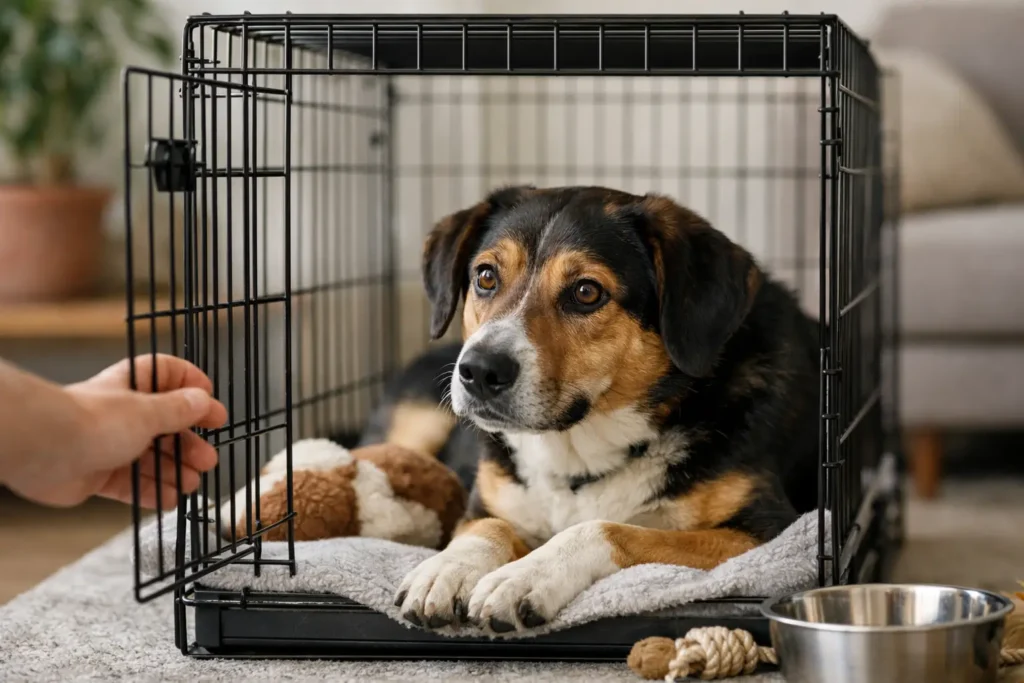
Place the crate in a calm, lived-in area, such as a family room or bedroom. Your dog should not feel banished from the people they trust. Add a washable bed or mat if your dog will not shred it, and consider covering just the back and sides with a light blanket if visual stimulation makes settling difficult. Keep the door securely open so it cannot swing shut and startle your dog.
How to Crate Train an Adult Dog Step by Step
Make the crate a place your dog chooses
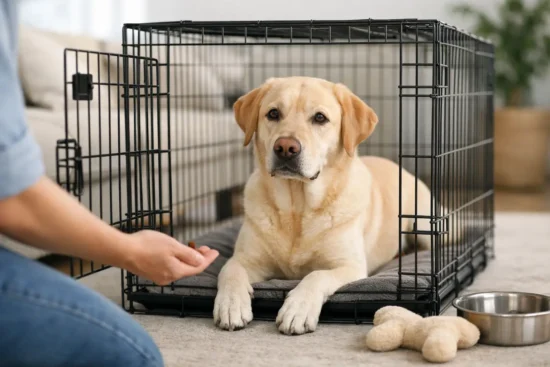
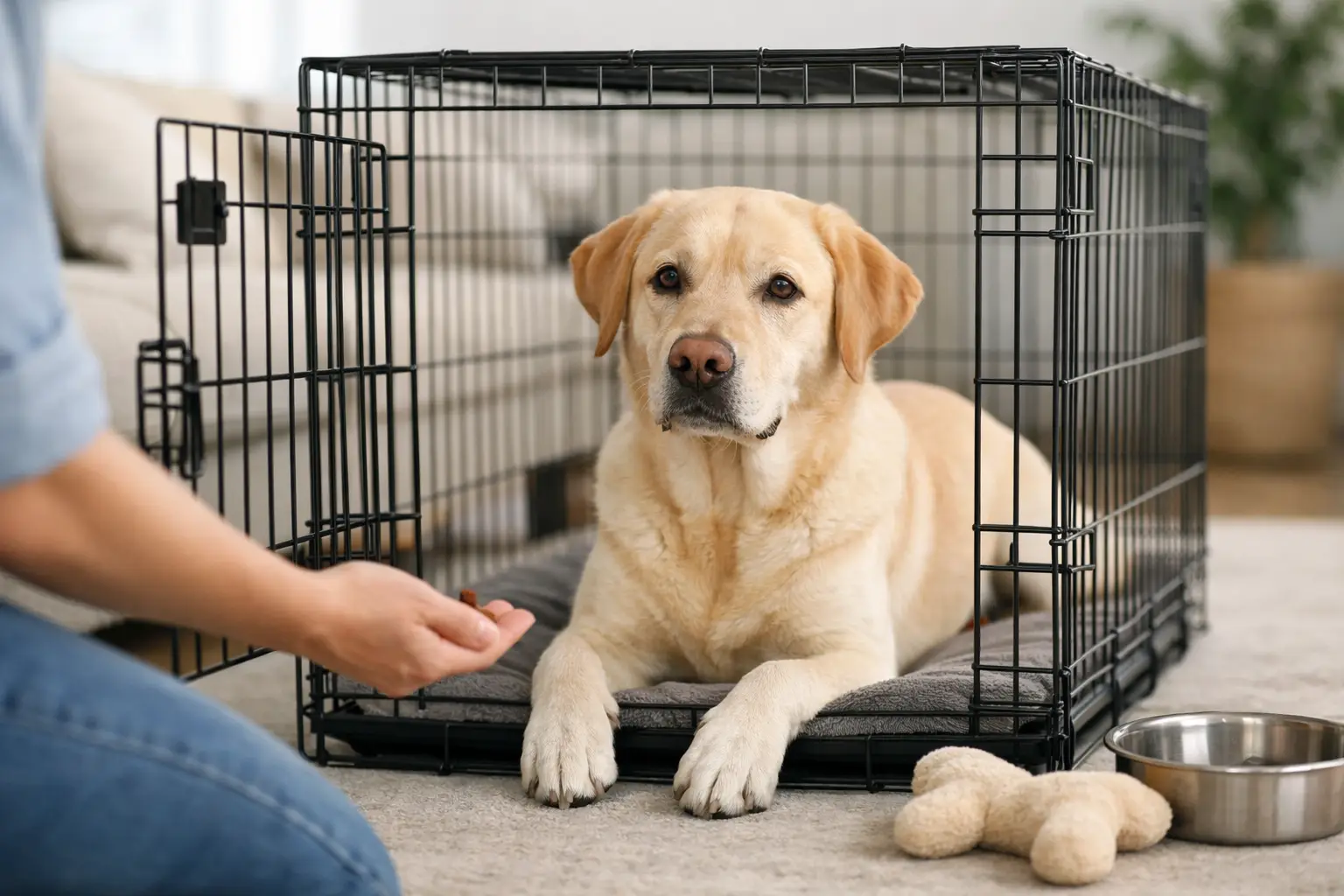
For the first day or two, do not close the door. Toss a few high-value treats just inside the entrance, then allow your dog to walk in, eat, and come back out. There is no need to coax, push, or repeatedly command them to enter. Choice is powerful here.
Once your dog is comfortably stepping inside, place treats farther toward the back. Feed part or all of their meals in the crate, beginning with the bowl near the entrance and moving it deeper as your dog relaxes. If they will not eat, the food is too close to something worrying them. Move the bowl back out and take a smaller step.
A stuffed food toy or safe long-lasting chew can help create a positive association, provided your dog can use it safely without supervision concerns. Save especially valuable rewards for crate time so the crate becomes the place where excellent things happen.
Add a cue, but keep it low-pressure
When your dog is willingly walking all the way in, say a simple cue such as “crate,” “bed,” or “place” just before they enter. Reward them once they are inside. Say the cue once, rather than repeating it louder if they hesitate.
Then invite your dog back out after a few seconds. At this stage, you are teaching that entering the crate does not mean losing freedom indefinitely. That predictability is especially reassuring to adult rescue dogs and dogs who have had unpleasant confinement experiences.
Practice closing the door in tiny increments
With your dog eating a treat or working on a food toy inside, gently close the door for one or two seconds, then open it before they show distress. Repeat this several times across short sessions. Gradually build from seconds to a minute, then several minutes.
Stay nearby at first. You might sit on the couch, read, or move casually around the room while your dog rests in the crate. Reward quiet, relaxed behavior by dropping a treat through the crate or calmly opening the door after a brief pause.
A dog who lies down, chews, blinks slowly, or shifts into a relaxed position is handling the exercise well. A dog who freezes, pants heavily in a cool room, drools, barks continuously, bites the bars, or throws their body against the crate is telling you the step was too difficult. Open the door when you can catch a brief quiet moment, then make the next session much easier.
Build distance before building duration
Many dogs can tolerate a closed crate door while you sit next to them but become worried when you leave. Practice a few seconds of distance before expecting a long stay. Take one step away, return, and reward calm behavior. Then walk across the room, step into the hallway, and briefly close an interior door.
Vary the exercise rather than making every session longer. A pattern such as 30 seconds, 10 seconds, one minute, and 20 seconds keeps your dog from anticipating that each crate entry will lead to a lengthy separation. Aim for several brief, successful sessions rather than one stressful one.
Use the Crate for Real Life Carefully
Once your dog can settle comfortably with you nearby, start using the crate for short, everyday moments. Offer a chew while you shower, prepare dinner, answer the door, or take a quick trip to the mailbox. These low-stakes repetitions teach your dog that crate time is ordinary and temporary.
Avoid using the crate only when you leave the house. If every crate session predicts being alone, even a dog that likes the space may begin to resist it. Include calm daytime rests while you are home, and let your dog occasionally choose to nap in the crate with the door open.
For nighttime, keep the crate near your bed at first if your dog is new to your home or unsettled. A recent adopter may need reassurance and a bathroom break overnight. Adult dogs generally have better bladder control than puppies, but age, medical conditions, diet, and prior routine all matter. Do not expect your dog to stay crated longer than they can comfortably hold it.
What Not to Do When Crate Training an Adult Dog
Never use the crate as a punishment after an accident, barking episode, or frustrating moment. Your dog cannot view it as a safe retreat if it also serves as doggy jail. Instead, manage the situation, address the behavior’s cause, and use the crate only when it can remain emotionally neutral or positive.
Do not follow a “cry it out” approach with a dog showing genuine fear. Brief protest can happen as a dog adjusts to a new routine, but escalating panic is not a training hurdle to ignore. Forced exposure can make confinement anxiety worse and may lead to self-injury.
It also helps to separate crate training from separation anxiety treatment. A dog who panics whenever you leave may not be objecting to the crate itself. They may be distressed by your absence, whether they are crated, behind a gate, or loose in the home. The American Veterinary Society of Animal Behavior recommends reward-based methods and supports working with a veterinarian or qualified behavior professional when fear and anxiety are involved.
When to Call Your Veterinarian or a Trainer
Pause crate training and get help if your dog is injuring themselves, breaking teeth or nails on the crate, eliminating from panic, vomiting, attempting escape with intense force, or showing distress that does not improve when you make sessions easier. Sudden changes in tolerance can also point to pain, urinary issues, cognitive changes, or another health concern.
Your veterinarian can rule out medical contributors and discuss whether a veterinary behaviorist, certified professional dog trainer, or other qualified behavior consultant is appropriate. Look for a professional who uses humane, reward-based training and who can adapt the plan to your dog rather than promising a one-size-fits-all timeline.
A crate is not mandatory for every adult dog, and some dogs will do better with a gated room or exercise pen. But for many dogs, patient training turns it into a familiar little bedroom – a place that makes travel, recovery, visitors, and daily life easier. Keep every step small enough for your dog to succeed, and that quiet willingness to walk inside will come from trust, not pressure.