


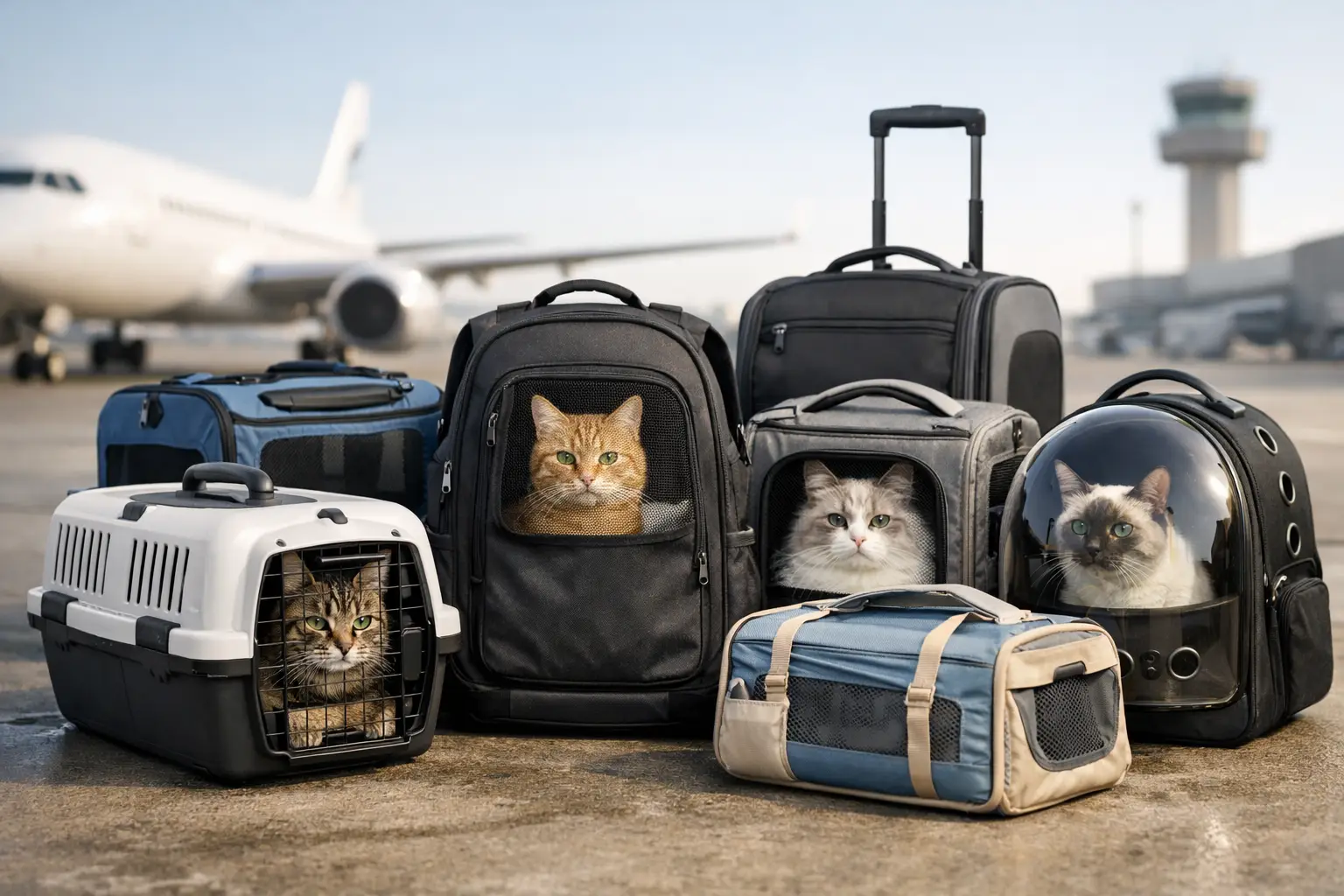
The information in this article is for educational and informational purposes only. It is not intended as veterinary advice, diagnosis, or treatment for any medical or health issue your pet may have.
Always consult a licensed veterinarian before making any decisions about your pet’s health, diet, medications, supplements, training, or care. Never disregard or delay professional veterinary advice based on content from this website.
BarkleyAndPaws.com and its authors assume no responsibility or liability for any errors, omissions, or outcomes resulting from the use of this information.
A bad carrier can turn a simple car ride into 30 minutes of scratching, panting, and full-body cat protest. A good one does the opposite – it gives your cat a secure, quiet space and gives you one less thing to worry about. If you’re shopping for the best cat carriers for travel, the right choice usually comes down to how you travel, how your cat reacts to confinement, and how easy the carrier is to clean when real life happens.
Some cats do fine in almost anything sturdy with a door. Others need more visibility, better airflow, softer sides, or a setup that feels less like a trap. That is why there is no single perfect carrier for every household. The best pick is the one that keeps your cat safe, fits your trip, and makes loading and unloading much less stressful.
What makes a cat carrier good for travel?
Safety comes first. A travel carrier should hold its shape, close securely, and keep your cat from slipping out during a panicked moment. For car travel, it should sit flat on the seat and work with a seat belt or another restraint method. For air travel, it needs to meet the airline’s size requirements, which can vary more than many owners expect.
Comfort matters almost as much. Good ventilation helps regulate temperature and lowers stress. A padded base or space for familiar bedding can make a huge difference, especially on longer trips. According to the American Veterinary Medical Association, pets should travel in a secure carrier rather than roaming freely in the car, both for their safety and yours.
Ease of use is where many carriers separate themselves. If you have ever tried to lower a suspicious cat through a tiny front opening, you already know this. Top-loading access, removable bedding, washable interiors, and sturdy handles are not bonus features – they are sanity savers.
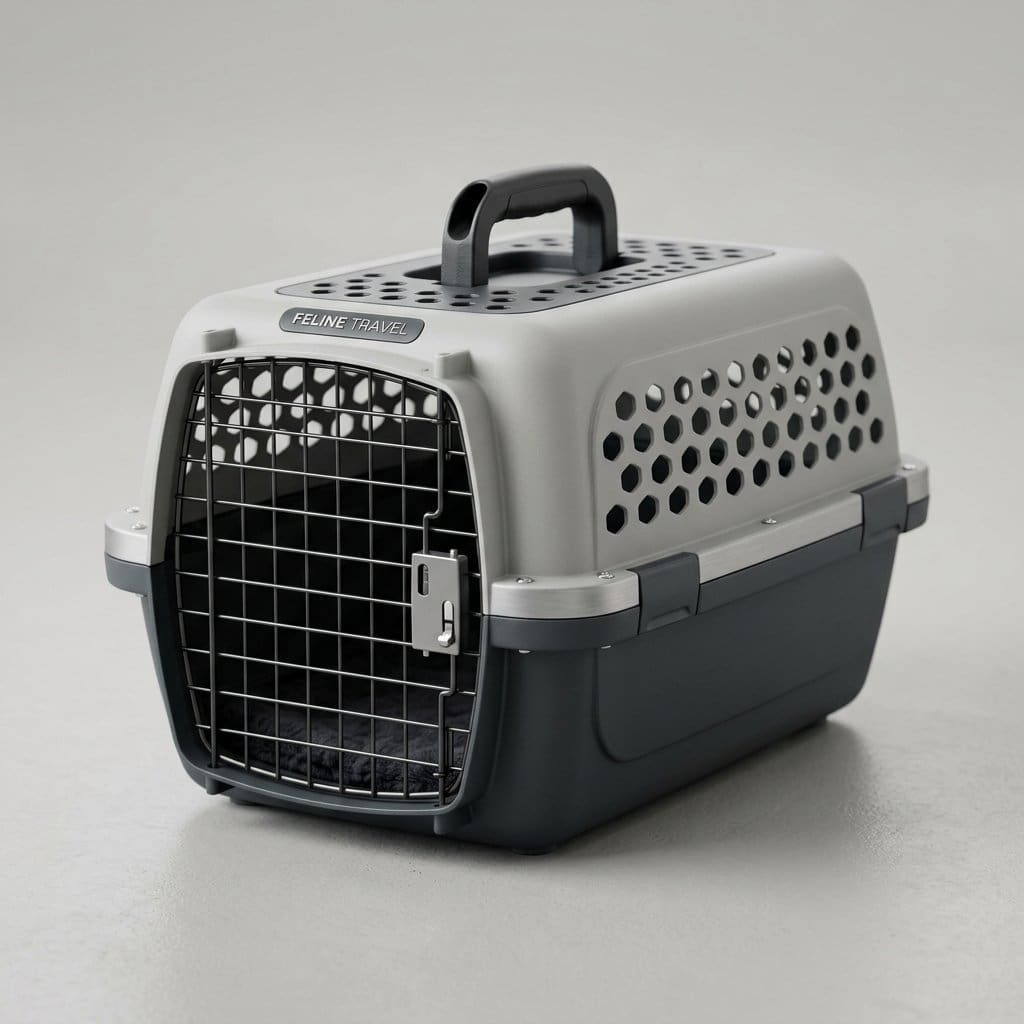
The best cat carriers for travel by type
1. Hard-sided carriers for nervous cats and car rides
Hard-sided carriers are still the default recommendation for a lot of cat owners, and for good reason. They are sturdy, easy to disinfect, and usually offer the best protection during car trips. If your cat tends to claw, chew, or throw their weight against the walls, a solid plastic carrier is often the safest bet.
They also work well for cats who do better in darker, den-like spaces. Many nervous cats feel more secure when they are not fully exposed. The trade-off is bulk. Hard carriers are heavier, less flexible, and not ideal for fitting under an airplane seat unless you have a very small cat and a very specific model.
Look for one with both front and top access if possible. That extra opening can make vet visits and overnight travel much smoother.
2. Soft-sided carriers for flights and lighter travel
Soft-sided carriers are often among the best cat carriers for travel by air because they are lightweight and slightly flexible. That flexibility matters when you need to fit the carrier under a plane seat. They are also easier to carry through airports, parking lots, and hotel lobbies.
The downside is structure. Some soft carriers sag if the frame is weak, and that can leave a cat feeling unstable. They are also a poorer choice for cats who scratch obsessively or panic hard enough to test every zipper. If you choose a soft model, strong mesh panels, reinforced seams, and locking zippers are worth paying for.
For cats who are calm or already carrier-trained, soft-sided designs are often the easiest option for everyday convenience.
3. Backpack carriers for short walks and hands-free movement
Backpack carriers can be helpful if you need to move through stairs, public transit, or crowded spaces without juggling a traditional handle carrier. They are especially useful for urban pet owners who walk part of the route to the car, train, or vet.
But they are not ideal for every cat. Some feel motion-sensitive when carried upright on a person’s back. Others dislike the constant shifting. A backpack carrier should have excellent ventilation, a firm base, and enough room for your cat to turn around comfortably. If it swings or collapses, skip it.
Backpacks are best for short transport segments, not hours of continuous confinement unless the design is unusually spacious and stable.
4. Expandable carriers for longer trips
Expandable carriers have zip-out sections that create extra lounge space when you stop moving. For road trips, this can be genuinely useful. Your cat gets more room to stretch during breaks, and you still have a compact carrier for the actual drive.
This style can work well for calm cats and longer itineraries, but it depends on how the expansion panels are built. Mesh extensions can feel flimsy if your cat leans heavily or scratches at them. They are a convenience feature, not a replacement for a secure main compartment.
If your cat gets overwhelmed easily, more space is not always better. Some cats prefer a snug setup that limits visual stimulation.
5. Crash-tested carriers for safety-focused drivers
If you take frequent car trips, especially beyond the occasional vet run, crash-tested carriers deserve a close look. These models are designed to be secured in the vehicle and built with impact performance in mind. They tend to cost more, but for regular travelers, the extra engineering may be worth it.
This is where your priorities matter. A plush interior and cute design are nice. Reliable restraint in a sudden stop is more important. The Center for Pet Safety has done testing on pet travel products, and their work highlights how much quality can vary across the market.
How to choose the right size
A carrier should be large enough for your cat to stand, turn, and lie down naturally, but not so oversized that they slide around during movement. Bigger is not automatically better. In a moving car, too much extra room can make the ride feel less secure.
Measure your cat from nose to base of tail and from floor to top of head while standing. Then compare those numbers to the carrier’s interior dimensions, not just the product title. Weight limits help, but shape matters too. A long, lean 12-pound cat may need a different fit than a compact 12-pound cat.
For kittens, avoid buying something enormous just to grow into it if you need it for immediate travel. You can use soft bedding to create a cozier space temporarily, but the carrier still needs to feel appropriately sized for the trip at hand.
Features worth paying for
Top-loading access is one of the most useful features you can get. Many cats resist going into a front door but tolerate being lowered in more gently from above. Removable, washable bedding is another practical win, especially for motion sickness or stress accidents.
Ventilation should be generous without leaving your cat feeling too exposed. Mesh windows, side vents, and breathable panels help with airflow. Secure closures matter more than they seem at first glance. Cats are better escape artists than most product designers apparently believe.
If you travel often, pay attention to the handle and shoulder strap quality. A carrier that digs into your hand or swings awkwardly becomes annoying fast. For airport use, a luggage sleeve can also make life easier.
Preparing your cat before the trip
Even the best carrier will not solve everything if your cat only sees it five minutes before departure. The ASPCA recommends getting cats used to their carrier well before travel by leaving it out at home with bedding, treats, and familiar scents. That turns it from a warning sign into part of the environment.
Short practice sessions help. Let your cat enter on their own, then work up to closing the door briefly, carrying them around the house, and taking very short drives. If your cat drools, vocalizes intensely, or pants during travel, talk with your veterinarian before a longer trip. Some cats need behavior strategies, and some may need medical support. PetMD and many veterinary practices also note that sedation is not a routine travel fix and should never be used without veterinary guidance.
Which cat carrier is best for your situation?
For most car travel, a hard-sided or crash-tested carrier is the strongest choice. For airline cabins, a soft-sided carrier usually makes more sense, assuming it meets the airline’s current dimensions. For quick walks through cities or apartment buildings, a well-structured backpack may be more practical.
If your cat is highly anxious, choose security over convenience. That often means a sturdy carrier with limited visual exposure, a stable floor, and easy top access. If your cat is calm and you need portability, soft-sided and expandable models can be a great fit.
The smartest purchase is not the one with the most features. It is the one your cat will tolerate, you can handle easily, and your travel plans actually require.
A carrier is never just a container. It is part of your cat’s travel experience, and when you choose well, every trip starts feeling a little more manageable.