

The information in this article is for educational and informational purposes only. It is not intended as veterinary advice, diagnosis, or treatment for any medical or health issue your pet may have.
Always consult a licensed veterinarian before making any decisions about your pet’s health, diet, medications, supplements, training, or care. Never disregard or delay professional veterinary advice based on content from this website.
BarkleyAndPaws.com and its authors assume no responsibility or liability for any errors, omissions, or outcomes resulting from the use of this information.
That moment when you walk past the litter box and catch a smell before you even see it? Your cat noticed it long before you did. If you’re wondering how to clean a litter box so it stays fresher, safer, and more appealing to your cat, the goal is not just odor control. It’s creating a bathroom your cat will actually want to use.
Cats can be remarkably particular about litter box hygiene, and for good reason. A dirty box can lead to odor buildup, bacterial growth, and sometimes litter box avoidance. According to the ASPCA, keeping the box clean is one of the basics of preventing elimination problems in cats. The good news is that a solid routine is simple once you know what matters most.
How to clean a litter box without making it harder
The biggest mistake many cat owners make is thinking litter box cleaning starts when the smell gets bad. In reality, the best routine is light, frequent maintenance with occasional deeper cleaning. That is easier on you, and much easier on your cat.
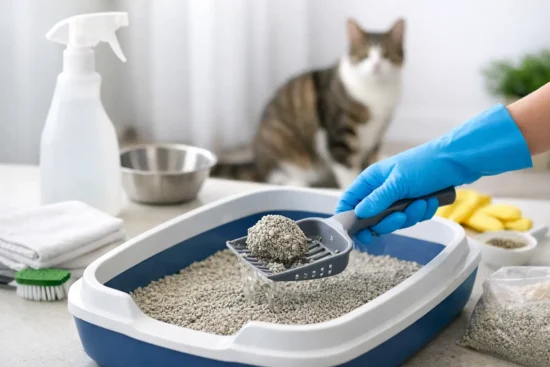
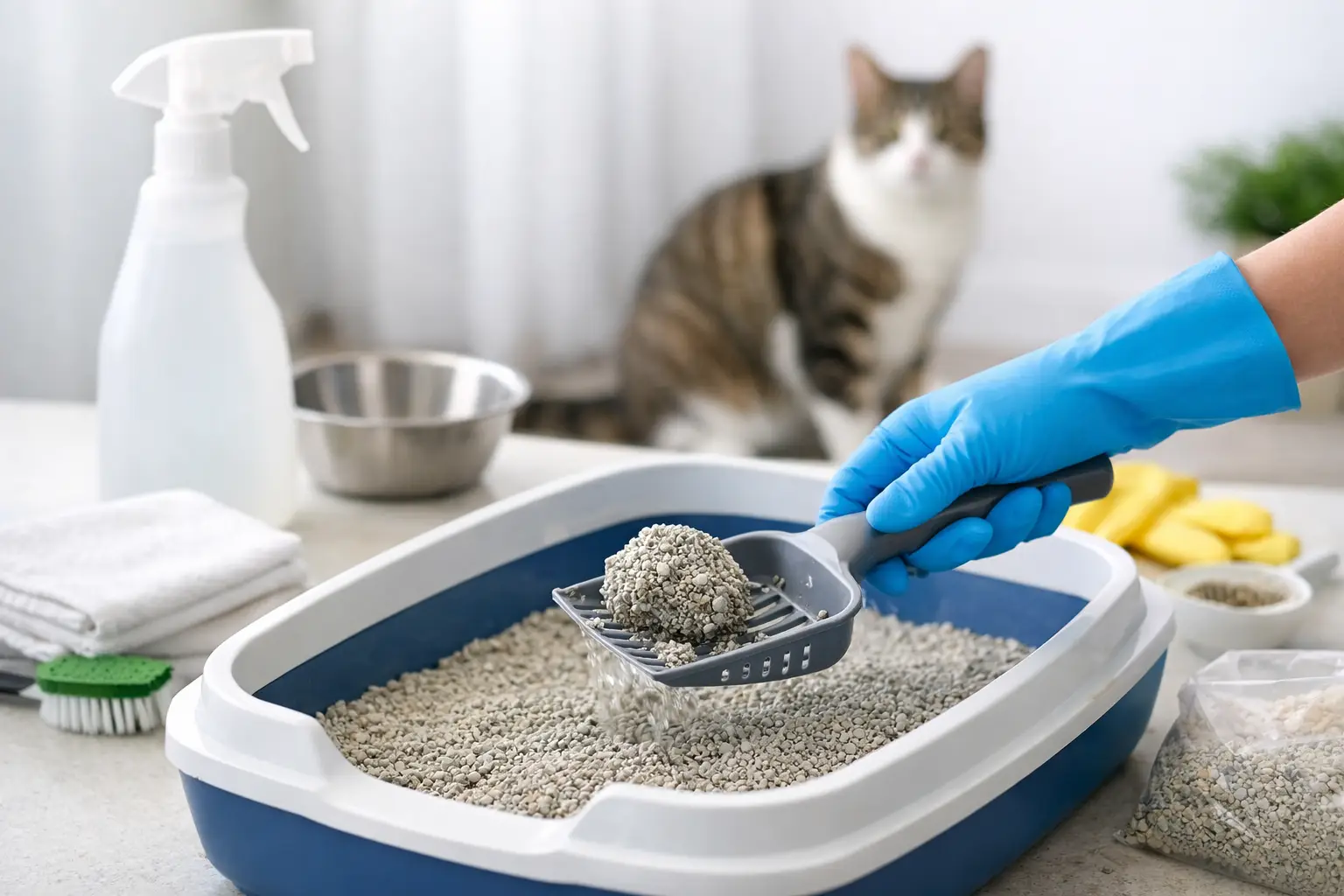
Start with the right supplies. You only need a scoop, a trash bag or dedicated waste bag, mild unscented dish soap, warm water, paper towels or a clean cloth, and fresh litter. Gloves are helpful if you prefer them. Strong cleaners, scented sprays, bleach-based products, and ammonia-heavy solutions are not a good idea. Cats have sensitive noses, and harsh smells can make the box less inviting.
If you’re using clumping litter, scoop out urine clumps and feces at least once a day. Twice a day is even better in multi-cat homes or in smaller spaces where odor lingers. If you’re using non-clumping litter, you’ll still remove solid waste daily, but you’ll likely need to change the litter more often because urine is absorbed rather than separated.
When scooping, go all the way to the bottom and corners. Wet litter tends to stick there, and that hidden buildup is often the source of stubborn odor. If you leave a thin layer of soiled litter behind each day, the box can smell bad surprisingly fast even when it looks mostly clean.
Your daily cleaning routine
For most households, daily cleaning is the sweet spot between cleanliness and sanity. Scoop all waste, check for damp patches, and top off litter only if the level has dropped below what your cat prefers. Many cats like around 2 to 3 inches of litter, though some prefer a little less. Too little litter means waste reaches the bottom quickly. Too much can make footing unstable, especially for kittens or senior cats.
Try to keep the experience predictable. Cats thrive on consistency, and a litter box that changes texture, depth, or smell every day can be as irritating to them as a dirty one. If you add fresh litter, use the same kind whenever possible unless you are intentionally transitioning.
This is also the time to take a quick look at what’s in the box. Changes in urine volume, stool consistency, or frequency can be an early clue that something is off. The American Veterinary Medical Association notes that litter box habits can offer important information about a cat’s health. If you notice straining, diarrhea, blood, or a sudden change in output, it’s worth calling your veterinarian.
How often to empty and wash the whole litter box
Even with diligent scooping, every litter box needs a full dump-and-scrub on a regular schedule. How often depends on the litter type, the number of cats, and how much the box gets used.
For clumping litter, many homes do well with a full change and wash every two to four weeks. For non-clumping litter, once or twice a week may be more realistic. In a multi-cat household, you may need to deep clean more often because waste accumulates faster and the odor load is higher.
To deep clean the box, empty all litter into the trash first. Then wash the box with warm water and mild, unscented soap. Scrub gently but thoroughly, paying extra attention to corners, seams, and any scratches in the plastic where residue can cling. Rinse well and dry the box completely before adding fresh litter.
A damp box can cause new litter to stick immediately, which starts the cycle over again. Drying matters more than many people realize.
One thing to skip is bleach mixed with urine residue. Cat urine contains ammonia, and mixing bleach with ammonia can create dangerous fumes. The Humane Society recommends avoiding strong chemicals for exactly this reason and keeping the litter area clean with milder products instead.
The best way to handle odor
If a litter box smells strong right after you clean it, there is usually a reason beyond normal cat waste. Sometimes the box itself is the issue. Plastic absorbs odor over time, especially if it’s older or scratched from repeated scooping. In that case, no amount of scrubbing will fully fix it, and replacing the box may be the better move.
Sometimes the problem is the litter. Scented formulas may seem like the answer for humans, but many cats dislike them. Unscented litter is often the safer choice because it controls odor without layering perfume on top. If you want extra help, a thin layer of baking soda under the litter can help in some homes, but it should not replace regular scooping or washing.
Location matters too. A box tucked into a cramped laundry room with poor airflow may smell stronger than the same box placed in a well-ventilated area. Covered boxes can trap odor for your cat even if they contain it for you. Some cats tolerate covers just fine, while others clearly prefer an open tray. It depends on the cat, the space, and how quickly the box is cleaned.
Common mistakes that make cats avoid the box
Learning how to clean a litter box well also means avoiding habits that accidentally turn it into a place your cat dislikes. One of the most common is using heavily scented cleaners or deodorizing crystals. What smells fresh to people can smell overpowering to cats.
Another is cleaning too aggressively and too rarely. If the box is left dirty for days and then suddenly scrubbed with a strong product, your cat gets both an unpleasant bathroom and a dramatic sensory change. Cats usually do better with steady maintenance than occasional overhauls.
Box setup also plays a role. If you have multiple cats, the standard advice is one box per cat, plus one extra. That guideline is widely recommended by veterinarians and behavior experts because it reduces crowding, competition, and stress around elimination. If one cat starts guarding a box or another cat decides it’s too dirty, having backups helps.
A final mistake is ignoring litter box aversion as a behavior problem before ruling out health issues. If your cat suddenly starts going outside the box, don’t assume they’re being difficult. Pain, stress, urinary issues, arthritis, or even a dislike of the box’s cleanliness can all be factors.
Special situations to plan for
Kittens usually need more frequent checks because they can fill a small box quickly and may be less tolerant of mess as they learn the routine. Senior cats may need boxes with lower sides, easier access, and extra attention to cleanliness if mobility issues make them more selective. Cats with long hair sometimes track more litter or get waste stuck around the rear, which can make the box dirtier faster.
If you’re pregnant or immunocompromised, take extra care with litter box handling. The CDC advises pregnant people to avoid changing cat litter if possible because of the risk of toxoplasmosis. If you must do it yourself, wear gloves and wash your hands thoroughly afterward.
Automatic litter boxes can reduce scooping time, but they are not maintenance-free. Waste compartments still need emptying, surfaces still need cleaning, and some cats never warm up to the sound or movement. They can be helpful, but only if your cat accepts them and you keep up with the cleaning schedule.
A simple routine that works
For most cat owners, the most realistic plan looks like this: scoop once or twice daily, check litter depth as needed, fully replace and wash on a regular schedule based on the litter type, and replace the box itself when it starts holding odor. That routine is not fancy, but it works.
If your home still struggles with litter box odor after that, step back and troubleshoot the basics. Is the box large enough? Is it in the right spot? Are there enough boxes for the number of cats? Is your cat healthy? Those questions usually get you further than another deodorizer ever will.
A clean litter box is one of those small routines that quietly shapes your cat’s comfort every single day. Keep it simple, keep it consistent, and your cat will probably thank you by using it exactly where they’re supposed to.