
The information in this article is for educational and informational purposes only. It is not intended as veterinary advice, diagnosis, or treatment for any medical or health issue your pet may have.
Always consult a licensed veterinarian before making any decisions about your pet’s health, diet, medications, supplements, training, or care. Never disregard or delay professional veterinary advice based on content from this website.
BarkleyAndPaws.com and its authors assume no responsibility or liability for any errors, omissions, or outcomes resulting from the use of this information.
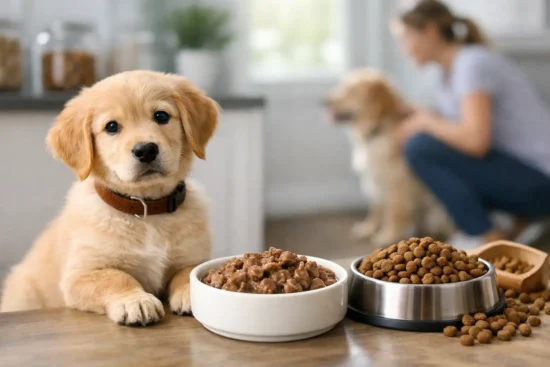
Your puppy polished off breakfast in record time, shot up another inch overnight, and suddenly the bag labeled “puppy formula” starts to feel temporary. That is usually when pet parents start asking when to switch puppy food – and the honest answer is not the same for every dog.
Some puppies are ready around their first birthday. Others, especially large and giant breeds, may need puppy food longer to support slower, more controlled growth. The right timing depends on size, growth rate, body condition, and the specific food you are feeding. If you switch too early, your puppy may miss nutrients designed for development. If you wait too long, you can end up feeding extra calories your dog no longer needs.
When to switch puppy food by age and size
Most dogs can transition from puppy food to adult food at about 12 months old. That guideline works well for many small and medium breeds, which tend to mature faster than bigger dogs. According to the American Kennel Club, small breeds often reach full size sooner, while larger breeds may keep growing for much longer.
Large and giant breed puppies are the exception that matters most. Breeds like Labrador Retrievers, Golden Retrievers, German Shepherds, Great Danes, and Mastiffs may need puppy food until 12 to 18 months, and sometimes closer to 24 months for giant breeds. Growth in these dogs is not just about getting bigger. It is about supporting bones and joints at a steady pace rather than pushing rapid weight gain.
That is why large-breed puppy foods are formulated differently. They are typically more controlled in calories and minerals like calcium and phosphorus. The goal is balanced growth, not maximum growth. The American Veterinary Medical Association and many veterinarians emphasize that nutrition during the first year can affect lifelong health, especially in bigger dogs.
If your puppy is toy-sized, the opposite often happens. Tiny breeds may look and act more mature sooner, and many are ready for adult food around 9 to 12 months. Even then, it is worth checking your food label and your veterinarian’s advice before making the change.

Signs your puppy may be ready for adult food
Age is helpful, but it should not be the only signal. A puppy nearing maturity often starts to look less like a baby and more like a scaled-down adult dog. Growth slows, the body fills out, and energy levels may become a little less chaotic, even if the zoomies are still very much alive.
Body condition matters too. If your puppy is maintaining a healthy weight and no longer needs the calorie density of puppy food, adult food may be a better fit. Puppy formulas are designed to support rapid development, which is great when your dog is actively growing. Once that growth curve starts to level off, those extra calories can become unnecessary.
Your veterinarian may also flag the timing during a routine visit. That is especially useful if your puppy has a breed-specific risk for orthopedic issues, a sensitive stomach, or a history of growing either too quickly or too slowly.
If you are unsure, ask a simple question at your next appointment: Is my dog still growing enough to need puppy food? That usually gets you a more useful answer than asking based on age alone.
Why switching too early or too late can cause problems
Puppy food is not just smaller kibble with a cute label. It is made to provide higher calories and targeted nutrients that support development. As noted by the Association of American Feed Control Officials, foods labeled for growth and reproduction must meet different nutrient standards than adult maintenance foods.
Switch too early, and a still-growing puppy may not get the nutrient profile intended for development. That concern is bigger for large breeds and puppies with delayed maturity. Switch too late, and your dog may continue eating more calories than needed, which can lead to excess weight gain. Carrying extra weight during adolescence puts unnecessary strain on joints and can make it harder to maintain ideal body condition later.
There is also a practical issue. Some owners keep feeding puppy food because their dog loves it or seems hungrier on adult food. But appetite alone is not a reliable guide. Many healthy young dogs would happily eat like growing puppies forever.
How to switch puppy food without upsetting your dog’s stomach
Once you know when to switch puppy food for your dog, the next step is doing it gradually. A sudden food change is one of the fastest ways to end up dealing with loose stool, gas, or a dog who eyes the bowl like you have betrayed them personally.
Most veterinarians recommend transitioning over 7 to 10 days. Start with mostly the old food and a small amount of the new food for the first few days. Then slowly increase the proportion of adult food while decreasing the puppy food. If your dog has a sensitive stomach, stretching that timeline to 10 to 14 days can help.
Watch stool quality, appetite, and energy during the transition. Mild changes can happen, but persistent diarrhea, vomiting, or refusal to eat are signs to pause and check with your veterinarian. The ASPCA also advises pet owners to monitor for digestive upset whenever changing diets, since even a high-quality food may not agree with every individual dog.
It also helps to keep everything else stable during the switch. If possible, do not introduce new treats, table scraps, supplements, or stress-heavy schedule changes at the same time. When several variables change together, it becomes much harder to tell what caused a problem.
Choosing the right adult food after puppy food
The best adult food is not automatically the most expensive one or the one with the trendiest packaging. What matters is that it is complete and balanced for adult maintenance, appropriate for your dog’s size, and a good fit for any health needs.
If your puppy has been eating a large-breed puppy formula, look for an adult formula designed for large breeds when the time comes. Smaller dogs can usually move to a standard adult formula unless their veterinarian recommends something more specific. Dogs with allergies, chronic soft stools, or skin issues may need a more targeted option.
You should also compare calorie content. Some adult foods are surprisingly calorie-dense, while others are lighter. Feeding amounts often need to change during the switch, especially if your dog’s activity level is changing too.
A food that meets AAFCO standards for adult maintenance is a good baseline. You can usually find that statement on the package. If you want a second opinion on your choice, your veterinary team is still the best shortcut.
Special cases that change the timeline
Not every puppy follows the standard schedule. Spayed or neutered dogs may need closer monitoring because metabolism and appetite can shift. Very active dogs may stay lean on puppy food longer, but that does not always mean they still need it. Rescue puppies with uncertain ages can also make timing tricky, since estimated birthdays are not always precise.
Medical conditions can change the plan too. Puppies with gastrointestinal issues, food sensitivities, or developmental concerns may need a specialized diet beyond the usual puppy-to-adult transition. If your dog is under veterinary care for a health issue, the “normal” timeline may not apply.
Mixed breeds deserve a little extra thought. If your puppy’s adult size is still a mystery, your vet can help estimate whether your dog is maturing more like a small, medium, or large breed. That gives you a better sense of whether the 12-month mark is likely right or a bit early.
The most common mistake pet owners make
The biggest mistake is treating the first birthday like a hard deadline. It is a useful checkpoint, not a universal rule. A small terrier may be ready right on schedule, while a gangly large-breed adolescent may still need the nutrition profile of puppy food for a while longer.
The second most common mistake is focusing only on the label and not on the dog in front of you. Your puppy’s body condition, growth pattern, stool quality, and overall health tell you a lot. If your dog looks great on paper but is constantly too thin, too heavy, or not tolerating the diet well, the plan may need adjusting.
At Barkley and Paws, we always come back to the same principle: good nutrition is not about chasing a perfect calendar date. It is about matching food to the stage your dog is actually in.
If you are standing in the pet food aisle wondering whether now is the right time, let your puppy’s size, growth, and veterinary guidance lead the decision – not just the birthday on the chart.