

The information in this article is for educational and informational purposes only. It is not intended as veterinary advice, diagnosis, or treatment for any medical or health issue your pet may have.
Always consult a licensed veterinarian before making any decisions about your pet’s health, diet, medications, supplements, training, or care. Never disregard or delay professional veterinary advice based on content from this website.
BarkleyAndPaws.com and its authors assume no responsibility or liability for any errors, omissions, or outcomes resulting from the use of this information.
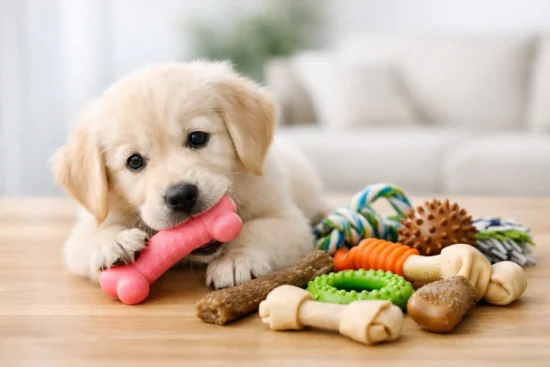
Your puppy is chewing the crate, the coffee table, and somehow the corner of a wall. That usually means teething has arrived, and finding the best puppy chews for teething quickly becomes less of a nice-to-have and more of a household survival tactic. The right chew can soothe sore gums, redirect destructive biting, and help your puppy learn what is actually okay to put in their mouth.
Teething usually starts around 3 to 4 months and can continue until about 6 or 7 months, though every puppy moves at a slightly different pace. During that stretch, their baby teeth loosen, adult teeth come in, and their urge to chew ramps up fast. Some puppies want cold, soft pressure. Others prefer a little resistance. That is why there is no single perfect chew for every dog, only safer and smarter choices based on age, size, chewing style, and supervision.
What makes the best puppy chews for teething?
A good teething chew does two jobs at once. It gives your puppy relief, and it lowers the odds that they will invent their own chew toy out of your baseboards.
The best options are soft enough to protect developing teeth but durable enough that they do not fall apart in minutes. For teething puppies, that balance matters. A chew that is too hard can risk tooth damage. A chew that is too flimsy can become a swallowing hazard. Texture is usually more important than extreme toughness. Puppies often do best with flexible rubber, soft nylon made specifically for puppies, cloth toys they can mouth and tug, or edible chews designed for young dogs.
Size also matters more than many owners expect. If a chew is too small, your puppy may try to swallow the last chunk. If it is too large or heavy, they may ignore it. Look for products labeled for puppy use and matched to your dog’s current weight, not just their expected adult size.

10 best puppy chews for teething
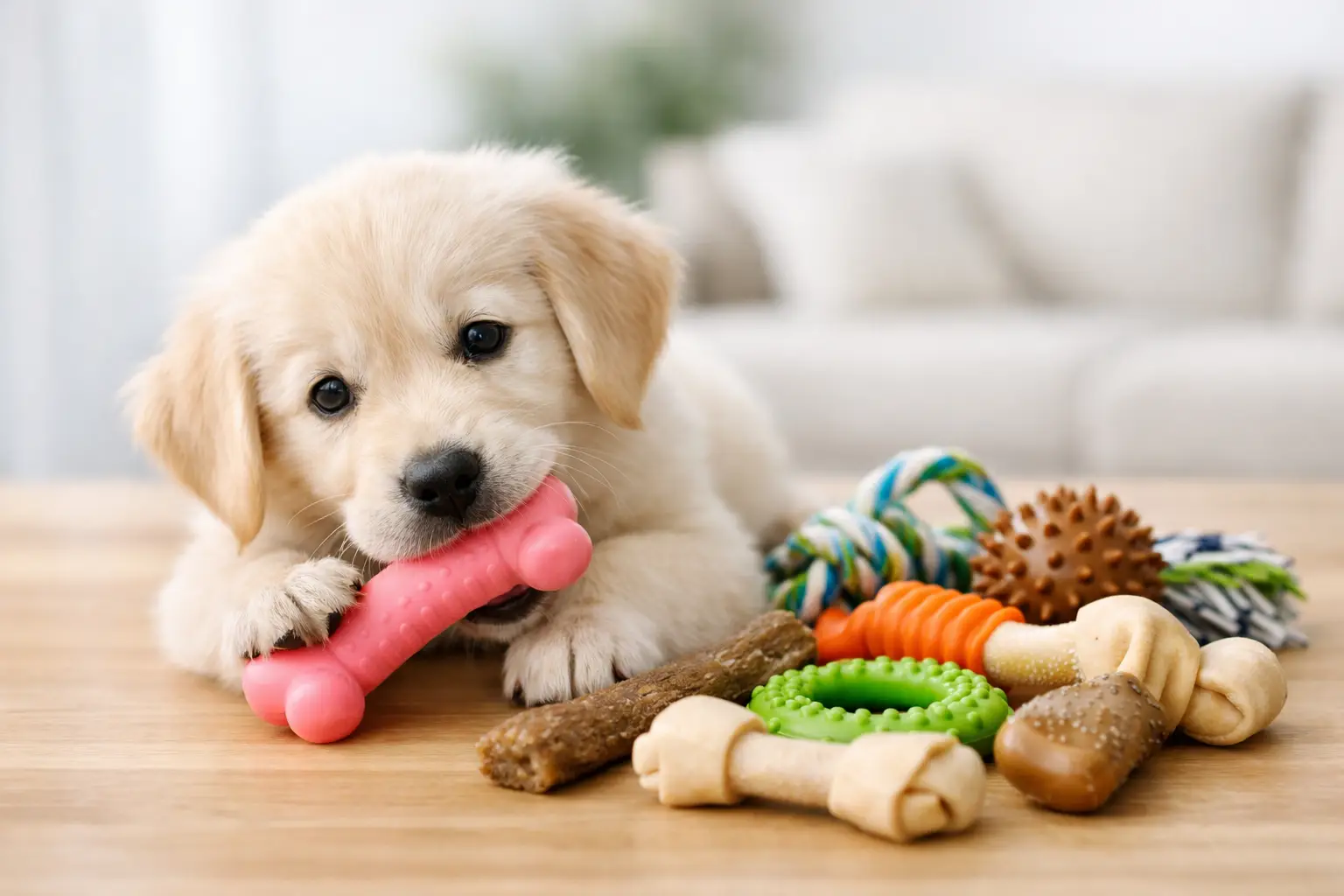
1. Soft rubber puppy teething toys
These are often the most reliable first choice. Soft rubber gives a little under pressure, which feels good on inflamed gums, and many can be chilled in the refrigerator for extra relief. They also tend to bounce unpredictably, which helps keep puppies interested.
This category works especially well for small to medium puppies and for dogs who like to carry toys around between chewing sessions. The trade-off is that aggressive chewers may tear softer rubber faster, so you still need to inspect it often.
2. Freezable chew toys
Cold can be genuinely helpful when gums are irritated. Freezable toys, whether fabric-based or rubber, add gentle numbing along with pressure. For puppies in the peak teething phase, this can be the difference between nonstop nipping and 20 peaceful minutes on the floor with a chew.
Skip anything frozen solid enough to feel rock-hard. You want cool and soothing, not a surface that could stress baby teeth.
3. Puppy-specific nylon chews
Not all nylon chews are appropriate for puppies, but softer puppy versions can be a good match for dogs who want more resistance than rubber provides. These are designed to be gentler than adult power-chewer products and often come in smaller sizes with puppy-friendly textures.
The key word here is puppy-specific. Hard adult chews may last a long time, but that is not the same as being ideal for a teething mouth.
4. Plush teething toys with chewable edges
Some puppies are comfort chewers as much as they are serious gnawers. A plush toy with reinforced edges, knots, or textured corners can give them something softer to mouth while still offering sensory interest.
These are not a fit for puppies who shred fabric and swallow stuffing. But for gentler chewers or puppies who like to cuddle between play sessions, they can be a helpful part of the rotation.
5. Rope toys for supervised chewing
Rope toys are useful because they satisfy chewing and light tug instincts at the same time. They can also help redirect puppies who want to mouth hands during play. For teething, softer cotton rope is usually better than extra-dense options.
That said, rope toys are best used with supervision. Once a rope starts fraying heavily, loose strands can become a problem if swallowed.
6. Edible puppy teething rings
Edible teething rings made for puppies can be a practical option for short, focused chewing sessions. They are often softer than long-lasting adult dog chews and may appeal to food-motivated puppies who ignore non-edible toys.
This is one of those it-depends choices. Some puppies do great with edible chews and settle nicely. Others gulp pieces too fast. If your puppy is a gulper, this category may not be your best first pick.
7. Digestible puppy chews with limited ingredients
If you want an edible chew, simpler is usually better. Limited-ingredient puppy chews can reduce the chance of stomach upset and make it easier to spot what agrees with your dog. They are especially helpful for owners already watching for food sensitivities.
Keep an eye on calories, though. Small puppies can pack on extras quickly if treats and chews start adding up.
8. Treat-dispensing puppy chews
A hollow chew toy that holds soft food or puppy-safe treats does more than ease gum discomfort. It also gives your puppy a mental job to do. That can be valuable during teething, when discomfort often shows up as restlessness, whining, or constant biting.
For young puppies, use easy fillings at first so frustration does not outweigh the benefit. Chilling the filled toy can add another layer of relief.
9. Natural rubber sticks and textured chew shapes
Some puppies are drawn to shapes that mimic sticks, bones, or branches, even when they are made of safer materials. Textured rubber versions can satisfy that instinct without the splinter risk that comes with real wood or brittle natural materials.
These are especially useful for outdoor-loving puppies who keep heading for mulch, twigs, or landscaping.
10. Vet-recommended dental puppy chews
A few dental chews are formulated for younger dogs and can pull double duty by giving your puppy something appropriate to chew while supporting oral hygiene. This can be useful once adult teeth are beginning to come in, but you still want to be sure the chew is labeled for puppies and not overly hard.
Dental claims should never outweigh safety. For teething puppies, comfort and appropriate softness come first.
How to choose the best puppy chews for teething at home
Start with your puppy’s chewing style. A gentle nibbler usually does well with plush, rope, or softer rubber. A determined chomp-and-repeat puppy may need puppy-grade rubber or softer nylon with a bit more structure. If your puppy destroys toys quickly, that does not mean you should jump straight to the hardest chew on the shelf. For teething mouths, too hard can create a different problem.
Think about temperature, too. Many puppies love chilled toys during peak gum soreness, but not all do. If your puppy ignores a room-temperature chew, try refrigerating it before deciding it was a bad buy.
It also helps to rotate options instead of relying on one holy grail chew. Puppies get bored fast, and novelty can make redirection much easier. A small rotation of three to five safe chews often works better than one expensive option they lose interest in after two days.
What to avoid
Hard bones, antlers, hooves, and adult-strength chews are common mistakes for teething puppies. They may seem durable, but durability is not the same thing as safety for developing teeth. Very hard materials can crack baby teeth or put too much pressure on sore gums.
You also want to be cautious with rawhide, heavily processed chews, and anything that softens into large slippery chunks. Some puppies handle these fine, but many do not. If a chew can be broken into swallowable pieces, the risk changes quickly.
Household stand-ins deserve a mention as well. Ice cubes, old shoes, socks, and random washcloths tend to sound convenient in the moment. They can also teach your puppy that household items are fair game. If you do offer a damp cloth for supervised chewing, make sure it does not become part of a larger pattern of chewing fabric around the house.
When a chew is not enough
Sometimes relentless chewing is not just teething. Overarousal, boredom, hunger, lack of naps, and normal puppy mouthiness can all pile on. If your puppy seems impossible to redirect, look at the full routine. Many puppies need more sleep than owners realize, and an overtired puppy often chews like a tiny wrecking ball.
If you notice bleeding that seems excessive, a foul odor from the mouth, refusal to eat, broken teeth, or severe pain, check in with your veterinarian. Teething can be messy, but it should not look extreme.
A good chew will not magically solve puppyhood, but it can make this stage much easier on both of you. Pick options that are soft enough for sore gums, sized for your puppy right now, and sturdy enough for supervised use. Then keep a few within reach, because the best time to offer a chew is usually five seconds before your puppy finds your favorite chair leg.