
The information in this article is for educational and informational purposes only. It is not intended as veterinary advice, diagnosis, or treatment for any medical or health issue your pet may have.
Always consult a licensed veterinarian before making any decisions about your pet’s health, diet, medications, supplements, training, or care. Never disregard or delay professional veterinary advice based on content from this website.
BarkleyAndPaws.com and its authors assume no responsibility or liability for any errors, omissions, or outcomes resulting from the use of this information.
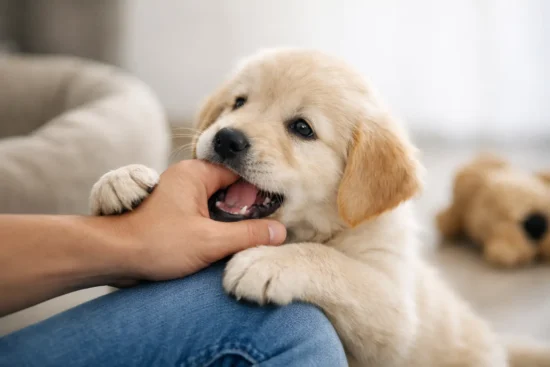
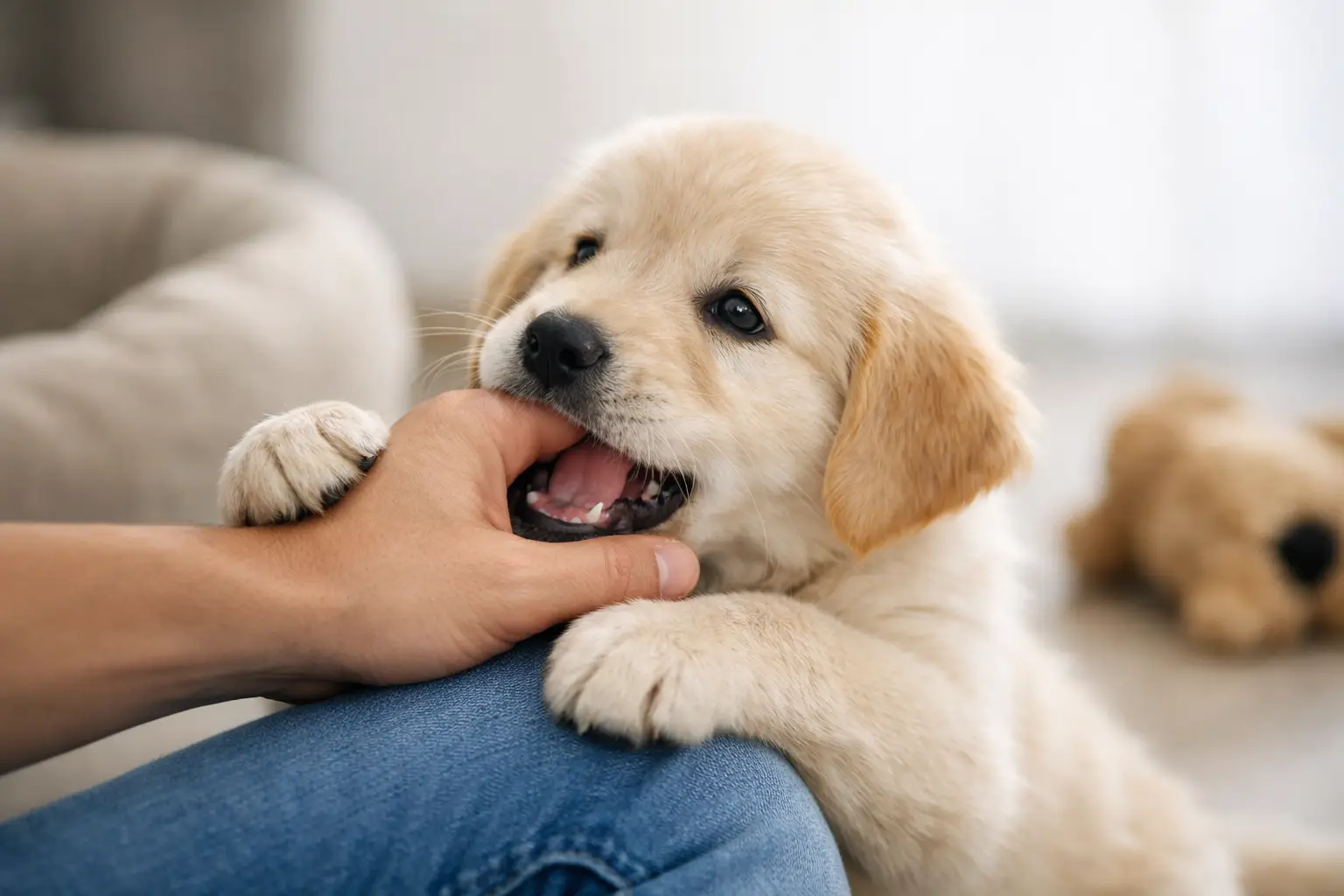
Your puppy is sweet one minute and clamped onto your sleeve the next. If you are wondering how to stop puppy biting without scolding, yelling, or turning playtime into a battle, the good news is that biting is normal – and very teachable.
Most puppies bite because they are exploring, playing, teething, or getting overstimulated. They are not being dominant or mean. According to the American Kennel Club, mouthing and nipping are common puppy behaviors, especially during early development. The goal is not to punish normal puppy behavior. The goal is to teach your dog what to do instead.
Why puppies bite so much
Puppies use their mouths the way toddlers use their hands. They investigate textures, test boundaries, and communicate excitement with their teeth. That is especially true during teething, which can make chewing feel soothing. The ASPCA notes that chewing is a natural behavior for dogs, and young puppies need appropriate outlets for it.
Biting also tends to spike when puppies are tired, wound up, or struggling to settle. Many pet parents assume the puppy needs more exercise, but sometimes the opposite is true. An overtired puppy often gets nippy fast.
Breed tendencies can matter too. Herding breeds may nip at ankles. Sporting and retriever types may grab hands and clothing more readily. That does not mean the behavior should continue, but it does mean your training plan should match the dog in front of you.
How to stop puppy biting at home
The fastest path is consistency. If biting sometimes gets attention, sometimes gets wrestling, and sometimes gets ignored, your puppy has no clear rule to follow. What works best is teaching a simple pattern: bite stops play, calm behavior keeps play going.
Redirect before your puppy makes contact
Keep a toy within reach anytime your puppy is awake and active. If your puppy comes in hot and starts targeting hands, sleeves, or pant legs, calmly offer a chew toy or tug toy right away. This is not bribery. It is redirection toward a behavior you want.
Timing matters here. If you wait until the puppy is fully latched onto your arm, redirection is harder. Watch for the moments that happen just before biting – bouncing, stalking feet, grabbing clothing, intense zoomy energy – and interrupt early.
Soft toys, rubber puppy chews, and age-appropriate teething toys all help. Some puppies prefer a toy with movement, while others want something they can really sink their teeth into. It may take trial and error.

End play the second teeth touch skin
If your puppy bites you during play, stop the game immediately. Stand up, go still, and remove attention for a brief moment. This teaches a clean cause and effect: teeth on people make the fun stop.
You do not need a dramatic reaction. In fact, squealing can make some puppies more excited. A calm pause is often more effective. Wait a few seconds, then restart gently. If biting happens again, end the interaction again.
This is one of those areas where patience matters more than force. Repetition teaches. Harsh corrections often create more arousal, fear, or confusion.
Use short breaks, not punishment
When a puppy is too worked up to make good choices, a brief reset helps. That might mean stepping behind a baby gate for 30 seconds or guiding your puppy to a quiet pen with a safe chew. This is not isolation as punishment. It is a nervous system break.
The AVMA supports reward-based training methods because they help dogs learn without the fallout that can come with punishment. If your puppy is biting harder as the evening goes on, look at sleep, routine, and stimulation – not just obedience.
Teach bite inhibition, not just “no biting”
A puppy should learn that human skin is extremely delicate. This lesson is called bite inhibition. Even if your puppy still mouths occasionally during the learning phase, the pressure should become softer over time.
That is why it helps to reward calm, gentle interaction. If your puppy licks your hand, sniffs you, or takes a toy instead of your fingers, mark that moment with praise and offer a reward. You are not only stopping bad behavior. You are building a better habit.
There is some debate about whether to yelp when bitten. For some puppies, a high-pitched sound makes them back off. For others, it turns you into the most exciting squeaky toy in the room. If yelping seems to increase biting, skip it.
Common reasons your puppy keeps biting
Sometimes training stalls because the real trigger is not being addressed.
Teething pain
Puppies often need more chewing outlets during teething. Cold washcloths, puppy-safe rubber toys, and textured chews can help soothe sore gums. Be careful with anything too hard, since developing teeth can be damaged.
Overtired behavior
A lot of evening biting is really nap deprivation. Young puppies need a surprising amount of sleep, often 18 to 20 hours a day depending on age. If your puppy turns into a tiny land shark at the same time every day, try a nap before that window instead of more stimulation.
Too much rough play
Wrestling with hands or encouraging your puppy to chase sleeves makes the rules blurry. Tug can be a great game, but it works best when the toy is the target and the game stops if teeth hit skin.
Lack of structure
Puppies do better when the day has rhythm. Short training sessions, naps, chew time, potty trips, meals, and calm play all reduce frantic behavior. Chaos tends to produce more biting, not less.
What not to do
A few common tactics can make the problem worse.
Do not hit your puppy on the nose, hold the mouth shut, alpha roll, or yell. These methods can create fear and damage trust without teaching the skill you actually want. They can also increase defensive behavior.
Do not keep offering your hands as chew toys because the bites are “cute for now.” Puppy habits scale up fast. What feels playful at 10 pounds is much less charming at 45.
And do not expect perfect progress in a straight line. Puppies improve, then regress during teething, growth spurts, or schedule changes. That is normal.
How to help kids safely interact with a biting puppy
If you have children at home, management matters as much as training. Kids move fast, squeal, and wave their hands, which can make puppies even nippier.
Set simple rules. Children should not run from the puppy, wrestle with the puppy, or put hands near the puppy’s face during excited moments. Give kids structured ways to interact instead, like tossing treats into a crate, asking for a sit, or playing with a long toy.
Adult supervision should be close and active, especially with younger children. Management tools like gates, pens, and leashes are incredibly useful while your puppy is learning.
When puppy biting needs extra help
Normal puppy biting usually improves with age and training. But some situations call for professional support.
If your puppy’s bites are frequent, intense, hard enough to break skin regularly, or paired with stiff body language, resource guarding, or extreme overarousal, talk with your veterinarian and consider a qualified positive reinforcement trainer or veterinary behavior professional. Medical discomfort, fear, and poor early social experiences can all affect behavior.
It is also worth checking whether your puppy is getting enough sleep, the right amount of food, and age-appropriate exercise. A puppy who is physically uncomfortable or constantly pushed past their limits will struggle to stay regulated.
A realistic timeline for improvement
Most puppies do not stop biting overnight. You are usually looking for gradual change: softer mouth pressure, quicker redirection, fewer ambushes, and better recovery after excitement.
Many puppies show major improvement by the end of teething, but training still matters after the baby teeth are gone. What you are building now is impulse control. That lesson lasts far beyond the puppy months.
If you stay calm, stay consistent, and make the right behavior easy, your puppy will get there. One day you will realize your hands are no longer the favorite toy – and that is a very good day for everyone in the house.