


The information in this article is for educational and informational purposes only. It is not intended as veterinary advice, diagnosis, or treatment for any medical or health issue your pet may have.
Always consult a licensed veterinarian before making any decisions about your pet’s health, diet, medications, supplements, training, or care. Never disregard or delay professional veterinary advice based on content from this website.
BarkleyAndPaws.com and its authors assume no responsibility or liability for any errors, omissions, or outcomes resulting from the use of this information.
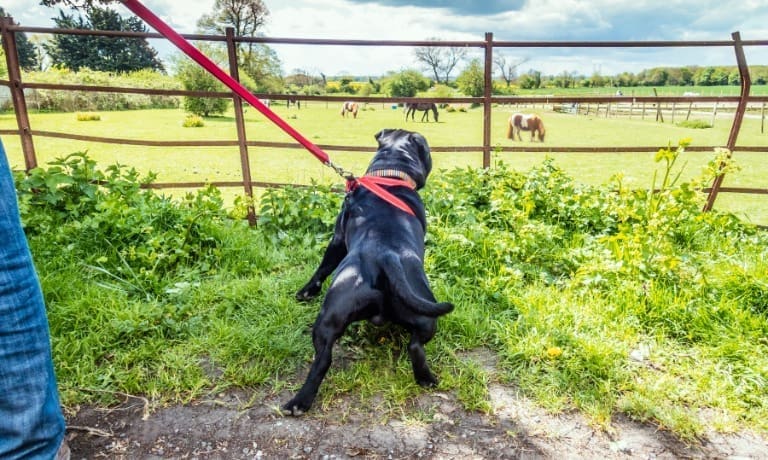
Does your dog struggle to go in public because they’re always barking, lunging, or running away from passersby, both people and animals? This is called reactivity, and it’s when your pup exhibits intense behavior seemingly disproportionate to their triggers. But is your pup acting this way because they’re scared or just really, really pumped up? The answer to that question matters for your training approach, so let’s explore how to tell the difference between fear- and excitement-based reactivity in dogs.
What’s Really Driving Your Dog’s Reactions?
If you notice any of these signs, then your dog’s reactivity is likely fear-based:
- tucked or low tail
- ears pinned back against the head
- you see the whites of their eyes
- stiff, tense body posture
- backing away or trying to escape
On the other hand, these are the signs of excitement-based reactivity:
- loose, wiggly body movements
- forward-leaning posture
- play bows before or after the outburst
- tail wagging (sometimes the whole back end!)
- pulling toward the trigger rather than away
The Context Clues
Look at what happens after the reactive episode. Does your dog immediately shake off, look stressed, and need time to decompress? That’s fear. Or does your dog bounce right back, ready to keep walking like nothing happened? That’s probably excitement.
The triggers matter too. Fear-based reactive dogs might respond to specific types of dogs, people, or situations that make them uncomfortable. Excitement-based reactive dogs usually react to anything remotely interesting—other dogs, people, squirrels, leaves blowing in the wind, etc.

Why This Distinction Matters
You wouldn’t use the same training approach for a dog who’s terrified of other dogs as you would for one who desperately wants to make friends. Fear-based reactivity requires you to build confidence and create positive associations from a distance. Excitement-based reactivity needs impulse control work and teaching alternative behaviors.
For example, leash reactivity in high-energy dogs tends to fall into the excitement category, and it shouldn’t be punished. Your pup might just be frustrated that they can’t say hello to every dog in the neighborhood.
Adapting Your Training Plan
Once you identify whether fear- or excitement-based reactivity drives your dog’s behavior, you can tailor your training plan. Fear-based dogs benefit from counter-conditioning at distances where they stay under their trigger threshold. Excitement-based dogs need structured impulse control games and rewards for calm behavior around triggers.
Both types of reactivity deserve your patience and understanding. Your dog isn’t trying to give you a hard time; they’re just struggling to manage their emotions.