

The information in this article is for educational and informational purposes only. It is not intended as veterinary advice, diagnosis, or treatment for any medical or health issue your pet may have.
Always consult a licensed veterinarian before making any decisions about your pet’s health, diet, medications, supplements, training, or care. Never disregard or delay professional veterinary advice based on content from this website.
BarkleyAndPaws.com and its authors assume no responsibility or liability for any errors, omissions, or outcomes resulting from the use of this information.
A dog that loves rainy walks is easy to picture. A dog standing in the doorway, shivering because the weather turned cold and wet, is a little more familiar. Finding the best waterproof dog coat is less about buying the most expensive option and more about matching the coat to your dog’s body, coat type, activity level, and climate.
Some dogs truly benefit from outerwear, while others only need it in specific conditions. A short-haired senior in Seattle has very different needs from a double-coated young Lab in Atlanta. That is why the smartest way to shop is not to start with style or brand. Start with function.
How to choose the best waterproof dog coat
A good waterproof dog coat should keep water out without trapping your dog in a stiff, sweaty shell. That balance matters more than many owners expect. If a coat is technically waterproof but rubs the armpits, limits shoulder movement, or makes your dog overheat after ten minutes, it will not get worn for long.
The outer fabric should repel steady rain instead of soaking through right away. For most pet owners, truly waterproof material with sealed or well-finished seams is more useful than a coat described only as water-resistant. Water-resistant can handle a drizzle. Waterproof is the better choice for regular winter walks, slushy sidewalks, or dogs that stay out long enough to get fully wet.
Fit is the next big factor. The coat should cover the back from shoulders toward the tail without interfering with bathroom breaks. Around the chest, it should feel secure but not tight. You should be able to fit a couple of fingers under the straps. If the coat shifts side to side, bunches near the front legs, or rides up when your dog moves, it is not the right cut.
Waterproof does not always mean warm
This is where many dog owners get tripped up. The best waterproof dog coat for a mild, rainy fall day may be the wrong choice for freezing temperatures. Some coats are simply shells. Others include fleece, synthetic insulation, or quilted linings.
For dogs that run hot, a lightweight waterproof shell is often enough. That includes many active medium and large breeds, especially those with thicker natural coats. For small breeds, lean dogs, puppies, seniors, and short-haired dogs, some insulation usually makes wet weather much more comfortable.
There is a trade-off, though. A heavily insulated coat can be great for short winter walks but too warm for hiking, running, or regions where temperatures swing during the day. If you live somewhere with mixed weather, a lighter waterproof coat may get more use than a bulky one.
Dogs that usually need more coverage
Body shape and breed type matter. Greyhounds, Whippets, Chihuahuas, French Bulldogs, Boxers, and many small mixed breeds often benefit from more chest and belly coverage because they have less natural insulation or sit closer to cold, wet ground. Dogs with arthritis can also seem much more comfortable in a coat that keeps rain and chill off their joints.
By contrast, some Huskies, Malamutes, Newfoundlands, and other heavy-coated breeds may only need rain protection in very specific situations. Even then, breathability matters more than extra padding.
Features that actually matter on rainy walks
It is easy to get distracted by cute prints and trendy colors, but a few practical details make a much bigger difference in daily use.
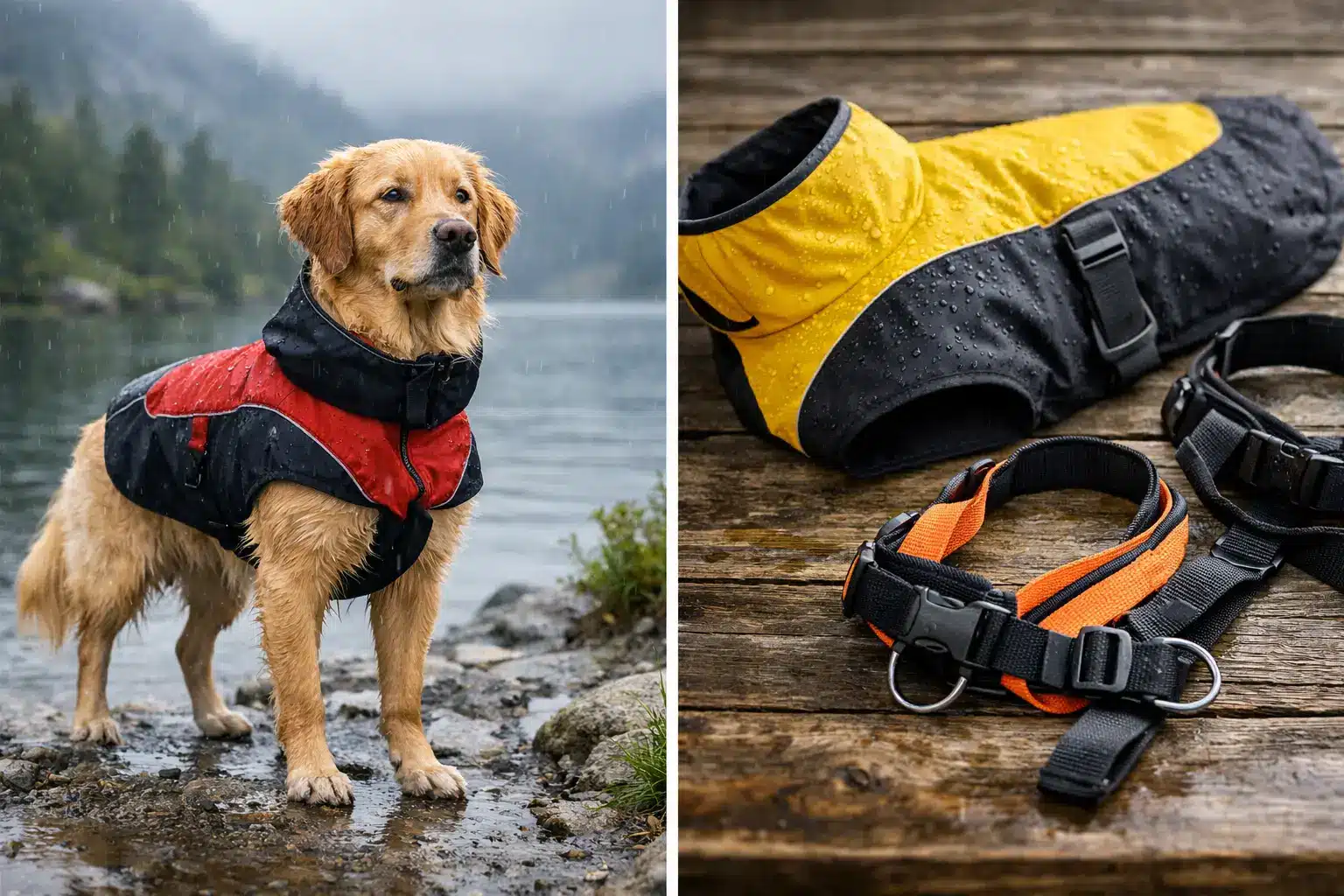
A leash opening is one of them. If your dog wears a harness, look for a coat with a harness portal or a design built to fit over the harness comfortably. If the opening sits in the wrong place, the coat may pull backward during walks.
Reflective trim is another feature worth having, especially if you walk early in the morning or after work when it is dark and wet. Drivers tend to have worse visibility in rain, and a reflective strip or piping can help your dog stand out.
Belly coverage is helpful for small dogs and low riders because splashing water comes from below as much as above. On the other hand, very full belly panels can be annoying for male dogs if the fit is not designed carefully. It depends on your dog’s shape.
Fasteners matter too. Hook-and-loop closures are quick and adjustable, but they can collect hair and lose grip over time. Buckles tend to feel more secure, though they can be slower to put on a wiggly dog. Snaps are neat when they are well placed, but they offer less fine-tuning for fit.
Look for freedom of movement
The shoulder area is where many otherwise good coats fail. Dogs need to extend their front legs freely, especially on longer walks. A coat that looks perfect while your dog is standing still can still restrict movement once they start trotting.
If possible, watch your dog walk in it indoors before heading outside. Look for shortened steps, awkward high lifting of the legs, or repeated attempts to bite or shake off the coat. Those are all clues that something is off.
Best waterproof dog coat materials and design choices
In practical terms, most owners do well with a polyester or nylon shell paired with either a mesh lining or light fleece. These materials are common because they dry relatively quickly, hold up to regular use, and do not become as heavy when damp as some cheaper fabrics.
Ripstop fabrics can be especially helpful for active dogs that brush against shrubs, play hard, or join you on trails. If your dog mostly needs a coat for neighborhood walks, you may care more about comfort and ease of cleaning than abrasion resistance.
You should also pay attention to coverage around the neck. A higher collar can block wind and rain, which is great for cold climates. But for dogs that dislike anything near the throat, a lower-profile neck may be easier to tolerate. There is no universal best design here. Comfort wins.
How to measure your dog before buying
Most return headaches happen because owners guess the size. Dog coat sizing is not standardized, so a medium in one brand can fit like a small in another.
Measure your dog’s back length from the base of the neck to the base of the tail. Then measure the widest part of the chest and, if the brand requests it, the neck. If your dog falls between sizes, the better choice depends on the design. With adjustable chest straps, sizing up may work. With a more structured coat, sizing down can sometimes prevent shifting. Always compare the chest measurement first if your dog has a broad front end.
Long-bodied dogs, barrel-chested breeds, and deep-chested dogs are where fit gets trickiest. In those cases, a coat made for the specific body type is often better than a generic one, even if it costs a little more.
When your dog should not wear a waterproof coat
A coat is a tool, not a requirement. Some dogs dislike wearing one so much that the stress outweighs the benefit. Others simply do not need one except in unusually cold rain.
Skip the coat if your dog starts overheating, panting heavily in cool weather, or acting uncomfortable after a few minutes. Also be cautious with very fluffy breeds. If the coat compresses the natural coat too much, it may reduce the insulating effect of their fur rather than help.
And never leave a coat on for hours after the walk if it is damp inside. Even the best shell can trap moisture against the skin if your dog gets wet from sweat or leaks around the edges.
Care tips to make a dog coat last
A waterproof coat needs occasional care to stay effective. Mud, oils, and repeated washing can reduce how well the outer surface sheds water. Follow the brand’s washing instructions closely and avoid harsh detergents unless the label says otherwise.
Let the coat dry fully between uses. If it gets stuffed wet into a basket or car trunk, it can develop odor, lose shape, and feel clammy the next time your dog wears it. It is also smart to check straps and stitching every few weeks during heavy use season.
At Barkley and Paws, we tend to look at rain gear the same way we look at any everyday pet essential: the right choice is the one your dog can move in, stay comfortable in, and wear without a fight. If a coat checks those boxes and keeps your dog dry enough to enjoy the walk, you have probably found the one that matters most.