

The information in this article is for educational and informational purposes only. It is not intended as veterinary advice, diagnosis, or treatment for any medical or health issue your pet may have.
Always consult a licensed veterinarian before making any decisions about your pet’s health, diet, medications, supplements, training, or care. Never disregard or delay professional veterinary advice based on content from this website.
BarkleyAndPaws.com and its authors assume no responsibility or liability for any errors, omissions, or outcomes resulting from the use of this information.
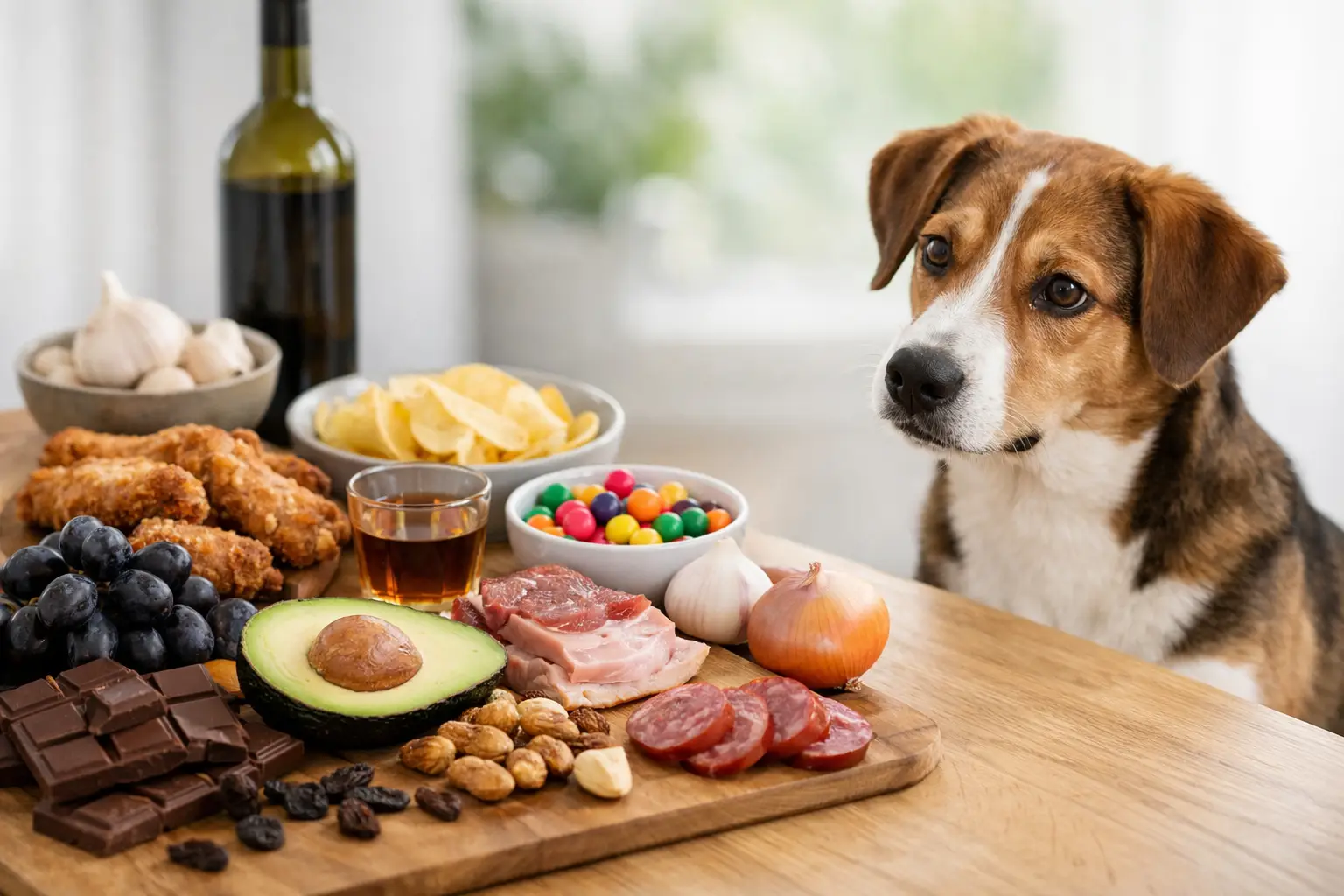
The panic usually starts with a half-open pantry door, a tipped-over purse, or a missing square of chocolate from the coffee table. When it comes to foods dogs should never eat, the real problem is that many of the most dangerous items are ordinary staples in American homes. They are not exotic ingredients. They are lunchbox snacks, baking supplies, sugar-free gum, and leftovers.
That is what makes this topic so relevant for everyday dog owners. You do not need to feed your dog table scraps on purpose for an emergency to happen. A determined counter surfer, a curious puppy, or a well-meaning child can turn a normal afternoon into a call to your vet.
Why some human foods are so dangerous for dogs
Dogs do not process food the way people do. A small amount of something harmless to us can affect a dog’s blood sugar, nervous system, kidneys, liver, or heart. Size matters too. A bite that barely registers for a Labrador may be far more serious for a Yorkie.
The dose, the type of food, and your dog’s health all shape the risk. Dark chocolate is more dangerous than milk chocolate. Seedless grapes are still dangerous. Bread dough is very different from baked bread. That is why vague advice like “just watch them” can backfire if your dog has eaten something on a truly toxic list.
According to the ASPCA Animal Poison Control Center, several common foods can cause significant poisoning in dogs, including chocolate, grapes, raisins, xylitol, onions, and alcohol. The American Veterinary Medical Association also warns that chocolate toxicity can quickly become a medical emergency depending on the dog’s size and the amount eaten.
12 foods dogs should never eat
Some foods are occasional stomach-upset foods. These are not that. These are foods dogs should never eat because the potential downside is too high.
Chocolate
Chocolate contains methylxanthines, including theobromine and caffeine, which dogs cannot metabolize well. Signs of toxicity can include vomiting, diarrhea, restlessness, a racing heart, tremors, and seizures. Baking chocolate and dark chocolate are the biggest concerns because they contain more theobromine than milk chocolate.
Grapes and raisins
Grapes and raisins can cause sudden kidney failure in dogs, and frustratingly, experts still do not know exactly why some dogs react so severely. The amount that triggers toxicity can vary. One dog may eat a few and seem fine at first, while another can become critically ill.
The VCA Animal Hospitals notes that vomiting, lethargy, and reduced appetite may show up early, followed by signs linked to kidney damage.
Xylitol
Xylitol is one of the most urgent food-related toxins for dogs. It is a sugar substitute found in some gums, candies, peanut butters, baked goods, mints, toothpaste, and vitamins. In dogs, xylitol can trigger a rapid insulin release that causes dangerous hypoglycemia. In some cases, it can also lead to liver failure.
This is one ingredient label every dog owner should get in the habit of checking, especially before sharing peanut butter as a treat or pill-hiding helper.
Onions, garlic, chives, and leeks
These all belong to the allium family and can damage a dog’s red blood cells, potentially leading to anemia. Onion is typically the biggest concern, but garlic is not automatically safe just because it is used in small amounts in human cooking. Raw, cooked, powdered, and dehydrated forms can all be risky.
Powdered onion and garlic are especially easy to overlook because they show up in seasoned meats, soups, sauces, and chips.
Alcohol
Dogs should never have alcohol in any form, whether it is beer, wine, liquor, or food made with enough alcohol to matter. Alcohol depresses the central nervous system and can cause vomiting, disorientation, low body temperature, breathing problems, and coma.
Fermented products can be a hidden issue too, which is one reason unbaked bread dough is so dangerous.
Raw bread dough with yeast
Yeast dough can expand in a dog’s stomach, causing painful bloating and even a dangerous twisting of the stomach in severe cases. As the yeast ferments, it can also produce alcohol. So you get two problems at once: physical expansion and alcohol toxicity.
If your dog raids the kitchen while dough is rising, do not take a wait-and-see approach.
Macadamia nuts
Macadamia nuts can cause weakness, vomiting, tremors, and trouble walking. The exact mechanism is still not fully understood, but the effect can be dramatic, especially in smaller dogs. The good news is many dogs recover with veterinary care, but that does not make the risk minor.
Avocado
Avocado is a gray-area food in some conversations, so it helps to be precise. The flesh is not considered as toxic to dogs as it is to some other animals, but avocado still poses concerns. It contains persin, which can cause GI upset, and the pit creates a serious choking or intestinal blockage hazard. Fatty foods like avocado can also be a poor choice for dogs prone to pancreatitis.
So while avocado is not in the same emergency tier as xylitol, it is still a food best kept off your dog’s menu.
Caffeine
Coffee grounds, brewed coffee, energy drinks, tea bags, caffeine pills, and some supplements can all be dangerous. Caffeine stimulates the heart and nervous system much like chocolate does, but it can hit hard and fast. A dog that gets into a discarded coffee filter or an energy drink can become agitated, shaky, and dangerously tachycardic.
Cooked bones and fatty table scraps
Not every risky food is technically toxic. Cooked bones can splinter and injure the mouth, throat, stomach, or intestines. Very fatty scraps like bacon grease, sausage drippings, and heavily buttered leftovers can trigger vomiting, diarrhea, and in some dogs, pancreatitis.
This is where “but my dog has eaten it before” can become false reassurance. Repeated exposure does not make a risky food safer.
Moldy foods
Trash raids are often more dangerous than owners realize. Moldy bread, dairy, nuts, and compost can contain tremorgenic toxins or other harmful substances that affect the nervous system. Dogs are not picky about what they steal, and that includes spoiled food with serious toxicity potential.
Fruit pits and seeds
Apple seeds, cherry pits, peach pits, and plum pits bring two problems. First, they can obstruct the digestive tract. Second, some contain compounds that can release cyanide when chewed. The obstruction risk is usually the more immediate concern, but either way, these are not safe treats.
What to do if your dog eats something unsafe
Start with the basics: remove the food, check the package if there is one, and estimate how much your dog ate. Try to note the time, the product name, the ingredient list, and your dog’s weight. That information helps your vet assess the risk quickly.
Then call your veterinarian right away. If your vet is unavailable, contact an emergency veterinary clinic or the ASPCA Animal Poison Control Center. Time matters, especially with xylitol, chocolate, grapes, and alcohol.
Do not induce vomiting unless a veterinary professional tells you to. It can make things worse in some situations, especially if the substance is caustic, if your dog is already weak, or if there is a choking risk.
How to prevent food accidents at home
Most poisoning cases are less about bad pet parenting and more about underestimating how resourceful dogs can be. Prevention works best when it matches your dog’s habits. A tall pantry latch may be enough for one dog and useless for another.
Store gum, candy, baked goods, chocolate, and supplements in closed cabinets, not bags on counters or in purses left on the floor. Make sure guests and kids know not to share snacks. If you use peanut butter regularly, keep one dog-safe jar and double-check every new label for xylitol.
It also helps to create a short household rule: if you are not sure whether a food is safe, do not offer it. That simple pause prevents a lot of avoidable emergencies.
Dog-safe treats do not have to be fancy. Plain cooked lean meat, small pieces of carrot, green beans, blueberries, or your dog’s regular treats are usually much better choices than table food. If your dog has a sensitive stomach, a history of pancreatitis, diabetes, or kidney disease, ask your vet before adding even healthy people foods.
If you want more practical pet safety guidance, Barkley and Paws covers the kind of everyday decisions that help keep curious dogs out of trouble.
A dog does not know the difference between a dangerous snack and a delicious one. That part is on us, and a little caution in the kitchen goes a long way.