


The information in this article is for educational and informational purposes only. It is not intended as veterinary advice, diagnosis, or treatment for any medical or health issue your pet may have.
Always consult a licensed veterinarian before making any decisions about your pet’s health, diet, medications, supplements, training, or care. Never disregard or delay professional veterinary advice based on content from this website.
BarkleyAndPaws.com and its authors assume no responsibility or liability for any errors, omissions, or outcomes resulting from the use of this information.
Missed puppy shots happen more often than people admit. A busy week turns into a late appointment, and suddenly you are wondering whether your dog is still protected or if the whole plan needs to start over. That is exactly where a good dog vaccination schedule guide helps – not as a substitute for your veterinarian, but as a clear roadmap for what is usually due, when it matters most, and where there is room for adjustment.
Vaccines work best when they are timed around a dog’s age, risk level, and local disease exposure. A tiny apartment puppy in a low-risk area may not need the exact same non-core vaccines as a hunting dog, a boarding regular, or a dog that hikes in tick-heavy regions. The goal is not to give every shot available. The goal is to protect against the diseases your dog is most likely to encounter while avoiding unnecessary guesswork.
Dog vaccination schedule guide: what counts as core
Veterinarians generally split vaccines into two groups: core and non-core. Core vaccines are recommended for nearly all dogs because they protect against serious, widespread diseases. In the US, those usually include rabies and a combination vaccine that covers distemper, adenovirus, and parvovirus, often shortened to DAP, DA2P, or DHP depending on the clinic and manufacturer.
Rabies is legally required in many states and local jurisdictions, but it is not just a paperwork vaccine. It protects against a fatal disease that can affect animals and people. Distemper can damage the respiratory, gastrointestinal, and nervous systems. Parvovirus is especially dangerous for puppies and can cause severe vomiting, diarrhea, dehydration, and death if treatment is delayed. Adenovirus protection helps guard against infectious hepatitis and related illness.
Non-core vaccines are recommended based on lifestyle and location. These can include Bordetella for dogs that board, groom, attend daycare, or spend time around many other dogs. Leptospirosis may be advised for dogs exposed to wildlife, standing water, or certain suburban and rural environments. Lyme vaccination may make sense in regions where tick exposure is common. Canine influenza can also be worth discussing if outbreaks are active in your area or your dog has frequent contact with groups of dogs.
Puppy vaccine timing matters more than most owners think
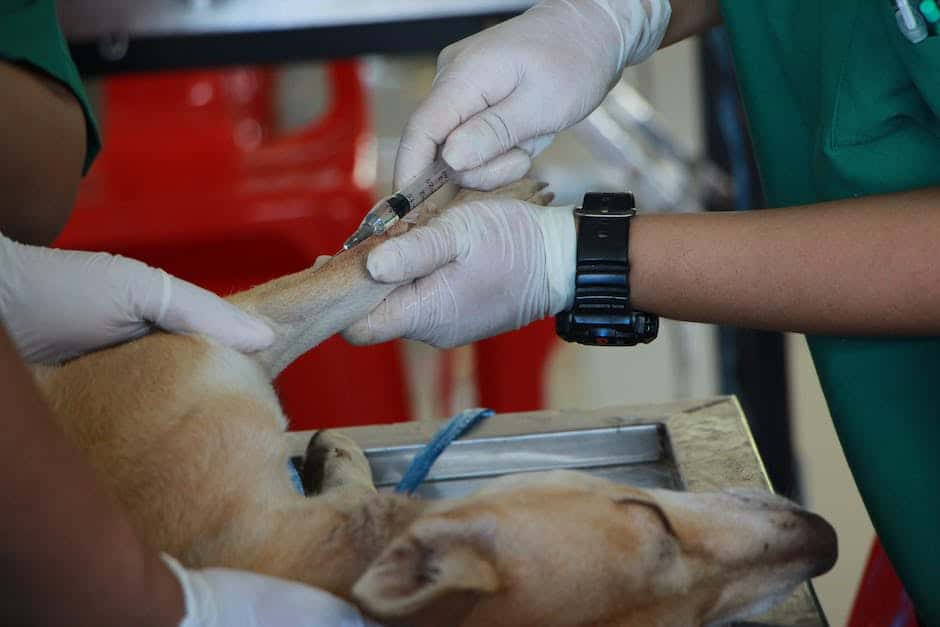
The reason puppies get a series instead of a single visit is simple. Maternal antibodies can interfere with how well early vaccines work. A puppy may have some temporary protection from mom, but that same protection can block a vaccine from creating a reliable immune response. That is why vets give a series over several weeks, rather than assuming one early shot will do the job.
Typical puppy schedule
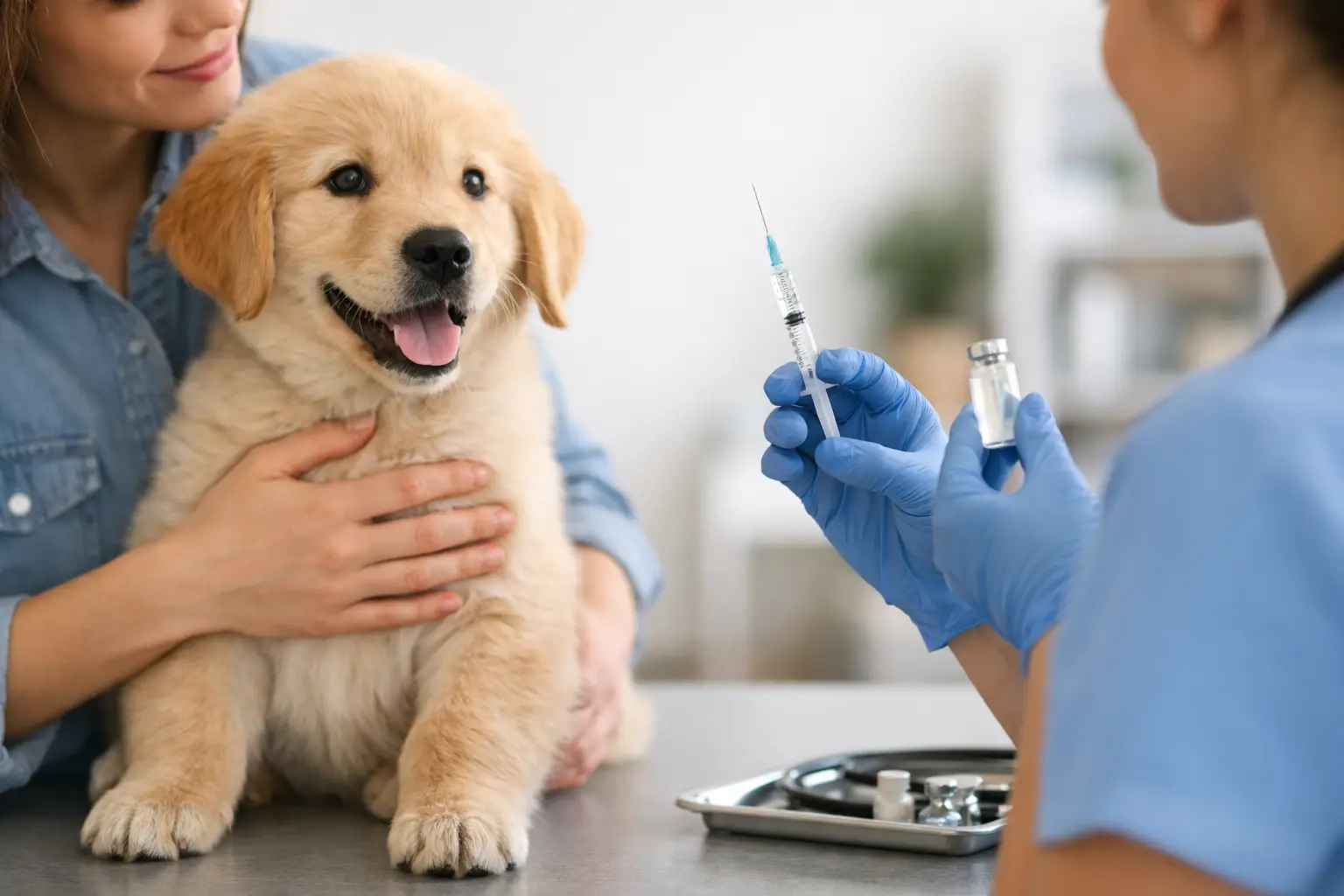
Most puppies begin their core vaccine series between 6 and 8 weeks of age. From there, booster doses are commonly given every 3 to 4 weeks until the puppy reaches about 16 weeks old. In some higher-risk situations, your veterinarian may recommend one more dose after that point.
A common schedule looks like this:
At 6 to 8 weeks, puppies often receive the first DAP-type vaccine. Around 10 to 12 weeks, they usually get the next dose. Around 14 to 16 weeks, they receive another booster. Rabies is often given at about 12 to 16 weeks, depending on state law and veterinary judgment. Non-core vaccines such as Bordetella, leptospirosis, Lyme, or canine influenza may be introduced during this period if the puppy’s lifestyle supports it.
That timing is not random. The last vaccine in the puppy series is especially important because it is the one most likely to land after maternal antibodies have faded enough for strong immunity to develop.
What if your puppy starts late?
If you adopt a puppy at 12 or 14 weeks and have no trustworthy vaccine records, your veterinarian will usually create a catch-up plan rather than guess. In many cases, puppies that start late still need a series, not just one shot. The exact number depends on age, prior records, and the type of vaccine used.
This is one of those it-depends situations where owners get into trouble by relying on old breeder notes, verbal assurances, or partially completed shelter paperwork. If the records are unclear, your vet will usually choose the safer route and vaccinate on a schedule that protects the dog.
Adult dog vaccines are simpler, but not one-size-fits-all
Once the puppy series is complete, the schedule usually gets easier. Most dogs receive a booster for core vaccines about one year after the last puppy dose. After that, many core vaccines are given every one to three years depending on the product, the disease, state law, and your veterinarian’s protocol.
Rabies timing is the clearest example. Some rabies vaccines are licensed for one year, while others are licensed for three years after the initial dose and required booster. State and local laws matter here, so your dog’s legal due date may not match what a friend in another county or state has on their reminder card.
For distemper, adenovirus, and parvovirus, many adult dogs move to a three-year booster interval after their one-year booster, though clinic recommendations can vary. Non-core vaccines often need more frequent boosters. Bordetella may be given every six months to one year depending on product type and exposure risk. Leptospirosis is commonly boosted yearly. Influenza schedules can also vary.
If your adult dog never completed puppy vaccines or has an unknown history, your vet may recommend a catch-up series followed by routine boosters. This is common with rescue dogs, dogs coming from informal rehoming situations, or dogs whose records were lost during a move.
Lifestyle changes can change the vaccine plan
A dog vaccination schedule guide only works if it matches real life. A stay-at-home senior dog with a fenced yard does not have the same exposure profile as a young social dog that goes to daycare twice a week. That does not mean the senior dog skips core vaccines, but it may affect which non-core vaccines are worth adding.
Think about where your dog spends time. Boarding, grooming salons, dog parks, training classes, apartment complexes with shared pet areas, and travel all increase contact with other dogs. Hiking, camping, farm visits, standing water, rodents, and wildlife can raise concern for leptospirosis or tick-borne risks. Even geography matters. Lyme vaccination may be more relevant in some parts of the Northeast and Upper Midwest than in other regions.
This is where a quick annual conversation with your vet pays off. Vaccine planning should reflect your dog’s current routine, not the routine they had two years ago.
Side effects are usually mild, but owners should know what to watch for
Most dogs have no more than mild soreness, a sleepy afternoon, or a little reduced appetite after vaccines. That is normal. What matters is knowing when a reaction is no longer mild.
Call your vet promptly if your dog develops facial swelling, repeated vomiting, trouble breathing, collapse, hives, or severe lethargy. Those reactions are uncommon, but they need medical attention. A small bump at the injection site can happen too, and it often fades with time, though persistent or growing lumps should be checked.
There is also a practical trade-off to discuss with your veterinarian if your dog has a history of vaccine reactions, chronic illness, or immune-related disease. In some cases, spacing vaccines out, choosing specific products, or adjusting timing may be reasonable. That decision should be individualized, not copied from social media advice.
How to keep your dog on schedule without overcomplicating it
The easiest system is also the one most owners skip: keep one reliable vaccine record and update it every visit. Use the paperwork from your veterinary clinic, not memory, and make sure it includes the vaccine name, date given, and next due date if available.
If you use boarding, daycare, or grooming services, check their vaccine requirements before your appointment is due. Some facilities require Bordetella or canine influenza earlier than you expect, and last-minute scheduling can be tricky during busy seasons.
It also helps to book the next visit before you leave the clinic. That sounds simple because it is simple. Preventive care tends to happen when the appointment already exists.
When titer testing comes up
Some owners ask about titer testing instead of boosters. Titers measure antibodies to certain diseases and can sometimes help assess immune response for vaccines such as distemper and parvovirus. They can be useful in specific situations, especially for dogs with a history of reactions or medical complexity.
Still, titers are not a full replacement for every vaccine decision. They are not commonly used to satisfy rabies laws, and interpretation is not always straightforward. Cost, availability, and what the result actually tells you are all part of the conversation. If you are interested, ask your veterinarian when titers are appropriate and when a routine booster remains the better choice.
A solid vaccine plan should feel clear, not confusing. If you know your dog’s age, lifestyle, and last documented shots, your vet can build a schedule that protects your dog without turning preventive care into a guessing game. And if you are behind, do not panic – getting back on track is almost always possible, and starting that conversation today is far better than waiting for perfect timing.