

The information in this article is for educational and informational purposes only. It is not intended as veterinary advice, diagnosis, or treatment for any medical or health issue your pet may have.
Always consult a licensed veterinarian before making any decisions about your pet’s health, diet, medications, supplements, training, or care. Never disregard or delay professional veterinary advice based on content from this website.
BarkleyAndPaws.com and its authors assume no responsibility or liability for any errors, omissions, or outcomes resulting from the use of this information.
If your Golden Retriever, Husky, Bernese Mountain Dog, or German Shepherd starts panting hard just ten minutes into a summer walk, you already know that thick double coat is working against them. A lightweight cooling vest can help pull heat away from your dog’s body and buy you more comfortable time outdoors.
But not every vest works the same way on a dense, insulating coat. The best cooling vests for large, double-coated dogs need to be light enough to avoid adding bulk and breathable enough to let evaporation do its job.
It’s also crucial that they’re sized correctly to cover the chest and torso without restricting movement.
The right vest doesn’t make hot-weather exercise safe on its own; it just supports your dog’s natural cooling and extends the window before overheating becomes a risk. That distinction matters more than any shiny product claim on a box.
Double-coated breeds have a layer of dense undercoat that traps air and slows heat exchange. So, a vest that works wonders on a short-haired Pit Bull might barely register on a Malamute.
You need a vest designed around evaporative cooling, sized precisely, and matched to the conditions you actually walk or hike in. This guide breaks down which lightweight cooling vests are worth your shortlist and what features genuinely matter for big, furry dogs.
We’ll also talk about how to measure, fit, and use a vest so it actually delivers results instead of just collecting dust in a closet somewhere.
Key Takeaways
- Evaporative cooling vests work best on large, double-coated dogs when they’re lightweight, properly fitted, and re-wetted regularly during use.
- Measuring your dog’s chest circumference and neck circumference before ordering is the best way to avoid sizing mistakes with big breeds.
- A cooling vest is a heat-management tool, not heat-proofing, so you still need to limit exercise intensity and watch for overheating signs in hot or humid weather.
What Large, Double-Coated Dogs Need First
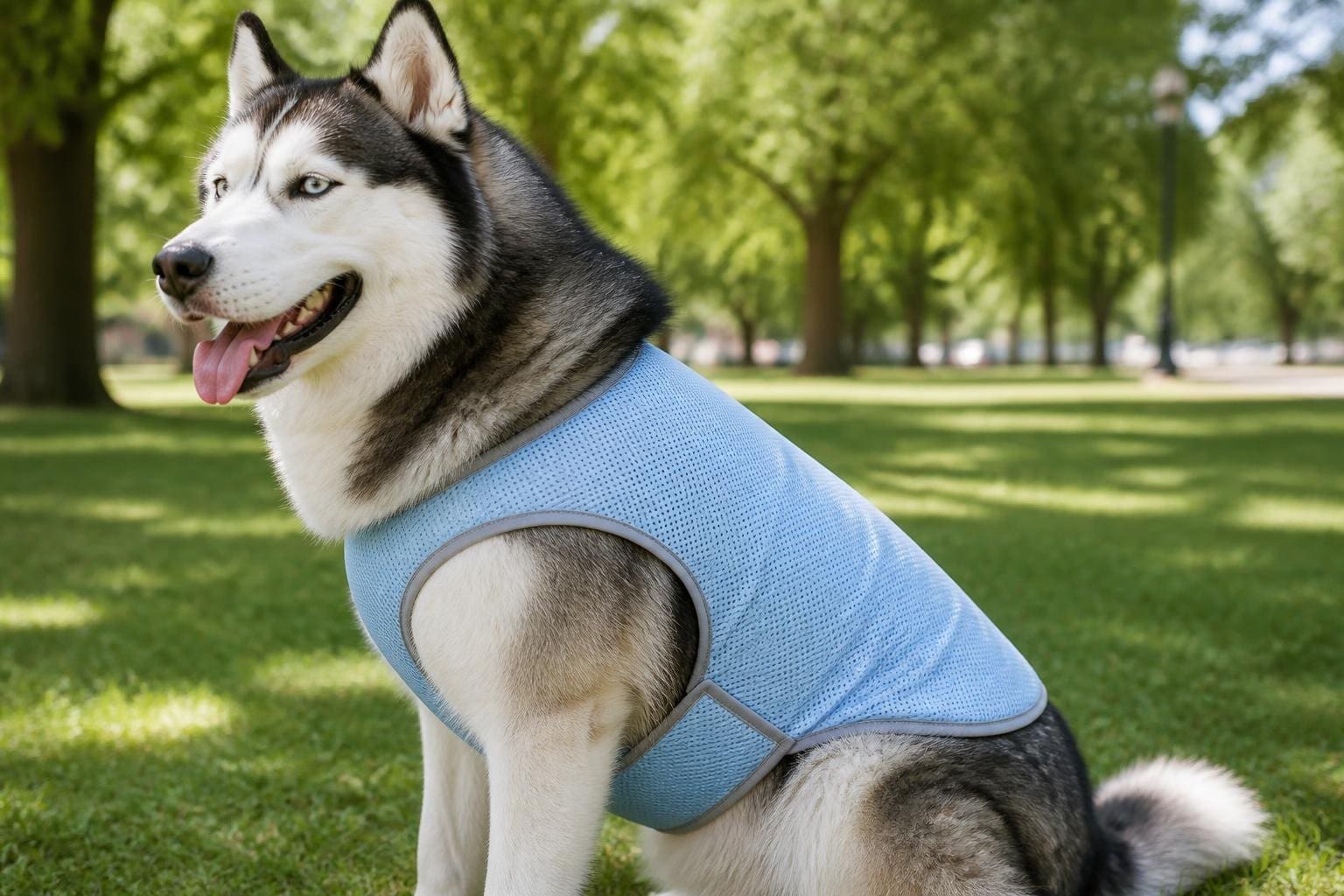
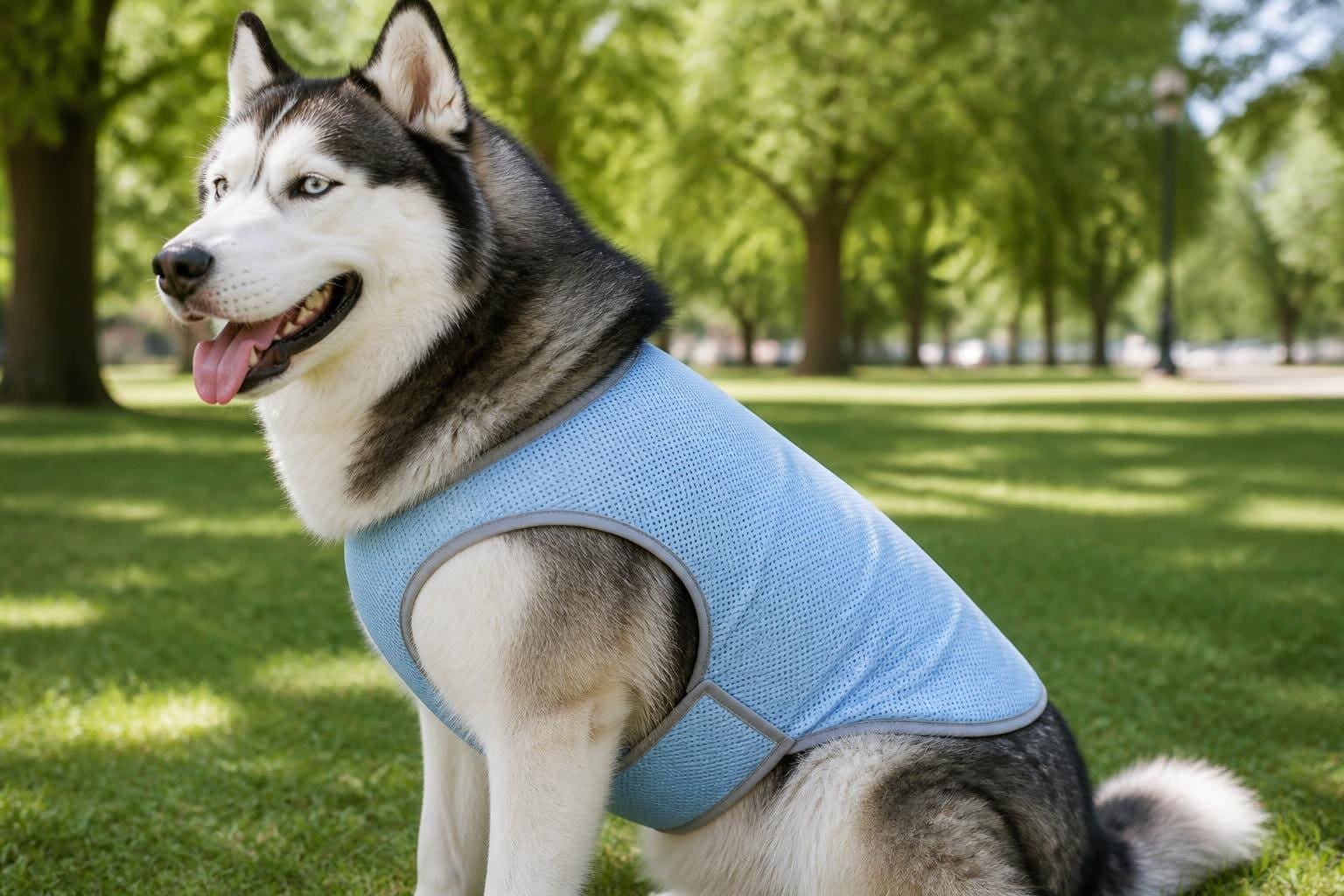
Double-coated breeds lose heat differently than single-coated dogs, and that affects which cooling technology, vest weight, and coverage pattern will actually help. An evaporative cooling vest works by holding water in its fabric and releasing it slowly as the moisture evaporates, pulling heat away from the surface.
An evaporation-based cooling vest is the most practical option for big dogs, but getting real results depends on how the vest interacts with a thick coat.
Why Thick Coats Change Cooling Performance
A double coat acts like insulation both ways. It slows heat gain from the sun, but it also slows heat loss from the body.
When you lay a cooling vest on top of that dense fur, there’s a buffer of trapped air between the vest’s cool surface and the dog’s skin. That buffer reduces the speed and efficiency of heat transfer.
This means an evaporative cooling vest on a Husky won’t feel as immediately effective as the same vest on a Boxer. You may need to lightly dampen the dog’s coat before placing the vest so that moisture reaches closer to the skin.
As noted in a guide from Furry Folly, dry fur acts as a thermal insulator that blocks the evaporative effect during the first critical minutes.
The vest still works, but you should expect a slower onset and plan for more frequent re-wetting.
When Lightweight Designs Beat Heavier Options
Gel-pack and ice-pack vests sound appealing because they start colder. The tradeoff is weight.
A gel vest in XL can add two to four pounds on top of an already-warm dog, creating extra strain on joints and restricting natural gait. For large double-coated breeds that already carry 60 to 120 pounds of body weight plus a heavy coat, a lightweight evaporative vest keeps things simple.
It adds minimal weight, allows full range of motion, and performs steadily for 20 to 45 minutes per wetting cycle. According to Whole Dog Journal, the best cooling vests for dogs are lightweight, breathable, loose-fitting, and light in color.
Anything heavy, tight, or dark just absorbs and holds more heat. Choose a lightweight design when your dog is active. Save heavier gel options for stationary rest in extreme heat.
When A Vest Helps And When It Will Not
A cooling vest helps during moderate-temperature walks, early morning or evening hikes, car travel, and outdoor rest. It lowers surface temperature and slows the rate of heat buildup.
It won’t protect your dog during midday exercise in 95°F heat with high humidity. In humid conditions, evaporation slows dramatically, and the vest loses most of its cooling effect.
It also can’t replace access to shade, fresh water, and rest breaks. Think of the vest as one layer in a heat-safety plan, not the entire plan.
Top Picks By Use Case
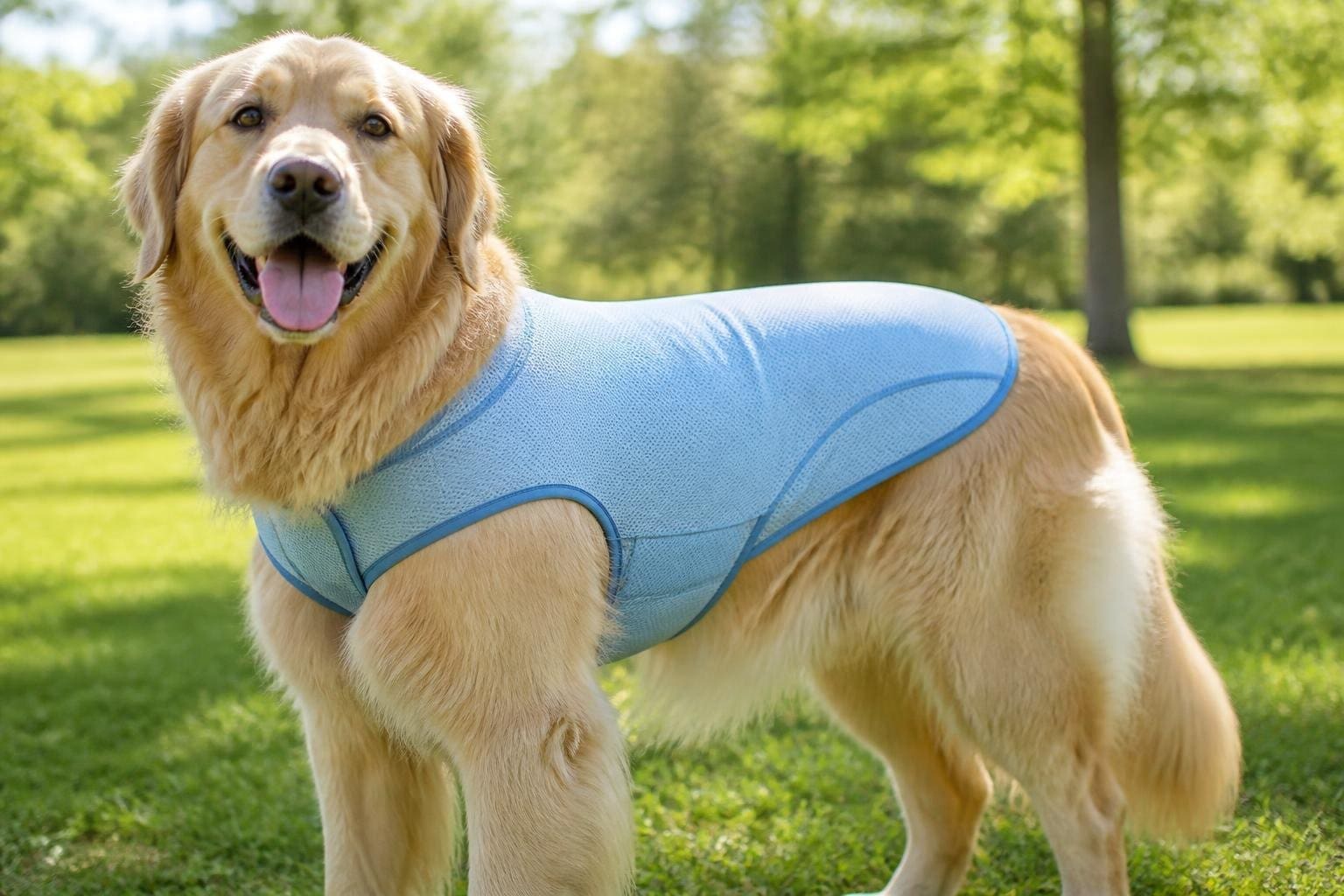
Each vest below was picked for how well it handles the specific challenges of large, double-coated dogs: weight on the coat, coverage over a broad chest, evaporative efficiency, and compatibility with harnesses or leash setups.
No single dog cooling vest wins every category, so the picks are organized by the way you’ll actually use them.
Best Overall For Hiking And Outdoor Use
The Ruffwear Swamp Cooler vest consistently stands out for active large dogs. The Ruffwear Swamp Cooler vest uses a three-layer evaporative design with a wicking outer layer, an absorbent middle, and a breathable inner layer that sits against the coat.
It holds water well without feeling heavy, and the Ruffwear Swamp Cooler Zip version adds a full-length zipper for easier on-and-off with big dogs. Coverage extends over the back and sides of the torso.
Side-release buckles and a leash portal make it compatible with most harnesses. For Golden Retrievers and German Shepherds on trail hikes, this is a reliable performer that balances cooling and mobility better than most competitors.
Best Lightweight Option For Frequent Walks
The DOGZSTUFF Dog Cooling Vest earns this spot for its minimal weight and soft evaporative fabric with UV protection. It pulls on like a shirt, which means less fuss during daily walk prep.
The fabric dries faster than thicker vests, so you’ll re-wet it more often on long outings. For 20- to 30-minute neighborhood walks with a Husky or Samoyed, the low bulk is a real advantage.
It’s one of the lightest evaporative options sized for large dogs and doesn’t trap heat the way some denser fabrics can.
Best Budget Pick For Big Dogs
The SGODA Dog Cooling Vest Harness offers solid performance at a lower price point. The SGODA dog cooling vest harness combines a cooling layer with a basic harness structure, which simplifies your setup.
Reflective strips add visibility on early morning or late evening walks. It doesn’t hold water quite as long as the Ruffwear, and the fit can run slightly narrow in the chest for barrel-chested breeds like Bernese Mountain Dogs.
Measure carefully. For the price, though, it’s a practical entry point if you want to test whether your dog tolerates a cooling vest before investing more.
Best Harness-Friendly Choice
The JUXZH Truelove Dog Cooling Vest is designed as a hybrid harness and cooling layer. It has an adjustable zipper closure and a D-ring leash attachment on top, so you don’t need a separate harness underneath.
For large double-coated dogs that already resist wearing multiple layers of gear, this two-in-one approach reduces bulk and fuss. The JUXZH Truelove dog cooling vest uses lightweight evaporative fabric and fits snugly without restricting shoulder movement.
As noted in reviews on Nature of Pets, the adjustable straps help accommodate the broader chests common in large breeds.
Best Alternative For Dogs That Dislike Bulk
The Canada Pooch Chill Seeker takes a slimmer profile approach. It provides less total coverage than a full vest but sits lighter and less noticeably on dogs that fuss with gear.
If your double-coated dog pulls at, bites, or tries to shake off bulkier vests, this is worth trying. The tradeoff is less surface area for evaporative cooling, which means less total heat reduction.
For calm walks in moderately warm weather, the lighter fit can still make a noticeable difference without the stress of a full-coverage vest your dog refuses to wear.
Features That Matter More Than Brand Hype
Marketing copy tends to blur the differences between dog cooling vests. The features below are the ones that actually change performance for large, double-coated dogs: weight distribution, construction layers, reflective fabric choices, and how the vest integrates with a cooling harness or leash system.
Weight, Coverage, And Mobility Tradeoffs
More coverage means more surface area for evaporation, which sounds like a clear win. But on a 90-pound German Shepherd with a full coat, a vest that wraps too far around the belly or sits too long over the hindquarters restricts natural movement.
The dog overheats faster because it can’t move freely. The sweet spot for large breeds is coverage from the base of the neck to just past the ribcage, with open sides or adjustable panels so the dog’s shoulders and hips stay unrestricted.
Aim for a vest that weighs under half a pound dry in an XL size. Every extra ounce adds up on a long hike.
Three-Layer Construction And Dry Touch Linings
The best cooling vests out there rely on three-layer construction: a heat-reflective outer shell that wicks moisture away, a middle layer that holds water, and an inner lining that stays pretty dry against your dog’s coat.
That dry-touch inner layer isn’t just a detail for double-coated breeds. A wet, heavy layer pressed right up against dense fur? That’s a recipe for matting, skin irritation, and trapped dampness long after the walk is over.
A review roundup from The Beloved Dog pointed out how three-layer fabric can keep dogs cool while the softer inner lining lets them move comfortably.
If you’re eyeing a vest that’s basically just a single absorbent layer, expect your dog’s coat to get wetter and the vest to dry out faster—less cooling, more mess.
Reflective Fabrics, UV Help, And Visibility
Light-colored, reflective fabric does two jobs: it bounces sunlight away from your dog and makes them easier to spot at dawn or dusk.
That’s a big deal if you’ve got a big dog out in low light. UV protection in the fabric sounds nice, but honestly, your dog’s double coat already blocks a lot of UV.
Reflective fabric has a bigger impact on heat absorption than UV-rated material alone. If you have to pick one, go with the reflective surface.
Harness Access, Buckles, And Leash Portals
If your dog wears a harness, the vest and the harness need to play nice together. Look for vests with a leash portal or a D-ring on top.
Or, pick a vest with side-release buckles and enough space to layer it over or under a harness. Vests that only pull over the head, with no buckles or zippers, are a nightmare on a 100-pound Malamute and don’t work well with front-clip harnesses.
Buckle closures at the chest or sides give you the most options—and save your back, honestly.
How To Measure For A Safe, Comfortable Fit
If a vest fits poorly, it bunches, shifts, or restricts your dog’s movement. Getting the right chest and neck measurements is what saves you from returns and wasted cash.
It’s a little trickier on a big, fluffy dog than on a sleek breed, but it’s worth the effort.
Chest Circumference And Neck Circumference Basics
Take a soft measuring tape and wrap it around the widest part of your dog’s ribcage, just behind the front legs. That’s your chest circumference, and it’s the most important number for sizing.
Keep the tape snug against the fur, but don’t squish it in. On double-coated dogs, pressing too deep can shave off an inch or more, and then you’ll end up with a vest that’s too small. For neck circumference, measure around the base of the neck where a collar sits naturally.
Canada Pooch’s sizing guide stresses that getting these numbers right is essential for the vest to actually work.
Jot both numbers down. Always compare them to the brand’s size chart—don’t trust those “for Huskies” or “for Labs” labels.
Where Large Dogs Usually Get Poor Fit
The most common fit issues for big, double-coated dogs:
- Too tight in the chest. Barrel-chested breeds (think Bernese Mountain Dogs, Newfoundlands) often fall between sizes. Go up a size and use the straps to snug things down.
- Too short in the torso. German Shepherds and Huskies have longer backs compared to their chest size. A vest that fits the chest might barely cover the body.
- Shoulder restriction. Rigid vests or those without stretch over the shoulders can mess with your dog’s stride. Watch them walk in the vest before you commit to a long adventure.
The Lucolove fit guide recommends measuring your dog while they’re standing naturally—not while sitting or flopped on the floor.
How To Layer A Vest Over Or Under A Harness
If you use a back-clip harness, it’s usually easiest to put the vest on first, then the harness over it. The harness straps help keep the vest in place.
For front-clip harnesses, look for vests with a leash portal or a cutout at the shoulders. That way, you can feed the harness through without bunching up the vest.
Don’t go overboard with layers. A thick harness plus a thick vest on top of a thick coat? That just traps heat. Keep each layer as slim as you can.
How To Use A Cooling Vest Effectively In Real Weather
A cooling vest only works if it stays wet and the weather allows for evaporation. That’s just the reality.
Knowing when and how to use one will keep your dog safer and your expectations in check.
Best Conditions For Evaporative Cooling
Evaporative cooling works best in dry heat with a bit of a breeze. If temps are between 75°F and 90°F and humidity is low to moderate, you’re in the sweet spot.
Even a light wind makes a big difference. If you’re hiking in the desert Southwest, these vests shine. Walks in the humid Southeast? Not so much.
When the air’s already heavy with moisture, evaporation slows down, and the vest can feel lukewarm pretty quickly.
How Often To Re-Wet During Walks Or Hikes
Plan to re-wet your dog’s vest every 20 to 40 minutes, depending on heat, humidity, wind, and how active your dog is. In really hot, dry conditions, it might dry out in under 20 minutes. On a breezy, milder day, you could get 45 minutes or so.
Bring a water bottle just for the vest. Pour water over the outer layer, then press it in. No need to soak it until it drips—just enough to re-saturate the middle layer.
Dogvills suggests wetting the vest before you put it on, then re-wetting as needed to keep the cooling cycle going.
Before each re-wet, dampen the fur under the vest too. It helps bridge the insulation gap that double coats can create.
Special Considerations For Humidity And Dark Coats
When humidity climbs above 70%, evaporative vests lose most of their punch. If you live somewhere muggy, try to walk early or late, keep outings short, and use the vest as a backup—not your only cooling strategy.
Dogs with dark coats (like black German Shepherds or sable Huskies) soak up more sun. A light or reflective vest helps bounce some of that heat away. On dark-coated dogs, the difference between a white or silver vest and a dark one can be huge in surface temperature.
Common Buying Mistakes With Big, Furry Dogs
Picking out a cooling vest for a big, double-coated dog comes with some easy-to-make mistakes. Even seasoned owners get tripped up here and there.
Choosing By Size Label Instead Of Measurements
“Large” means something different for every brand. One company’s Large is for a 55-pound dog; another’s is for a 75-pounder. Breed names on size charts? Not reliable.
Always use your dog’s actual chest and neck measurements and compare them to the manufacturer’s chart. If they’re between sizes, size up. A loose vest still cools. A tight vest can restrict breathing and trap heat—nobody wants that.
Assuming More Coverage Always Means Better Cooling
Full-body coverage sounds smart, but on double-coated dogs, too much fabric can backfire. Wrapping the belly can trap heat, since dogs release heat through their undersides. Covering the hindquarters just gets in the way.
The “sweet spot” is the upper back and sides of the ribcage. Rover.com reviews point out that as temps rise, large and heavy-coated breeds need a well-placed vest more than a full-coverage one that overheats them.
Treating Cooling Gear As Heat-Proofing
This is a big one. A cooling vest can lower your dog’s surface temp by a few degrees and slow heat buildup, but it’s not a magic shield against heatstroke.
If it’s over 90°F, humidity is high, or your dog’s working hard, the vest isn’t enough. Shade, water, breaks, and the willingness to call it quits early are still essential. Watch for heavy panting, drooling, glazed eyes, stumbling, or a dark red tongue—none of those are things a vest can fix.
Frequently Asked Questions
What features should I look for in a cooling vest for a large dog with a thick double coat?
Go for lightweight evaporative fabric, a three-layer build with a dry-touch lining, and adjustable buckles or zippers that fit a broad chest. A light, reflective outer layer helps with sun. Leash portal or D-ring? Definitely handy for harness users.
How do evaporative cooling vests compare to gel or phase-change cooling vests for heavy-coated breeds?
Evaporative vests are lighter, less restrictive, and better for active dogs. Gel and phase-change vests start off colder but are heavy and lose their chill quickly unless you can recharge them. For big, double-coated breeds, the weight of a gel vest can actually cause more heat stress than the initial cold helps, so lightweight evaporative styles are usually the better pick for outdoor stuff.
How do I measure my dog correctly to choose the right vest size and fit?
Measure your dog’s chest at the widest part behind the front legs, using a soft tape that’s snug but not pressing deep into the fur. Do the same for the neck, at the base. Match both numbers to the manufacturer’s size chart—skip breed or weight guesses.
How long does a cooling vest typically stay effective in hot weather, and how often should it be re-wetted?
Most evaporative vests stay cool for 20–45 minutes per wetting, depending on weather and activity. In hot, dry weather, re-wet every 20 minutes. Milder temps with a breeze? You might get 40–45 minutes before it dries out.
Are cooling vests safe to use during exercise, and what signs of overheating should I watch for?
They’re safe for moderate exercise in reasonable temps, but not a substitute for common sense in extreme heat. Watch for heavy panting, thick drool, bright red or dark gums, stumbling, or lethargy. If you spot any of these, stop, get to shade, offer water, and call your vet.
How should I clean and maintain a cooling vest to prevent odors and skin irritation?
After wearing your cooling vest, rinse it well with clean water. Hang it somewhere airy and let it dry out all the way before you stash it away.
Most evaporative vests can handle a gentle hand wash with some mild soap every now and then. Skip the fabric softener, bleach, or tossing it in the dryer—those just mess up the absorbent parts.
Whatever you do, don’t shove a damp vest into a sealed bag. That’s just asking for mildew and nasty smells. Always make sure it’s bone dry before you pack it up.