


The information in this article is for educational and informational purposes only. It is not intended as veterinary advice, diagnosis, or treatment for any medical or health issue your pet may have.
Always consult a licensed veterinarian before making any decisions about your pet’s health, diet, medications, supplements, training, or care. Never disregard or delay professional veterinary advice based on content from this website.
BarkleyAndPaws.com and its authors assume no responsibility or liability for any errors, omissions, or outcomes resulting from the use of this information.
The first time your rescue dog sees a crate, they are not seeing your good intentions. They are seeing a strange box, a closed door, and a situation they may or may not trust yet. That is why learning how to crate train a rescue dog is less about the crate itself and more about helping a dog feel safe, predictable, and in control.
For some rescue dogs, crate training goes surprisingly fast. For others, especially dogs with a history of neglect, confinement, or separation distress, the process takes patience and a lighter touch. The goal is not to force compliance. The goal is to create a calm space your dog can accept and eventually choose.
Why crate training can help rescue dogs
Used thoughtfully, a crate can become a bedroom, a decompression zone, and a way to prevent accidents or destructive behavior while your dog settles in. Many newly adopted dogs are adjusting to a new home, new smells, new people, and a completely different routine. A crate can cut down on that chaos.
It also helps with management. If your dog is not yet house trained, chews when stressed, or gets overstimulated easily, a crate gives you a safe option when direct supervision is not possible. According to the American Kennel Club, crate training can support both house training and routine building when introduced gradually and positively.
That said, crate training is not the right fix for every issue. If your rescue dog shows true panic in confinement, severe separation anxiety, or a history that suggests crate trauma, trying to push through can make things worse. In those cases, your best next step is behavior support from your veterinarian or a qualified trainer.
Start with the right crate setup
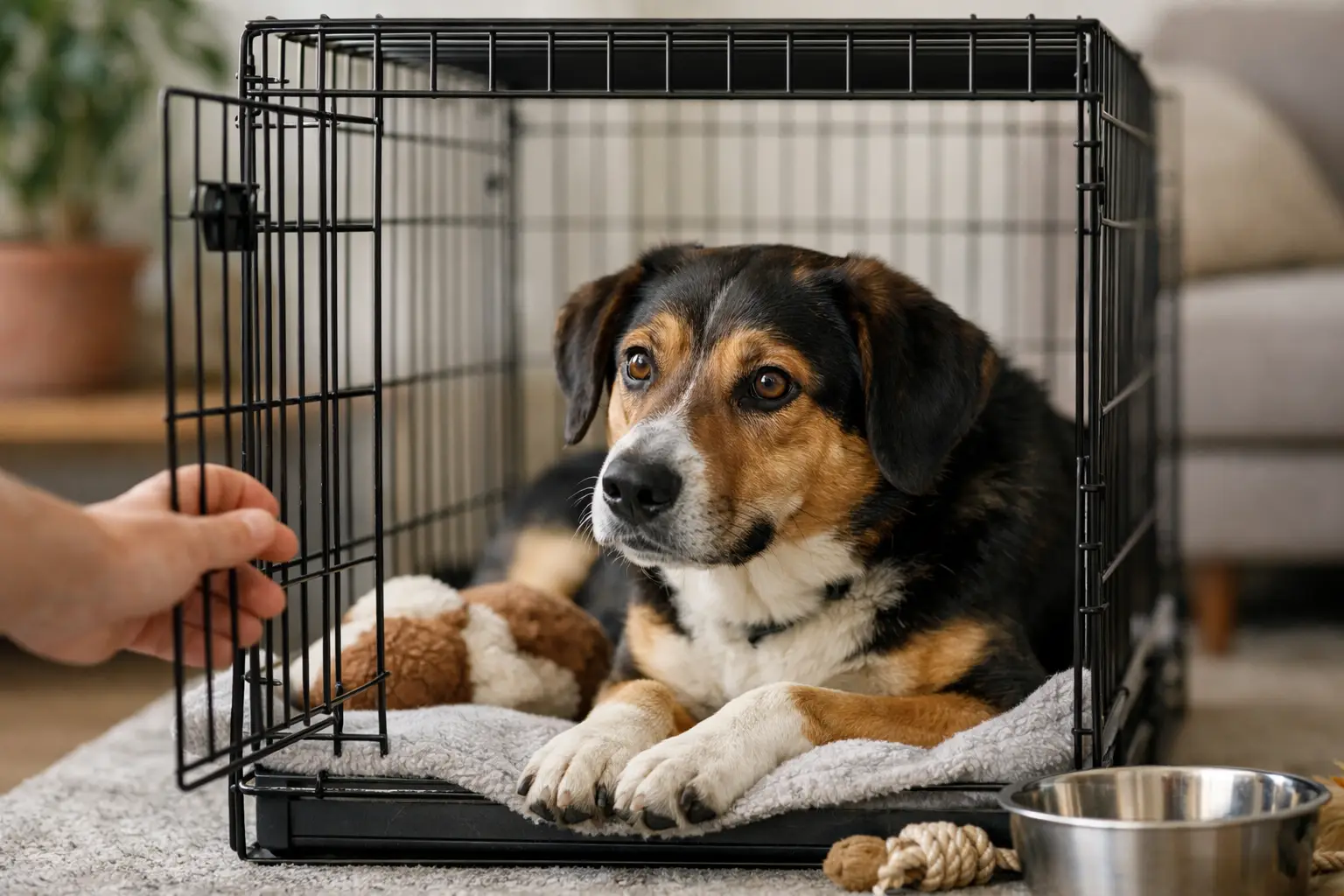
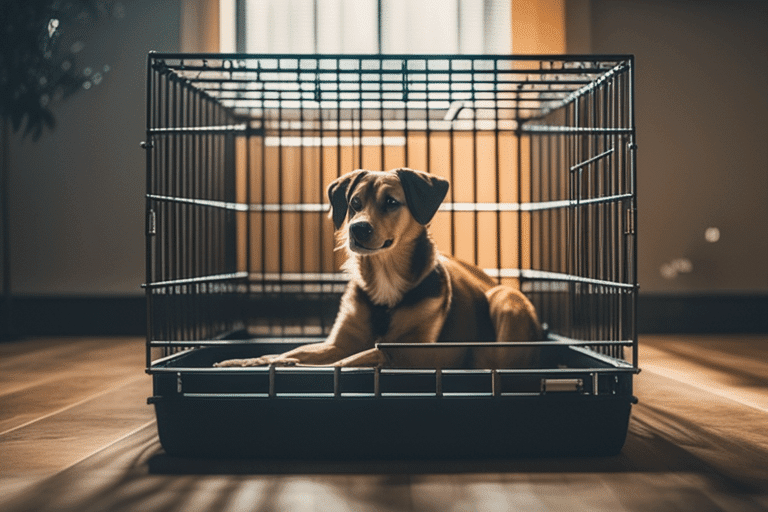
Before training starts, make the crate feel comfortable and low-pressure. Choose a crate large enough for your dog to stand up, turn around, and lie down comfortably, but not so large that one side becomes a bathroom corner. Wire crates work well for airflow and visibility, while plastic crates can feel more enclosed and den-like for some dogs. It depends on the dog.
Place the crate in a part of the home where your dog can feel included without being overwhelmed. A quiet corner of the living room often works better than an isolated laundry room or a busy hallway. Add a soft bed if your dog is not likely to shred it, and consider covering part of the crate with a blanket if your dog relaxes better with less visual stimulation.
Keep the door open at first. That matters. A rescue dog should be able to investigate the crate without feeling trapped.
How to crate train a rescue dog without creating fear
The fastest way to make a crate feel scary is to use it only when you are leaving, frustrated, or trying to stop unwanted behavior. The better approach is to build positive associations in tiny, manageable steps.
Start by tossing a few treats just outside the crate, then just inside the entrance. Let your dog go in and come back out. Do not shut the door. Do not push them in. Let them choose. If they only stretch their neck inside at first, that still counts as progress.
Next, feed meals near the crate and then inside the crate if your dog is comfortable. Food changes the emotional picture. The crate begins to predict something good instead of something uncertain. You can also place a stuffed food toy or long-lasting chew inside so your dog spends a little more time there voluntarily.
Once your dog is entering willingly, begin closing the door for a second or two while they eat or enjoy a treat, then open it before they become worried. Over several sessions, extend the time slowly. If your dog stiffens, whines, paws frantically, or stops eating, you moved too fast.
This part is where many owners get stuck. They wait for the dog to “get used to it” while the dog is already over threshold. Rescue dogs often need a slower pace than puppies raised in stable homes. Slow is not failing. Slow is usually what works.
Build duration in small steps
Once your dog can stay relaxed in the crate with the door closed for a minute or two, start adding a little distance and time. Sit nearby at first. Then stand up, walk a few steps away, and come back. Then leave the room briefly and return before your dog gets distressed.
Think of crate time as a skill you are layering. First comes entering the crate. Then staying with the door closed. Then staying while you move. Then staying while you leave briefly. Trying to skip ahead usually backfires.
A calm release matters too. Do not open the crate door the second your dog starts barking or scratching, or you risk teaching that noise gets them out. Wait for a brief pause, then open the door casually. No big emotional reunion, just a quiet release.
How long should a rescue dog stay in a crate?
This depends on age, bladder control, energy level, and emotional comfort. A newly adopted adult dog may handle short crate sessions well during the day, but that does not mean they are ready for several hours alone right away. Puppies, senior dogs, and dogs still learning house training usually need more frequent breaks.
As a general rule, crates are best used for short management periods, sleep, and downtime, not as an all-day holding space. The Humane World for Animals advises against excessive crate use and emphasizes that dogs need exercise, social contact, and mental stimulation outside the crate.
At night, many rescue dogs do well with the crate near your bed for the first week or two. Your presence can help them settle, and you will hear if they need a bathroom break. During the day, balance crate practice with walks, training games, sniffing time, and rest.
Common setbacks when crate training a rescue dog
Even if you follow every step carefully, rescue dogs can hit bumps in the road. A dog who was fine yesterday may protest today after a stressful event, a vet visit, or a big change in routine. Regression does not always mean the crate is wrong. Sometimes it means your dog needs an easier version of the plan for a few days.
Whining can be tricky to interpret. Some dogs whine briefly because they are settling. Others are signaling rising panic. Listen to the whole picture. A dog who lies down after a minute is different from a dog who is panting hard, drooling, biting the bars, or trying to escape. The ASPCA notes that dogs showing intense distress in a crate may be dealing with separation anxiety rather than a simple training gap.
If your dog has a full panic response, stop using the crate as a closed confinement tool until you get professional guidance. Safety comes first. Dogs can injure teeth, nails, and paws trying to break out.
When a crate may not be the best fit
Some rescue dogs never truly love crates, and that is okay. Success does not have to mean your dog happily naps in a crate for hours. It may simply mean they can tolerate it for car travel, vet recovery, or short periods when needed.
If your dog consistently does better with a gated room, exercise pen, or dog-proofed small space, that can be a perfectly reasonable management choice. The point is to create safety without adding fear. Crate training is useful, but it is not a moral requirement of dog ownership.
Practical tips that make the process easier
Keep sessions short enough that your dog succeeds. Use high-value treats your dog only gets around the crate. Practice when your dog is tired, not when they are bursting with energy. Maintain a predictable routine so crate time does not feel random or threatening. And avoid using the crate as punishment, even once, because rescue dogs tend to remember emotional context very clearly.
If multiple people in the home are involved, make sure everyone follows the same approach. Mixed signals slow things down. One person patiently building trust and another person shoving the dog inside will undo progress fast.
For especially sensitive dogs, pairing the crate with calming background noise, a worn T-shirt that smells like you, or a consistent pre-crate routine can help. These are not magic fixes, but they can lower stress enough for learning to happen.
Learning how to crate train a rescue dog asks you to think like both a teacher and a teammate. You are not trying to win a battle of wills. You are showing a dog, one calm repetition at a time, that this new home can be predictable, safe, and kind.