


The information in this article is for educational and informational purposes only. It is not intended as veterinary advice, diagnosis, or treatment for any medical or health issue your pet may have.
Always consult a licensed veterinarian before making any decisions about your pet’s health, diet, medications, supplements, training, or care. Never disregard or delay professional veterinary advice based on content from this website.
BarkleyAndPaws.com and its authors assume no responsibility or liability for any errors, omissions, or outcomes resulting from the use of this information.
A cat who hooks your sweater, kneads your lap like a tiny excavator, or gets stuck on the carpet is usually telling you the same thing – those nails are getting long. If you have been wondering how to trim cat nails safely without turning it into a wrestling match, the good news is that most cats can learn to tolerate nail trims when the process is calm, brief, and predictable.
For many owners, the hardest part is not the clipping itself. It is the fear of hurting the cat, cutting too far, or creating a bad experience that makes the next attempt worse. A careful trim helps protect your furniture and skin, but more importantly, it can prevent overgrown nails from snagging, splitting, or even curling into the paw in severe cases.
Why nail trimming matters
Indoor cats still need regular nail care. Scratching posts help shed the outer nail layers and support natural behavior, but they do not always keep nails short enough on their own. Kittens often have needle-sharp tips, active adult cats can develop hooks, and senior cats may be less active and wear their nails down less effectively.
Long nails are not just a cosmetic issue. They can catch on blankets, upholstery, or carpet and put stress on the toe. In older cats, thickened or curved nails can become uncomfortable if they are not checked routinely. That is one reason many veterinarians recommend getting cats used to paw handling early, even if trims are only needed every few weeks.
What you need before you start
The best setup is simple. Use cat nail clippers or small pet nail trimmers that feel comfortable in your hand, keep a towel nearby, and have styptic powder or cornstarch available in case you accidentally nick the quick. Good lighting matters more than people realize. If you cannot clearly see the nail, you are more likely to guess.
Treats also help, especially for beginners. A high-value reward can shift the cat’s attention from restraint to payoff. Some owners do best with a second person who offers treats while the other person clips, but many cats actually stay calmer with just one handler and less commotion.
If your cat has dark nails, the trim requires a little more caution because the quick is harder to see. That does not mean you cannot do it at home. It just means smaller trims are safer.

How to trim cat nails safely, step by step
Start when your cat is relaxed, not mid-zoomies and not right after a stressful event. Many cats are easiest to handle after a meal or during a sleepy part of the day. Sit in a comfortable spot and bring the cat into your lap or next to you rather than pinning them down on the floor.
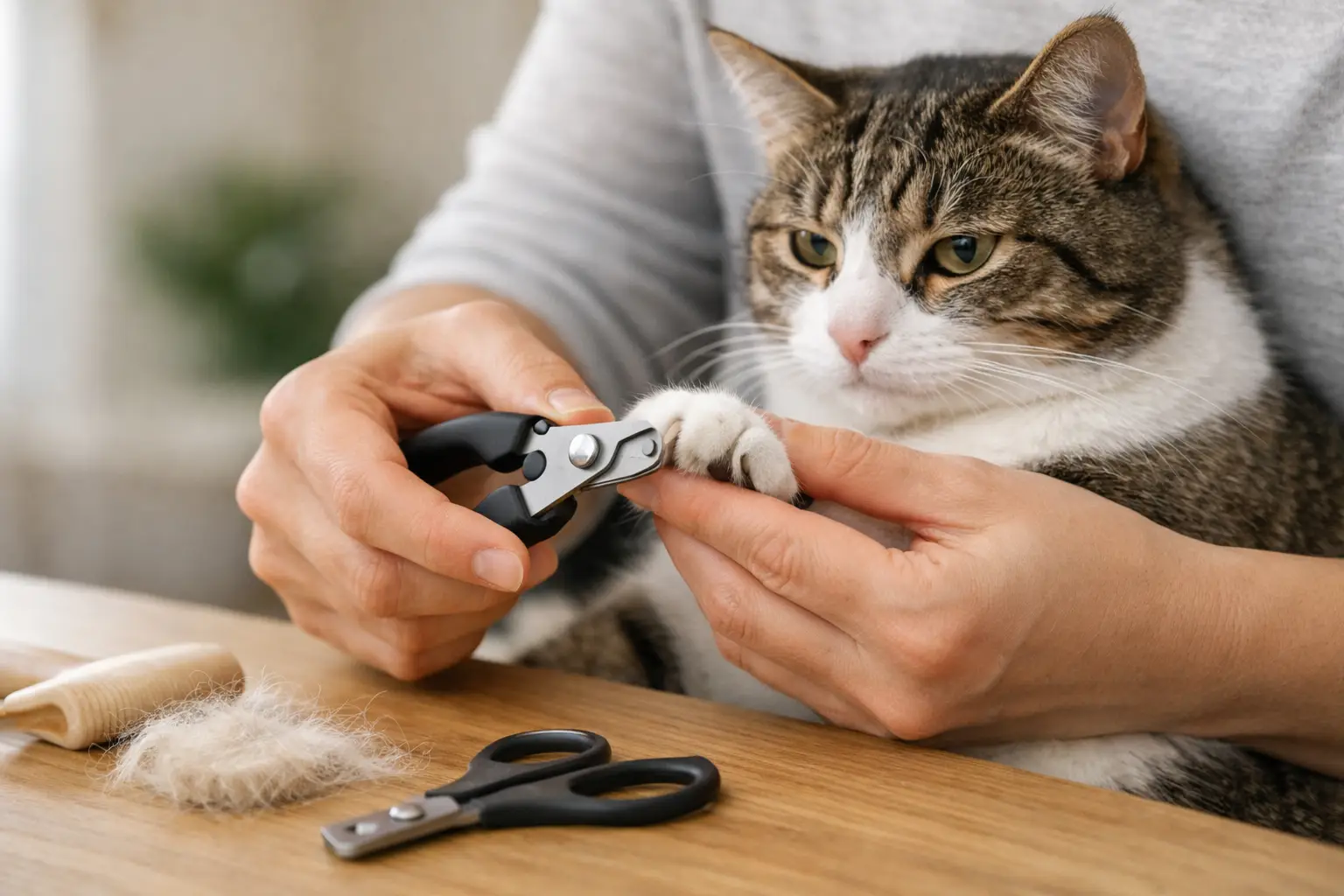
Hold one paw gently and press the toe pad and top of the toe together so the nail extends. On clear or light-colored nails, you will usually see a pink area inside the nail. That is the quick, which contains blood vessels and nerves. You only want to remove the sharp, curved tip in front of it.
Clip a small amount at a slight angle, following the natural shape of the nail. Do not try to take off too much at once. A modest trim is enough to remove the hook and make the nail less sharp. Then let go, praise your cat, and offer a treat.
If your cat stays calm, move on to the next nail. If not, stop after one or two. There is no prize for finishing every paw in one sitting. For many cats, especially during the learning phase, short successful sessions work better than ambitious ones.
How much should you cut?
Less than you think. With most cats, trimming just the pointed end is enough. If you can see the quick, stay well ahead of it. If you cannot, remove only the very tip. You can always trim again in a week if needed. You cannot undo cutting too far.
What if you cut the quick?
It happens, even to experienced owners. Your cat may jerk, vocalize, or pull away, and the nail may bleed. Stay calm. Apply styptic powder or a little cornstarch with gentle pressure until the bleeding stops. Then end the session and give your cat time to reset. One accidental nick does not mean you have failed, but it is a sign to take less off next time.
Reading your cat’s tolerance level
A safe nail trim depends as much on body language as technique. A cat who is purring and still may be fine, but a twitching tail, flattened ears, rippling skin, growling, or repeated attempts to yank the paw away mean the session is heading in the wrong direction.
That is your cue to pause. Pushing through when a cat is escalating often creates stronger resistance later. It is usually better to trim two nails today, three tomorrow, and the rest later than to force a full trim and lose trust.
Some cats prefer being wrapped loosely in a towel with one paw exposed. Others hate the feeling of restriction and do better sitting upright on a counter or in a lap. This is one of those areas where it depends on the individual cat. The safest method is the one that keeps both of you calm.
Common mistakes that make trimming harder
One common mistake is waiting until nails are obviously overgrown. By then, the trim feels more urgent, the nails may be thicker, and the cat is less likely to be used to handling. Routine maintenance is easier than catch-up grooming.
Another mistake is gripping the paw too tightly. Cats tend to resist force with more force. A gentle, steady hold usually works better than a firm restraining grip. The same goes for your voice. Calm and matter-of-fact beats soothing panic every time.
Owners also get into trouble by trying to trim all four paws in one go no matter what. Front nails usually need attention more often than back nails, and many cats tolerate front paw handling better. If your cat only allows the front nails this week, that is still progress.
How often should you trim?
Most indoor cats need a trim every two to four weeks, but there is no universal schedule. Kittens may need frequent trims because their nails are sharp and grow quickly. Some adult cats with strong scratching habits can go longer. Seniors often benefit from more regular checks because reduced activity can mean less natural wear.
A good rule is to look for hooked tips, snagging on fabric, or audible clicking on hard surfaces when the claws are partially extended. You do not need a perfect calendar. You need a habit of checking.
When not to do it yourself
Home trimming is not always the right call. If your cat becomes intensely fearful, aggressive, or impossible to handle safely, getting help from a veterinarian or professional groomer is the better option. The same goes for cats with injured paws, infected nail beds, unusually thick nails, or suspected pain.
Senior cats and cats with arthritis may dislike certain positions even if they are normally cooperative. In those cases, a gentler setup, shorter sessions, or veterinary guidance can make a big difference. If the nails are severely overgrown or curling toward the paw pad, do not wait.
Helping a cat learn to accept nail trims
If your cat hates nail trims, training starts when the clippers are nowhere in sight. Touch a paw briefly, reward, and stop. The next day, hold the paw for a second longer. Later, press a toe so the nail extends, reward again, and end the session. This gradual approach teaches your cat that paw handling does not automatically lead to a stressful event.
Once that feels easy, bring out the clippers and let your cat see and sniff them without using them. Reward that too. Then clip one nail and stop. From there, build tolerance slowly. At Barkley and Paws, we see this pattern again and again with routine care tasks – consistency usually beats force.
For kittens, this process is especially valuable. Early positive handling often turns nail trims into a minor chore instead of a recurring standoff. For adult rescue cats or nervous cats, progress may be slower, but small wins still count.
A few final practical tips
Trim before the nails get too sharp, keep sessions short, and do not aim for perfection. If your cat gives you three nails today, take the win. If another household member is better at handling or clipping, it is fine to divide the job.
And if you feel anxious, your cat will often notice. The more matter-of-fact you make the routine, the easier it becomes over time. A safe nail trim is not about speed or bravery. It is about calm repetition, good timing, and knowing when enough is enough.
With patience, most cats can learn that a quick paw check, a tiny clip, and a treat are simply part of life – and that is a much better outcome than waiting until every cuddle comes with claws.