


The information in this article is for educational and informational purposes only. It is not intended as veterinary advice, diagnosis, or treatment for any medical or health issue your pet may have.
Always consult a licensed veterinarian before making any decisions about your pet’s health, diet, medications, supplements, training, or care. Never disregard or delay professional veterinary advice based on content from this website.
BarkleyAndPaws.com and its authors assume no responsibility or liability for any errors, omissions, or outcomes resulting from the use of this information.
The debate over wet vs dry cat food usually starts the same way: your cat loves one, ignores the other, and somehow still acts like you have offered the wrong meal. Preference matters, but it is only one piece of the puzzle. The better choice depends on your cat’s age, health, hydration habits, weight goals, dental status, and your daily routine.
If you are trying to choose between canned food and kibble, the good news is that there is no single perfect answer for every cat. Some cats do best on wet food, some do well on dry, and many thrive on a mix of both. What matters most is feeding a complete and balanced diet that fits your cat as an individual.
Wet vs dry cat food: the biggest differences
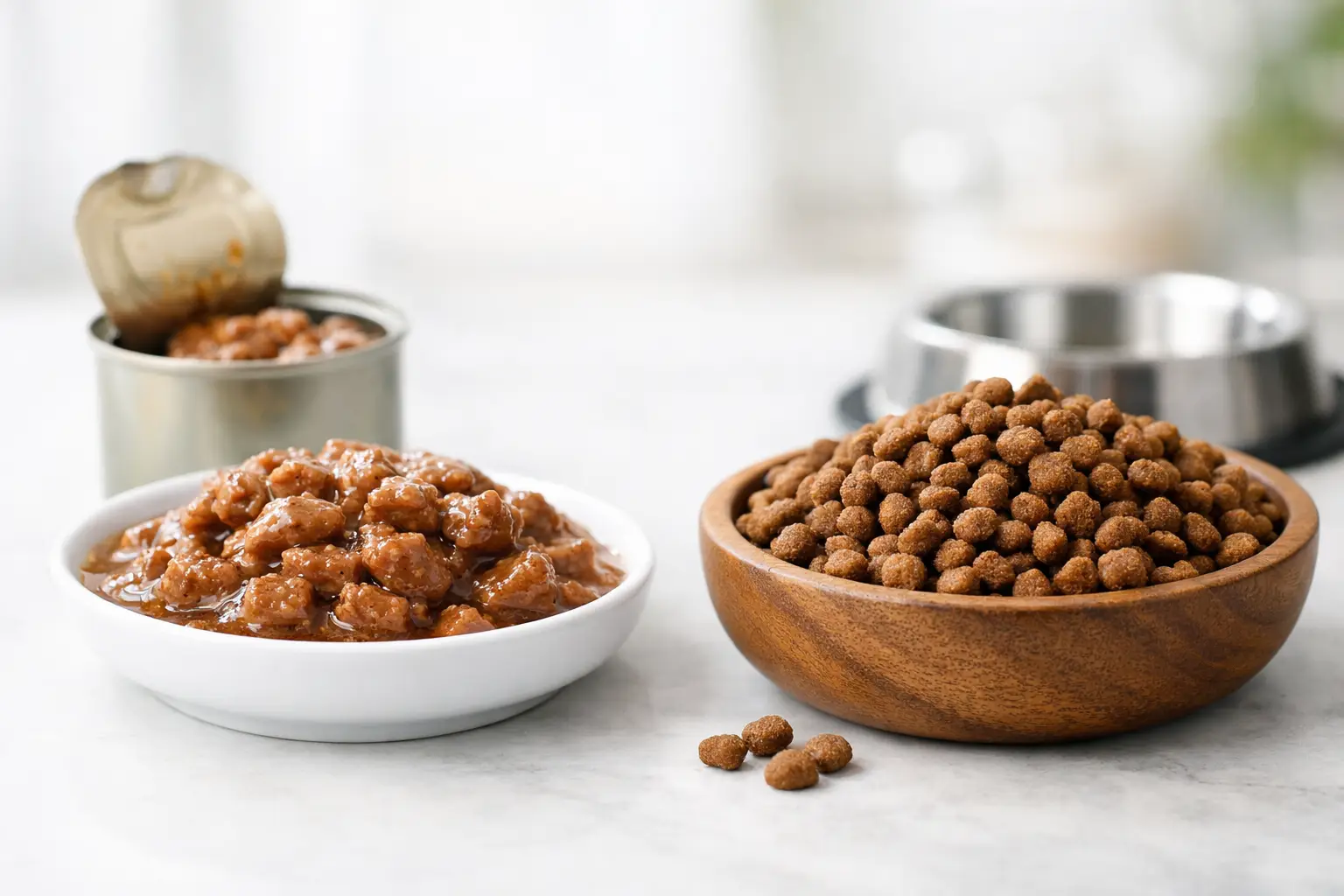
The most obvious difference is moisture. Wet cat food contains far more water than dry food, while kibble is much more concentrated. That changes how filling the food feels, how many calories fit into a cup, and how much water your cat gets from meals.
Wet food is typically richer in moisture and often more aromatic, which can make it easier to tempt picky eaters or cats with reduced appetites. Dry food is more convenient to store, serve, and measure. It also tends to cost less per day, especially in multi-cat households.
Texture is another major factor. Some cats strongly prefer the soft texture of pate, shreds, or gravy-based meals. Others like the crunch of kibble. If your cat has dental pain, missing teeth, or jaw discomfort, that preference can shift quickly.
When wet food may be the better choice
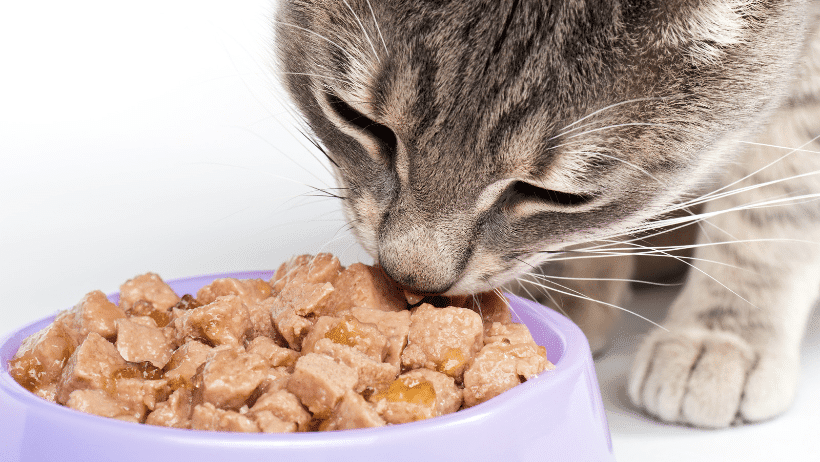
For many cats, wet food has one clear advantage: hydration. Cats naturally have a low thirst drive compared with some other pets, so they often benefit from getting extra water through food. This can be especially helpful for cats prone to urinary issues or those who simply do not drink much from their bowl or fountain.
Wet food can also help with weight control. Because it contains more water, it usually has fewer calories per ounce than dry food. That means some cats can eat a more satisfying volume of food while taking in fewer calories overall. For a cat that acts hungry all day, this can make portion control less frustrating for everyone.
It is also a practical option for senior cats, cats recovering from illness, and cats with poor appetites. The stronger smell and softer texture can make meals more appealing and easier to eat. In homes with kittens, wet food can be useful during transitions because it is easier to chew and often easier to mix with a regular feeding schedule.
The trade-off is convenience. Opened wet food needs refrigeration, leftovers cannot sit out for long, and feeding it regularly can cost more. If you are gone for long workdays, wet food is not always the easiest standalone option.
When dry food may be the better choice
Dry food works well for pet parents who need practicality. It is easy to portion, easy to store, and often more budget-friendly than feeding canned food exclusively. If you have multiple cats or need a feeding plan that fits a busy routine, kibble can be much easier to manage.
Dry food is also useful for cats who prefer to graze. While free-feeding is not ideal for every cat, especially those prone to weight gain, measured dry food can be convenient in puzzle feeders or timed feeders. That can support enrichment and make feeding schedules easier when you are not home.
Some owners assume dry food is better for dental health because it crunches, but that idea needs a little caution. Regular kibble is not the same as a dental diet designed to reduce tartar. Crunch alone does not reliably clean teeth, and many cats still need regular dental care regardless of what is in the bowl.
Dry food’s biggest drawback is that it is calorie-dense. A small portion can carry a lot of calories, which makes overfeeding easy. For indoor cats with lower activity levels, that can add up quickly.
Is wet or dry cat food healthier?
This is where wet vs dry cat food gets more nuanced. Neither format is automatically healthier. A high-quality wet food and a high-quality dry food can both be complete and balanced. The healthier choice is the one that matches your cat’s medical needs, body condition, and lifestyle.
For example, a cat with a history of urinary problems may benefit from the extra moisture in wet food. A healthy adult cat with no hydration issues may do very well on dry food if portions are appropriate and water intake is good. A diabetic cat, an overweight cat, or a cat with kidney concerns may need a more tailored conversation with a veterinarian.
The label matters more than the format alone. Look for a food that is complete and balanced for your cat’s life stage, whether that is growth, adult maintenance, or all life stages. Ingredients matter too, but not in the simplistic way marketing sometimes suggests. The overall nutritional profile is what counts.
Wet vs dry cat food for kittens, adults, and seniors
Kittens often do well with either format, as long as the food is formulated for growth. Wet food can be especially useful during weaning and early feeding because it is softer and easier to eat. Dry kitten food can also work well once chewing is comfortable and fresh water is always available.
Adult cats are where individual needs really take over. A lean, active adult cat that drinks well may thrive on dry food, wet food, or a combination. An indoor adult cat with a tendency to gain weight may do better with more wet food in the mix to help with satiety.
Senior cats can become pickier, drink less, or develop dental and medical issues that change feeding needs. Wet food often becomes more helpful with age, especially if chewing is uncomfortable or hydration is a concern. Still, many older cats continue doing well on dry food if they enjoy it and can eat it comfortably.
Should you feed a mix of wet and dry?
For many households, a mixed-feeding approach is the sweet spot. Wet food can help with hydration and meal satisfaction, while dry food adds convenience and often lowers overall cost. This setup can also give you more flexibility if your cat is selective or your schedule changes.
A common routine is wet food in the morning and evening, with a measured amount of dry food during the day. That said, mixing formats only works well if you stay aware of total calories. It is easy to accidentally overfeed when both canned food and kibble are offered.
If you go this route, treat the full day’s intake as one feeding plan, not separate snacks that do not count. Your veterinarian can help you estimate a daily calorie target if your cat needs weight management support.
Signs your cat’s current food may not be the right fit
Sometimes the question is not whether wet or dry is better in theory. It is whether your cat is doing well on the current diet. If you notice frequent vomiting, chronic loose stool, poor coat quality, ongoing weight gain, weight loss, low energy, or changes in thirst and urination, it is worth taking a closer look.
Feeding struggles can also be a clue. A cat that consistently leaves dry food untouched may prefer wet food, but pain, nausea, or dental disease can look like pickiness. A cat that inhales kibble and begs constantly may need a different calorie strategy, not just a bigger scoop.
Sudden appetite changes always deserve attention. Food preference can be quirky, but abrupt changes may point to a health issue rather than a flavor opinion.
How to choose the best option for your cat
Start with your cat, not the internet argument. Think about water intake, weight, age, activity level, medical history, and how realistic your feeding routine is. A food that looks ideal on paper but does not fit your budget or schedule is hard to stick with.
If your cat is healthy and your vet has no concerns, you can use practical questions to narrow the choice. Does your cat need help staying hydrated? Wet food deserves a serious look. Does your cat need scheduled meals while you are out of the house? Dry food may be easier to manage. Is weight control a challenge? Wet food or a mixed plan may help. Is cost a major factor? Dry food often stretches further.
If you want to switch foods, do it gradually over about a week unless your veterinarian advises otherwise. Slow transitions help reduce digestive upset and give your cat time to adjust to a new texture and smell.
The best feeding plan is the one that keeps your cat at a healthy weight, supports hydration, fits any medical needs, and is realistic for everyday life. Your cat does not need you to win the wet vs dry cat food debate. They need you to notice what helps them feel good, eat well, and stay healthy for the long haul.
If you are still torn, that is a good reason to ask your veterinarian for a recommendation based on your cat’s body condition and health history. A smart feeding choice does not have to be fancy. It just has to work for the cat waiting by the bowl.