

The information in this article is for educational and informational purposes only. It is not intended as veterinary advice, diagnosis, or treatment for any medical or health issue your pet may have.
Always consult a licensed veterinarian before making any decisions about your pet’s health, diet, medications, supplements, training, or care. Never disregard or delay professional veterinary advice based on content from this website.
BarkleyAndPaws.com and its authors assume no responsibility or liability for any errors, omissions, or outcomes resulting from the use of this information.
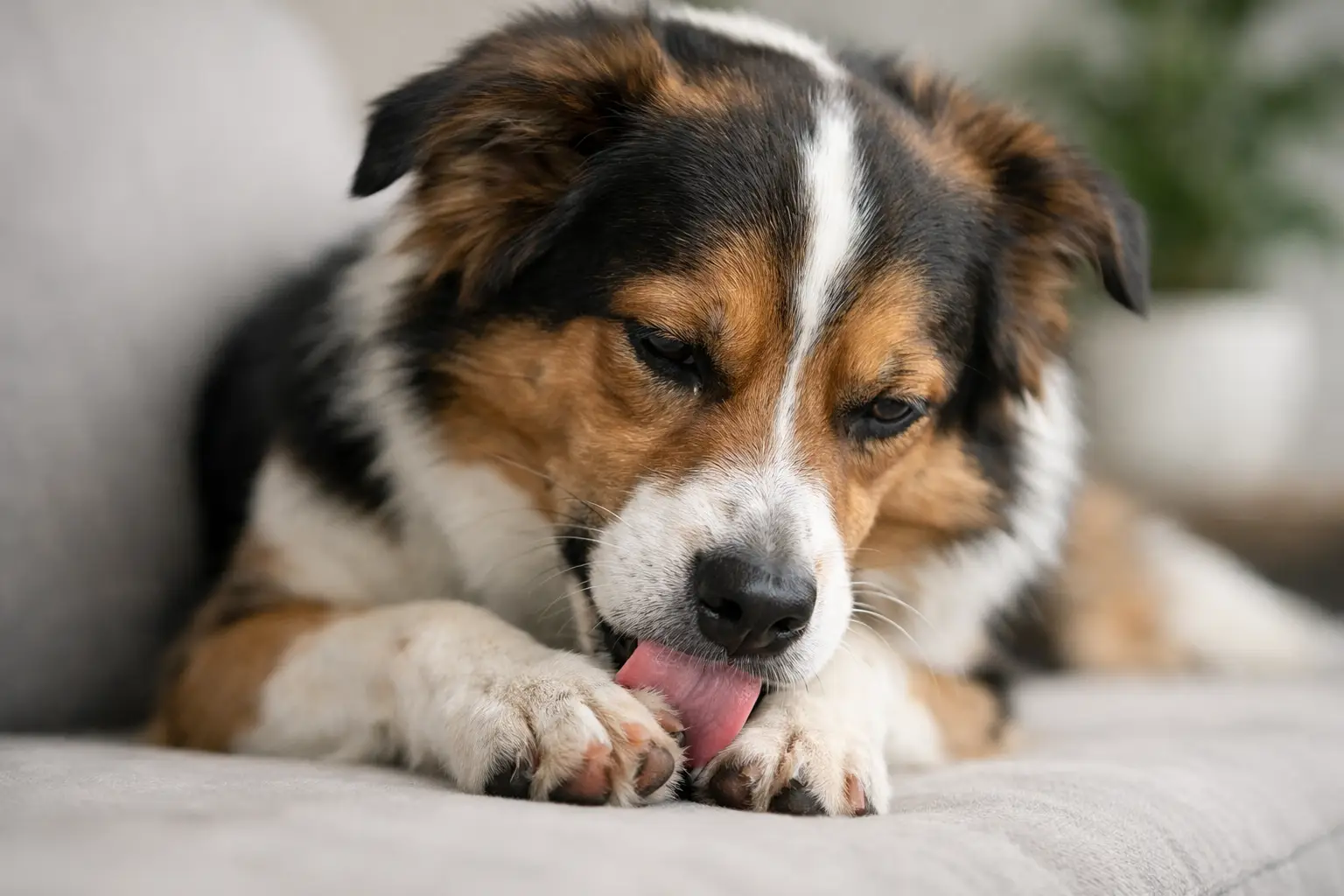
You glance over during a quiet evening and there it is again – lick, lick, lick. If you’ve been wondering why does my dog lick paws, the short answer is that paw licking can be completely harmless, or it can be your dog’s way of signaling discomfort. The trick is figuring out when it’s routine grooming and when it points to irritation, pain, allergies, or stress.
Most dogs lick their paws sometimes. A little licking after a walk, after eating, or during normal grooming is not unusual. What raises a flag is frequent, intense, or obsessive licking, especially if one paw gets all the attention or the skin starts to look red, damp, or irritated.
Why does my dog lick paws so much?
Paw licking usually falls into a few big categories: irritation on the skin, something painful in the paw, allergic reactions, parasites, or behavioral causes like boredom and anxiety. Sometimes the reason is obvious, like a thorn stuck between the toes. Other times it takes a little detective work.
Dogs experience the world through their feet more than many owners realize. Paws touch hot pavement, wet grass, lawn chemicals, road salt, rough trails, and whatever mystery substance is on the kitchen floor. If the skin barrier gets irritated, your dog may lick as a way to soothe the area. Unfortunately, constant licking adds moisture and friction, which can make the problem worse.
That cycle matters. A dog licks because the paw is itchy or sore, then the licking irritates the skin further, and now the dog has even more reason to keep licking.
Common medical reasons dogs lick their paws
Allergies are one of the most common explanations, especially if your dog licks multiple paws and the problem seems to come and go with the seasons. Environmental allergies, such as pollen, mold, grass, and dust mites, often show up on the skin and feet. Food allergies can also play a role, although they are less common than many owners assume.
If allergies are behind the licking, you might also notice itchy ears, face rubbing, recurrent skin infections, or red skin on the belly. The pattern can help. Seasonal flares often suggest environmental triggers, while year-round itchiness may point to indoor allergens or, in some cases, food sensitivities.
Infections are another frequent cause. Yeast and bacterial infections love warm, moist spaces, and the area between the toes is perfect for that. If your dog’s paws smell odd, look pink or rusty, or seem greasy, an infection may be developing. Licking can start the problem, but infection can also become the main reason it continues.
Pain is easy to miss. A cracked nail, small cut, splinter, foxtail, burn from hot pavement, or sore joint can all lead to licking. If your dog focuses on one paw only, limps, avoids putting weight on that foot, or pulls away when you touch it, pain should move higher on your list of suspects.
Parasites can be part of the picture too. Fleas, mites, and other skin irritants may trigger itching in the feet and legs. Even if you do not see fleas, a bite reaction can make some dogs intensely itchy.
Dry, damaged paw pads also matter. Winter salt, summer heat, rough terrain, and frequent exposure to cleaning products can all leave pads cracked or tender. In those cases, licking is less about itch and more about trying to comfort sore skin.
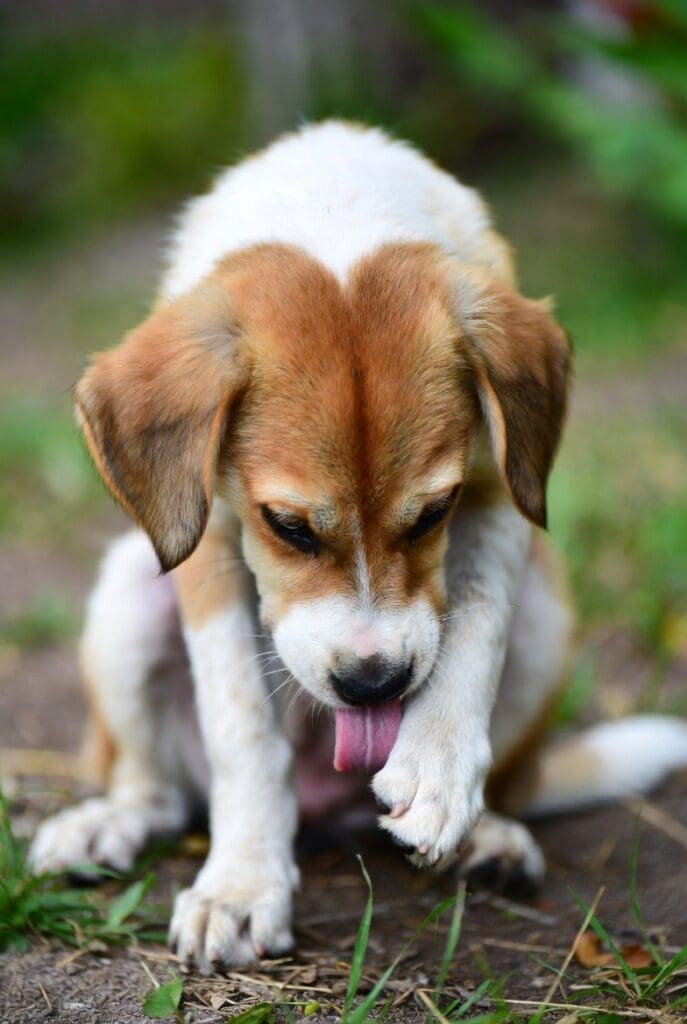
Behavioral paw licking is real too
Not every paw-licking dog has a skin disease. Some dogs lick from stress, frustration, boredom, or habit. This is more likely if the licking happens during downtime, after exciting events, or when your dog is left alone.
Behavior-based licking often has a repetitive, almost self-soothing quality. It may start with mild irritation or stress and then turn into a learned behavior. Dogs that are underexercised, under-stimulated, or prone to anxiety can settle into repeated licking because it releases tension.
This is where context matters. If your dog gets plenty of exercise, mental enrichment, and predictable routines but still can’t stop licking, medical causes should be ruled out first. If the vet clears physical issues, then it makes sense to look harder at stress and behavior.
What normal paw licking looks like
A healthy dog may briefly lick paws to clean off dirt, groom after a walk, or settle down before sleep. The licking is short, not frantic, and does not leave the fur wet for long. The skin stays normal in color, and your dog moves comfortably.
Problem licking is different. It tends to be frequent, hard to interrupt, or focused on one spot until the fur thins and the skin reddens. If you notice swelling, discharge, bleeding, limping, or a strong odor, it is no longer something to watch casually.
How to check your dog’s paws at home
Start with a calm, hands-on look in good light. Spread the toes gently and inspect the top and bottom of each paw. Look for stuck debris, tiny cuts, cracked pads, redness, swelling, broken nails, or anything embedded in the skin.
Pay attention to the fur between the toes. Damp, stained fur can suggest chronic licking. Red-brown discoloration is common because saliva stains light-colored hair. That tells you the behavior has been going on longer than you may have thought.
Think about recent exposures too. Did your dog just hike a rough trail, walk on salted sidewalks, spend time in a freshly mowed yard, or switch to a new floor cleaner? Those details help narrow down whether irritation is environmental.
When to call your veterinarian
If your dog has been licking for more than a couple of days, if the skin looks inflamed, or if the licking keeps returning, it is worth making an appointment. You should also call sooner if your dog is limping, crying, chewing at the paw, or refusing normal activity.
A vet visit is especially important when multiple paws are involved or when you see signs of infection. At that point, home care alone may not solve it. Allergies, yeast overgrowth, interdigital cysts, nail injuries, and foreign bodies often need treatment that targets the underlying cause rather than just the licking itself.
What you can do at home right now
If the paw looks mildly irritated but not severely injured, start simple. Wipe paws after walks to remove pollen, dirt, lawn residue, and salt. Dry them well, especially between the toes. For some dogs, this small habit makes a noticeable difference.
You can also reduce irritation by avoiding hot pavement, limiting time on treated lawns, and using dog boots when conditions are rough. If your dog’s pads seem dry or cracked, a pet-safe paw balm may help support the skin barrier.
Try not to let your dog lick nonstop while you are figuring things out. An Elizabethan collar or soft recovery cone can help break the lick-irritate-lick cycle if the skin is getting worse. Distraction helps too – offer a food puzzle, training session, sniff walk, or chew during the times your dog usually fixates on paws.
If stress seems part of the picture, look at the daily routine honestly. Many dogs need more mental work, not just more backyard time. Short training sessions, nose work games, chew outlets, and predictable exercise can lower repetitive behaviors. Still, it is smart not to assume anxiety too quickly. Paw licking from pain and allergies is often mistaken for a behavior problem.
Why does my dog lick paws at night?
Nighttime paw licking is common because the house gets quiet and there are fewer distractions. Minor irritation that your dog ignored all day may feel more noticeable when everything settles down. The same is true for boredom and anxiety.
If it mainly happens at night, think about the full day. Dogs who are inactive for long stretches may release that pent-up energy through repetitive licking in the evening. On the other hand, if nighttime licking comes with red paws, ear scratching, or face rubbing, allergies may still be the main issue.
The bottom line on paw licking
Paw licking is one of those behaviors that sounds minor until it isn’t. Sometimes it is just grooming. Sometimes it is the first visible clue that your dog is itchy, sore, or stressed. The best response is not to panic, but not to shrug it off either.
A quick paw check, a few smart routine changes, and early veterinary help when the licking persists can spare your dog a lot of discomfort. When you pay attention to the pattern, your dog’s paws usually tell you more than you think they will.