

The information in this article is for educational and informational purposes only. It is not intended as veterinary advice, diagnosis, or treatment for any medical or health issue your pet may have.
Always consult a licensed veterinarian before making any decisions about your pet’s health, diet, medications, supplements, training, or care. Never disregard or delay professional veterinary advice based on content from this website.
BarkleyAndPaws.com and its authors assume no responsibility or liability for any errors, omissions, or outcomes resulting from the use of this information.
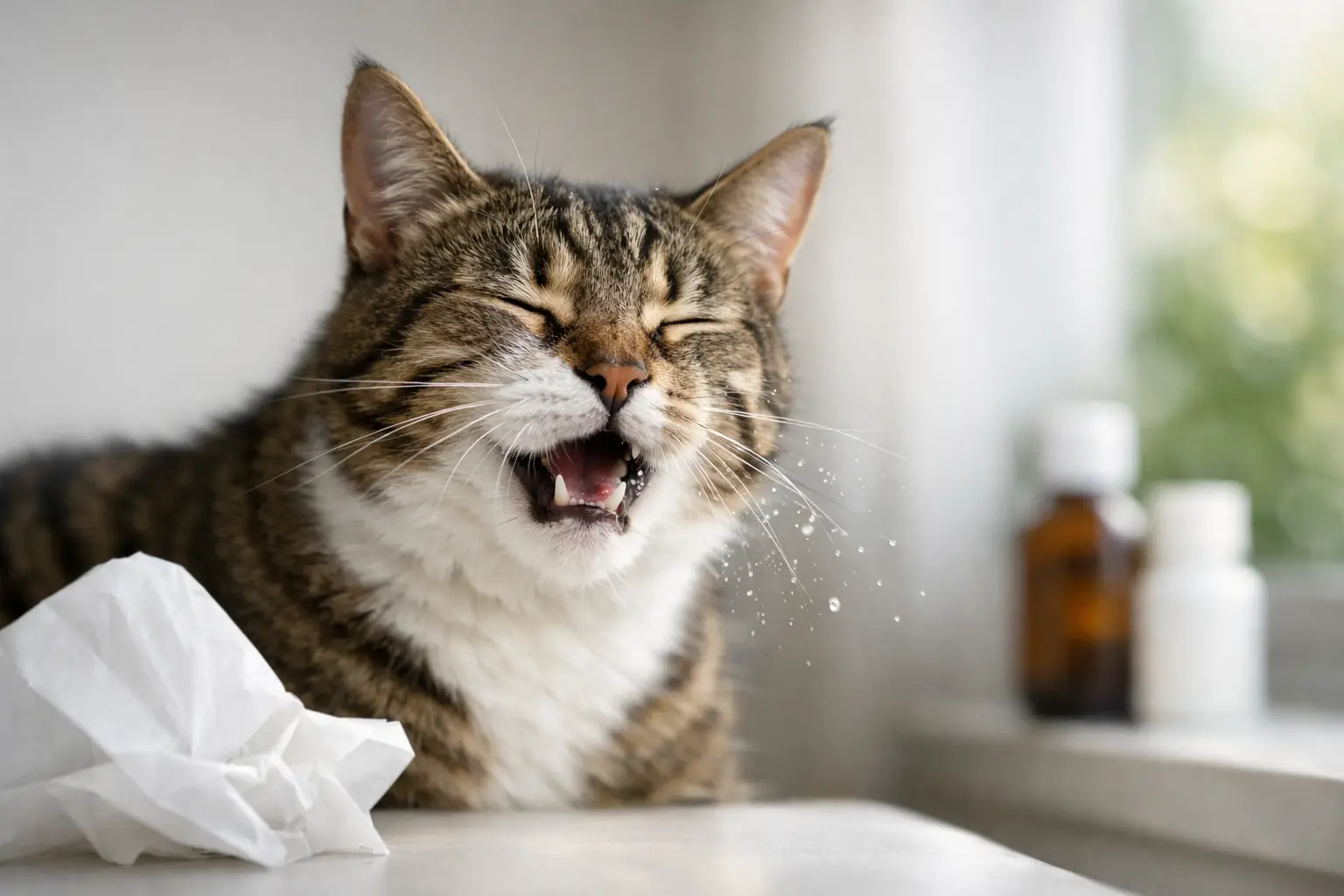
That sudden little achoo from your cat can be adorable once. Ten sneezes in a row, plus watery eyes or a runny nose, is a different story. If you’ve been asking, why is my cat sneezing, the answer ranges from harmless irritation to infections that need veterinary treatment.
A single sneeze now and then is usually no big deal. Cats, like people, can react to dust, strong smells, or something that briefly tickles the nose. What matters is the pattern. Frequent sneezing, especially when it shows up with congestion, low energy, poor appetite, or eye discharge, deserves a closer look.
Why is my cat sneezing all of a sudden?
Cats sneeze when the lining of the nose gets irritated. Sometimes that irritation is temporary, and sometimes it points to a larger issue affecting the upper respiratory tract. The most common causes fall into a few buckets: environmental irritants, viral infections, dental disease, allergies, and less commonly, something physically stuck in the nose or a growth inside the nasal passage.
Indoor cats are not automatically protected. Strong cleaning sprays, scented candles, dusty litter, smoke, and even perfume can trigger sneezing in a sensitive cat. If the sneezing started right after a new litter, air freshener, detergent, or home project, that timing matters.
In many cats, though, persistent sneezing is tied to an upper respiratory infection. These are especially common in kittens, shelter cats, newly adopted cats, or any cat that has been around other felines. Viral infections caused by feline herpesvirus and calicivirus are frequent culprits. Even after the first illness passes, some cats continue to have flare-ups during stress.
The most common causes of cat sneezing
Upper respiratory infections are high on the list because they’re so common. A cat with a URI may sneeze repeatedly and also have nasal discharge, squinty or goopy eyes, congestion, and less interest in food. Cats rely heavily on smell to eat, so a stuffy nose can make them seem picky when they really just can’t smell dinner.
Environmental irritation is another common explanation. Dusty litter is a big one. So are aerosol sprays, fireplace smoke, essential oil diffusers, and heavily fragranced products. If your cat sneezes but otherwise acts completely normal, the environment is worth reviewing first.
Dental problems can be surprisingly connected. The roots of some upper teeth sit close to the nasal passages, and infection there can irritate nearby tissue. This is more likely in older cats, especially if you’ve noticed bad breath, drooling, trouble chewing, or one-sided nasal discharge.
Allergies get blamed often, but true allergies are not the most common reason cats sneeze nonstop. They can happen, especially with environmental triggers like pollen, mold, or household dust, but infection and irritation are usually more likely than seasonal allergies alone.
Less often, a foreign object such as a grass blade can get lodged in the nose, or a polyp or tumor can affect the nasal passage. These causes are less common but more concerning, particularly if the sneezing is severe, persistent, or mostly on one side.
Signs your cat may have more than simple irritation
A healthy cat who sneezes once and moves on is different from a cat whose body language says, I don’t feel right. If sneezing comes with thick mucus, eye discharge, mouth breathing, fever, coughing, noisy breathing, or appetite loss, it’s no longer just an annoyance.
Pay attention to discharge color and frequency. Clear discharge can show up with irritation or early infection. Yellow, green, or bloody discharge is more concerning. Repeated sneezing fits, facial swelling, pawing at the nose, or bad breath also push this into vet territory.
Kittens, senior cats, and cats with chronic illnesses need quicker attention because they can get dehydrated and stop eating faster than healthy adult cats.
When should you worry about a sneezing cat?
The honest answer is: it depends on how often it’s happening and what else is going on. Sneezing for a day after a dusty cleaning session is different from sneezing every day for two weeks.
Call your vet promptly if your cat is sneezing and also not eating, breathing with effort, acting lethargic, or showing thick nasal or eye discharge. You should also make an appointment if the sneezing lasts more than a few days, keeps coming back, or is paired with weight loss or visible mouth pain.
There are also urgent red flags. Open-mouth breathing, blue or pale gums, severe facial swelling, or any major breathing struggle should be treated as an emergency.
What you can do at home first
If your cat seems comfortable and the sneezing is mild, a few practical changes can help. Start by removing obvious irritants. Skip scented sprays, candles, diffusers, and smoke exposure. If you recently changed litter, switch to an unscented low-dust option.
Humidity may help a congested cat feel better. Sitting with your cat in a steamy bathroom for 10 to 15 minutes can loosen secretions, as long as your cat stays calm. Make sure they keep drinking, and consider offering warmed wet food to make eating easier.
Gently wiping away nasal or eye discharge with a soft damp cloth can improve comfort. Beyond that, avoid home remedies that sound natural but can be dangerous. Essential oils, over-the-counter cold medicine, and human nasal products are not safe DIY treatments for cats.
What you should not do is wait too long if your cat stops eating. Cats can run into serious complications from going without enough food, even over a relatively short period.
How vets figure out why your cat is sneezing
Your vet will usually start with the basics: how long it has been happening, whether your cat goes outdoors, vaccine history, appetite changes, and whether there’s discharge from the nose or eyes. A physical exam can reveal congestion, fever, dental disease, oral ulcers, or swollen lymph nodes.
For a mild suspected viral infection, treatment may be supportive at first. For more stubborn or severe cases, your vet might recommend tests such as nasal or eye swabs, bloodwork, dental evaluation, or imaging. If a foreign body, polyp, or tumor is suspected, more advanced diagnostics may be needed.
Treatment depends on the cause. A simple irritant issue improves when the trigger is removed. Viral infections may need supportive care and sometimes medication for secondary bacterial infection. Dental disease can require cleaning or tooth extraction. Chronic herpes flare-ups may need longer-term management rather than a one-time fix.
Why some cats keep sneezing on and off
This is one of the most frustrating versions of the problem. Many cats recover from an upper respiratory infection but continue to have occasional flare-ups, especially if feline herpesvirus is involved. Stress, boarding, a move, a new pet, or illness can trigger symptoms again.
That does not always mean your cat is in danger, but it does mean recurring sneezing should be discussed with your vet. Repeated inflammation can make the nasal passages more sensitive over time, and chronic issues are easier to manage when you know the pattern.
Can cat sneezing be prevented?
You cannot prevent every sneeze, but you can lower the odds of ongoing problems. Keeping vaccinations current matters, especially for kittens and multi-cat households. Good ventilation, low-dust litter, regular dental care, and prompt attention to early cold-like symptoms also help.
If your cat has a history of respiratory flare-ups, consistency is useful. Sudden environmental changes, stress, and crowded pet exposure can all play a role. Clean food bowls, wash bedding regularly, and keep your cat’s living space as low-irritant as possible.
Some cats are simply more prone to nasal issues than others. Flat-faced breeds, cats with prior infections, and seniors may need a little more monitoring than the average healthy adult cat.
If you’re wondering why is my cat sneezing, the best next step is to look at the whole cat, not just the nose. A bright, playful cat with one random sneeze usually needs less concern than a cat who is congested, tired, and ignoring dinner. Trust the pattern, trust what you know about your cat’s normal behavior, and when something feels off, getting veterinary guidance early is often the kindest move.