

The information in this article is for educational and informational purposes only. It is not intended as veterinary advice, diagnosis, or treatment for any medical or health issue your pet may have.
Always consult a licensed veterinarian before making any decisions about your pet’s health, diet, medications, supplements, training, or care. Never disregard or delay professional veterinary advice based on content from this website.
BarkleyAndPaws.com and its authors assume no responsibility or liability for any errors, omissions, or outcomes resulting from the use of this information.
That eager stare starts the second you open a can. If you’ve ever wondered, can cats eat tuna, the short answer is yes – but that does not mean tuna should become a daily habit. Cats usually love the smell and taste, yet too much tuna can create nutritional gaps, digestive trouble, and longer-term health risks.
Tuna sits in an odd middle ground for cats. It is not automatically dangerous, and in small portions it can be a fine treat for many healthy adult cats. At the same time, it is not a complete cat food, and some forms are much better choices than others. The real question is not just whether cats can eat tuna, but how much, how often, and in what form.
Can cats eat tuna as a regular food?
Not really. Tuna should be treated as an occasional extra, not the foundation of your cat’s diet. Cats need a complete and balanced food that provides the right levels of taurine, vitamins, minerals, fatty acids, and protein. Plain tuna for humans does not reliably deliver that balance.
This matters more than many owners realize. A cat that fills up on tuna may eat less of their regular food, which can slowly lead to deficiencies. Cats are especially sensitive to nutritional imbalances because they are obligate carnivores with very specific dietary needs. A few bites now and then is one thing. Replacing meals with tuna is another.
If you are offering tuna-flavored cat food, that is a different situation. Commercial cat food labeled complete and balanced is formulated to meet feline nutritional needs, even when tuna is one of the main ingredients.
Why cats love tuna so much
Tuna has a strong smell, a rich taste, and a soft texture that many cats find irresistible. For picky eaters, that can make it tempting to use as a quick fix. A little tuna mixed into regular food may encourage a reluctant cat to eat, especially during stress or recovery from minor illness.
But there is a trade-off. Some cats become so enthusiastic about tuna that they start rejecting their normal food. Once that preference sets in, mealtime can turn into a negotiation. If your cat is already choosy, frequent tuna treats can make the problem worse.
When tuna is safe for cats
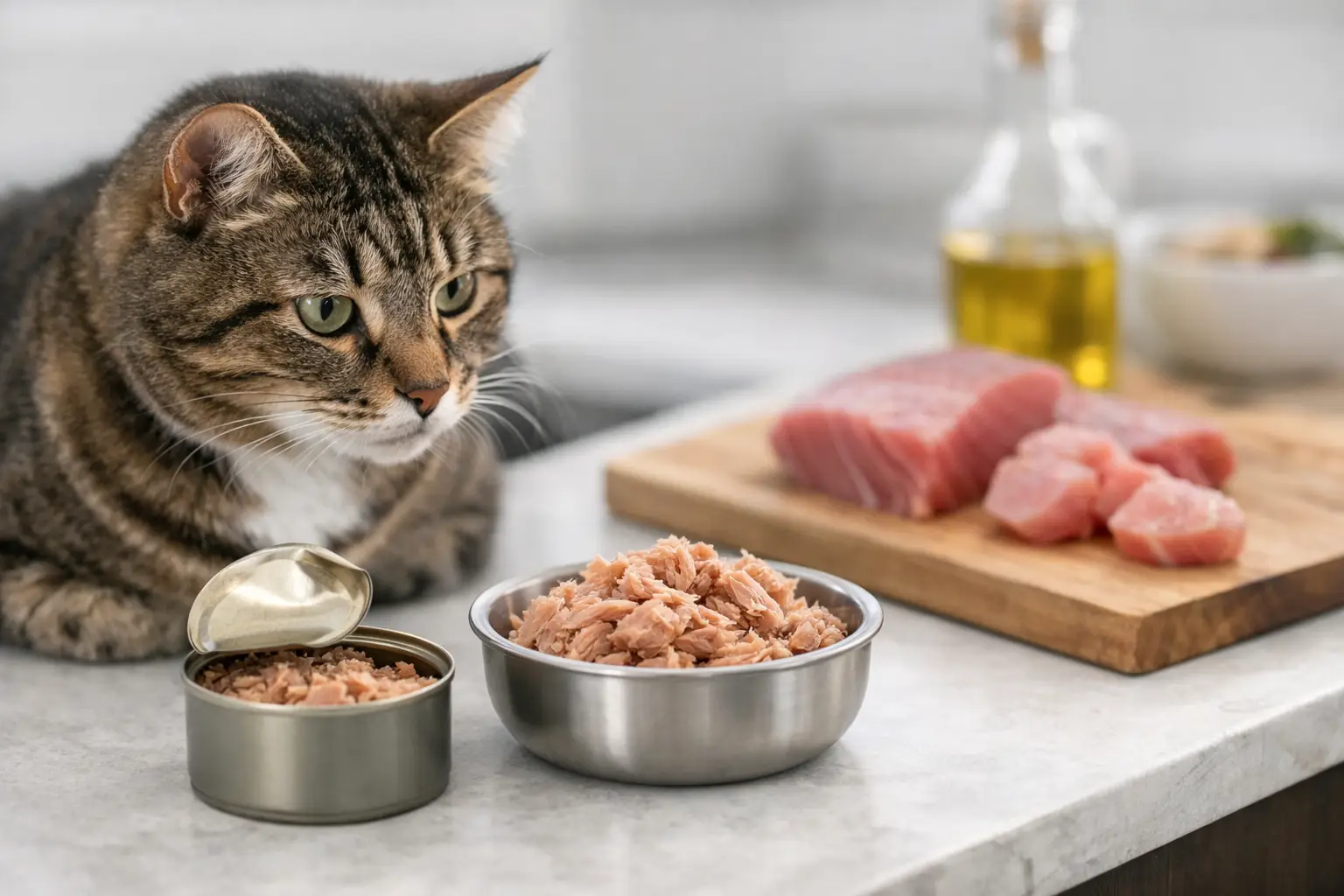
For most healthy adult cats, a small amount of plain, cooked tuna is generally safe as an occasional treat. Tuna packed in water is usually the best option if you are choosing canned tuna meant for people. It should be plain, with no added salt, seasonings, onions, garlic, or sauces.
Fresh cooked tuna can also work if it is fully cooked and served unseasoned. The portion should stay small. Think of tuna as a topper or treat, not a bowlful.
A practical rule is to keep treats, including tuna, to no more than 10 percent of your cat’s daily calories. For many cats, that means just a teaspoon or two at a time. Larger cats may tolerate a little more, but the point is moderation, not precision.
When tuna is not a good idea
There are several situations where tuna is a poor choice or should be avoided entirely.
Kittens should not be fed tuna regularly because they need carefully balanced nutrition to support growth. Cats with kidney disease, heart disease, food sensitivities, or a history of pancreatitis may also need stricter control over salt, fat, or specific proteins. If your cat is on a prescription diet, adding tuna can interfere with the purpose of that food.
Tuna packed in oil is another one to skip. The extra fat can upset your cat’s stomach, and oily foods are simply unnecessary for most pets. Tuna with added flavorings is also off the table. Ingredients that seem harmless to people can be irritating or unsafe for cats.
Raw tuna is not worth the risk either. Raw fish can carry bacteria or parasites, and some raw fish contains an enzyme called thiaminase that can break down thiamine, an essential B vitamin. Cooking reduces some of those concerns.
The biggest risks of feeding cats tuna
The main problem with tuna is not usually immediate poisoning. It is the pattern of overfeeding it.
Nutritional imbalance
A steady diet of tuna can crowd out complete cat food and leave your cat short on key nutrients. Over time, that can affect energy, skin and coat quality, organ function, and overall health.
Mercury exposure
Tuna is a larger fish, which means it can contain more mercury than many smaller species. A little tuna once in a while is unlikely to cause issues in most cats, but frequent or heavy feeding raises concern. This is one reason veterinarians often recommend keeping tuna as an occasional treat instead of a staple.
Too much sodium
Many canned tuna products for humans contain more sodium than a cat needs. Even when a product does not taste especially salty to you, it may still be high for a small animal. Cats with heart or kidney concerns are especially vulnerable here.
Digestive upset
Some cats handle tuna well. Others get vomiting, diarrhea, or soft stools after even a modest amount. Rich foods can also trigger stomach upset in sensitive cats.
Food fixation
This one sounds minor until you live with it. Cats can become obsessed with tuna and begin refusing balanced meals, begging more intensely, or raiding trash and countertops whenever fish is around.
What kind of tuna is best?
If you are going to share tuna, plain canned tuna in water is usually the simplest option. Drain it well and offer a very small amount. Chunk light tuna is often considered a better occasional choice than albacore because it generally contains less mercury, though the safest approach is still to feed sparingly.
Cooked fresh tuna is fine too, as long as it is plain. Skip seared tuna with oils, seasoning blends, garlic butter, or marinades. Those preparations are made for human taste, not feline safety.
Tuna salad should never be shared. Mayo, onion, garlic, extra salt, and other mix-ins make it a poor fit for cats.
How to serve tuna without causing problems
A little structure helps here. Offer tuna after your cat has already eaten some of their regular meal, not before. That lowers the chance that they will hold out for fish and ignore balanced food.
Start with a tiny portion, especially if your cat has never had tuna before. Watch for vomiting, diarrhea, itching, or unusual behavior over the next day. If your cat does well, you can keep tuna in the occasional-treat category.
Using tuna as a high-value reward can make sense in some situations. It can help with medication training, carrier training, or building trust with a shy cat. The key is using just enough to get the benefit without turning it into a daily extra.
Can cats eat tuna every day?
This is where the answer becomes much firmer. Cats should not eat tuna every day unless it is part of a complete and balanced cat food specifically formulated for regular feeding. Daily spoonfuls of canned tuna for humans may seem harmless, but over time they can create exactly the kind of imbalance and overexposure most owners want to avoid.
If your cat begs for tuna every day, it helps to separate interest from need. Cats are excellent at persuading people, and strong preferences can look like necessity. In most cases, what your cat needs is a nutritionally complete diet and a treat routine that stays small and predictable.
Better alternatives to tuna
If your cat loves meaty treats, there are safer ways to indulge that interest. Small amounts of plain cooked chicken or turkey often work well and may be easier on the stomach. Commercial cat treats can also be a better option when they are designed for feline nutrition and portion control.
For cats that like fish flavors, fish-based cat treats or complete fish-forward cat foods are often a smarter choice than sharing from your own can. You still want moderation, but the nutritional profile is usually more cat-appropriate.
Signs your cat has had too much tuna
Sometimes the warning signs are simple. Your cat may skip their regular food, throw up, or develop loose stool. In other cases, the pattern is behavioral. They may become fixated on people food, cry at the pantry, or reject meals unless something extra is mixed in.
If your cat eats a large amount of tuna once, monitor for stomach upset and call your veterinarian if anything seems off. If tuna has become a regular part of the diet and your cat seems unwell, it is worth discussing their overall nutrition with your vet rather than just removing the fish and hoping for the best.
The bottom line on can cats eat tuna
Can cats eat tuna? Yes, in small amounts and not too often. Plain tuna in water can be a reasonable treat for many healthy adult cats, but it should stay in the treat lane. It is not a substitute for complete cat food, and more is not better just because your cat acts like it is.
A good rule for pet parents is simple: keep tuna plain, keep the portion small, and keep it occasional. Your cat can enjoy the taste without letting a favorite snack push a healthy diet off course. When in doubt, your veterinarian can help you decide what fits your cat’s age, health, and eating habits best.