

The information in this article is for educational and informational purposes only. It is not intended as veterinary advice, diagnosis, or treatment for any medical or health issue your pet may have.
Always consult a licensed veterinarian before making any decisions about your pet’s health, diet, medications, supplements, training, or care. Never disregard or delay professional veterinary advice based on content from this website.
BarkleyAndPaws.com and its authors assume no responsibility or liability for any errors, omissions, or outcomes resulting from the use of this information.
Your cat skips breakfast, hides under the bed, and startles at sounds that never used to matter. Those small shifts can be easy to brush off, but signs of stress in cats often show up as changes in routine long before they look dramatic.
Cats are masters of subtle communication. A stressed cat may not cry for help in an obvious way. Instead, you might notice different litter box habits, extra grooming, less grooming, clinginess, aggression, or a sudden urge to disappear into the closet for half the day. Stress is not just a behavior issue, either. If it goes on too long, it can affect appetite, sleep, digestion, skin, and overall well-being.
Why stress in cats can look so different
Stress in cats is highly individual. One cat gets noisy and demanding. Another goes quiet and withdrawn. Some become reactive, while others seem sleepy or uninterested in everything around them. Age, personality, health status, home environment, and past experiences all shape how a cat responds.
That is why context matters. A shy rescue cat adjusting to a new apartment may show stress differently than a confident senior cat dealing with a new puppy in the house. The common thread is change – in behavior, body language, routine, or physical habits.
12 signs of stress in cats
1. Hiding more than usual
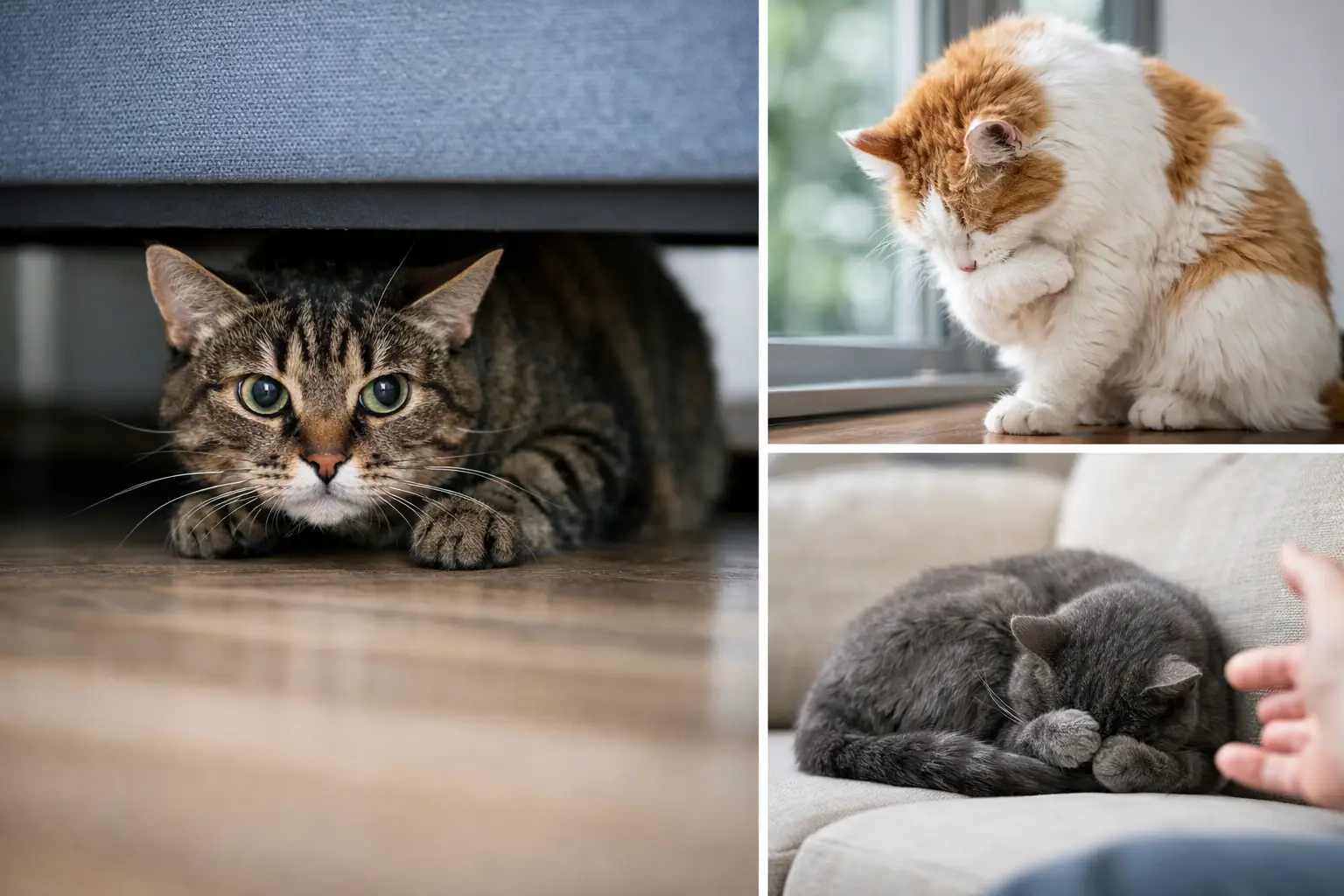
Most cats enjoy tucked-away sleeping spots, so hiding alone is not always a problem. The concern is a noticeable increase. If your cat suddenly spends most of the day under furniture, inside closets, or in places they never used to choose, stress may be part of the picture.
This often happens after a move, a new pet, visitors, loud construction, or conflict with another animal in the home. It can also happen with pain or illness, which is why ongoing hiding deserves a closer look.
2. Changes in appetite
A stressed cat may eat less, ignore treats, or stop showing interest at mealtime. Some cats do the opposite and begin begging more or eating fast, especially if stress disrupts their routine.
A short-term dip in appetite after a stressful event can happen. But if your cat refuses food, especially for more than a day, call your veterinarian. In cats, not eating can become serious quickly.
3. Litter box problems
One of the most frustrating signs for owners is urinating or defecating outside the litter box. Stress can absolutely trigger this, especially when there are conflicts between cats, changes in the home, or a litter box setup that no longer feels safe.
Still, this is one area where you should not assume behavior is the only cause. Urinary tract issues, constipation, arthritis, and other medical conditions can look like stress-related litter box trouble.
4. Overgrooming or less grooming
Some stressed cats lick themselves excessively, often on the belly, legs, or sides. Over time, this can lead to thin fur or bald patches. Others stop grooming enough and start to look unkempt, greasy, or flaky.
Either change suggests something is off. Stress is one possibility, but allergies, skin disease, pain, and other health concerns can also be involved.
5. Aggression or irritability
A cat that swats, bites, growls, or hisses more than usual may be feeling overwhelmed. Stress lowers tolerance. Things that were once manageable – being picked up, walking past another pet, hearing kids run through the room – can suddenly spark a bigger reaction.
This does not make your cat mean or spiteful. It usually means your cat feels unsafe, overstimulated, or unable to control the situation.
6. Increased vocalization
Some cats become more talkative when stressed. They may yowl at night, meow repeatedly, or make sounds that seem unusual for them. This is especially common during environmental changes or when a cat feels blocked from a preferred space or person.
Because vocal changes can also happen with pain, cognitive decline, and medical illness, it helps to look at the full picture rather than one symptom alone.
7. Withdrawal from people or pets
If your normally social cat starts avoiding attention, skipping favorite hangouts, or distancing themselves from another pet they usually tolerate, stress may be building.
Withdrawal can be subtle at first. A cat may still come out for meals but stop lounging near the family. They may choose higher perches, less trafficked rooms, or shorter interactions.
8. Restlessness and hypervigilance
A stressed cat may seem unable to settle. You might notice pacing, frequent scanning of the room, tail twitching, flattened ears, dilated pupils, or startling easily at ordinary sounds.
This kind of body language often means your cat is on alert. In multi-pet homes, it can be a clue that another animal is creating tension, even if you do not see open fighting.
9. Sleeping pattern changes
Cats sleep a lot, so this sign can be easy to miss. Stress may make some cats sleep more as a coping behavior, while others nap lightly and wake at every sound.
Pay attention to changes in where your cat sleeps too. A cat who no longer sleeps in their usual spots may be avoiding activity, noise, or another pet.
10. Scratching or marking more often
Stress can lead to more scratching on furniture, door frames, or specific household areas. Scratching is normal cat behavior, but a sudden increase can be a way to self-soothe and leave familiar scent cues.
Some cats also begin urine marking when they feel insecure about territory. This is particularly common after moving, seeing outdoor cats through windows, or introducing a new pet.
11. Digestive upset
Stress can affect the gut. You may see vomiting, loose stool, constipation, or a generally sensitive stomach during stressful periods. Short-term digestive changes do happen, but repeated symptoms always deserve medical guidance.
Cats with chronic stress may also cycle through flare-ups that seem random until you identify the trigger.
12. Clinginess or unusual dependence
Not every stressed cat hides. Some become more attached and follow their person from room to room, demand extra reassurance, or seem unable to relax alone.
This can be easy to mistake for affection, and sometimes it partly is. But if the behavior is sudden and paired with other changes, it may reflect anxiety rather than simple sociability.
Common triggers behind signs of stress in cats
Stress often starts with a disruption to predictability. Cats like control, routine, and clear access to what they need. When that balance shifts, stress follows.
Common triggers include moving, remodeling, travel, guests, a new baby, a new pet, conflict with another cat, changes in litter or food, loud noises, boredom, lack of vertical space, and not having enough safe resting areas. Even positive changes can be stressful at first.
Medical discomfort can also act like a stress trigger or make stress worse. A cat with arthritis, dental pain, bladder inflammation, or digestive issues may seem behaviorally off when the root issue is physical.
When stress might actually be a medical problem
This is the key trade-off to keep in mind. Many signs of stress in cats overlap with signs of illness. Hiding, appetite changes, aggression, vocalization, litter box trouble, and overgrooming can all point in either direction.
If symptoms come on suddenly, last more than a couple of days, or include straining to urinate, repeated vomiting, weight loss, lethargy, or refusal to eat, contact your veterinarian promptly. Behavior matters, but medical causes need to be ruled out first.
How to help a stressed cat feel safer
Start by lowering the pressure in your home environment. Keep feeding times, litter box cleaning, and daily routines consistent. Give your cat access to quiet hiding spots and elevated resting areas where they can observe without being approached.
If you have more than one pet, make sure resources are spread out. That means separate litter boxes, water stations, resting spots, and scratching areas. Competition is a common source of hidden stress.
Interactive play helps many cats release tension, especially younger or indoor cats with excess energy. Short daily sessions can make a real difference. So can predictable affection on your cat’s terms. A stressed cat usually does better with choice than with forced cuddling.
Environmental support can help too. Puzzle feeders, window perches, covered beds, scratching posts, and calming pheromone products may reduce stress in some cats. It depends on the individual cat and the trigger. If the issue is social conflict, for example, a new bed alone will not solve it.
For bigger stressors like moving or bringing home a new pet, go slowly. Give your cat one safe room first, keep introductions gradual, and resist the urge to rush the adjustment because things seem quiet. Cats often cope better when change happens in stages.
If your cat’s stress seems persistent, a veterinary behavior consultation can be worthwhile. Some cats benefit from a more structured behavior plan, and in some cases medication or supplements may be appropriate under veterinary guidance.
Living with a cat means noticing the little things before they become big ones. When your cat’s habits shift, take that seriously, stay curious, and respond with patience – because feeling safe is the foundation for every other part of feline health.