


The information in this article is for educational and informational purposes only. It is not intended as veterinary advice, diagnosis, or treatment for any medical or health issue your pet may have.
Always consult a licensed veterinarian before making any decisions about your pet’s health, diet, medications, supplements, training, or care. Never disregard or delay professional veterinary advice based on content from this website.
BarkleyAndPaws.com and its authors assume no responsibility or liability for any errors, omissions, or outcomes resulting from the use of this information.
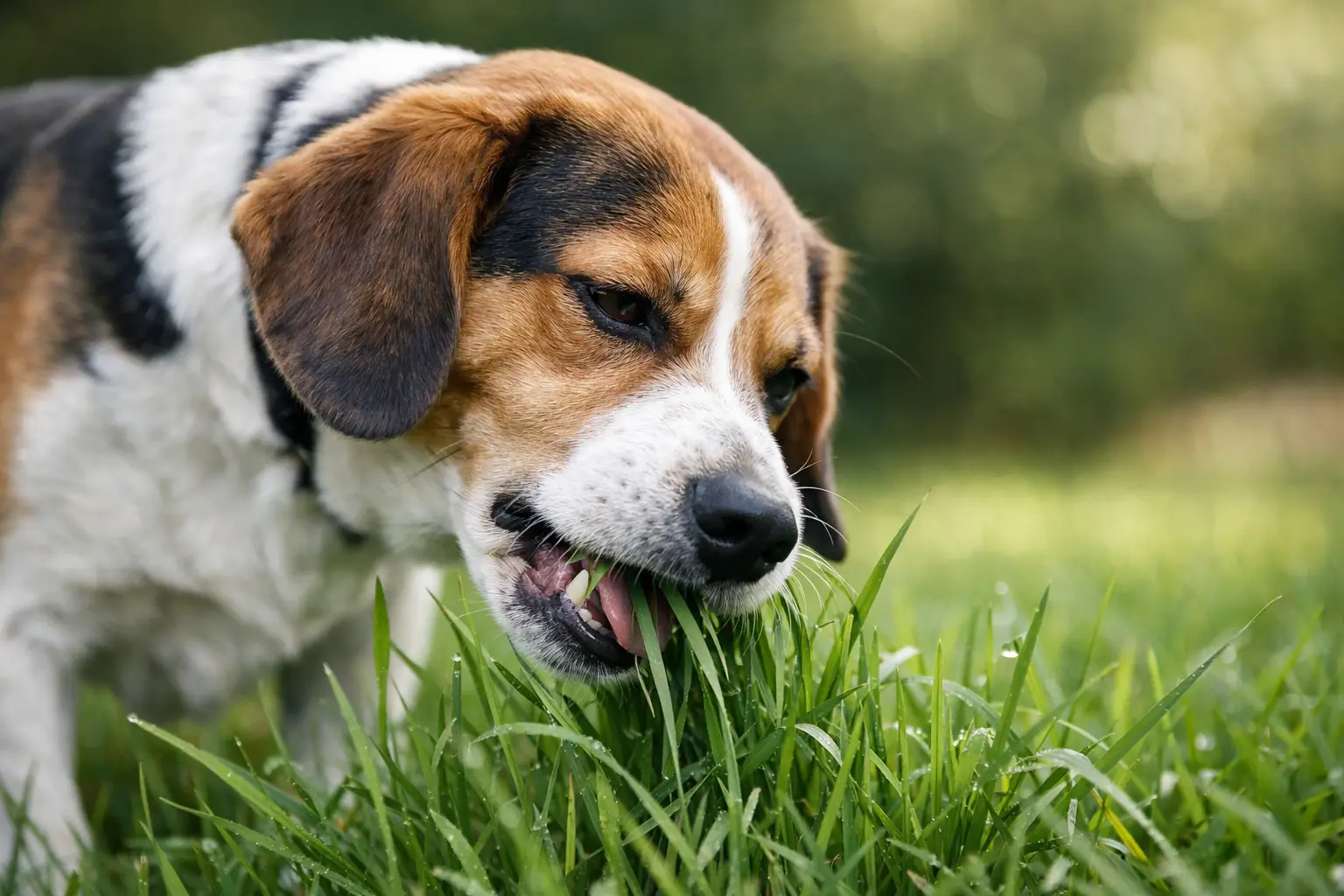
You look away for two seconds on a walk, and suddenly your dog is grazing like a tiny lawnmower. If you’ve ever wondered why does dog eat grass, you’re not alone. It is one of the most common dog behaviors owners ask about, and the good news is that grass-eating is often normal. The harder part is figuring out when it is just a quirky habit and when it may point to a health or behavior issue.
Why does dog eat grass in the first place?
There is no single answer that fits every dog. Some dogs nibble a few blades here and there and never seem bothered by it. Others gulp down grass quickly and throw up soon after. Those are different patterns, and they can mean different things.
For many dogs, eating grass appears to be a normal behavior rather than a sign that something is seriously wrong. Dogs explore the world with their mouths, and texture, smell, and taste all matter. Fresh grass can be interesting, especially in spring or after rain. Some dogs seem to enjoy it the same way they enjoy chewing a stick or sniffing a new patch of ground.
There is also some evidence that grass-eating is common enough to be considered part of normal canine behavior. In many cases, dogs that eat grass do not seem ill before or after. That matters, because the old idea that dogs eat grass only to make themselves vomit does not fully explain what most owners actually see.

Do dogs eat grass because of an upset stomach?
Sometimes, yes. A dog with mild nausea, reflux, intestinal irritation, or another stomach issue may eat grass and then vomit. But it is not accurate to assume that every dog is self-medicating every time they chew on the lawn.
In practice, some dogs eat grass because they feel sick, and some seem to feel sick after eating too much grass too fast. It can go both ways. If your dog suddenly starts eating large amounts of grass, especially with lip licking, gulping, reduced appetite, diarrhea, or repeated vomiting, stomach discomfort moves higher on the list of likely causes.
Could it be diet related?
Possibly, but not always in the way people think. A healthy dog on a balanced commercial diet is usually not eating grass because of a major nutritional deficiency. That said, dogs with diets low in fiber or dogs with digestive sensitivity may be more likely to seek out plant material.
If your dog seems obsessed with grass, it is worth looking at the whole feeding picture. Recent diet changes, rich treats, table scraps, eating too fast, or inconsistent meal timing can all affect digestion. Some dogs do better when their meals are adjusted, split into smaller portions, or reviewed with a veterinarian.
Boredom, stress, and habit can also explain why dogs eat grass
Behavior plays a bigger role than many owners realize. A dog who is under-stimulated may eat grass simply because it gives them something to do. This is especially true for younger dogs, highly active breeds, and dogs left alone in the yard without much enrichment.
Stress can show up this way too. Some dogs chew grass during changes in routine, after moving homes, during loud outdoor activity, or when they are generally anxious. In those cases, the grass itself may not be the issue. It may be one small sign that your dog needs more structure, more exercise, or a calmer environment.
Habit matters as well. If a dog has eaten grass for years without any fallout, it may simply be part of their routine. That does not mean you should ignore it completely, but context matters more than the behavior alone.
When grass-eating is probably harmless
A lot of dogs eat grass occasionally and stay perfectly healthy. If your dog nibbles grass now and then, acts normal, eats normally, has normal stools, and does not vomit often, this behavior is usually not an emergency.
The bigger concern is often not the grass itself but what may be on it. Lawns can be treated with herbicides, pesticides, fertilizers, or other chemicals that are not safe for dogs. Public areas may also contain fecal residue, parasites, mold, or sharp plant material mixed into the grass.
That is why a dog who casually eats grass in a clean, untreated yard is in a different situation from a dog gulping grass on the edge of a roadside park or apartment complex lawn.
When to be concerned
Grass-eating deserves a closer look if it becomes frequent, frantic, or comes with other symptoms. The pattern matters as much as the act.
Call your vet if your dog is eating grass and also showing repeated vomiting, diarrhea, constipation, bloating, lethargy, abdominal pain, appetite changes, weight loss, or signs of choking. You should also pay attention if your dog is trying to eat non-food items along with grass, since that may suggest pica, digestive disease, or anxiety-related behavior.
A sudden change is another red flag. If your dog never used to care about grass and now seeks it out every day, that shift is worth noting. Dogs can develop gastrointestinal issues, parasites, food intolerance, pancreatitis, or other medical problems that first show up in subtle ways.
Puppies deserve extra caution because they are more likely to swallow too much, pick up parasites, or ingest unsafe debris. Senior dogs also warrant a lower threshold for a vet call if the behavior is new.
What you can do at home
If your dog seems otherwise healthy, start by observing the pattern rather than trying to stop the behavior instantly. Notice when it happens, how much grass your dog eats, whether vomiting follows, and whether certain locations trigger it more than others.
That information helps you separate occasional nibbling from a real problem. It also gives your veterinarian a clearer picture if you need guidance later.
If boredom may be part of the issue, increase daily enrichment. Longer sniff walks, food puzzles, short training sessions, and regular play can reduce random grazing behavior in some dogs. If stress seems connected, look at recent changes in the home or routine and try to make your dog’s day more predictable.
Diet is another reasonable place to review, but avoid making major changes on your own just because your dog ate grass a few times. If the behavior is frequent, ask your vet whether your dog’s food, feeding schedule, or fiber intake should be adjusted.
Most importantly, try to limit access to treated lawns and unfamiliar grassy areas. Prevention matters more than the grass habit itself.
Why does dog eat grass and then throw up?
This is the version that worries owners most, and understandably so. Sometimes a dog eats grass rapidly because they already feel nauseated. Other times, the rough texture irritates the stomach enough to trigger vomiting.
One episode is not always a crisis, especially if your dog returns to normal right away. Repeated episodes are different. If your dog regularly eats grass and vomits, or vomits multiple times in a day, that goes beyond a harmless quirk and should be discussed with your vet.
Pay attention to what the vomit looks like too. Foam, bile, blood, foreign material, or repeated retching without producing anything all deserve prompt medical attention.
Should you stop your dog from eating grass?
Usually, you do not need to panic over occasional grass eating. But you also do not need to encourage it. A practical middle ground is best.
If the grass is clean, untreated, and your dog only nibbles occasionally, monitoring is often enough. If the behavior is excessive, paired with digestive symptoms, or happening in places where the grass may be contaminated, redirect your dog and follow up on the cause.
Think of grass-eating as a clue, not a diagnosis. Sometimes the clue points to nothing more than curiosity. Sometimes it points to nausea, stress, or a daily routine that needs a few small fixes.
Living with dogs means getting used to a few odd habits, and this is one of the classics. What helps most is knowing your own dog’s baseline. When their grass-eating looks like their usual harmless weirdness, you can breathe easier. When it comes with a clear change in appetite, energy, digestion, or behavior, trust that instinct and get it checked.