

The information in this article is for educational and informational purposes only. It is not intended as veterinary advice, diagnosis, or treatment for any medical or health issue your pet may have.
Always consult a licensed veterinarian before making any decisions about your pet’s health, diet, medications, supplements, training, or care. Never disregard or delay professional veterinary advice based on content from this website.
BarkleyAndPaws.com and its authors assume no responsibility or liability for any errors, omissions, or outcomes resulting from the use of this information.
A puppy who has just rolled in something questionable may need a bath right away. Otherwise, there is no prize for bathing them early or often. Learning how to bathe a puppy is less about getting every paw perfectly clean and more about teaching your dog that grooming is safe, brief, and followed by good things.
For most puppies, a calm introduction to water and handling matters more than a full scrub. Keep the first few baths short, use products made for dogs, and work at your puppy’s pace. That foundation can make future baths, nail trims, and vet visits far less stressful.
When Does a Puppy Need a Bath?
A bath is appropriate when your puppy is visibly dirty, smells unpleasant, has gotten into something sticky, or has been exposed to a substance you need to rinse away. For a healthy puppy who mostly stays clean, bathing every few weeks or even less often is usually plenty. Overbathing can strip natural oils from the skin and coat, which may leave skin dry or itchy.
Age matters, too. Young puppies have a harder time regulating body temperature, so avoid a full bath if they are very small, chilled, or unwell. If a puppy under about 8 weeks old needs cleaning, a warm, damp washcloth is often the safer choice. Ask your veterinarian for guidance if your puppy has skin irritation, fleas, diarrhea, or a medical condition that affects bathing.
Between baths, spot-clean muddy paws and use a damp cloth for minor messes. Regular brushing is often the best way to remove loose fur, dust, and tangles without adding another bath to the schedule.
What You Need Before You Bathe a Puppy
Set everything out before bringing your puppy to the tub or sink. Once they are wet, you do not want to step away for a towel while they attempt an enthusiastic escape.
You will need a nonslip mat or folded towel for the bottom of the bathing area, several absorbent towels, a cup or handheld sprayer, and a dog-specific puppy shampoo. A brush, a few pea-sized training treats, and a clean washcloth are also helpful. For smaller puppies, a kitchen sink or plastic wash basin can feel more secure than a large bathtub, as long as it is clean and provides stable footing.
Never use human shampoo, even a gentle baby formula. Human skin and canine skin have different pH needs, and the wrong product can cause dryness or irritation. Skip heavily scented shampoos, essential oils, and flea products unless your veterinarian has confirmed they are appropriate for your puppy’s age and weight.
Water temperature should feel comfortably warm on the inside of your wrist, not hot. Fill the tub with only a few inches of water, or keep the drain open and use a cup to wet your puppy gradually. The sound and force of a sprayer can be startling for some dogs, especially during their first bath.
How to Bathe a Puppy Step by Step
Start with a quick brush before water touches the coat. Brushing lifts loose fur and helps you find mats, bits of debris, or skin changes that deserve a closer look. It is also a simple way to begin the routine on a calm note.
Bring your puppy into the bathing area with a cheerful voice, then reward them for standing on the nonslip surface. Let them investigate the empty tub, sink, or basin first if they seem unsure. A puppy does not need to love bath time immediately. Your goal is for them to stay within their comfort zone rather than become overwhelmed.
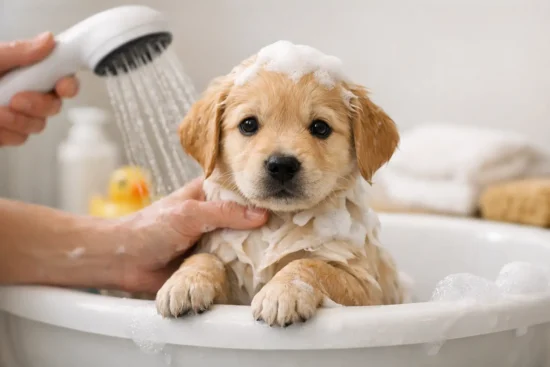
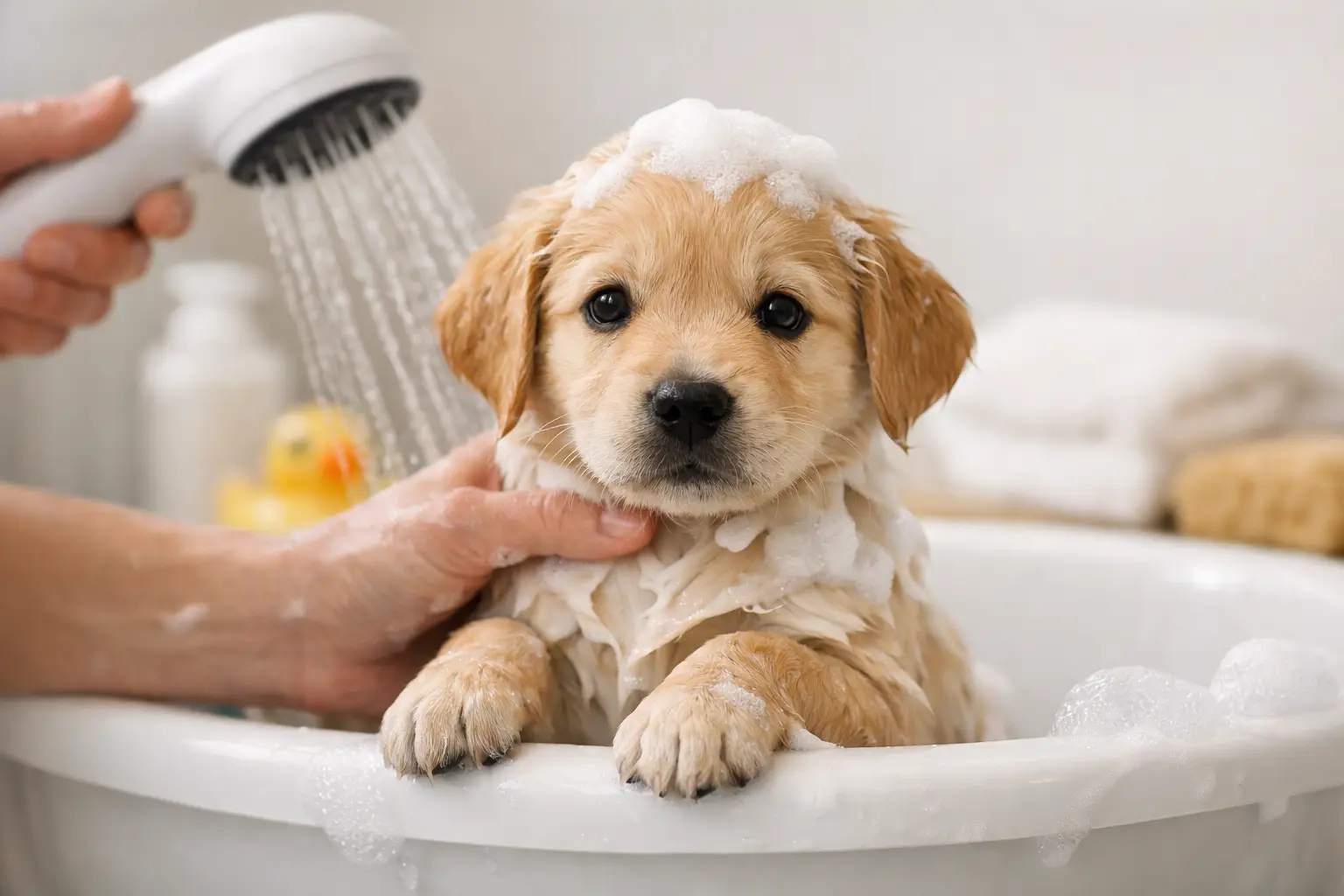
Wet the body from the neck down using a cup, soft sprayer setting, or wet washcloth. Keep water out of the eyes, ears, and nose. For a puppy who is nervous, pause often and offer a treat after each calm moment. Slow progress is still progress.
Use a small amount of puppy shampoo and gently lather the neck, back, chest, belly, legs, tail, and paws. Work shampoo through the coat with your fingertips rather than scrubbing vigorously. Pay attention to the paws and underside, where outdoor dirt tends to collect, but be gentle around sensitive skin.
For the face, skip shampoo unless it is truly needed. Instead, wipe around the muzzle and eyes with a clean, damp washcloth. Do not pour water into the ears or try to clean deep inside them. Healthy ears generally do not need cleaning at every bath, and inserting cotton swabs can push debris farther into the ear canal.
Rinse thoroughly until the water runs clear and the coat no longer feels slippery. Leftover shampoo is one of the most common causes of post-bath itchiness. Take your time under the legs, around the belly, and between the toes, where suds can hide.
Lift your puppy onto a towel immediately and wrap them snugly but comfortably. Many puppies will shake hard the moment they are out of the water, so protect yourself, your walls, and any nearby phone before that happens. Pat and squeeze the coat dry instead of rubbing aggressively, which can tangle longer fur.
Drying Your Puppy Safely
Towel drying is enough for many short-coated puppies, particularly in a warm home. Keep your puppy indoors until fully dry and avoid chilly drafts. If the weather is cold or your puppy has a dense or long coat, you may need a dryer to prevent them from staying damp against the skin.
Use a pet dryer on a low, cool, or warm setting, never hot. Hold it well away from the coat and keep it moving. First introduce the sound from across the room while giving treats, then gradually move closer if your puppy remains relaxed. A human hair dryer can work at a distance on a low setting, but it can become too hot quickly, so check the airflow against your wrist frequently.
If your puppy panics at the dryer, stop. Towel dry as well as possible and try dryer training separately on another day. Forcing the issue can turn a manageable bath into a lasting fear.
Make Bath Time a Positive Habit
The best bath routine is predictable. Use the same calm phrase, such as “bath time,” offer treats for cooperative behavior, and keep the entire session brief. End before your puppy reaches their limit whenever possible.
Praise specific behaviors you want to see again: standing still, allowing a paw to be handled, or looking at the sprayer without backing away. A lickable treat spread on a bath-safe surface can keep some puppies happily occupied, but supervise closely and choose a treat that agrees with their stomach.
It also helps to practice bath-related handling when there is no bath. Touch your puppy’s paws, lift the ears gently, run a dry cup over the back, and reward calm responses. These tiny practice sessions teach your puppy that grooming tools and body handling are normal parts of life, not warning signs.
Common Puppy Bath Mistakes to Avoid
The biggest mistake is rushing. A puppy who is trembling, scrambling, or repeatedly trying to flee is telling you the session is too difficult. Reduce the challenge by using less water, a quieter method, shorter handling, or more rewards.
Avoid bathing immediately after a large meal, since excitement and restraint can upset a full stomach. Do not leave your puppy unattended in water, even for a moment. Also resist the urge to use perfume, scented sprays, or household cleaning products to cover odors. If a healthy puppy has a persistent bad smell, greasy skin, flakes, redness, hair loss, or frequent scratching, schedule a veterinary visit instead of bathing more often.
Flea treatment deserves extra caution. Not every flea shampoo is safe for young puppies, and using the wrong product or dose can be dangerous. Your veterinarian can recommend an age- and weight-appropriate plan, especially if your puppy is very young or lives with other pets.
A successful puppy bath may look less like a spotless grooming commercial and more like a damp, wiggly dog earning treats in a towel. That is perfectly fine. Each calm, kind experience teaches your puppy that being cared for is nothing to fear.