

The information in this article is for educational and informational purposes only. It is not intended as veterinary advice, diagnosis, or treatment for any medical or health issue your pet may have.
Always consult a licensed veterinarian before making any decisions about your pet’s health, diet, medications, supplements, training, or care. Never disregard or delay professional veterinary advice based on content from this website.
BarkleyAndPaws.com and its authors assume no responsibility or liability for any errors, omissions, or outcomes resulting from the use of this information.
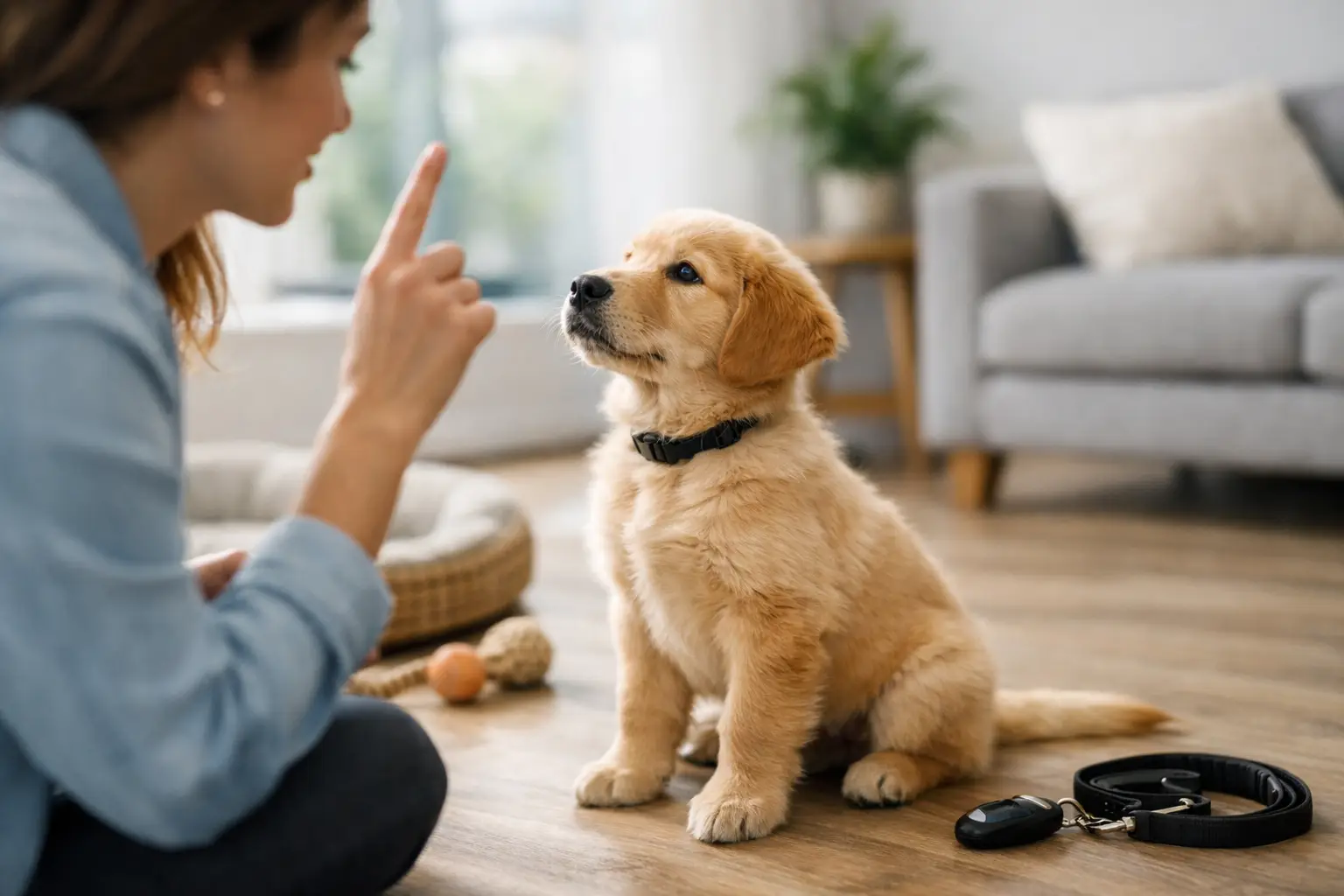
The first week with a puppy usually looks nothing like the fantasy. There is the 5 a.m. whining, the mystery puddle on the rug, the tiny teeth on your shoelaces, and the sudden realization that puppy training is less about getting a dog to “behave” and more about teaching a baby animal how your world works.
That shift matters. When owners expect instant obedience, frustration builds fast. When they treat training as daily communication, progress gets much easier to see. Most puppies are not being stubborn. They are being young, overstimulated, under-rested, or simply confused about what you want.
What puppy training really means
Good puppy training is not a race to teach a perfect sit. It is the process of building habits, confidence, and trust while your dog is still learning how to move through the world. House training, bite inhibition, leash manners, crate comfort, and basic cues all count. So does helping your puppy feel safe around people, sounds, surfaces, and routine handling.
This is why the early months matter so much. Puppies are learning all the time, even when you are not actively running a training session. If jumping gets attention, jumping becomes useful. If whining at the crate door always earns release, whining starts to look like a strategy. Small moments, repeated often, become the behavior your puppy offers by default.
Start with management, not just commands
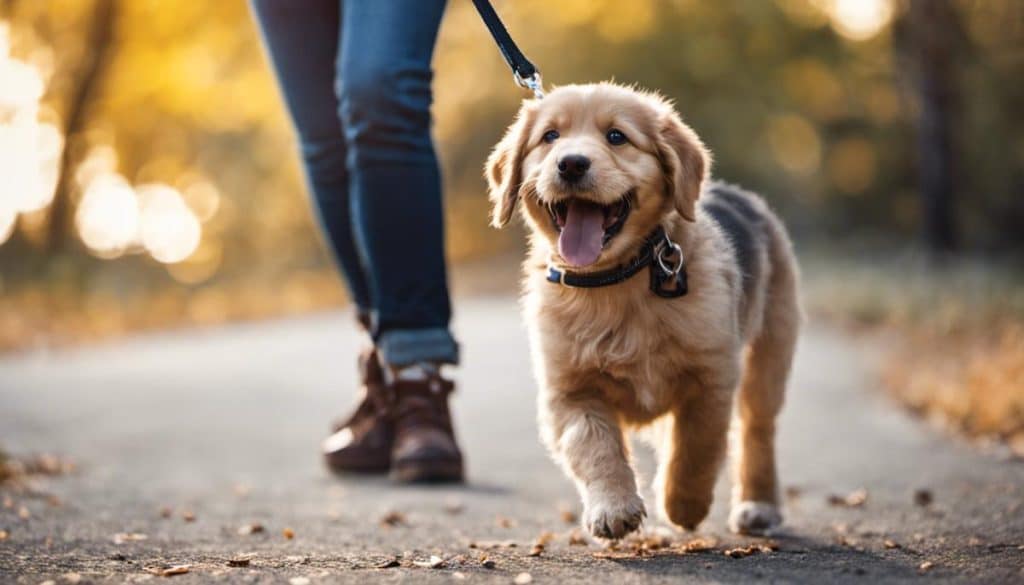
One of the most common training mistakes is asking too much freedom from a puppy too soon. A young dog who has access to the whole house, full run of the yard, and unlimited interaction with guests is almost guaranteed to rehearse messy behavior. That does not mean the puppy is difficult. It means the setup is doing too much of the teaching.
Management is what keeps bad habits from getting stronger while good habits are still taking shape. Baby gates, a crate, exercise pens, a leash indoors, regular potty trips, and scheduled naps are all training tools. They make it easier for your puppy to succeed before self-control is fully developed.
This part can feel unglamorous, but it works. A puppy who is prevented from chewing the table leg has fewer chances to practice chewing the table leg. A puppy who goes outside every couple of hours has more chances to get potty training right. Training is faster when the environment supports it.
Puppy training for potty habits
Potty training is usually the first big stress point, and consistency matters more than intensity. Your puppy needs frequent trips outside, especially after waking, eating, drinking, playing, or spending time in the crate. Waiting until your puppy signals clearly is risky early on because many young puppies do not know how to hold it long enough to ask.
When your puppy goes in the right spot, reward immediately. That means praise, a small treat, or both within seconds, not once you are back inside. The goal is to make the connection crystal clear.
Accidents indoors are information, not evidence that training failed. If they are happening often, the schedule may be too loose, supervision may be inconsistent, or the puppy may have too much space. Clean accidents thoroughly and tighten the routine. If your puppy is suddenly having more accidents after doing well, a vet check is smart to rule out a medical issue.
Teach the basics in short sessions
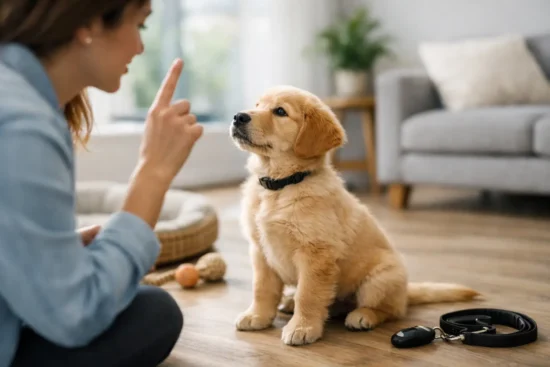
Formal training sessions should be brief enough that your puppy still wants more. For most young puppies, that means a few minutes at a time, repeated throughout the day. Sit, down, come, touch, and leave it are useful starters, but the real skill is learning how to pay attention to you.
Use food rewards generously in the beginning. That is not bribery. It is clear feedback. When your puppy offers the behavior you want and gets rewarded, you are building a pattern worth repeating. Over time, you can vary rewards and ask for more reliability in more distracting settings.
Keep your criteria realistic. A sit in your quiet kitchen is not the same as a sit in the front yard while a neighbor walks by with a stroller. Puppies do not generalize well at first. If a cue seems to “disappear” in a new place, the training is not broken. The environment just got harder.
Biting, chewing, and overexcited behavior
Puppy nipping is normal, but normal does not mean pleasant. Puppies explore with their mouths, and many get especially mouthy when they are tired or overstimulated. This is where owners often assume the puppy needs more exercise, when in reality the puppy may need less chaos and more rest.
Redirect biting onto an appropriate toy, then pause the interaction if teeth keep landing on skin or clothing. That pause matters. It teaches your puppy that rough behavior makes fun stop. If your puppy gets wild every evening, look closely at the schedule. Many puppies act “bad” when they are simply overdue for a nap.
Chewing follows a similar pattern. Provide legal outlets, rotate toys to keep them interesting, and supervise closely. Teething puppies have a real need to chew, so the goal is not to stop chewing. It is to aim it at the right things.
Crate training and alone-time skills
Crate training works best when the crate feels predictable, not punishing. Feed meals there, offer a chew in the crate, and build short, calm sessions before your puppy needs to stay in it for longer stretches. If the crate only appears when you leave the house, many puppies learn to dislike it quickly.
The same goes for alone time. Puppies need gradual practice being by themselves while safe and settled. Start small. Step away for a minute, then return before your puppy escalates into panic. Build duration slowly. Some vocalizing is common, but intense distress is different and should not be pushed through casually.
There is a trade-off here. Owners want puppies to be independent, but too much isolation too soon can backfire. The sweet spot is regular, low-stress practice that teaches your puppy solitude is temporary and safe.
Socialization is not the same as social time
One of the most misunderstood parts of puppy training is socialization. It does not mean letting your puppy greet every dog, every child, and every stranger at the hardware store. It means helping your puppy form calm, positive associations with the world.
That can look like watching traffic from a distance, hearing the vacuum while eating treats, walking on gravel, meeting one gentle visitor, or seeing another dog without having to interact. Quality matters more than quantity. A single overwhelming experience can do more harm than a dozen neutral or pleasant ones can repair.
If your puppy is shy, do not force closeness in the name of confidence-building. Give space, pair new things with rewards, and let curiosity grow at a manageable pace. Bold puppies also need guidance so they do not learn that lunging toward everything is the default.
When puppy training gets stuck
Sometimes progress stalls, and that is usually a sign to simplify. If your puppy is ignoring cues, check sleep, routine, environment, and expectations before assuming defiance. Young puppies need a surprising amount of sleep, often far more than owners realize. An overtired puppy can look hyper, frantic, or impossible to train.
It also helps to ask whether the reward is strong enough for the job. Dry kibble may work in the living room but fail completely when squirrels are involved. Training should match the difficulty of the setting.
If you are seeing persistent fear, guarding, extreme distress when alone, or handling issues that seem to intensify, bring in professional help early. A qualified trainer can prevent small patterns from becoming entrenched. In some cases, your veterinarian should be part of that conversation too.
Make life skills part of the day
The most effective puppy training often happens between the obvious lessons. Ask for a sit before meals. Reward four paws on the floor before greeting. Practice coming when called in the hallway, then again in the yard. Touch paws briefly and pair it with treats so nail care is less stressful later.
These repetitions add up because they happen in context. Your puppy starts to see that calm behavior opens doors, earns attention, and makes good things happen. That is more useful than a dog who can perform cues on command but falls apart in ordinary life.
For many households, the best approach is not perfection but steady improvement. A puppy who is mostly house trained, increasingly calm, and learning how to recover from excitement is on the right track. At Barkley and Paws, that is the kind of real-life progress worth aiming for.
Puppies grow fast, but good habits grow through repetition. If you stay clear, consistent, and a little patient on the messy days, you are not just training a puppy. You are shaping the dog your home will live with for years.