

The information in this article is for educational and informational purposes only. It is not intended as veterinary advice, diagnosis, or treatment for any medical or health issue your pet may have.
Always consult a licensed veterinarian before making any decisions about your pet’s health, diet, medications, supplements, training, or care. Never disregard or delay professional veterinary advice based on content from this website.
BarkleyAndPaws.com and its authors assume no responsibility or liability for any errors, omissions, or outcomes resulting from the use of this information.
That moment when you walk past the litter box and catch a smell before you even see it? That is usually less about having a “bad” cat and more about using the wrong litter for your home, your cat, or your cleaning routine. Finding the best cat litter for odor control can make a dramatic difference in how your space feels day to day, especially in apartments, multi-cat homes, and smaller rooms where smells tend to linger.
The tricky part is that odor control is not one-size-fits-all. Some litters trap ammonia better, some dry out waste faster, and some hide smells with fragrance that people like but cats may hate. According to the ASPCA, many cats can be sensitive to litter texture and scent, which means the most powerful deodorizing formula is not always the one your cat will actually use consistently. That is why the best choice usually balances odor performance, cat comfort, dust level, and how much scooping you are realistically going to do.
What actually makes the best cat litter for odor control?
Odor control starts with chemistry, but it ends with habits. Cat urine breaks down into ammonia, and that sharp smell is what most owners notice first. Solid waste creates a different problem – immediate odor that gets worse if it is not buried well or removed quickly.
Litters that control odor well usually do one or more of these things: absorb moisture fast, form tight clumps, use activated carbon or baking soda, or naturally trap smells in porous material. The American Veterinary Medical Association emphasizes the value of keeping litter boxes clean and appealing because box aversion can develop when a setup becomes unpleasant. In other words, even the best litter cannot rescue a box that is not scooped often enough.
For most households, clumping litter tends to perform better for odor because it lets you remove urine before the smell spreads through the whole box. Non-clumping litter can still work, but it often needs more frequent full changes to stay fresh.

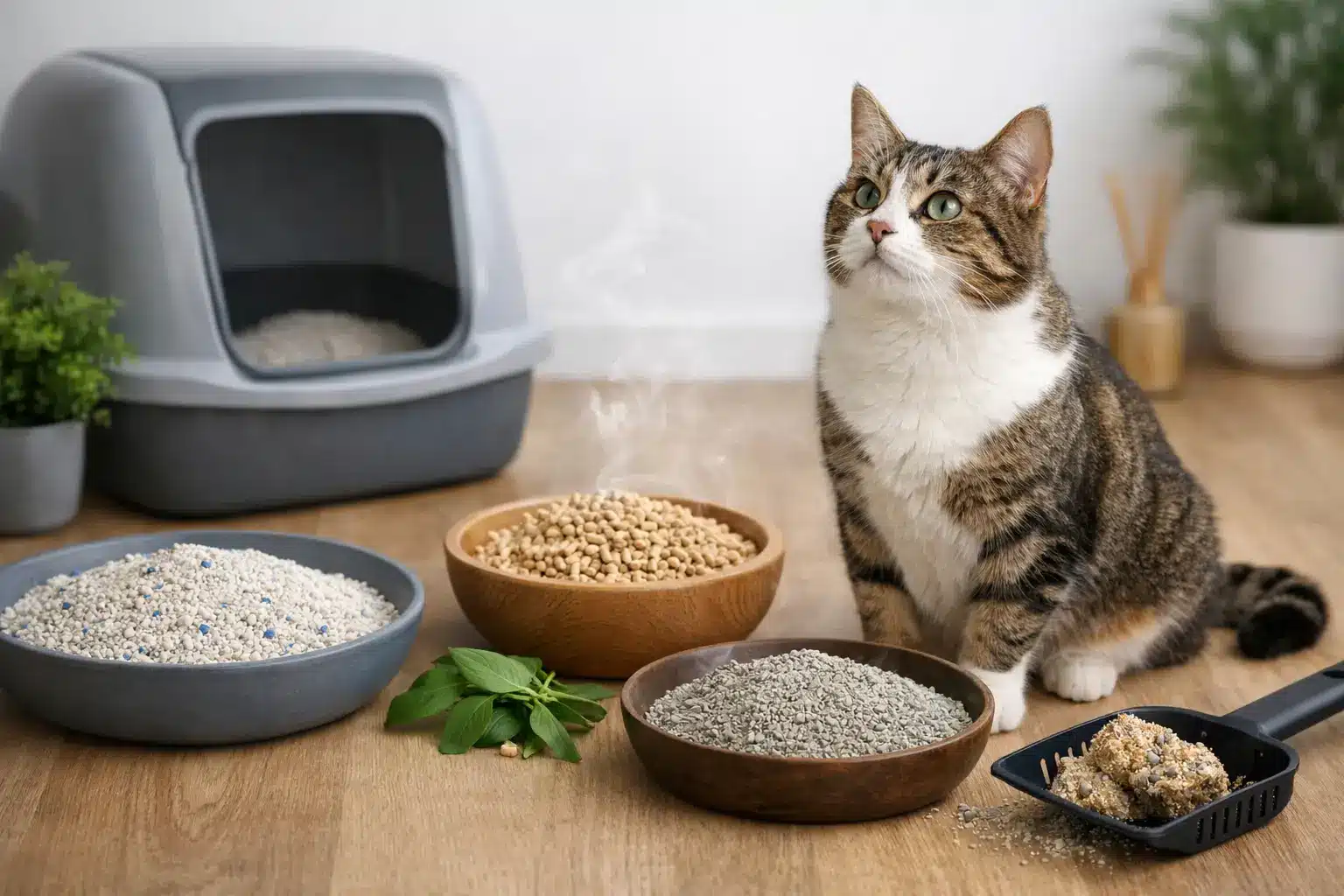
The best cat litter for odor control by litter type
Clumping clay litter
If your top priority is strong odor control with easy daily maintenance, clumping clay is still the category to beat. It absorbs quickly, creates scoopable clumps, and many formulas include charcoal, mineral blends, or baking soda for extra odor protection.
This type is often the most effective choice for busy homes because it allows targeted cleanup instead of dumping the entire box every few days. The trade-off is dust and weight. Some clay litters can be heavy to carry and messy around the box, especially if your cat tracks litter on paws.
Products in this category that pet owners often gravitate toward include Dr. Elsey’s Ultra, Fresh Step Advanced, Arm & Hammer Clump & Seal, and Tidy Cats Free & Clean. These tend to perform well when odor control matters most, though individual cats may have strong texture preferences.
Unscented clay litter
This deserves its own mention because many owners assume scented equals better. It often does not. Scented litter can mask odor for humans, but it does not always neutralize it better, and some cats dislike the perfume enough to avoid the box.
If your cat is picky, has respiratory sensitivity, or is recovering from stress-related litter box issues, unscented clumping clay is often the safer place to start. Cornell Feline Health Center notes that cats generally prefer clean, accessible boxes and can be particular about litter characteristics, including smell and texture. A simpler formula can solve more problems than a heavily fragranced one.
Silica crystal litter
Silica gel litter works differently. Instead of forming traditional clumps, it absorbs moisture into crystals and slowly dehydrates waste, which helps with urine odor in particular. Many owners like it for single-cat homes because it can stay fresher longer than expected and tends to produce less dust than lower-quality clay litters.
The downside is feel. Some cats do not like the texture underfoot, and solid waste still needs prompt scooping. Crystal litter can also be more expensive upfront, although the box may last longer between full changes.
PrettyLitter and Fresh Step Crystals are common examples. They can be a smart fit if urine smell is your main issue and your cat accepts the texture.
Natural and plant-based litters
Natural litter has improved a lot. Corn, walnut, wheat, wood, and grass-based formulas can control odor surprisingly well, especially when they clump tightly and absorb quickly. For owners trying to reduce dust, weight, or environmental impact, this category is worth a serious look.
The trade-off is variation. One natural litter may be excellent, while another turns mushy, tracks badly, or struggles with ammonia smell. World’s Best Cat Litter, ökocat, and Naturally Fresh are examples that many cat owners test when they want a lower-dust or more eco-conscious option.
Natural litter can be especially appealing if someone in the home is sensitive to clay dust, but performance depends heavily on humidity, box style, and whether you have one cat or several.
How to choose the right litter for your home
The best litter is the one that works in your actual life, not just in a product description. A studio apartment with one adult cat has different odor challenges than a house with three cats and two covered boxes in the laundry room.
If you have multiple cats, start with a strong clumping litter that is unscented or lightly scented and designed for multi-cat use. Those formulas usually focus more on ammonia control and clump strength. If your main problem is urine smell building over time, crystal litter or charcoal-enhanced clay may help more than standard clay. If you are worried about dust, look at low-dust clay or a high-performing natural litter.
It also helps to think honestly about maintenance. If you scoop twice a day, you can get away with more litter types. If you usually scoop once every evening, you will want a litter that forms firm clumps fast and locks in odor between cleanings.
Odor control is not just about litter
Even the best cat litter for odor control will disappoint if the setup around it is working against you. The number of boxes matters. The ASPCA generally recommends one litter box per cat, plus one extra, and that advice can make a real difference in odor because it spreads out waste and reduces overload in a single box.
Box size matters too. A cramped box gets dirty faster and gives cats less room to bury waste. Covered boxes can trap odor for humans in the short term, but they may also hold smells inside where your cat experiences them more intensely. Some cats tolerate that fine. Others do not.
Scooping frequency is the real game-changer. Once in the morning and once at night is ideal in odor-prone homes. Replacing litter on schedule and washing the box with mild soap and water helps more than adding extra deodorizer. If your cat’s waste suddenly smells much stronger than usual, or you notice changes in urination habits, it is worth checking with your veterinarian because diet, dehydration, and medical issues can affect litter box odor.
Best overall picks for most cat owners
If you want the shortest path to a fresher box, a few types rise to the top for most households. Unscented clumping clay is usually the safest overall recommendation because it balances odor control, affordability, and cat acceptance. For stubborn ammonia smell, a premium multi-cat clay litter with charcoal or baking soda often performs best. For owners prioritizing lower dust and lighter weight, a quality natural litter is worth testing. For single-cat homes dealing mostly with urine odor, silica crystals can be a strong option.
That means there is no single universal winner, but there are smart starting points. Dr. Elsey’s Ultra is a dependable general pick. Arm & Hammer Clump & Seal is often a good fit for stronger odor protection. World’s Best Cat Litter is a reasonable natural option for many homes. PrettyLitter can make sense when monitoring urine and moisture absorption is part of the appeal.
If you are still troubleshooting, switch gradually instead of dumping in a totally new litter overnight. Many cats do better with a transition over several days, mixing old and new litter so the change feels less abrupt.
A fresher litter box usually comes down to matching the litter to your cat’s preferences and your cleaning reality. When those two things line up, your home smells better, your cat stays happier, and the box becomes a whole lot less stressful to manage. For practical pet care guidance like this, Barkley and Paws focuses on the kind of everyday choices that make life with animals easier and cleaner.