


The information in this article is for educational and informational purposes only. It is not intended as veterinary advice, diagnosis, or treatment for any medical or health issue your pet may have.
Always consult a licensed veterinarian before making any decisions about your pet’s health, diet, medications, supplements, training, or care. Never disregard or delay professional veterinary advice based on content from this website.
BarkleyAndPaws.com and its authors assume no responsibility or liability for any errors, omissions, or outcomes resulting from the use of this information.
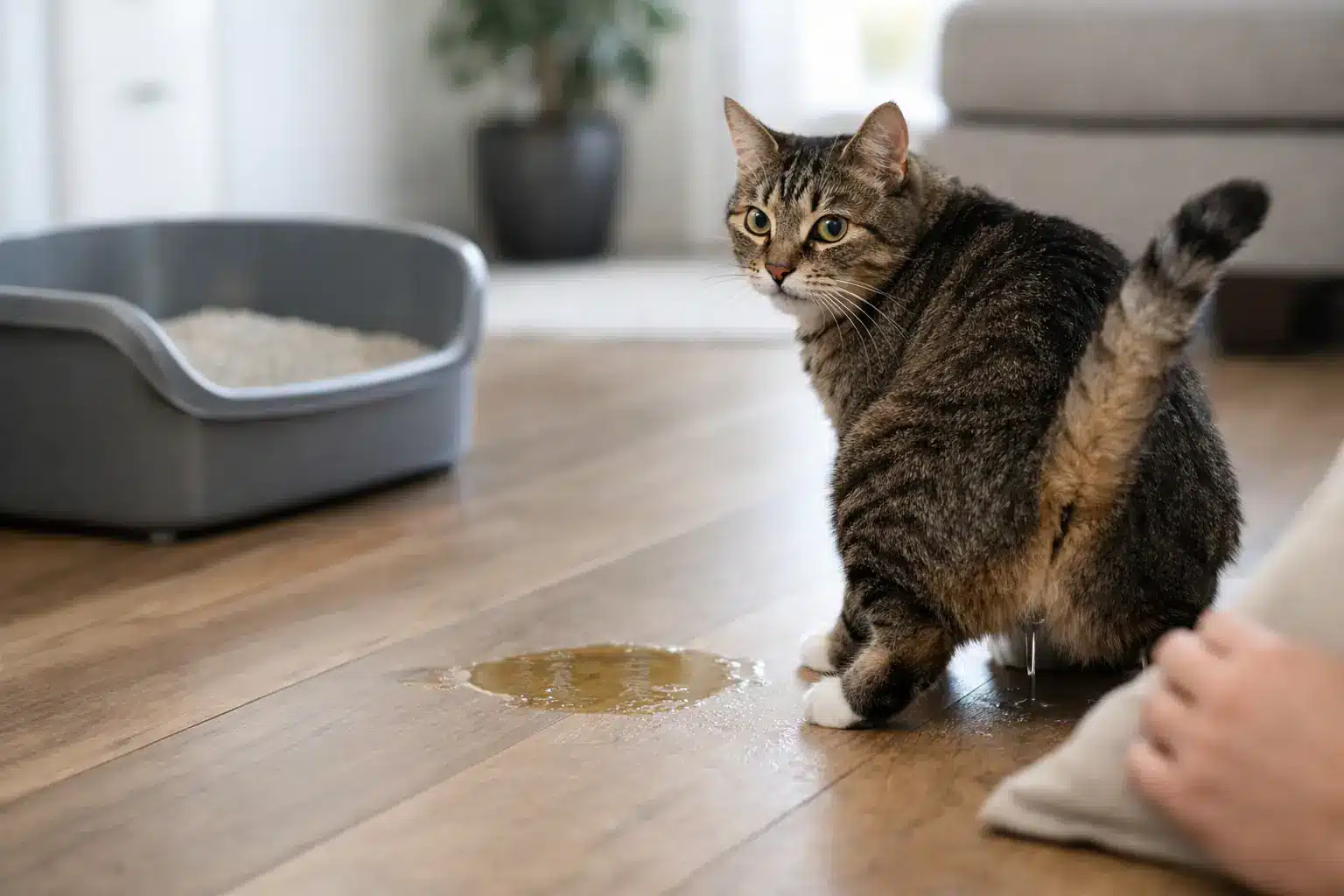
You walk into the room and smell it before you see it. A damp spot on the rug, a corner of the sofa, maybe your laundry pile. If you’re asking, “why is my cat peeing outside litter box,” the answer is rarely spite and almost never laziness. Cats usually do this for a reason, and the fastest way to fix it is to figure out whether that reason is medical, behavioral, or environmental.
This is one of the most common and most frustrating cat care problems because it sits right at the intersection of health and habit. A cat can be uncomfortable, stressed, unhappy with the box setup, or dealing with more than one issue at the same time. That means the right response is part detective work, part cleanup, and part prevention.
Why is my cat peeing outside litter box all of a sudden?
When the behavior starts suddenly, medical causes move to the top of the list. Urinary tract infections, bladder inflammation, crystals, stones, kidney disease, diabetes, arthritis, and even cognitive changes in older cats can all change litter box behavior. According to the American Veterinary Medical Association, changes in urination habits should be taken seriously because they can signal illness, pain, or urinary obstruction.
A cat with urinary discomfort may begin to associate the litter box with pain. In your cat’s mind, the box becomes the place where it hurts to pee, so they try another surface instead. Soft items like bedding, towels, and carpet are especially common targets because they may feel gentler under sensitive paws or during a painful squat.
Male cats, especially if they are straining or producing only small drops, need prompt veterinary attention. A urinary blockage can become life-threatening quickly. The ASPCA also notes that litter box avoidance can stem from both health problems and stress, which is why it helps to look at the full picture rather than focusing only on behavior.
If your cat is visiting the box often, crying out, licking the genital area, peeing tiny amounts, or showing blood in the urine, don’t wait it out. That is vet territory.
The litter box setup might be the problem
Cats are famously particular, and honestly, that reputation is earned. A litter box can look fine to us and still be completely unacceptable to a cat.
The most common issue is cleanliness. Many cats want waste removed daily, and some want it removed more than once a day. If the box smells strong to you, it smells much stronger to your cat. The Cornell Feline Health Center advises that box hygiene, location, and litter type are all major factors in litter box avoidance.
The box itself can also be wrong. Covered boxes hold in odor, which owners like, but cats may not. High-sided boxes can be hard for seniors or cats with arthritis. Small boxes may feel cramped, especially for larger cats. Some cats dislike liners because they shift underfoot. Others refuse boxes that sit next to loud appliances, near a furnace, or in a part of the house with too much traffic.
Litter texture matters too. Many cats prefer unscented, fine-grain clumping litter. A heavily perfumed litter that smells “fresh” to people can be overwhelming to a cat. A sudden switch in litter brand or texture can trigger accidents, especially in cats that are already sensitive or stressed.
And then there’s box math. In multi-cat homes, one box in the laundry room is usually not enough. The standard recommendation is one box per cat, plus one extra, placed in different areas of the home. That setup gives cats options and reduces conflict.

Stress can show up as pee on the floor
Cats like routine, predictable spaces, and a strong sense of control over their territory. When those things change, some cats respond with inappropriate urination.
Stress triggers can include a new baby, houseguests, a move, remodeling, schedule changes, a new pet, neighborhood cats visible through the window, or tension between pets in the home. Even smaller shifts, like moving the litter box, changing detergent on the bedding, or rearranging furniture near the box, can matter more than many owners expect.
This is where context really matters. A cat who pees by the front window may be reacting to outdoor cats. A cat who pees on your bed may be dealing with separation stress, conflict with another pet, or a need for a location that smells strongly like you. That does not mean your cat is being vindictive. It means the spot may feel safer, softer, or more emotionally comforting.
Spraying is another piece of the puzzle. Spraying is usually a small amount of urine deposited on a vertical surface, often tied to territorial communication. Regular urination is typically on horizontal surfaces and creates a larger puddle. The distinction matters because management may be different, though stress and medical issues can still play a role in both.
How to figure out what’s actually causing it
Start with a vet visit, especially if the behavior is new, frequent, or paired with any signs of discomfort. Bring details. Your vet will want to know when it started, how often it happens, whether your cat is peeing large or small amounts, and whether the accidents happen in one location or several.
At home, take a close look at patterns. Is your cat avoiding one box but using another? Does the problem happen after visitors come over? Is it only on soft surfaces? Did anything change in the household in the days before it started? Tiny details can point to the cause.
If you have more than one cat, don’t assume you know who’s responsible. That sounds obvious until you’re cleaning a mystery puddle for the fourth time and making accusations in the wrong direction. A small camera near the litter area can help confirm which cat is having trouble and whether another cat is blocking access.
What to do right now
Once medical issues are being addressed or ruled out, make the litter box experience easier, cleaner, and calmer.
Add boxes if you don’t already have enough. Put them in quiet, easy-to-reach areas on different levels of the home if possible. Scoop at least once a day, wash boxes regularly with mild soap and water, and avoid strong cleaners that leave behind scent.
If you’ve recently changed litter, consider going back to the previous type or offering two options side by side. Many cats do best with unscented clumping litter. If your cat is older or stiff, try a large low-entry box. If another pet or child tends to corner the cat near the box, create a more private route.
Cleaning accidents the right way matters too. Use an enzymatic cleaner designed for pet urine. Regular cleaners may remove the stain for you while leaving behind scent markers your cat can still detect. If the smell remains, the area can become a repeat bathroom spot.
You can also make the accident area less appealing and the box more appealing. Feed your cat near the previously soiled area if appropriate, place a bed there, or block access temporarily. At the same time, keep the litter box path open, calm, and easy.
When behavior support makes a difference
Some cases do not resolve with a clean box and a negative urine test. If stress or territorial tension is driving the problem, environmental changes may need to go deeper.
That can mean adding vertical space, improving play time, separating resources in multi-cat homes, and reducing visual access to outdoor cats. Food bowls, water stations, resting areas, scratching posts, and litter boxes should not all be clustered in one zone where one confident cat can control them.
Pheromone diffusers can help some cats feel more settled, though results vary. They are not magic, but they can be useful as part of a broader plan. If the behavior is persistent, ask your vet whether a veterinary behaviorist or cat-focused behavior consultant would help. It depends on the cat, the household, and whether anxiety, conflict, or habit has become part of the picture.
Why punishment makes this worse
Scolding a cat for peeing outside the box usually backfires. Your cat does not connect punishment with the puddle in the way people hope. What they do learn is that you are scary when urine appears, which can add stress and make the problem harder to solve.
A better approach is calm cleanup, careful observation, and strategic changes. That may not feel as emotionally satisfying in the moment, especially when the target is your comforter, but it works better.
If your cat has started peeing outside the box, assume they are communicating something useful, even if the message is inconvenient. Listen to the pattern, check for pain, and make the box setup easier to say yes to. Most cats are not trying to make your life harder. They are telling you that something about theirs needs attention.