

The information in this article is for educational and informational purposes only. It is not intended as veterinary advice, diagnosis, or treatment for any medical or health issue your pet may have.
Always consult a licensed veterinarian before making any decisions about your pet’s health, diet, medications, supplements, training, or care. Never disregard or delay professional veterinary advice based on content from this website.
BarkleyAndPaws.com and its authors assume no responsibility or liability for any errors, omissions, or outcomes resulting from the use of this information.
If your dog thinks your hand near their mouth is an invitation to play tug, you are not alone. Learning how to brush dog teeth usually has less to do with toothpaste and more to do with timing, patience, and making the whole thing feel normal instead of suspicious.
Dental care matters because plaque does not stay cosmetic for long. It hardens into tartar, irritates the gums, and can lead to bad breath, pain, loose teeth, and expensive veterinary treatment. The good news is that most dogs can learn to tolerate brushing, and many end up accepting it as just another part of the routine.
Why brushing your dog’s teeth is worth the effort
A lot of pet owners assume dental chews or dry kibble will handle the job. Those can help a little, but they do not replace brushing. When plaque sits along the gumline, mechanical brushing is still the most reliable way to remove it before it becomes tartar.
Daily brushing is the goal, but a few times a week is still better than doing nothing. What matters most is consistency. A calm two-minute session three or four times a week will do more for your dog than one heroic struggle every month.
What you need before you start
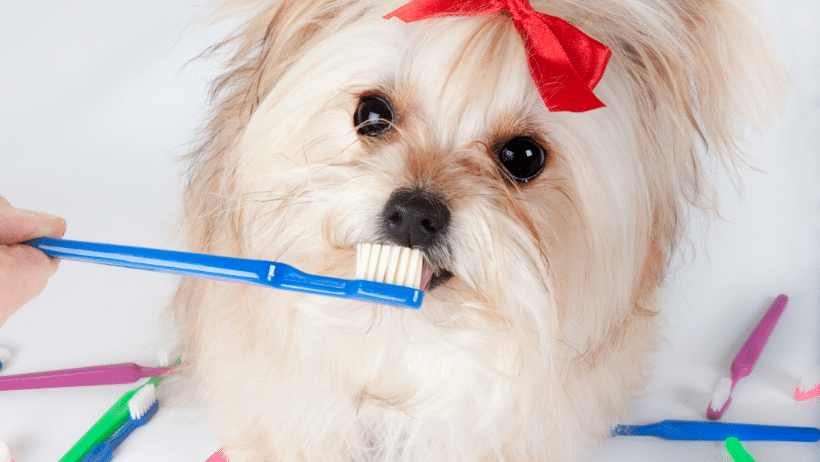
Keep your setup simple. You need a dog toothbrush or finger brush, dog-safe toothpaste, and a quiet moment when your dog is relaxed. Human toothpaste is not safe for dogs because it often contains ingredients they should not swallow.
A standard dog toothbrush works well for many medium and large dogs, while a finger brush can feel less intimidating for smaller dogs or beginners. Dog toothpaste usually comes in flavors like poultry or peanut butter, which helps turn brushing into a reward instead of a chore.
If your dog is very mouth-sensitive, start with gauze wrapped around your finger before moving to a brush. That softer texture can make the first few sessions easier.
How to brush dog teeth step by step
The biggest mistake people make is trying to brush every tooth on day one. Most dogs need a short introduction period, and that is completely normal.
Start by teaching your dog that mouth handling is safe
Sit next to your dog instead of looming over them. Gently touch the muzzle, lift a lip for a second, then reward. Repeat until your dog stays loose and comfortable. If they pull away, do less, not more.
Once that feels easy, let your dog taste the toothpaste from your finger. You want them to associate the smell and flavor with something pleasant. For some dogs, this step alone takes a couple of days.
Add the brush slowly
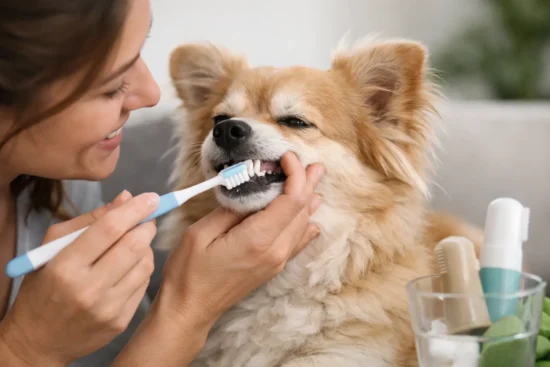
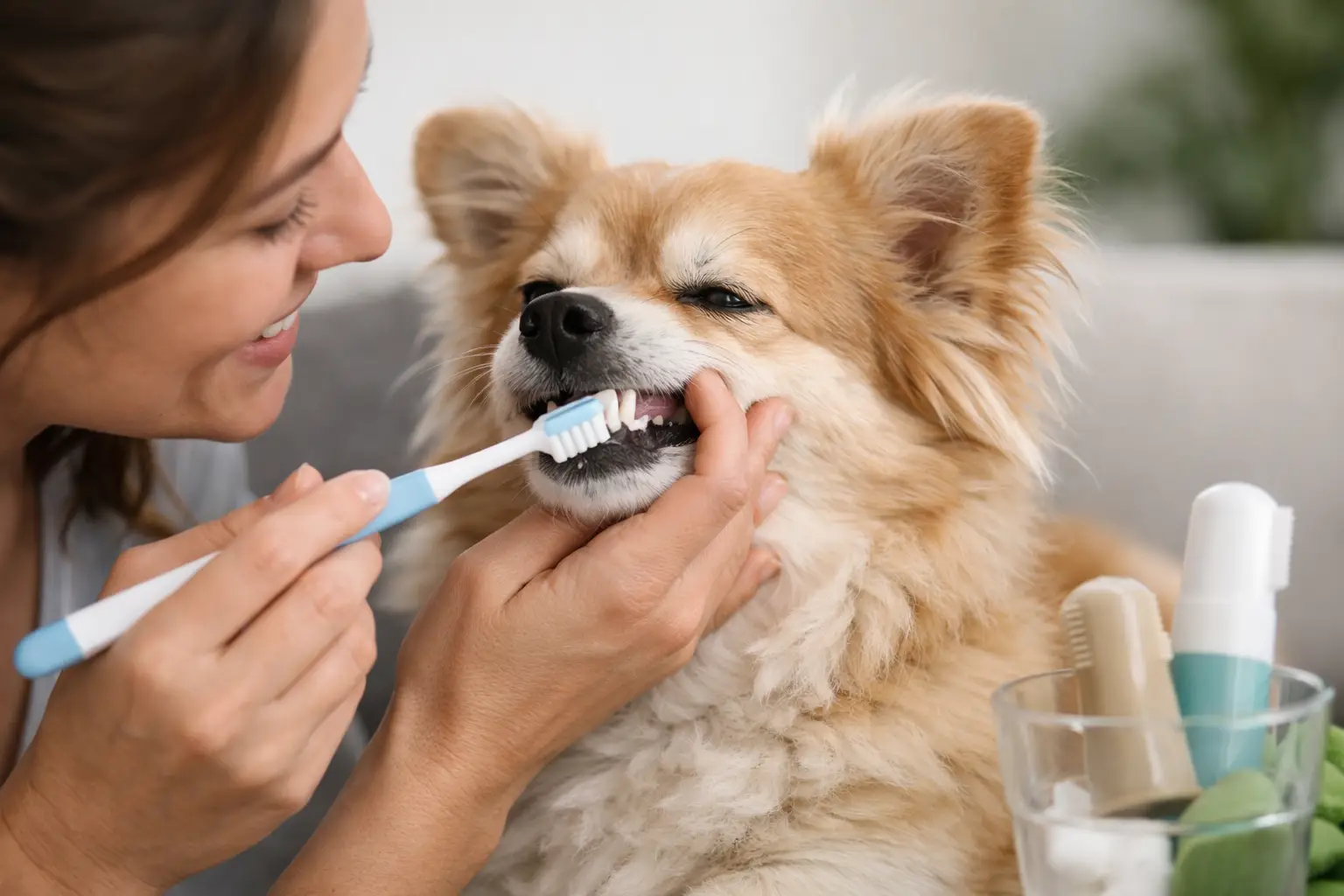
Put a small amount of toothpaste on the brush and let your dog lick it. Then lift the lip and make one or two light strokes on the outer surface of the back teeth. Stop there and praise generously.
The outside surfaces are the priority because that is where plaque tends to build up most, and it is also the easiest area to reach. You do not need to pry the mouth open wide or brush the inside surfaces aggressively. Your dog’s tongue does some natural cleaning on the inside.
Work in short sessions
As your dog gets used to it, increase the number of teeth you brush in each session. Use gentle circular motions and angle the bristles toward the gumline. Focus on the canines and back molars, since those areas often collect the most buildup.
Aim for 30 seconds per side at first. Over time, you can build toward brushing most of the mouth in about two minutes. If your dog stays calm for only 20 seconds, that is still progress.
How to make tooth brushing easier for nervous dogs
Some dogs accept brushing quickly. Others act like you have proposed a deeply unreasonable idea. For anxious or wiggly dogs, your approach matters as much as your technique.
Choose a time when your dog is already calm, such as after a walk or in the evening. Avoid trying to brush when they are overexcited, hungry, or focused on household activity. A familiar spot like the couch, dog bed, or floor mat can also help.
Keep your voice relaxed and your movements predictable. Fast hands and repeated repositioning can make a nervous dog more suspicious. If your dog turns away or stiffens, pause and back up to an easier step instead of pushing through.
For some dogs, brushing is easier with one person gently offering reassurance and treats while the other brushes. For others, extra people add pressure. It depends on your dog’s temperament.
When to stop and try again later
There is a difference between mild resistance and real distress. If your dog is lip licking constantly, whale-eyeing, growling, snapping, or trying hard to escape, stop the session. That does not mean they can never learn. It means the pace is too fast.
Reset with shorter sessions and easier goals. You might spend a week simply touching the muzzle and rewarding. That slower foundation often leads to better long-term success than forcing a full brush too early.
Common mistakes that make brushing harder
Trying to clean every tooth perfectly is one of the fastest ways to create a battle. A partial session done gently is better than a complete session your dog dreads.
Using human toothpaste is another common problem. Even if the mint smell seems fresh to you, most dogs hate it, and the ingredients are not designed to be swallowed by pets.
Skipping brushing for weeks and then starting again only when breath gets bad also works against you. By that point, the mouth may already be tender. If your dog suddenly resists brushing after previously tolerating it well, discomfort could be the reason.
What if your dog already has bad breath or tartar?
If you see yellow or brown buildup, red gums, bleeding, pawing at the mouth, drooling, or noticeably foul breath, brushing alone may not be enough. Those signs can point to dental disease, and a veterinary exam is the right next step.
This is where expectations matter. Brushing helps prevent plaque and slow future buildup, but it does not remove established tartar the way a professional dental cleaning can. If your dog already has significant buildup, brushing is still useful after treatment to help keep the mouth healthier.
Puppies, small breeds, flat-faced breeds, and senior dogs often need extra attention because they can be more prone to dental issues. Crowded teeth and age-related wear can make daily maintenance even more valuable.
How often should you brush?
If you can brush your dog’s teeth every day, that is ideal. If daily brushing is not realistic, aim for at least three times a week and be honest about what you can maintain.
A routine that fits your real life will beat an ambitious plan that disappears after four days. Pair brushing with something that already happens regularly, like the evening walk, dinner cleanup, or bedtime treat. Habit stacking works for dogs just as well as it does for people.
Helpful extras that support brushing
Brushing does the heavy lifting, but it does not have to work alone. Dental chews, water additives, dental diets, and oral rinses may support your routine, especially for dogs that tolerate brushing only briefly. Still, these are backup players, not the whole team.
If you use extras, choose options made specifically for dogs and watch how your dog responds. Some products are great for one pet and not a fit for another, especially if your dog has food sensitivities, a tiny mouth, or a habit of gulping treats whole.
How to brush dog teeth and keep it sustainable
The best brushing routine is the one your dog does not hate and you will actually keep doing. That might mean using a finger brush instead of a long-handled one, brushing at night instead of in the morning, or focusing mostly on the outer back teeth when time is tight.
Progress is rarely perfectly smooth. Some days your dog will cooperate, and some days they will act like the toothbrush is a personal insult. Stay patient, keep sessions short, and think in weeks instead of single attempts.
At Barkley and Paws, we look at routines like this as part of everyday preventive care, not perfection. A calm, consistent brushing habit can protect your dog’s comfort far better than waiting until there is a problem you can smell.
If you start small and stay steady, tooth brushing goes from awkward to ordinary – and that is exactly where you want it.