

The information in this article is for educational and informational purposes only. It is not intended as veterinary advice, diagnosis, or treatment for any medical or health issue your pet may have.
Always consult a licensed veterinarian before making any decisions about your pet’s health, diet, medications, supplements, training, or care. Never disregard or delay professional veterinary advice based on content from this website.
BarkleyAndPaws.com and its authors assume no responsibility or liability for any errors, omissions, or outcomes resulting from the use of this information.
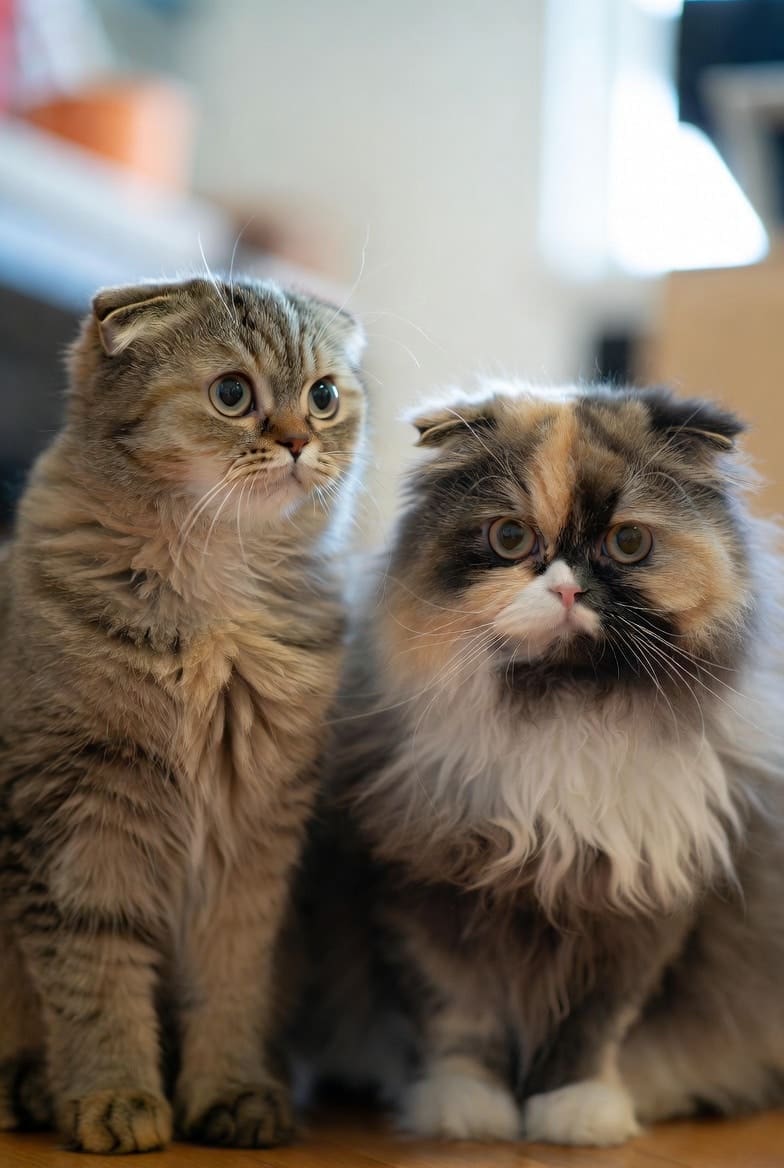
Two adorable kittens sit side by side in a breeder’s nursery. Both share the same sweet owl-like expression and folded ears that make Scottish Fold kittens instantly recognizable. One sports a plush, dense coat that stands proudly away from its rounded body, while the other displays flowing, silky fur with distinctive tufts adorning its ears and toes. Though these littermates may look dramatically different, they share identical genetics except for one crucial gene that determines whether they’ll grow into short-haired or long-haired beauties.
The choice between these two coat varieties extends far beyond appearance, affecting everything from daily grooming routines to seasonal care requirements that potential owners should understand before bringing home their new feline family member.
Understanding Scottish Fold Coat Genetics
The Scottish Fold kitten comes in two distinct coat varieties that can actually appear in the same litter. In 1978, the Cat Fanciers’ Association (CFA) granted the breed championship status, and in the mid-1980s, the long-haired version started to gain recognition. The International Cat Association (TICA) was the first registry to recognize the longhairs for championship competition in the 1987-88 show season, and CFA followed in 1993-94.
The long-haired trait in Scottish Folds traces back to the original barn cat Susie, who carried a recessive gene for long hair along with her distinctive folded ears. When two cats carrying this recessive gene are bred together, roughly 25% of their offspring will display the long-haired coat, while the remaining 75% will have short hair.
This genetic variation means that even experienced breeders cannot predict with certainty which kittens in a litter will develop long coats until the fur begins to grow out over the first few months of life. Both varieties share identical temperaments, health considerations, and physical structure – the only difference lies in their coat length and the associated grooming requirements.
The long-haired variety is sometimes called Highland Fold, Scottish Fold Longhair, or Coupari, depending on the registry and geographical location. Regardless of the name, these cats represent the same breed with simply a different expression of coat genetics.
Short-Haired Scottish Fold Characteristics
The short haired Scottish Fold displays the classic appearance that first captivated William Ross when he discovered Susie in 1961. These cats feature dense, plush coats that stand away from their bodies, creating a soft, cushioned appearance that begs to be touched. The texture feels remarkably thick and resilient, with each hair contributing to an overall rounded silhouette.
The short coat consists of a double layer with a soft undercoat providing insulation and body, while the guard hairs offer protection and create the breed’s characteristic sheen. This coat structure helps maintain the Scottish Fold’s famous rounded appearance while requiring minimal grooming intervention from owners.
Physical Appearance Features
- Coat Texture: Dense, plush, and stands away from the body
- Grooming Needs: Weekly brushing typically sufficient
- Seasonal Changes: Moderate shedding during spring and fall
- Overall Look: Emphasizes the breed’s signature rounded features
- Maintenance Level: Low to moderate care requirements
Short-haired Scottish Folds tend to show their body structure more clearly, making their rounded features and sturdy build more apparent. The shorter coat also means that any weight changes become more noticeable, helping owners monitor their cat’s body condition more easily.
The coat colors and patterns appear more defined in short-haired varieties, with tabby markings showing crisp delineation and solid colors displaying rich, even tones throughout. This clarity of pattern makes short-haired Scottish Folds particularly striking in show competitions where pattern definition is valued.
Long-Haired Scottish Fold Features
The long hair Scottish Fold kitten develops a dramatically different appearance as it matures, though it starts life looking virtually identical to its short-haired siblings. By eight to twelve weeks of age, the longer coat becomes apparent, and by six months, the full glory of the long-haired coat emerges with all its distinctive features.
Long-haired Scottish Folds display medium to long fur with several characteristic features that set them apart from their short-haired relatives. The coat includes britches (longer fur on the upper thighs), prominent toe tufts, a fully plumed tail, ear furnishings, and often a ruff around the neck that frames their sweet faces beautifully.
The texture remains soft and silky throughout, but the longer length creates a flowing appearance that moves gracefully as the cat walks. This coat type particularly emphasizes the breed’s gentle, refined appearance while adding an element of elegance to their overall presentation.
Distinctive Long-Hair Features
- Britches: Longer fur on upper hind legs
- Toe Tufts: Fluffy hair between and around toes
- Ear Furnishings: Soft hair inside and around ears
- Tail Plume: Full, flowing tail with longer fur
- Neck Ruff: Frame of longer fur around the face
- Overall Length: Medium to long throughout the body
The Scottish Fold long hair kitten requires more dedicated grooming from an early age to prevent matting and maintain the coat’s lustrous appearance. However, many owners find the extra effort worthwhile for the stunning visual impact these cats create.
Grooming Requirements Comparison
The most significant practical difference between short and long-haired Scottish Folds lies in their grooming needs. Short-haired varieties require brushing once or twice weekly, with daily brushing needed during seasonal shedding periods. The dense coat can trap dead hair, so regular brushing prevents matting and keeps the fur looking its best.
Long-haired Scottish Folds demand daily brushing or at a minimum every other day. The longer fur tangles easily, particularly under the arms, behind ears, and around hindquarters. Without regular attention, painful mats can develop that may require professional removal.
Health Considerations for Both Varieties
Both short and long-haired Scottish Folds share identical health considerations related to their breed genetics. The folded ear gene affects cartilage development throughout their body, potentially leading to joint issues regardless of coat length. The primary health concern is osteochondrodysplasia, a condition affecting cartilage and bone development that can cause painful arthritis.
Regular veterinary checkups are crucial for monitoring joint issues, heart conditions, and kidney disease. Long-haired varieties may face additional grooming-related concerns if coats aren’t properly maintained, as matted fur can cause skin irritation. The folded ears in both varieties require special attention to prevent wax buildup and infections.
Lifestyle Compatibility Factors
Choosing between short and long-haired Scottish Folds often depends on lifestyle factors and personal preferences rather than the cats’ personalities, which remain consistent across both varieties.
Time Commitment Considerations
Short-haired Scottish Folds suit busy households where grooming time is limited. Their weekly brushing requirement fits easily into most schedules, and they maintain their appearance with minimal intervention. These cats work well for first-time cat owners or families with demanding schedules.
Long-haired varieties require dedicated daily grooming time, making them better suited for households where someone can commit to regular coat care. Many long-haired Scottish Fold owners find the grooming routine relaxing and enjoyable, creating special bonding time with their cats.
Household Environment Factors
- Allergies: Both varieties shed, but long-haired cats may distribute more allergens through their longer fur, which carries dander further throughout the home.
- Cleanliness: Short-haired cats typically track less fur throughout the house, while long-haired varieties may leave more noticeable fur on furniture and clothing.
- Climate: Long-haired Scottish Folds may be more comfortable in cooler climates, while short-haired varieties adapt well to various temperature ranges.
Activity Level Considerations
Both coat varieties suit similar activity levels, as Scottish Folds are generally calm, moderate-energy cats. However, long-haired cats may need extra grooming attention after play sessions to prevent tangles from forming in their flowing coats.
Indoor living suits both varieties well, though long-haired cats particularly benefit from controlled environments where their coats are less likely to pick up debris and require emergency grooming sessions.
Cost Differences and Considerations
The financial commitment differs between short and long-haired Scottish Folds primarily in ongoing grooming expenses rather than initial purchase prices from reputable breeders.
Professional Grooming Costs
Short-haired Scottish Folds typically require professional grooming only occasionally, perhaps seasonally or when owners prefer professional nail trimming and ear cleaning. These sessions usually cost less due to the simpler coat maintenance required.
Long-haired varieties often benefit from professional grooming every 6-8 weeks to maintain coat health and prevent matting. Professional groomers can also provide specialized services like sanitary trims and mat removal that may be challenging for owners to perform safely at home.
Grooming Supply Investment
Short-Haired Supplies: Basic brushes, nail clippers, and ear cleaning supplies typically cost under $50 initially with minimal replacement needs.
Long-Haired Supplies: More extensive grooming tool collections, including multiple brush types, combs, and de-matting tools, may cost $75-150 initially, with more frequent replacement due to heavier use.
Health-Related Costs
Both varieties face similar potential health expenses related to breed-specific conditions. However, long-haired cats might incur additional costs if grooming neglect leads to skin issues requiring veterinary treatment.
Finding Your Perfect Furry Match
Selecting between short and long-haired Scottish Folds depends on personal preferences and lifestyle rather than personality differences. Consider a short-haired variety if you prefer lower maintenance grooming or have limited time for daily coat care. Choose a long-haired Scottish Fold if you enjoy grooming activities and appreciate flowing, elegant coats.
Both varieties offer identical temperaments and health considerations, with differences lying only in grooming requirements and visual appeal. Whether sporting a plush short coat or flowing long hair, these cats grow into equally charming companions with the same sweet, gentle nature that makes Scottish Folds beloved worldwide.
The most important factor remains finding a reputable breeder who prioritizes health testing and ethical breeding practices, ensuring either choice will bring years of joy and companionship to the right home.