


The information in this article is for educational and informational purposes only. It is not intended as veterinary advice, diagnosis, or treatment for any medical or health issue your pet may have.
Always consult a licensed veterinarian before making any decisions about your pet’s health, diet, medications, supplements, training, or care. Never disregard or delay professional veterinary advice based on content from this website.
BarkleyAndPaws.com and its authors assume no responsibility or liability for any errors, omissions, or outcomes resulting from the use of this information.
Cats do a solid job of cleaning themselves with their tongues, so full baths aren’t part of the regular routine for most cats. Still, sometimes your cat rolls in something sticky, gets into a mess in the litter box, or comes home with dirt worked deep into the coat. Those moments call for a real bath, whether your cat agrees with the plan or not. Bathing a cat who hates water goes a lot better when you keep the setup simple and the process controlled. Want to get through it without turning your bathroom into a scene? Here’s how to make bath time easier on both of you.
Use A Deep Basin Sink
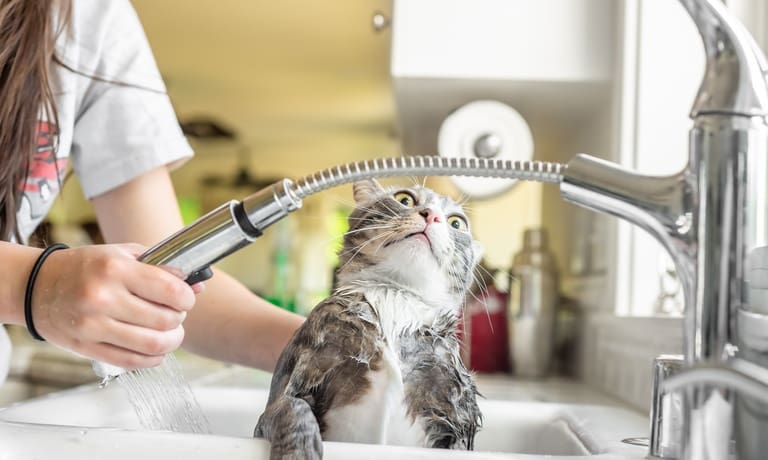
Deep-basin sinks can make washing a nervous cat easier because there’s less space for them to climb, twist, and push away from you. If you have a deep basin sink installed in your laundry room, that gives you a contained area with higher sides and better access than a wide, open bathing spot. A utility sink and wash station also work. Despite the deeper design, don’t fill the sink any higher than you would a shallow bath. It should hold enough water to wet the lower part of your cat’s body without surrounding them in water.
Keep The Water Temperature Comfortable
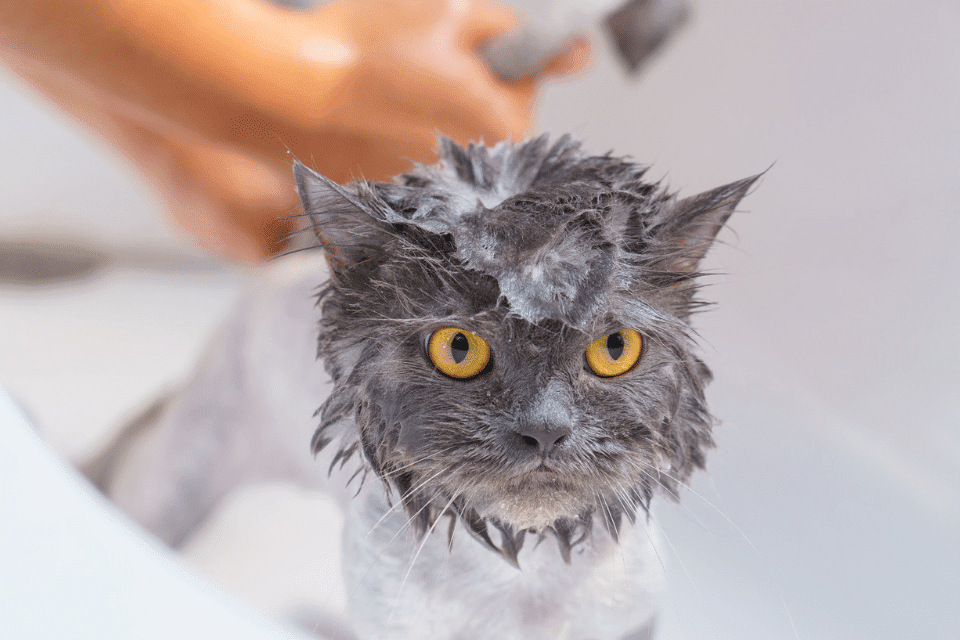
It could be that your cat is tolerant of water as long as it doesn’t feel like melted lava or a surprise ice bath. Your cat’s bath should be lukewarm, between 100 and 103 degrees Fahrenheit (37.8 to 39.4 degrees Celsius). A bath that’s too hot can irritate your cat’s skin, while one that’s too cold can leave them stiff, uncomfortable, and upset. A comfortable temperature helps reduce the initial shock of the bath so your cat is less likely to panic.
Keep the Surroundings Calm and Quiet
When your cat is already jittery at the start of a bath, extra noise can push them over the edge. Make sure the room is quiet before you dip them in the water. If there are any washers, dryers, or fans running, turn them off. Close the door to keep out pets, other people, or anything else that could add stress. And keep your own voice calm as you wash them. Less commotion helps your cat stay more settled during the bath.
Wet Your Cat Slowly
Instead of dumping water over your cat all at once, take it slow. Use a cup to pour a little water on them at a time. Start with the lower part of your cat’s body and work your way towards the shoulders. Many cats react badly to bath time because it feels strange and foreign; moving slowly gives them time to adjust to the sensation of water on their body so they don’t panic as quickly.
Use Cat Shampoo Sparingly
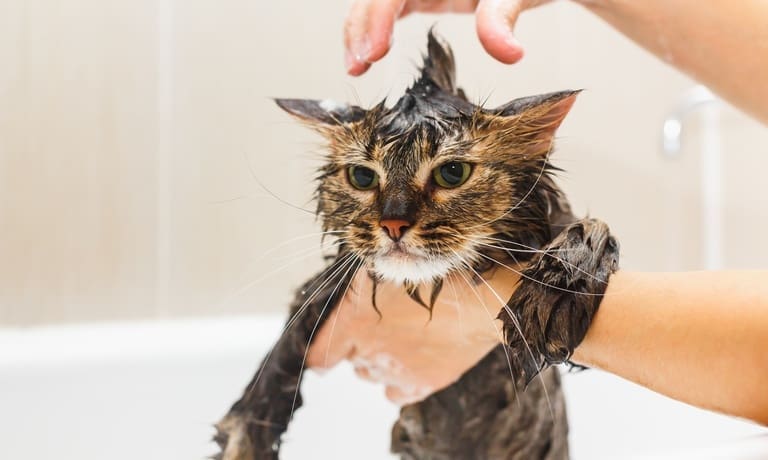
Too much shampoo can make the bath harder than it needs to be. A heavy amount takes longer to rinse out, and extra rinse time gives your cat more time to get annoyed. A small amount of cat shampoo is enough for most baths, especially if the goal is to clean up dirt, dander, or something sticky in the coat. Work it in gently without scrubbing too hard. A lighter hand keeps the process simpler and helps you get to the rinse before your cat decides they’re done.
When Bath Time Needs To Happen
No cat has to love bath time for you to get the job done well. A little planning, a calm setup, and a gentler approach can go a long way when water isn’t exactly your cat’s favorite thing. Bathing a cat who hates water gets easier when you keep each step simple and avoid doing too much at once. Your cat may still act offended afterward, because of course they will, but at least they’ll be clean.