

The information in this article is for educational and informational purposes only. It is not intended as veterinary advice, diagnosis, or treatment for any medical or health issue your pet may have.
Always consult a licensed veterinarian before making any decisions about your pet’s health, diet, medications, supplements, training, or care. Never disregard or delay professional veterinary advice based on content from this website.
BarkleyAndPaws.com and its authors assume no responsibility or liability for any errors, omissions, or outcomes resulting from the use of this information.
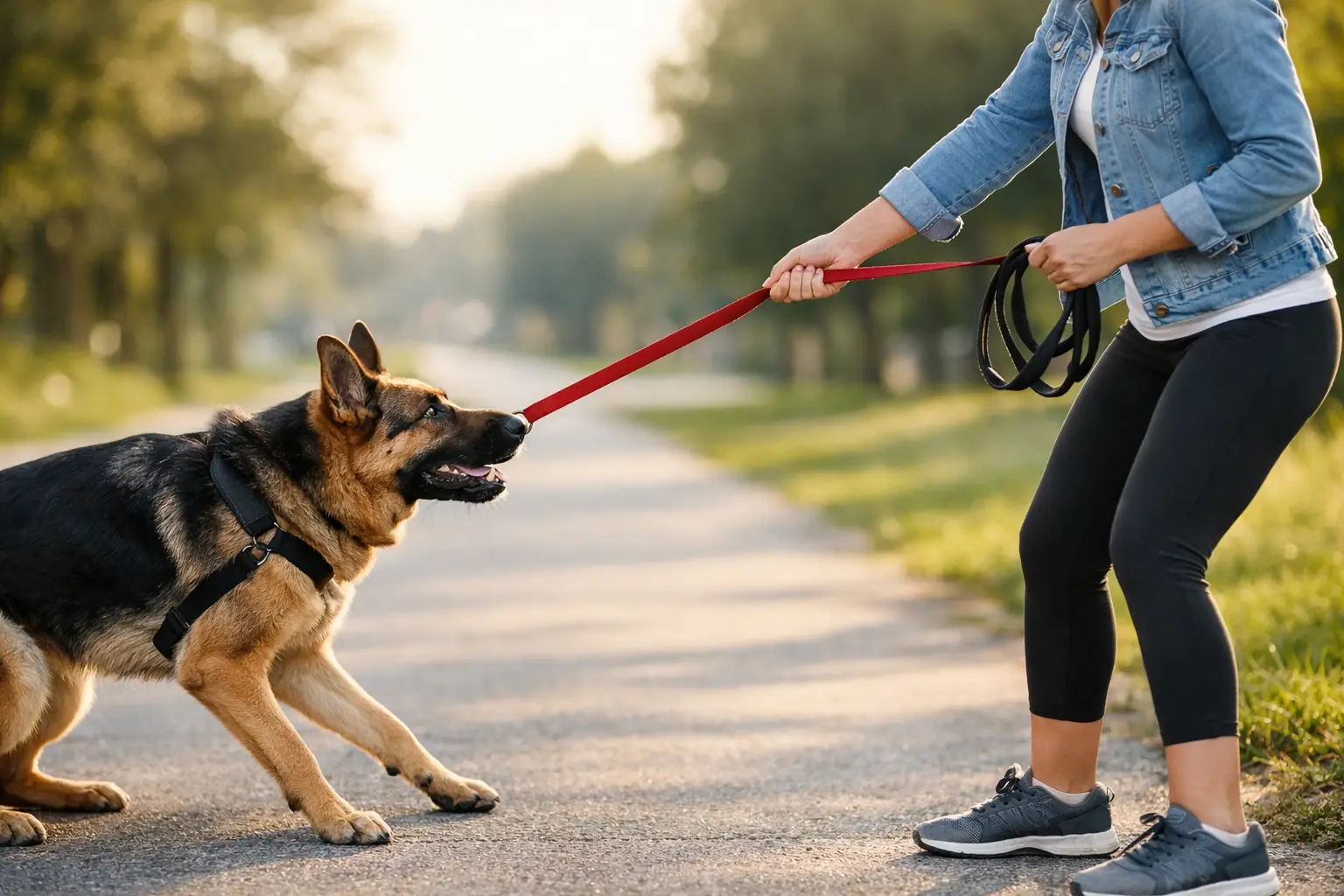
That first hard lunge can turn a nice walk into a shoulder workout fast. If you are trying to figure out how to stop dog pulling, the fix usually is not strength, scolding, or a tighter grip. It is teaching your dog that staying with you is what makes the walk keep going.
Pulling is one of the most common leash complaints because it is incredibly self-rewarding. Dogs move toward smells, squirrels, grass, and greetings by leaning forward, and every successful pull teaches them that pulling works. According to the American Kennel Club, leash training improves most when dogs are consistently rewarded for walking near their handler and prevented from practicing the behavior you do not want. That basic pattern matters more than fancy techniques.
Why dogs pull in the first place
Most dogs are not being stubborn. They are being efficient. Dogs naturally walk faster than many humans, and the outside world is packed with rewards. A young Labrador who drags you to every bush is not plotting against you. He has simply learned that pressure on the leash often leads to something interesting.
Excitement is a big factor, but it is not the only one. Some dogs pull because they are under-exercised and hit the sidewalk already buzzing. Others pull because they are anxious and trying to create distance from a trigger or rush toward safety. Breed tendencies matter too. Sporting and working breeds may pull with more intensity than a low-key companion dog, and small dogs often get less leash training because owners can physically manage them longer.
This is why there is no single magic trick for how to stop dog pulling. A confident adolescent dog, a fearful rescue, and a frustrated greeter may all pull for different reasons. The training principles overlap, but your pacing and setup should match the dog in front of you.
How to stop dog pulling with a clearer training plan
Before you ask for a perfect neighborhood walk, teach your dog what you want in a lower-distraction space. Your living room, driveway, or a quiet patch of sidewalk is a much better classroom than a busy trail on Saturday morning.
Start by choosing one side for your dog to walk on. It does not matter whether it is left or right. What matters is consistency. Hold a few small, high-value treats at the level of your dog’s nose, take one or two steps, and reward while the leash is still loose. Then repeat. Early on, this can feel almost silly because you are rewarding constantly, but that is exactly how you build the pattern.
As your dog starts checking in and staying closer, increase the number of steps between treats. If the leash tightens, stop moving. The key is calm timing. Do not jerk the leash back and do not keep walking while your dog leans into the pressure. Wait for even a slight release or a glance back, then mark that moment with praise and move forward again.
Movement becomes the reward. That is what changes the game.
The stop-and-go method works, but only if you are patient
Many owners have heard of stopping every time the dog pulls, then conclude it does not work because the walk becomes painfully slow. In the beginning, it often does. That does not mean the method is wrong. It means your dog is still learning.
For the stop-and-go approach to work, every person who walks the dog has to follow it. If your dog can drag one family member down the block but not another, the lesson gets muddy. Dogs repeat what pays off, and inconsistent rules keep pulling alive.
You can also add a direction change. If your dog forges ahead, turn and walk a few steps the other way, then reward when your dog catches up at your side. This keeps your dog mentally engaged instead of planting at the end of the leash and waiting you out.
Reward the right zone, not just the absence of pulling
One mistake owners make is waiting until the dog stops pulling before giving feedback. That misses dozens of good moments. Reward when your dog is in the area you want, with a soft leash and attention on you or the environment without lunging.
Think of it as building a preferred walking zone. Your dog does not need competition-level heel work on every potty break. For most households, success means a dog who can walk with a loose leash, respond when you slow down, and recover quickly from distractions.
That practical goal is easier to maintain and more realistic for everyday life.
The gear question: what helps and what makes things worse
Equipment will not train the behavior by itself, but it can make training safer and clearer. A standard flat collar is fine for many dogs, though it gives you less control if your dog surges suddenly. A front-clip harness can be useful because it redirects the dog’s body when they pull forward, which often reduces momentum without relying on neck pressure.
The American Veterinary Medical Association supports reward-based training methods and avoiding handling that increases fear or distress. That matters when choosing gear. Tools that rely on pain or intimidation may suppress behavior in the short term, but they can also create fallout, especially in nervous or reactive dogs.
A retractable leash is usually a poor choice for a dog learning leash manners because it teaches constant tension. If you are working on how to stop dog pulling, you want the leash to have a clear difference between loose and tight. A regular 5- to 6-foot leash does that better.
If your dog coughs, gags, spins, or seems more agitated in certain equipment, pause and reassess. Fit matters. Comfort matters. And if your dog has a history of neck, airway, or orthopedic problems, ask your veterinarian what setup is safest.
What to do when distractions blow up your training
Real walks are messy. A rabbit appears. A neighbor wants to say hi. A delivery truck rattles past your fence line. Good leash manners are not built by pretending those things will not happen. They are built by adjusting distance and difficulty before your dog goes over threshold.
If your dog pulls hard toward people or dogs, create more space before asking for attention. This is not giving in. It is setting your dog up to succeed. The ASPCA notes that dogs learn better when they are not pushed into a state of high arousal or fear. Once your dog can notice the distraction without lunging, reward generously for eye contact, a loose leash, or choosing to stay with you.
This is where many owners move too fast. If your dog can walk nicely in the yard but unravels on the sidewalk, the answer is usually not more correction. It is easier practice, more repetition, and shorter sessions.
For high-energy dogs, train after some decompression
If your dog explodes out the door at full speed, try separating exercise from leash skill work. A quick play session in the yard, a short sniff break on a long line in a safe area, or a bit of food puzzle time before the walk can take the edge off.
There is a trade-off here. Some dogs walk better after they burn a little energy. Others get more wound up by pre-walk excitement. If your dog gets crazier after fetch, skip that and start with calm pattern games at the door instead. It depends on your dog’s personality and arousal level.
Common mistakes that keep pulling going
The biggest one is accidentally rewarding the wrong thing. If your dog drags you to a tree and then gets to sniff, the pulling was successful. Sniffing is wonderful and should absolutely be part of a healthy walk, but try using it strategically. Ask for a few loose-leash steps first, then release your dog to sniff as a reward.
Another common problem is asking for too much too soon. A 45-minute training walk through a stimulating neighborhood can be too hard for a dog who only just learned to stay near you in the driveway. Short, successful sessions build more progress than long frustrating ones.
Owners also underestimate timing. Rewarding two seconds late can mean you are paying for forging ahead instead of walking beside you. If that feels tricky, use a simple marker word like yes the instant your dog gets it right, then deliver the treat.
When pulling may be more than a training issue
Sometimes leash pulling is tangled up with pain, panic, or frustration that needs a broader plan. If your dog suddenly starts pulling more, seems uncomfortable in a harness, limps after walks, pants excessively, or reacts strongly to normal sights and sounds, get a veterinary check first.
If your dog lunges, barks, or thrashes on leash around triggers, you may be dealing with reactivity rather than basic excitement. That does not mean your dog is bad, and it does not mean you failed. It means the training plan should include trigger management and behavior support, sometimes with a certified trainer or veterinary behavior professional.
For many dogs, how to stop dog pulling comes down to one simple rule repeated hundreds of times: loose leash moves the walk forward. Keep your practice short, keep your rewards meaningful, and keep your expectations fair. A calmer walk rarely arrives all at once, but with steady training, it absolutely gets closer.