


The information in this article is for educational and informational purposes only. It is not intended as veterinary advice, diagnosis, or treatment for any medical or health issue your pet may have.
Always consult a licensed veterinarian before making any decisions about your pet’s health, diet, medications, supplements, training, or care. Never disregard or delay professional veterinary advice based on content from this website.
BarkleyAndPaws.com and its authors assume no responsibility or liability for any errors, omissions, or outcomes resulting from the use of this information.
The difference between a calm, comfortable walk and a tug-of-war often comes down to one decision: dog harness vs collar. If your dog pulls, slips backward, coughs on leash, or turns every squirrel sighting into a full-body launch, the gear you choose matters more than many owners realize.
A collar is simple, familiar, and perfectly fine for many dogs in some situations. A harness can offer more control and reduce pressure on the neck, but it is not automatically the better choice for every dog or every walk. The right answer depends on your dog’s size, behavior, health, and what you actually need that gear to do.
Dog harness vs collar: the real difference
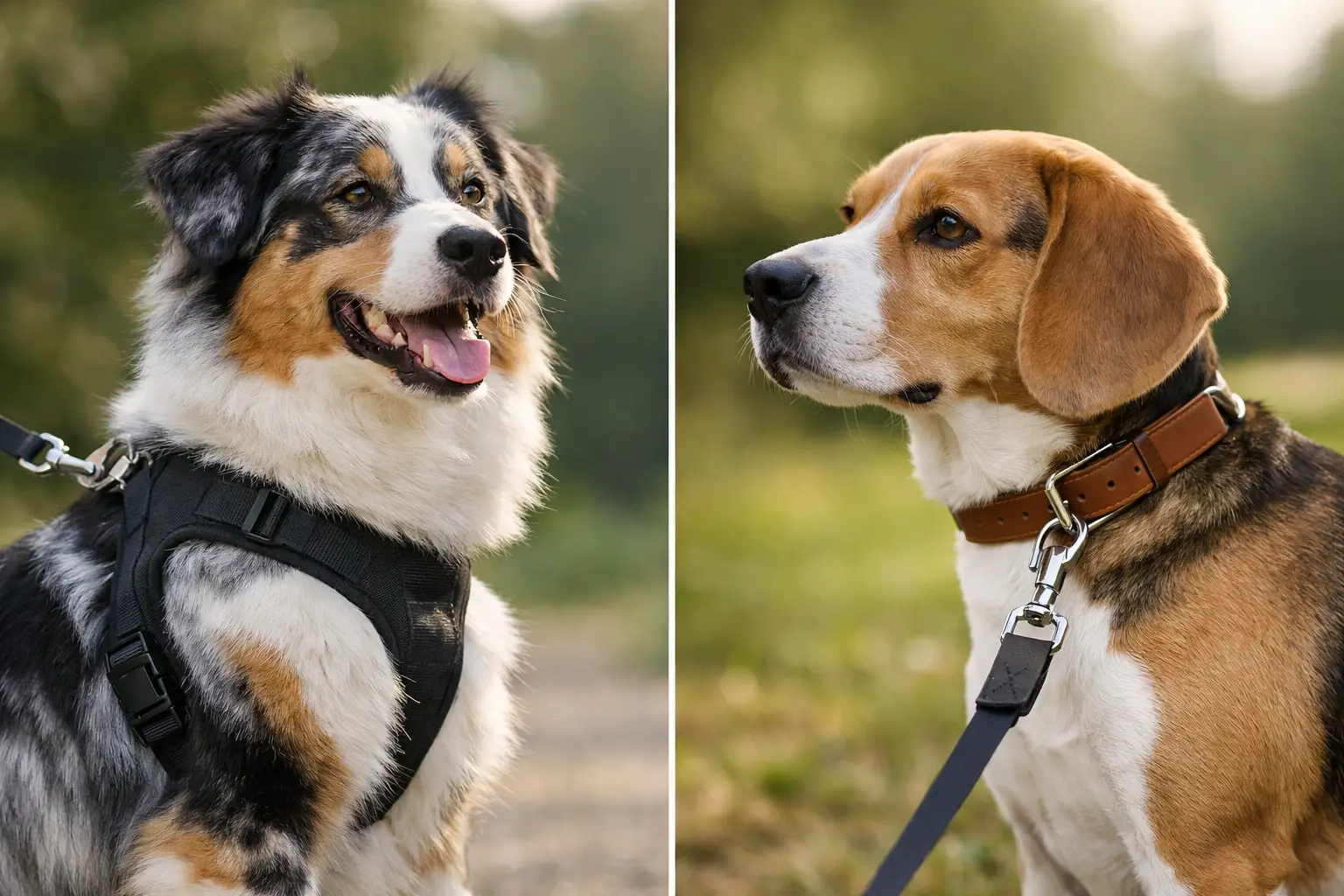
A collar sits around the neck. It is typically best for holding ID tags and, for some dogs, attaching a leash during calm walks. A harness wraps around the chest and shoulders, spreading pressure across a larger area of the body.
That design difference is the whole debate. When a dog hits the end of the leash wearing a collar, the force goes straight to the neck and throat. When the same dog is in a well-fitted harness, that pressure is usually distributed across the chest and torso instead. For dogs that pull hard, have delicate airways, or are prone to slipping out of gear, that can be a meaningful safety upgrade.
Still, a harness is not magic. A poorly fitted harness can rub, restrict movement, or give owners a false sense of security. Some dogs also walk beautifully on a flat collar and do not need anything more elaborate.
When a collar makes sense
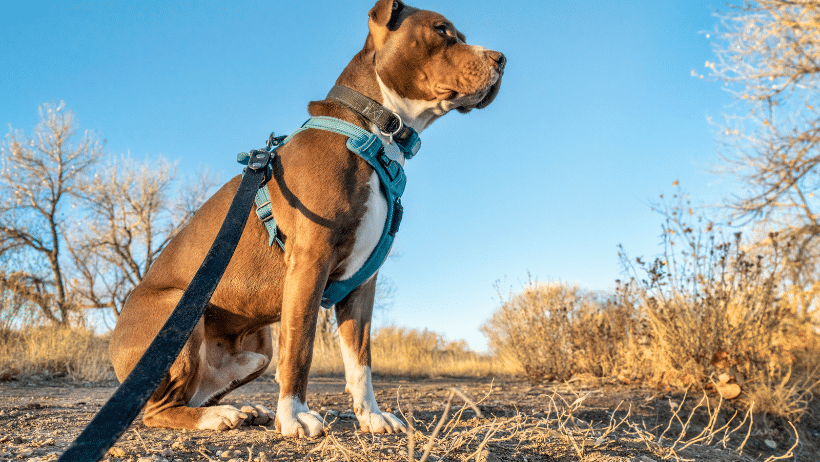
For many adult dogs with good leash manners, a flat collar works just fine for everyday use. It is lightweight, easy to put on, and ideal for carrying rabies tags, license tags, and ID information. Even dogs that primarily walk in a harness should usually wear a collar with identification unless safety or medical reasons suggest otherwise.
A collar can also be a reasonable leash attachment choice for dogs that do not pull, lunge, or choke themselves at the end of the leash. If your dog walks beside you with a loose leash and has no history of respiratory issues, neck injury, or escape behavior, a collar may be all you need for short neighborhood walks.
The trade-off is that collars are less forgiving. If your dog suddenly bolts after another dog, backs out during a stressful moment, or spends the walk coughing against the leash, a collar stops being the simple option and starts becoming the risky one.
When a harness is the better choice
Harnesses are often the better pick for puppies, small breeds, brachycephalic dogs like pugs and French bulldogs, strong pullers, and dogs in training. They can also be especially helpful for shy or reactive dogs that may twist, spin, or try to retreat when startled.
A good harness can give you better physical control without concentrating force on the throat. Front-clip styles, in particular, can help redirect forward pulling, which is useful during leash training. Back-clip harnesses are comfortable and convenient, though they may encourage pulling in some dogs simply because they allow the dog to lean into the pressure more easily.
Older dogs and dogs with mobility issues may also benefit from certain harness designs, especially those with supportive handles. These can help owners guide a dog over stairs, into the car, or through slippery areas without tugging on the neck.
Safety and health considerations
This is where the dog harness vs collar question becomes less about preference and more about your individual dog. If your dog has tracheal sensitivity, collapsing trachea, chronic coughing, cervical spine concerns, or eye conditions that can worsen with pressure, a harness is usually the safer route. Small dogs are often overrepresented in these conversations because their airways and neck structures can be more delicate.
Dogs with flat faces also deserve extra consideration. Breeds with shortened airways already work harder to breathe, so adding repeated leash pressure to the throat is not ideal.
That said, harnesses have their own fit-related concerns. If the chest strap sits too close to the armpits, it can cause rubbing. If the harness crosses the shoulders poorly, it may interfere with natural gait. A bulky harness left on all day can also trap moisture or irritate skin, especially in hot weather or on heavy-coated dogs.
The safest setup is usually a properly fitted harness for walks and a comfortable collar for identification.
Training matters more than gear alone
Owners sometimes hope a harness or collar will solve pulling by itself. Usually, it will not. Gear can support training, but it does not replace it.
If your dog pulls because they are overexcited, under-exercised, nervous, or never learned loose-leash walking, the long-term fix is training. A front-clip harness can give you better leverage while you teach leash skills, and a flat collar can work well once those skills are reliable. But neither tool changes behavior without consistent practice.
This is also why one owner swears by collars while another says harnesses changed everything. They may be describing two completely different dogs with two completely different training histories.
Which dogs should not rely on a collar for walking?
Some dogs are simply poor candidates for leash walking on a collar. That includes dogs that pull hard enough to gag, toy breeds with fragile necks, brachycephalic breeds, dogs recovering from neck or spine issues, and any dog with a history of slipping out of a collar.
Very nervous rescue dogs often fall into this category too. A frightened dog can back out of a flat collar faster than many owners expect. In those situations, a secure harness can be a major safety tool, sometimes paired with a backup connection to a collar for extra precaution.
If you have a giant breed or a high-drive adolescent dog, a harness may also make walks more manageable while training catches up with strength and enthusiasm.
How to choose the right harness
Not all harnesses are equally useful. The best choice depends on what problem you are trying to solve.
For pullers, a front-clip harness is often the most practical starting point. It helps redirect the dog back toward you when they surge forward. For calm dogs who mainly need comfort and security, a back-clip harness may be enough. For escape artists, look for designs with multiple adjustment points and a more secure body shape.
Fit is everything. You should be able to slide two fingers under most straps without the harness shifting excessively. It should sit clear of the throat, not dig into the armpits, and not limit shoulder movement. If your dog’s coat gets rubbed thin or they seem reluctant to move naturally, the fit is off even if the harness looks snug.
How to choose the right collar
If you are using a collar for walking, keep it simple and well-fitted. A flat collar is the standard choice for most dogs. It should be snug enough that your dog cannot slip out but not so tight that it leaves pressure marks or discomfort.
For identification, collars are hard to beat. They are visible, easy to keep on, and hold tags reliably. Many owners end up using both tools for that reason: harness for leash attachment, collar for ID.
Skip any collar that works by tightening excessively or causing pain unless you are under direct guidance from a qualified professional and understand the risks. For most pet owners, comfort, safety, and consistent training are the better path.
The best answer for most pet owners
For the average family dog, this is not really an either-or decision. A collar and a harness often serve different jobs.
Use a collar for identification and everyday wear if your dog tolerates it well. Use a harness for walks if your dog pulls, has health concerns, is young and still learning, or needs extra security. If your dog walks beautifully on a collar and has no medical or behavioral reason to switch, there is no need to complicate things.
What matters is matching the gear to the dog in front of you, not the dog in a product ad or a training video.
Some dogs do best in a harness for life. Some graduate from harness to collar once leash skills improve. Some wear both every day because that setup covers safety, comfort, and identification all at once. That is a sensible approach, not overkill.
If you are unsure, watch your dog closely on your next few walks. Are they coughing, straining, backing out, leaning hard, or moving awkwardly? Those small signs tell you more than the packaging ever will. The best gear is the one that helps your dog move comfortably and keeps both of you a little more relaxed when the leash clips on.