


The information in this article is for educational and informational purposes only. It is not intended as veterinary advice, diagnosis, or treatment for any medical or health issue your pet may have.
Always consult a licensed veterinarian before making any decisions about your pet’s health, diet, medications, supplements, training, or care. Never disregard or delay professional veterinary advice based on content from this website.
BarkleyAndPaws.com and its authors assume no responsibility or liability for any errors, omissions, or outcomes resulting from the use of this information.
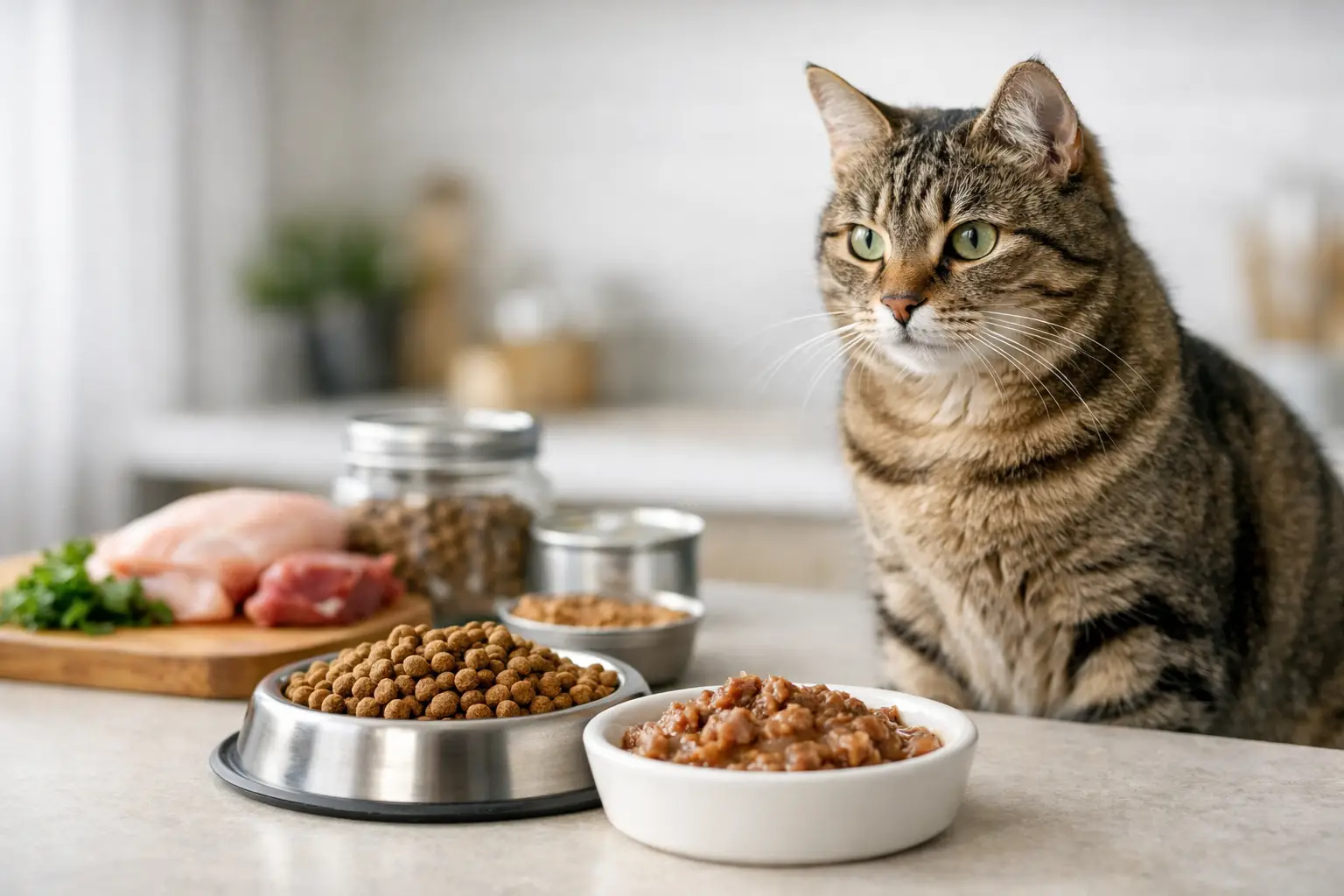
The cat food aisle can make a thoughtful pet owner feel oddly unprepared. One bag says high protein, another says indoor formula, a third promises shiny coats and better digestion. If you are wondering how to choose cat food without getting pulled in ten directions by marketing, the good news is that the basics are simpler than the packaging suggests.
Cats are obligate carnivores, which means they need nutrients that come primarily from animal sources. That one fact clears up a lot of confusion. The best choice for your cat is not the trendiest formula or the most expensive can. It is the food that matches your cat’s life stage, health needs, eating habits, and your ability to feed it consistently.
How to choose cat food without overthinking it
Start with your cat, not the label on the front of the bag. A healthy kitten has different nutritional needs than a sedentary indoor adult, and a senior cat with kidney concerns needs something different from both. Before comparing brands, ask four basic questions: how old is your cat, does your cat have any diagnosed health issues, is your cat at a healthy weight, and will your cat actually eat the food.
That last point matters more than many owners expect. A nutritionally complete food does not help much if your cat refuses it after two bites. Preference, texture, smell, and routine all play a role. Some cats love pate and ignore shreds. Others prefer dry food simply because that is what they know.
Match the food to your cat’s life stage
The easiest way to narrow your options is by age category. Kittens need more calories, more protein, and carefully balanced minerals to support growth. Adult cats need maintenance nutrition, while senior cats may benefit from diets that support muscle retention, joint comfort, or easier digestion.
Look for food labeled for your cat’s life stage, such as growth, adult maintenance, or all life stages. All life stages foods can work, but they are not always the most tailored option. A healthy adult cat often does better on a formula designed specifically for adult maintenance rather than one built to meet the higher energy demands of kittens too.
Check for complete and balanced nutrition
One of the most useful lines on a package is not the flashy one on the front. It is the nutritional adequacy statement, which tells you whether the food is complete and balanced for a certain life stage. That means the formula is intended to provide the nutrients your cat needs as a primary diet, not just as a treat or topper.
If you feed a homemade diet, raw food, or boutique formula without veterinary guidance, the risk is not always obvious right away. Nutritional gaps can develop slowly. For most households, a commercially prepared complete and balanced food is the safer and more practical choice.
Dry, wet, or both?
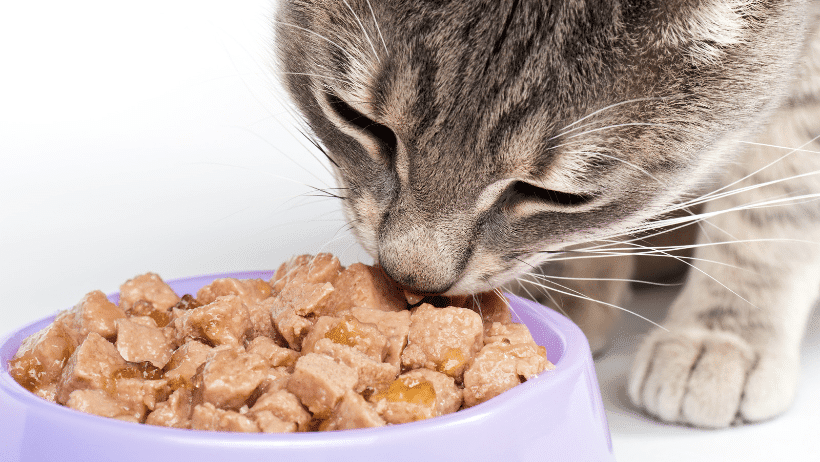
This is where a lot of cat owners get stuck, and the honest answer is that it depends. Wet food can help increase water intake, which is especially helpful because many cats are not enthusiastic drinkers. It is often a smart option for cats prone to urinary issues, constipation, or those who simply do better with extra moisture in their diet.
Dry food is convenient, easy to portion, and usually more budget-friendly. It also stores well and works nicely in puzzle feeders for enrichment. But dry food is less hydrating, and free-feeding it all day can make weight gain easier, especially for indoor cats who spend more time napping than sprinting.
For many cats, a mixed feeding routine works well. Wet food adds moisture and variety, while dry food offers convenience. The right balance comes down to your cat’s health, your budget, and what you can realistically maintain day after day.
How much ingredients really matter
Ingredient lists matter, but not always in the way people think. Owners often get told to scan the first five ingredients and avoid anything they cannot pronounce. That sounds tidy, but it leaves out the bigger picture.
A better approach is to look for a named animal protein source and remember that ingredients are listed by weight before cooking. Fresh chicken may appear first, but it contains a lot of water. That does not make it bad, just not automatically better than another formula with chicken meal listed higher. Meals are concentrated protein ingredients and can absolutely have a place in quality cat food.
What matters more is whether the overall diet is appropriate and balanced. Marketing terms like premium, natural, ancestral, or holistic are not guarantees of nutritional quality. Some grain-free diets are excellent, and some are unnecessary for a cat with no grain sensitivity. Some foods with by-products are perfectly nutritious, despite the bad reputation that word gets online.
If your cat is healthy, focus less on trendy ingredient fear and more on proven nutritional fit. If your cat has allergies or digestive issues, then ingredient selection becomes more specific and more important.
How to choose cat food for common health concerns
Health conditions change the conversation fast. A cat with urinary crystals, diabetes, chronic kidney disease, food allergies, or obesity should not be eating based on generic advice from a message board. In these cases, your veterinarian’s recommendation should lead.
That does not mean every cat needs a prescription diet. Many do well on over-the-counter formulas chosen for a specific need, such as hairball control, sensitive stomach support, or weight management. But when a condition has already been diagnosed, especially one involving the urinary tract, kidneys, or blood sugar, precision matters.
Weight deserves special attention because it is so common and so easy to miss. A cat that seems pleasantly round may already be overweight. Extra pounds can raise the risk of arthritis, diabetes, and grooming problems. If your cat is gaining steadily, food choice is only part of the fix. Portion size, treat habits, and activity level matter just as much.
Indoor formulas, sensitive stomach formulas, and breed-specific diets
Some specialty formulas are helpful. Others are mostly positioning.
Indoor cat food can make sense if it is lower in calories and supports hairball management, especially for less active cats. Sensitive stomach foods can be useful when they are built around digestible ingredients and your cat actually improves on them. Breed-specific diets are more hit or miss. Unless your cat has a clear need that a particular formula addresses, breed on the bag is usually less relevant than age, weight, and medical history.
Budget matters, and that is okay
Many owners feel guilty if they cannot buy the most expensive food on the shelf. There is no need. A reliable, complete and balanced food that fits your budget is better than a premium brand you cannot afford consistently or one that leads to frequent diet changes because the cost is too high.
Consistency matters in cat nutrition. Sudden switches can upset digestion, and constantly rotating foods because of sales or trends can make it harder to identify what truly works for your cat. If you find a food your cat does well on, your vet approves of it, and it fits your budget, that is a solid outcome.
You can also improve a routine without rebuilding it from scratch. For example, if you mainly feed dry food because it is practical, adding a small amount of wet food daily may give your cat a useful hydration boost without doubling your grocery bill.
When and how to switch foods
Even the right food can cause problems if you switch too quickly. Most cats do best with a gradual transition over about seven to ten days. Mix a small amount of the new food into the old, then slowly increase the new portion. This helps reduce stomach upset and gives picky cats time to accept the change.
Watch the litter box, energy level, coat quality, and appetite during the transition. Soft stool, vomiting, or complete refusal to eat are signs to pause and reassess. Some cats need a slower change, and some simply dislike a certain texture or flavor.
If your cat stops eating entirely for more than a day, do not wait it out. Cats can get into trouble quickly when they go without food.
Signs you chose well
The best cat food is not crowned by the loudest packaging claim. It shows up in your cat’s daily life. A good fit usually means a healthy weight, a shiny coat, normal stool, steady energy, and a cat who eats with interest but not desperation.
There is also room for adjustment. Cats change as they age. A food that worked beautifully at two years old may not be the best option at ten. Rechecking your choice once in a while is part of good pet care, not a sign you got it wrong the first time.
Choosing cat food can feel oddly high-stakes because food touches everything from energy to digestion to long-term health. But once you focus on life stage, health needs, practical feeding habits, and consistency, the decision gets much clearer. Your cat does not need a perfect label. Your cat needs a thoughtful one.