


The information in this article is for educational and informational purposes only. It is not intended as veterinary advice, diagnosis, or treatment for any medical or health issue your pet may have.
Always consult a licensed veterinarian before making any decisions about your pet’s health, diet, medications, supplements, training, or care. Never disregard or delay professional veterinary advice based on content from this website.
BarkleyAndPaws.com and its authors assume no responsibility or liability for any errors, omissions, or outcomes resulting from the use of this information.
When your dog stares at you from the kitchen floor like a tiny food critic, choosing between raw vs cooked dog food can start to feel bigger than dinner. For many owners, this decision is not really about trends. It is about safety, digestion, energy, budget, and the very real hope that the bowl you serve helps your dog feel their best.
There is no one-size-fits-all answer here. Some dogs do well on carefully planned raw diets. Others thrive on cooked meals, whether homemade or commercially prepared. The right choice depends on your dog’s health, your comfort with food handling, and how much time you can realistically give to meal prep.
Raw vs cooked dog food at a glance
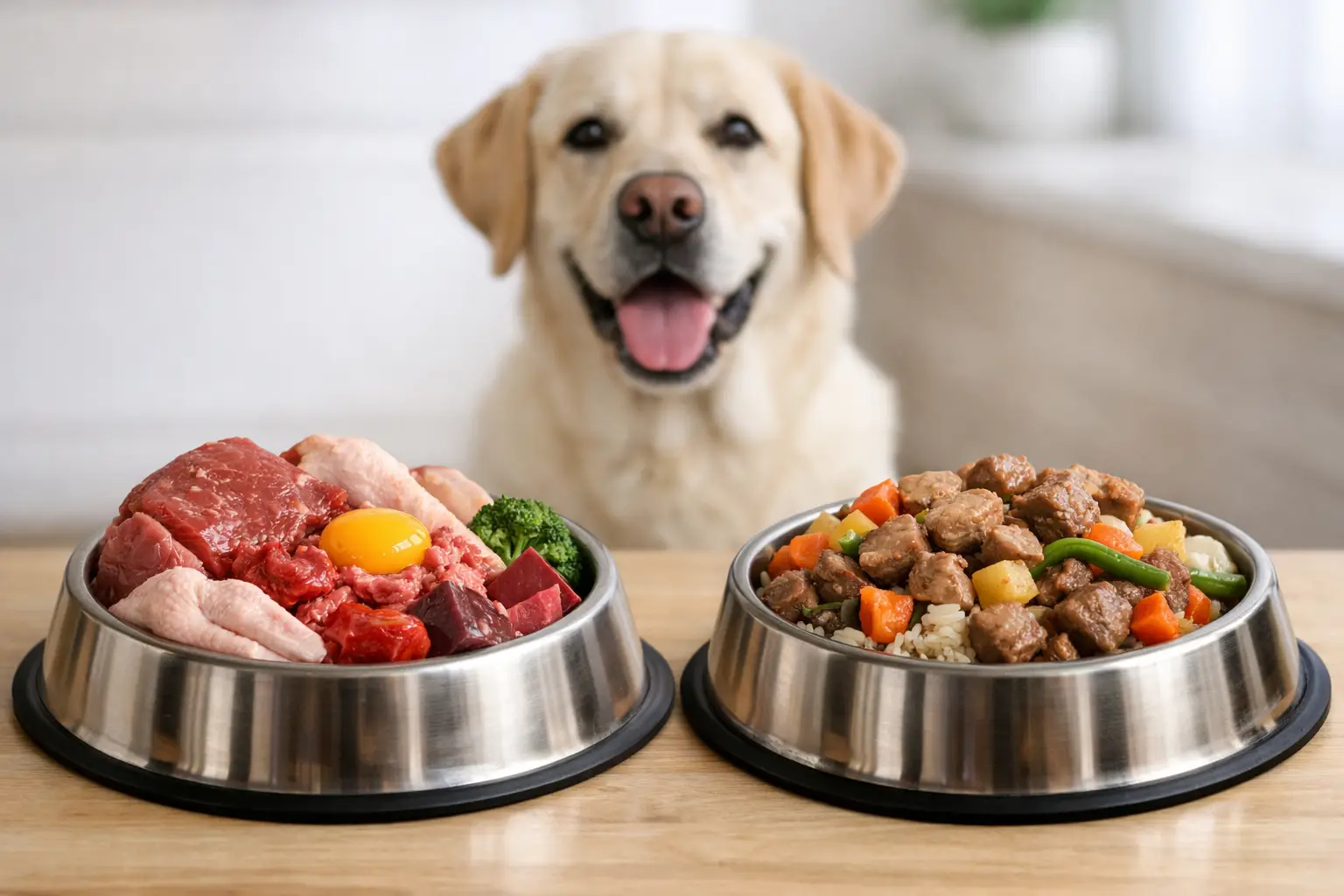
The biggest difference between raw and cooked dog food is exactly what it sounds like. Raw diets use uncooked ingredients such as muscle meat, organ meat, bones, and sometimes vegetables or supplements. Cooked diets use similar ingredients, but heat changes the texture, digestibility, and food safety profile.
Supporters of raw feeding often point to ingredient control and minimal processing. Supporters of cooked feeding usually focus on lower pathogen risk and easier digestion for some dogs. Both sides can make good points, which is why this topic tends to get heated fast.
What matters more than internet debate is whether a diet is complete, balanced, and safe for your individual dog.
Why some owners choose raw dog food
Raw feeding appeals to owners who want a less processed approach. They may like seeing recognizable ingredients in the bowl and having more control over what their dog eats. Some owners also report improvements in stool quality, enthusiasm for meals, and coat condition.
There can be practical upsides too. Certain dogs with food sensitivities may do better when their owners can simplify ingredients and avoid common fillers or additives. Raw diets can also be useful in elimination-style feeding plans when guided by a veterinarian.
That said, raw feeding is not automatically better just because it looks more natural. Domestic dogs are adaptable eaters, and their nutritional needs are more important than the marketing language around any feeding style.
The main concerns with raw feeding
The most serious concern is bacteria. Raw meat can carry pathogens such as Salmonella, Listeria, and E. coli. Those organisms may affect the dog, but they can also spread to humans through food prep surfaces, bowls, hands, and even the dog’s saliva or stool. That risk matters even more in homes with young children, older adults, pregnant women, or anyone with a weakened immune system.
Another issue is nutritional balance. Homemade raw diets are easy to get wrong, especially when calcium, phosphorus, trace minerals, and certain vitamins are not properly calculated. Feeding plain meat without a complete formulation can lead to deficiencies over time. Bones also deserve caution. While some raw feeders use them successfully, they can still cause broken teeth, choking, or digestive injury.
Why cooked dog food works well for many dogs
Cooked dog food gives owners many of the same benefits they like about fresh feeding, but with fewer food safety concerns. Cooking reduces bacterial load, which can make a big difference for households that want fresh ingredients without the stress of managing raw meat every day.
For some dogs, cooked food is simply easier on the stomach. Seniors, puppies, dogs with dental pain, and pets recovering from illness may handle softer, cooked meals more comfortably. Cooking can also improve digestibility of certain ingredients, especially some starches and vegetables.
Cooked diets can still be highly tailored. If your dog needs a novel protein, lower fat intake, or a more controlled ingredient list, a cooked plan may offer flexibility without as much risk.
The trade-offs of cooked diets
Heat changes food. That is not always bad, but it does mean some nutrients are reduced during cooking. If you are making meals at home, you may need supplements or a veterinary nutritionist’s recipe to make sure the diet stays complete and balanced.
Cooked food can also be more time-consuming than kibble and more expensive than many commercial dry diets. Owners sometimes start strong with batch cooking, then realize the shopping, measuring, freezing, and reheating schedule is hard to maintain.
There is also a middle ground that gets overlooked. Commercial fresh-cooked dog foods can offer convenience and better portion control, though cost may still be a factor.
Raw vs cooked dog food for nutrition
This is where the conversation should slow down. Nutritionally, raw vs cooked dog food is not a simple win-lose comparison. A well-formulated raw diet can meet a dog’s needs. A well-formulated cooked diet can do the same. A poorly planned version of either can create problems.
Protein quality, fat levels, essential fatty acids, calcium balance, and micronutrients all matter more than whether the food was heated. Dogs need complete nutrition over time, not just appealing ingredients. That is why homemade diets, especially for growing puppies and dogs with medical conditions, should be built with professional guidance.
If your dog has kidney disease, pancreatitis, severe allergies, gastrointestinal disease, or a history of urinary stones, this choice becomes more medical than philosophical. In those cases, the safest path is to work with your veterinarian rather than follow general feeding advice from social media.
Safety matters more than feeding style
Owners are often drawn to the visible appeal of fresh food, and that makes sense. But safety deserves equal weight. If you are considering raw feeding, you need to be honest about food handling habits. Can you store raw meat correctly, sanitize prep areas every time, and prevent cross-contamination in a busy household? If not, cooked may be the better fit.
Even with cooked food, safe handling still counts. Fresh meals should be refrigerated promptly, portioned carefully, and not left sitting in the bowl for hours. Dogs are not immune to foodborne illness just because they will happily eat almost anything.
A good diet is one you can feed consistently and safely, not one that looks ideal on paper but creates daily risk or stress.
Which dogs may do better on each?
Raw diets may appeal most to healthy adult dogs in households that can manage strict hygiene and work from balanced recipes or reputable commercial formulations. Owners who are detail-oriented and comfortable with meal planning often do best here.
Cooked diets tend to make more sense for puppies, seniors, immunocompromised dogs, and dogs with sensitive digestion. They also fit households that want fresh feeding without the added concern of raw pathogens. For busy families, cooked can feel far more doable.
If your dog is picky, either approach can help, since fresh food is often more enticing than standard kibble. But preference alone should not drive the decision. Some dogs love food that is not especially good for them. That is hardly unique to dogs.
What to ask before you switch
Before changing your dog’s diet, think through the daily reality. Is the plan complete and balanced? Can you afford it long term? Will your dog need a slow transition? Are there health issues that call for a veterinary opinion first?
It also helps to define your goal. Are you trying to improve stool quality, manage allergies, encourage eating, or move away from heavily processed food? Once you know what problem you are actually trying to solve, the best feeding style often becomes clearer.
And if you are moving from kibble to either raw or cooked, do it gradually over at least a week unless your veterinarian recommends otherwise. Sudden changes can cause stomach upset even when the new food is excellent.
The better choice is the one that fits your dog
There is a reason this debate never fully goes away. Raw and cooked dog food both have valid advantages, and both come with limitations. The smartest choice is not the most extreme one. It is the one that matches your dog’s health, your household’s safety needs, and your ability to feed it well every single day.
If you want fresh feeding with fewer worries, cooked may be the easier path. If you are committed to raw and willing to do it carefully, it can work for some dogs. Either way, your dog does not need perfection. Your dog needs a thoughtful, consistent plan made with their well-being in mind.
Sometimes the best nutrition decision is simply the one you can stick with confidently, from the first scoop to the last lick of the bowl.