

The information in this article is for educational and informational purposes only. It is not intended as veterinary advice, diagnosis, or treatment for any medical or health issue your pet may have.
Always consult a licensed veterinarian before making any decisions about your pet’s health, diet, medications, supplements, training, or care. Never disregard or delay professional veterinary advice based on content from this website.
BarkleyAndPaws.com and its authors assume no responsibility or liability for any errors, omissions, or outcomes resulting from the use of this information.
That 5 a.m. yowl at your bedroom door can make it feel like your cat should eat every hour. In reality, how often should cats eat depends on age, health, activity level, and even whether they prefer to graze or clean the bowl in one sitting. The right feeding schedule is less about following a rigid rule and more about matching meals to your cat’s biology and daily routine.
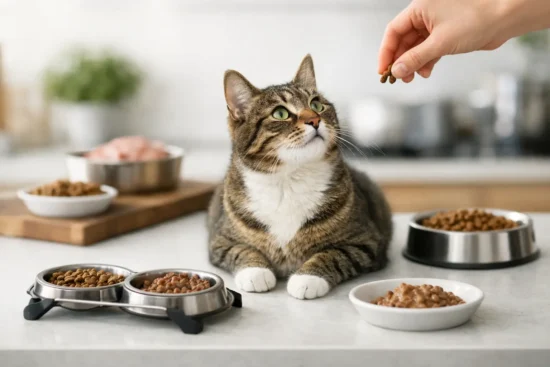
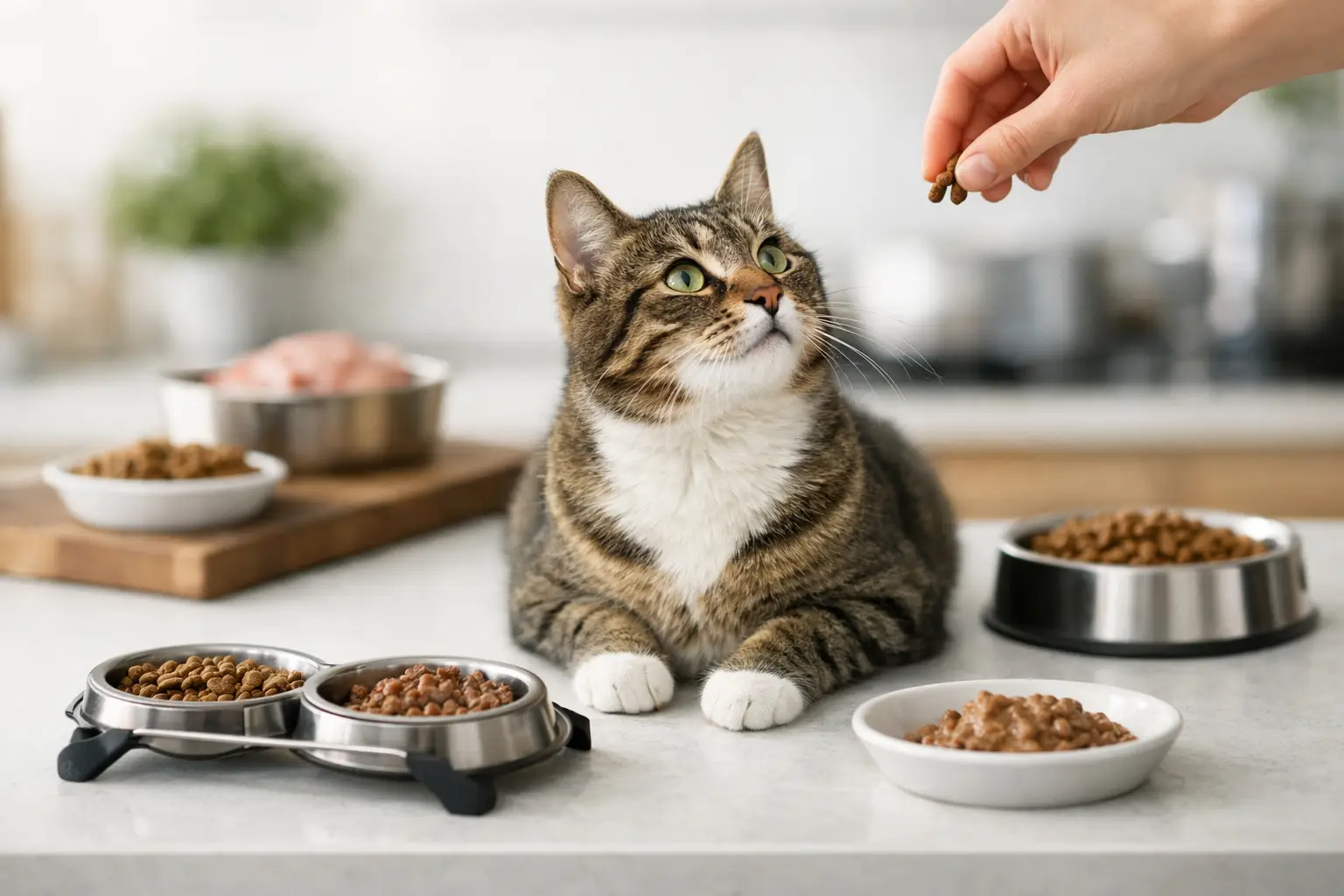
Cats are natural hunters that evolved to eat small prey throughout the day and night. That does not mean they need constant access to food, but it does explain why one giant meal is usually not the best fit. For most healthy adult cats, two measured meals a day works well. Many cats also do well with three smaller meals if that better fits the household schedule or helps with hunger, weight control, or vomiting.
How often should cats eat at different ages?
Age is the biggest factor in setting a feeding routine. A kitten, a healthy 4-year-old indoor cat, and a senior with medical needs should not all be fed the same way.
Kittens
Kittens grow fast and burn through calories quickly, so they need to eat more often than adults. Young kittens that are still being weaned need several small meals a day. Once they are fully on solid food, many do best with three to four meals daily until they reach about 6 months old.
Between 6 months and 1 year, many kittens can shift to three meals a day, then gradually move to two meals as they approach adulthood. If your kitten acts ravenous between meals, loses weight, or has digestive upset, the schedule may need adjusting. Portion size matters just as much as frequency.
Adult cats
Most adult cats do well eating twice a day, roughly 10 to 12 hours apart. Morning and evening feedings are practical for many households and help keep calorie intake consistent. Some adults are perfectly comfortable with three smaller meals, especially if they tend to beg, eat too quickly, or throw up bile when their stomach stays empty too long.
Free-feeding, where dry food is left out all day, can work for some cats that naturally self-regulate. The catch is that many indoor cats do not self-regulate very well. They snack out of boredom, gain weight gradually, and make it harder for owners to notice changes in appetite. Measured meals are usually the easier and safer choice.
Senior cats
Senior cats often still do well with two meals a day, but this is where the answer gets more individual. Older cats may have dental disease, lower appetite, kidney disease, diabetes, hyperthyroidism, or digestive changes that make smaller, more frequent meals easier. If your senior cat is losing weight, leaving food behind, or suddenly acting hungrier than usual, it is worth discussing with your veterinarian rather than just increasing food on your own.
What is the best feeding schedule for cats?
The best feeding schedule is one you can keep consistent and that keeps your cat at a healthy weight with steady energy. For most households, that means breakfast and dinner at about the same time every day.
Consistency matters because cats like predictability. A regular schedule can reduce food-related anxiety, cut down on begging, and make litter box and appetite changes easier to notice. If your workday is long, an automatic feeder can help split meals into smaller portions without requiring someone to be home at noon.
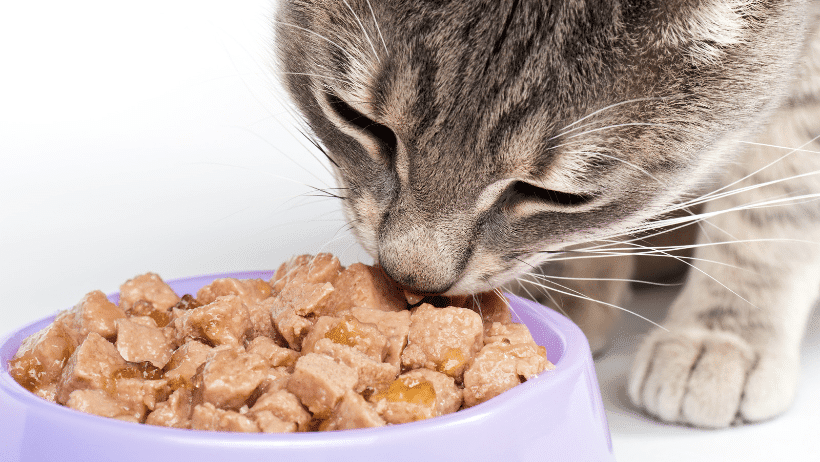
Wet food and dry food can both fit into a healthy schedule. Wet food is often useful for hydration and portion control, while dry food is convenient and easy to use in puzzle feeders or automatic feeders. Many owners land on a mixed approach, such as wet food in the morning and evening with a small dry portion midday. The important part is total daily calories, not just how many times the bowl comes out.
Signs your cat may need a different meal frequency
Two meals a day is a good starting point, but some cats clearly tell you when it is not working. A schedule may need tweaking if your cat vomits from an empty stomach, bolts food and then begs again, wakes everyone before sunrise for breakfast, or seems restless and food-obsessed all day.
Weight changes matter too. A cat that gains weight on free-choice feeding may do better with set mealtimes. A cat that is underweight or recovering from illness may need smaller, more frequent meals to get enough calories in comfortably. If your cat suddenly becomes unusually hungry, unusually uninterested in food, or starts drinking much more water, that is a medical flag, not just a feeding issue.
Should cats have food available all day?
Sometimes, but not by default. Leaving food out all day can be convenient, especially in multi-person households or for cats that nibble naturally. It can also create problems.
The biggest downside is overeating. Indoor cats often get less exercise than their outdoor or highly active counterparts, so unlimited dry food can quietly lead to excess weight. Obesity raises the risk of arthritis, diabetes, and other health issues. Another problem is that free-feeding can mask appetite changes, which are often one of the earliest signs that something is wrong.
There are exceptions. Some very lean, active, or stress-prone cats may do better with access to small amounts of food between meals. In multi-cat homes, though, free-feeding makes it harder to know who is eating what. If one cat is on a prescription diet or one tends to overeat, scheduled meals become much more useful.
Wet food vs. dry food and meal timing
Meal frequency and food type are connected, but one does not automatically determine the other. Wet food is usually served in meals because it should not sit out for long. Dry food is easier to leave out, but that does not mean it should be available nonstop.
Wet food can help cats who do not drink much water, and many cats find it more filling because of the moisture content. Dry food can be helpful for portioned snacks, puzzle feeders, and households that need convenience. Some cats thrive on one format, while others do well on a mix. If you feed both, count all calories together. A common mistake is serving full portions of wet food and then adding dry food as if it does not count.
How often should cats eat if they have special health needs?
This is where general advice stops being enough. Cats with diabetes, gastrointestinal disease, kidney disease, food allergies, or a history of urinary issues may need very specific meal timing and food choices. For example, some diabetic cats do better with meals timed around insulin, while cats prone to nausea may benefit from smaller, more frequent portions.
Cats that eat too fast may also need a different setup rather than simply more food. Slow feeders, food puzzles, and spreading meals across the day can reduce scarfing and vomiting. If your cat is overweight, increasing meal frequency can help in some cases by controlling hunger, but only if each meal is carefully portioned.
A simple way to find the right routine
Start with your cat’s life stage and health status. A healthy adult cat can usually begin with two measured meals a day. Watch body condition, energy, stool quality, appetite, and behavior for a couple of weeks. If your cat seems satisfied, maintains a healthy weight, and is not vomiting or begging constantly, the schedule is probably working.
If not, adjust one thing at a time. You might split the same daily food amount into three meals instead of two. You might move the evening meal later to prevent dawn wake-ups. You might switch from free-feeding to measured portions. Small changes are easier to evaluate than a complete feeding overhaul.
Your veterinarian should be part of the conversation if your cat is a kitten, a senior, overweight, underweight, or dealing with any medical condition. Feeding schedules are simple on paper, but the right answer is always the one that supports your individual cat’s health.
For most cats, the sweet spot is not constant snacking and not one oversized dinner. It is a predictable routine, measured portions, and a setup that lets your cat feel satisfied without turning every hallway walk into a demand for seconds.