

The information in this article is for educational and informational purposes only. It is not intended as veterinary advice, diagnosis, or treatment for any medical or health issue your pet may have.
Always consult a licensed veterinarian before making any decisions about your pet’s health, diet, medications, supplements, training, or care. Never disregard or delay professional veterinary advice based on content from this website.
BarkleyAndPaws.com and its authors assume no responsibility or liability for any errors, omissions, or outcomes resulting from the use of this information.
Summer heat is tough on any dog, but for a senior dog, it’s a real risk. As dogs get older, their ability to regulate body temperature just doesn’t work as well as it used to.
The same sunny afternoon that a younger dog shrugs off could push an older one into danger. If your dog is seven or older, treating extreme summer heat as a real health concern (not just a nuisance) is one of the best things you can do for them this season.
Senior dogs often have other issues: maybe their kidneys aren’t what they used to be, or joint pain keeps them from finding a cooler spot. Some carry extra weight, and others have heart problems that make hot days even harder.
Even if your dog has always handled summer like a champ, these changes can sneak up on you as the years go by.
Key Takeaways
- Change your dog’s outdoor schedule right away during heat spikes—skip midday outings entirely.
- Keeping fresh water in more than one spot at home is weirdly effective.
- Learn your dog’s own warning signs for heat stress so you can step in before things get out of hand.
Act Fast When Temperatures Spike
If there’s a heat wave coming, don’t wait to see how your dog handles it. Change your routine within the first day—older dogs just can’t afford the gamble.
When Heat Becomes Risky For Older Dogs
According to tips for keeping senior dogs cool in summer, most senior dogs start getting uncomfortable above 75°F. That’s even lower than the 80°F mark you’ll hear for younger pups.
Humidity makes things worse—panting doesn’t work as well when the air is already thick with moisture. Dogs with heart disease, arthritis, or extra weight are at even higher risk; their bodies are already working overtime.
How To Adjust Walks, Potty Breaks, And Outdoor Time
On really hot days, aim for walks before 8 a.m. or after 7 p.m. Pavement holds heat long after the sun sets—test it with the back of your hand for five seconds. If it’s too hot for you, it’s too hot for them.
Between 10 a.m. and 4 p.m., keep potty breaks quick and to the point. Head for a shady patch of grass, let your dog do their thing, and get back inside. No need for a stroll during the hottest part of the day.
Simple Same-Day Changes That Improve Comfort
Try these quick fixes:
- Move your dog’s bed away from windows that catch the afternoon sun.
- Set up a fan for extra airflow—even with the AC on, it helps.
- Lay a damp towel on the floor where your dog likes to rest.
- Freeze part of their water bowl to keep it cooler longer.
- Check the temperature in the rooms your dog actually uses, not just the thermostat.
Think of these as your heatwave checklist—not forever changes, just what you do when temps spike.
Build A Cooler Daily Setup At Home
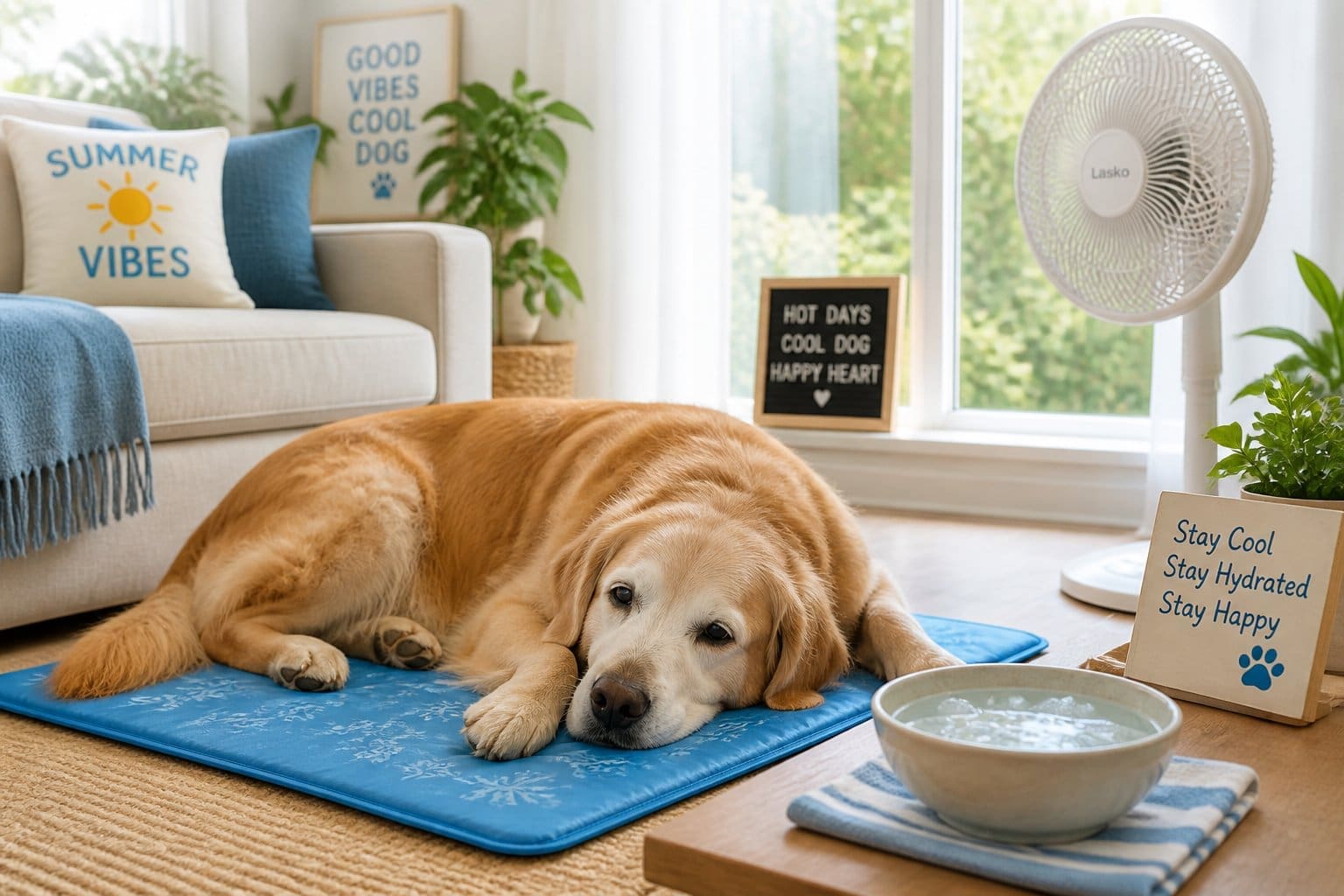
The goal? A stable, cool spot where your senior dog can rest without their body working overtime. It’s the little things—like where you put their bed or how easy it is to find water—that add up. A pet water fountain can be a surprisingly nice upgrade.
Best Indoor Resting Spots And Airflow
Tile and hardwood floors stay cooler than carpet. Most senior dogs will hunt these out on their own—let them.
If your dog’s usual hangout is carpeted, drop a cooling mat there. Fans work best if they’re pulling cooler air in or pushing warm air out, not just stirring things up.
Central AC set at 78°F is about right, if you have it. If not, a window unit in your dog’s main room is worth considering.
Try not to put your dog’s bed near heat-generating appliances—ovens, dryers, or even the back of the fridge.
Water Access In Every Key Area
Stick a water bowl in every room your dog uses, especially near the door for potty breaks. Older dogs with stiff joints might skip drinking if it means a trek across the house.
Pet water fountains get bonus points—moving water stays fresher, and a lot of dogs just like it better. Toss in a few ice cubes when it’s especially hot.
Cooling Tools That Can Help Without Overcomplicating Care
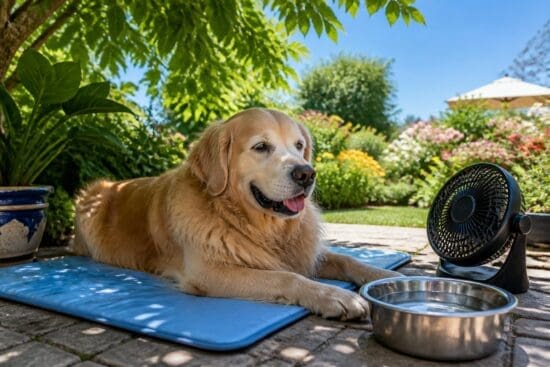
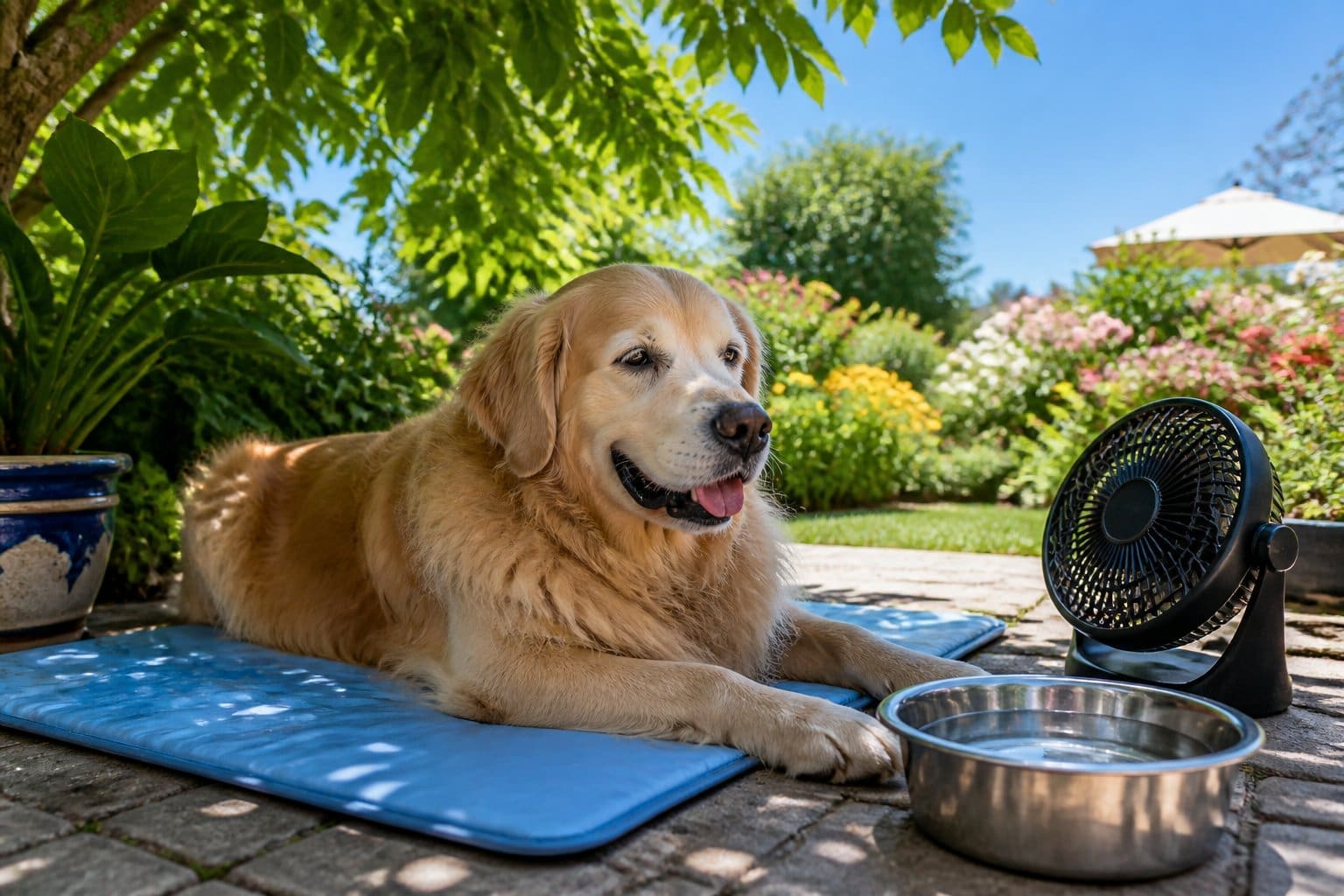
A pressure-activated cooling mat is honestly a game changer. No plugs, no fuss—just toss it where your dog likes to nap. Make sure it’s firm enough for sore joints.
Other handy tools:
- Elevated mesh beds—let air move underneath.
- Clip-on fans—aim them low, near where your dog rests.
- Cooling bandanas—just soak in cool water and wrap around the neck.
You don’t need every gadget on the list. Pick a couple that work for your space and your dog’s habits.
Hydration And Feeding Strategies In Extreme Heat
Hydration is the big one—if you focus on nothing else, focus on this. Senior dogs often don’t drink enough, partly because their thirst signals get weaker with age.
So you have to get a little creative. A portable water bowl is a must for outings, even if you’re just going for a quick drive.
How To Encourage An Older Dog To Drink More
If your dog’s ignoring their water, try adding a splash of low-sodium chicken broth. It sounds simple, but it works for a lot of picky seniors.
You can also offer wet food, water down their meals, or make frozen treats with diluted broth and safe add-ins like plain chicken or watermelon.
According to hydration tips for dogs in hot weather, more water stations around the house means more drinking—simple as that. The easier you make it, the more they’ll drink.
Check your dog’s gums on hot days. Moist and pink is good. Pale, sticky, or dry gums? That’s a red flag—your dog needs fluids, maybe even a vet visit.
What To Bring On Walks And Car Rides
Don’t leave home without a portable water bowl and fresh water, even for quick trips. Collapsible silicone bowls are cheap, light, and fit anywhere.
Offer water before you leave, during stops, and as soon as you get home. On car rides, don’t count on open windows—bring a little cooler with ice water and keep the AC running the whole time.
Meal Timing, Moisture, And Weight Considerations
Feed your dog when it’s coolest—early morning or evening. Digestion actually makes body heat, so big meals at noon just add to the problem.
Thinking about switching to wet food for the summer? Ask your vet. As mentioned in what to feed dogs in hot weather, wet food helps with hydration and can be a nice supplement.
If your senior dog’s a little chunky, it’s worth addressing. Extra pounds make it harder to stay cool. Work with your vet for a safe plan, especially since summer limits exercise.
Grooming, Coat Care, And Sun Protection
Grooming matters for keeping senior dogs cool, but what’s right depends on their coat. For double-coated breeds, shaving is usually not the answer, even if it’s tempting.
Thin-coated or light-colored dogs have different worries—sunburn is real. Pet-safe sunscreen is one thing people forget, but it can make a big difference.
Why Shaving Is Not Always The Answer
Shaving a double-coated breed—think Husky, Golden Retriever, or Lab—removes the insulating layer that actually helps protect against both heat and cold. The undercoat acts as a temperature buffer, and removing it can leave skin exposed to sunburn and mess with the coat’s natural job.
The AKC’s summer grooming guidance recommends regular brushing to get rid of dead undercoat instead of clipping for double-coated breeds. A well-brushed coat lets air move better and does a much better job at managing temperature than a shaved one.
Special Considerations For Thick And Aging Coats
Senior dogs can have changes in their coat—dryness, thinning, or mats that just seem to show up out of nowhere. These changes make insulation and protection less reliable.
Regular brushing gets more important as your dog ages, not less. Try to brush your senior dog at least two or three times a week during the summer.
Pay extra attention to spots where mats love to form: behind the ears, under the collar, around the back end. A slicker brush or undercoat rake that matches your dog’s coat type is your best friend here.
Sometimes, a light trim from a pro groomer—definitely not a full shave—can help keep a thick coat manageable without losing that natural protection.
Protecting Sensitive Skin, Paws, And Light-Coated Dogs
Dogs with white or light coats, thin coats, or pink skin are honestly pretty prone to sunburn, especially on the nose, ear tips, and belly. Pet-safe sunscreen (no zinc oxide or PABA) can go on those exposed spots before heading outside.
Paw pads need some love too. Hot pavement can burn fast, and older dogs might not move away in time. Stick to grass and shade, and maybe try paw wax or little booties for short trips outside.
After every walk, check their paw pads for redness, cracks, or tenderness. Better safe than sorry.
Warning Signs That Mean Your Dog Needs Help
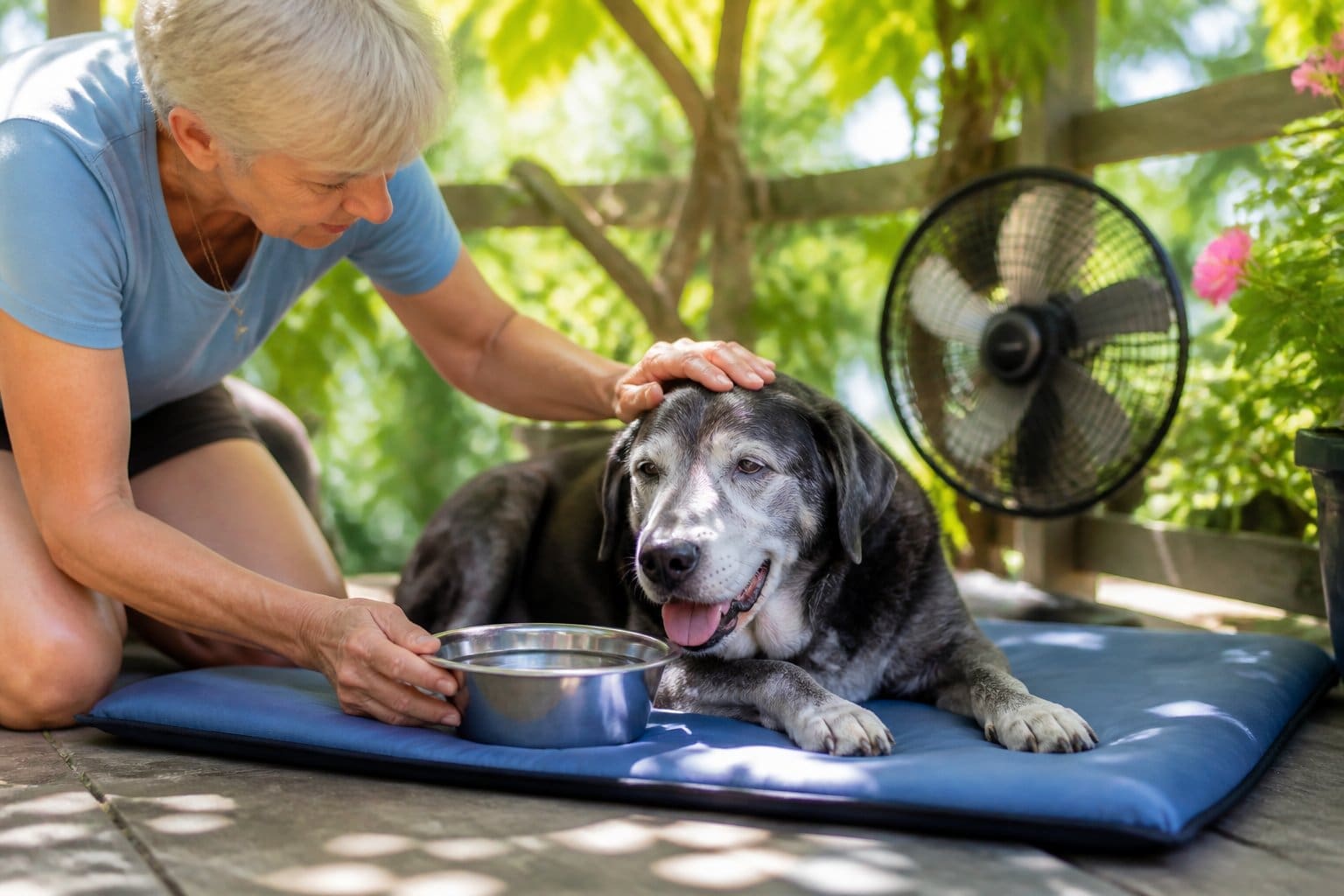
Knowing the warning signs of heat stress before things get serious is huge when you’re caring for a senior dog in extreme heat. Older dogs can show more subtle signs than younger ones, and the time between “not right” and “emergency” can be alarmingly short.
Early Signs Of Heat Stress And Dehydration
Watch for these early clues during or after any warm-weather outing:
- Heavy or weird panting that just doesn’t seem normal for your dog
- More drooling than usual
- Lethargy or just not wanting to get up
- Dry or tacky gums
- Skin that doesn’t snap back quickly if you gently pinch it on the neck
- Seeking out cool spots or acting restless
If you see any of these, get your dog inside right away, offer cool water in small sips, and help them rest on something cool. Don’t wait to see if they’ll “walk it off.”
Red-Flag Symptoms That Need Urgent Veterinary Care
These signs mean it’s time to call the vet, no hesitation:
- Panting that won’t stop, even after trying to cool them down
- Gums that look bright red, pale, or bluish
- Vomiting or diarrhea
- Disorientation, stumbling, or collapse
- Seizures
- Loss of consciousness
Senior pet safety resources point out that dogs with heart or kidney issues are at even higher risk for things to go south quickly once heat stress starts.
How To Cool A Dog Safely While Getting Help
While you’re calling the vet or on your way to the clinic:
- Move your dog to the coolest spot you can find, ASAP
- Use cool (not ice-cold) water on paw pads, groin, and armpits
- Drape a damp towel over their body—skip the head
- Turn on a fan to help with evaporation
- Don’t dunk your dog in cold water; that can send them into shock
Keep the car’s AC blasting during the drive. Call ahead so the vet knows what’s coming and can be ready.
Travel, Outings, And Emergency Readiness
Heading out with a senior dog in summer? You need a bit more prep than just grabbing a leash and a treat. A pet first aid kit should live in your car or bag all year, but in summer, you’ll want a few extras for the heat.
Car Safety And Summer Errands
Never leave your senior dog in a parked car in summer, not even for a minute. The temperature inside skyrockets so fast—windows cracked or not, it’s just not worth the risk.
If your dog has to come with you, plan stops where a friend can stay with them in an air-conditioned car, or where they can come inside. Summer heat safety guidance always lists the parked car as one of the most dangerous places for dogs, and that’s doubly true for seniors.
Planning Short Trips With An Older Dog
For day trips or outings, plan around the heat—don’t try to fight it. Go places with shade, indoor spots, or water, and stick to cooler morning or evening hours.
Tips for summer travel with senior dogs suggest frequent breaks and low-key activity to avoid building up too much heat. Bring more water than you think you’ll need, and offer it at every stop.
What To Keep In A Summer Emergency Kit
Your pet’s summer emergency kit should have:
- Collapsible water bowl and a sealed bottle of fresh water
- Pet first aid kit with basics like gauze, antiseptic wipes, and emergency contacts (your vet and the closest emergency animal clinic)
- A small spray bottle of water for quick cooling
- A cooling towel or lightweight cloth you can wet fast
- Your dog’s meds with an extra day or two’s supply
- A printed copy of your dog’s latest health summary if they have ongoing issues
Just keep this kit in your car during the summer so you’re not scrambling when it matters.
Frequently Asked Questions
What are the safest ways to cool an older dog down during a heatwave?
Move your dog to the coolest indoor spot you can find and use cool (not icy) water on their paw pads, groin, and armpits. A fan helps with evaporation, and small sips of cool water are best. No dunking in cold water—shock is a real risk.
How can I keep my senior dog cool indoors without air conditioning?
Set up fans to pull in cool air from shaded windows early in the day, then close up before it gets hot. Cooling mats on tile or wood floors help, and wet food or water with ice cubes can boost hydration. If it’s always hot, maybe invest in a window AC unit for one room.
What should I do to keep my dog comfortable and cool at night in hot weather?
Pick the coolest room for sleeping—one with decent airflow if possible. Cooling mats, a low fan, and a bowl of fresh water nearby all help at night. Skip the blankets, even if your dog usually loves them.
Are cooling vests or cooling mats safe and effective for senior dogs?
Cooling vests and mats are generally safe, but cooling mats are usually easier for older dogs since they don’t have to wear anything. Look for a pressure-activated mat that doesn’t need refrigerating for the most consistent results.
How can I use a wet towel to cool my dog without causing discomfort or shock?
Use cool—not ice—water to wet the towel. Drape it over the neck, back, and sides, not the head or face. Swap it out or re-wet it every few minutes as it warms up, and use a fan if you can to speed up cooling.
What are the warning signs of overheating or heatstroke in an older dog?
Early signs? You might notice heavy panting or drooling. Sometimes, there’s lethargy, or their gums feel dry or sticky.
If things get worse, you could see vomiting or maybe some disorientation. Pale or oddly bright red gums, collapsing, and even seizures—those are red flags that mean you need a vet, fast.
Older dogs just don’t handle heat as well, and honestly, they can go from okay to emergency way quicker than you’d expect. If you spot any of these signs, it’s best not to wait around.