

The information in this article is for educational and informational purposes only. It is not intended as veterinary advice, diagnosis, or treatment for any medical or health issue your pet may have.
Always consult a licensed veterinarian before making any decisions about your pet’s health, diet, medications, supplements, training, or care. Never disregard or delay professional veterinary advice based on content from this website.
BarkleyAndPaws.com and its authors assume no responsibility or liability for any errors, omissions, or outcomes resulting from the use of this information.
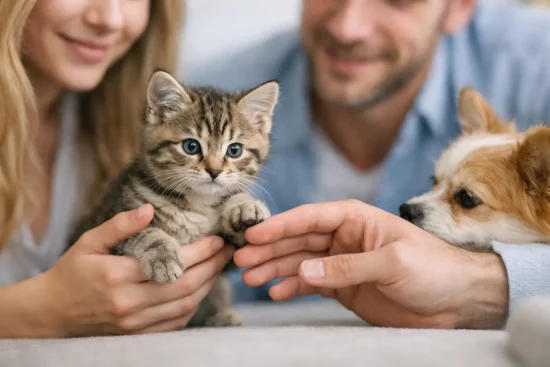
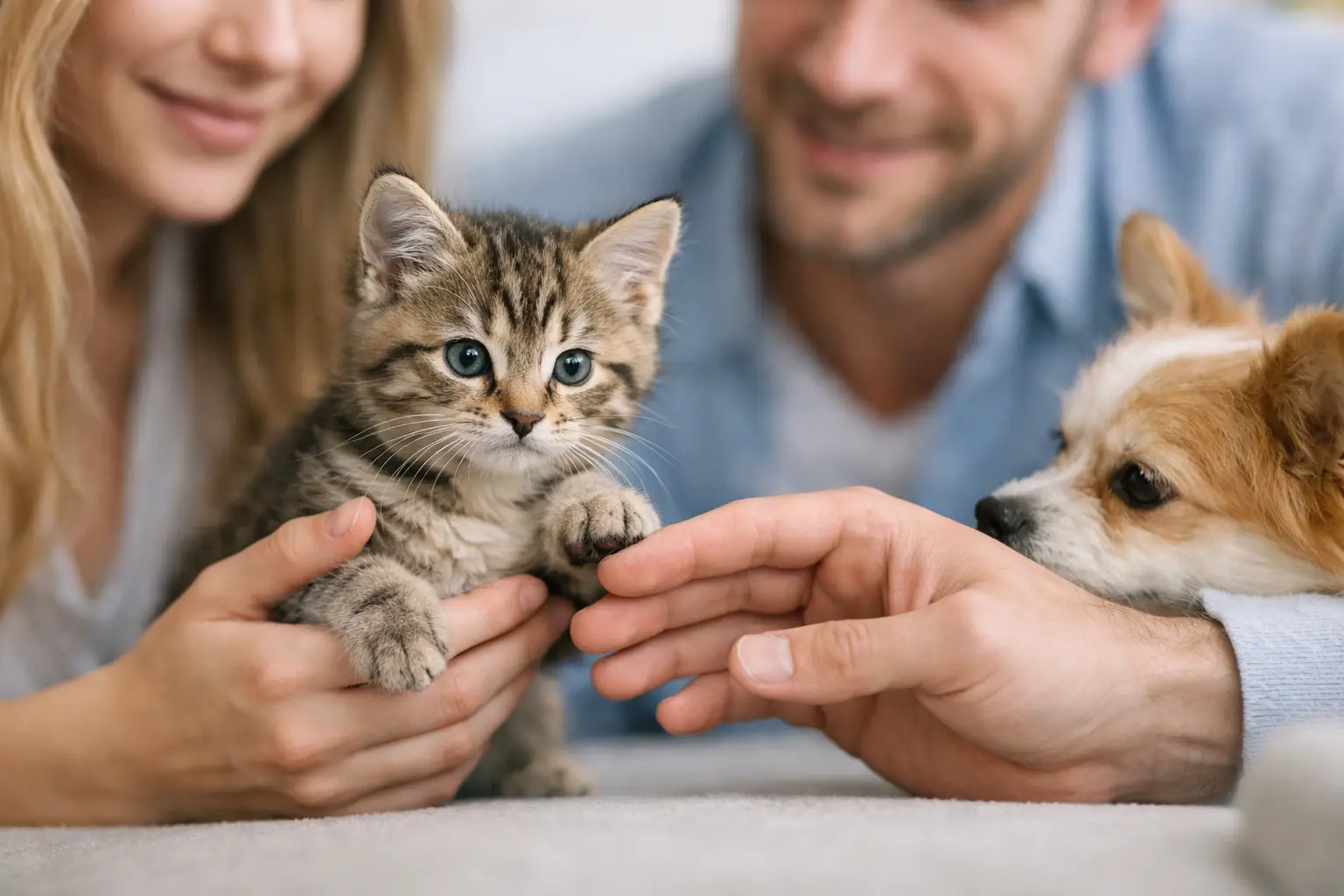
A kitten who happily climbs into your lap, recovers quickly from a new sound, and tolerates a carrier did not necessarily arrive that way. Those everyday wins are built through small, positive experiences repeated at the kitten’s pace. Learning how to socialize a kitten is less about making them outgoing and more about teaching them that people, home life, and gentle change can be safe.
The early weeks matter because kittens are especially open to new experiences when they are very young. Still, there is no deadline after which a cat cannot become more comfortable. A shy eight-week-old, a formerly feral adolescent, and a confident kitten from a busy foster home will all need different amounts of time. Your job is to notice the cat in front of you, protect their sense of safety, and make good things happen often.
Start socializing your kitten early, but gently
Most kittens benefit from calm, positive human contact beginning around two to seven weeks of age, usually while they are still with their mother and littermates. By the time a kitten comes home, often at eight weeks or older, you can continue that foundation with short, predictable interactions throughout the day.
Begin in one quiet, kitten-proofed room rather than giving a nervous newcomer the entire house. Set up food, water, a litter box, a soft sleeping area, a scratching surface, and a hiding spot such as an open carrier or covered bed. The hiding spot is not a problem to solve. It gives your kitten control, and control makes bravery more likely.
Sit on the floor nearby and let the kitten decide whether to approach. Speak softly, blink slowly, and offer a small treat or a toy dragged gently along the floor. Avoid reaching into a hiding place, staring directly at them, or passing the kitten from person to person. Even affectionate attention can feel like pressure when everything is new.
A well-socialized kitten is not one who accepts unlimited handling. It is one who learns that people listen when they communicate discomfort.

Make handling a daily, positive routine
Brief handling sessions teach your kitten that being touched is normal and safe. Choose moments when they are relaxed or sleepy, not when they are racing through the house or focused on play. Pair each touch with praise, a favorite treat, or a tiny lick of kitten-safe wet food.
Start with the places most kittens enjoy: the cheeks, shoulders, and back. Once your kitten is comfortable, gradually introduce the types of touch that support lifelong care. Gently lift a paw for one second, touch an ear, stroke the tail, and briefly look at the mouth without forcing it open. Follow with a reward, then stop before the kitten becomes annoyed.
This practice can make nail trims, grooming, medication, and veterinary exams less stressful later. Keep sessions short – often 30 seconds to two minutes is plenty. If your kitten pulls away, flicks their tail sharply, flattens their ears, growls, or swats, back up to an easier step next time. Pushing through those signals can teach the kitten that hands predict discomfort.
When you do pick up your kitten, support both the chest and hind end. Hold them close to your body for a moment, then calmly put them down before they struggle. Some cats grow into lap cats; others prefer sitting beside their people. Respecting that preference is part of good socialization, not a missed opportunity.
Let play build trust and good manners
Play is one of the fastest ways to connect with a kitten, especially one that is hesitant about touch. Use wand toys, soft toy mice, and lightweight balls to create a safe outlet for stalking, chasing, pouncing, and catching. Two or three short play sessions each day can reduce boredom and help a busy kitten settle more easily afterward.
Keep hands and feet out of the game. Wrestling with fingers may look adorable when a kitten is tiny, but it teaches them that human skin is a target. If teeth or claws touch you during play, become still, quietly end the interaction, and redirect to an appropriate toy once the kitten has calmed down. Do not yell, tap their nose, or use spray bottles. Fear may stop a behavior in the moment, but it does not build trust or teach the kitten what to do instead.
Offer a small meal after an active play session when practical. That sequence – hunt, catch, eat, rest – follows a cat’s natural rhythm and can make your routine feel reassuring.
Introduce everyday sights and sounds in small doses
Socialization includes the ordinary soundtrack of a home: the dishwasher, television, doorbell, laundry, visitors, and traffic beyond the window. The goal is not to expose your kitten to everything at full volume. It is to introduce novelty in manageable amounts while they still feel safe.
Start with a low-intensity version of a sound or activity. Run the vacuum briefly in another room, play a recording of a doorbell quietly, or invite one calm friend over rather than hosting a crowded gathering. Give your kitten space to observe from a distance and pair the experience with treats, play, or a meal.
Watch body language closely. A curious kitten may have forward ears, a relaxed body, and a willingness to investigate. A frightened kitten may crouch, freeze, hide, hold their ears sideways or back, hiss, or refuse food. If you see stress, reduce the intensity immediately. For example, increase the distance from the appliance, shorten the visit, or return to a quieter room.
Do not deliberately frighten a kitten in the name of helping them “get used to it.” Repeated overwhelm can make a sensitive cat more wary, not more confident.
Introduce people, children, and pets carefully
Your kitten does not need to meet dozens of strangers. A handful of calm, respectful people can provide excellent practice. Ask guests to sit down, ignore the kitten at first, and toss treats nearby rather than reaching over the kitten’s head. Let the kitten make the first move.
Children need clear coaching. They should sit on the floor, use quiet voices, pet with one open hand, and never chase, corner, carry, or wake a sleeping kitten. Adult supervision is essential, even with gentle children. A kitten’s small size makes accidental rough handling more likely, and one scary encounter can have an outsized effect.
For resident cats, begin with separation and scent swapping. Trade bedding, feed meals on opposite sides of a closed door, and allow brief visual contact only when both animals appear relaxed. Move at the slower animal’s pace. Hissing does not automatically mean the introduction has failed, but stalking, repeated attacks, or prolonged fear mean you should slow down and create more distance.
Dogs require even more management. Introduce them only when the dog is calm, on leash, and responsive to cues. Give the kitten high places and a dog-free retreat, and never allow chasing. Some cats and dogs become close companions; others peacefully coexist with boundaries. Both outcomes are perfectly acceptable.
Build confidence around the carrier, car, and care routines
Many cats only see a carrier before a stressful trip, so they learn to avoid it. Leave a sturdy carrier open in the kitten’s main space with a blanket inside. Toss treats in it, serve an occasional meal beside or inside it, and let it become part of the furniture before you ever close the door.
Once your kitten walks in comfortably, practice closing the door for a few seconds, lifting the carrier, and taking a short walk around the room. Build up gradually. You can also take very brief car rides that end back at home, but skip this step if car travel causes obvious distress. The priority is creating tolerable, rewarded experiences, not checking off a training task.
Schedule a veterinary visit soon after adoption or purchase if one has not already been arranged. Bring familiar bedding, use treats if your veterinarian approves, and mention any fear, diarrhea, poor appetite, sneezing, or behavior concerns. Early guidance is especially useful for kittens with unknown histories or limited human contact.
When a kitten needs more time
Some kittens hide for days, avoid hands, or panic around normal household activity because of temperament, limited early exposure, or a difficult start. Progress may look small at first: eating while you sit nearby, accepting a treat from your fingers, or emerging five minutes earlier than yesterday. Those are real gains.
Keep the routine predictable and resist comparisons with more social kittens. If fear is intense, your kitten stops eating, eliminates outside the litter box, becomes aggressive, or shows no improvement after several weeks of patient work, contact your veterinarian. They can rule out pain or illness and help you decide whether a qualified feline behavior professional would be useful.
The best socialization plan is built from small invitations, not demands. Give your kitten safety, choice, gentle practice, and reasons to trust you, and you will be laying the groundwork for a more secure companion for years to come.