


The information in this article is for educational and informational purposes only. It is not intended as veterinary advice, diagnosis, or treatment for any medical or health issue your pet may have.
Always consult a licensed veterinarian before making any decisions about your pet’s health, diet, medications, supplements, training, or care. Never disregard or delay professional veterinary advice based on content from this website.
BarkleyAndPaws.com and its authors assume no responsibility or liability for any errors, omissions, or outcomes resulting from the use of this information.
Bringing home a kitten is adorable for about five seconds – then the questions start. They cry after eating, ignore one food and inhale another, and somehow seem hungry all the time. A good kitten feeding guide helps you sort out what is normal, what is not, and how to support steady growth without guessing at every meal.
Kittens are not just smaller cats. Their bodies are growing fast, their energy needs are higher, and their stomachs are tiny compared with the amount of nutrition they need each day. That is why feeding a kitten is less about filling a bowl and more about matching food, portion size, and schedule to age.
Why a kitten feeding guide matters
The first year sets the pace for bone growth, muscle development, immune support, and healthy body condition. Feed too little, and a kitten may miss key calories and nutrients during a critical stage. Feed too much, and you can create digestive upset or unhealthy weight gain, especially once the early growth spurts begin to slow.
Quality matters too. Kittens need food labeled for growth or for all life stages, with enough protein, fat, vitamins, and minerals to support development. Adult cat food is not the right nutritional match for a young kitten, even if they seem willing to eat it.
Kitten feeding guide by age
Birth to 4 weeks
Very young kittens should stay with their mother whenever possible. They depend on their mother’s milk for both nutrition and immune support. If the mother is unavailable, a veterinarian-approved kitten milk replacer is the right substitute. Cow’s milk is not appropriate and often causes digestive problems.
At this stage, kittens need frequent feedings, including overnight. Bottle-fed newborns may need to eat every 2 to 4 hours depending on age, size, and veterinary guidance. Because this period is delicate, orphaned newborns should be monitored closely for weight gain, hydration, and body temperature.
4 to 8 weeks
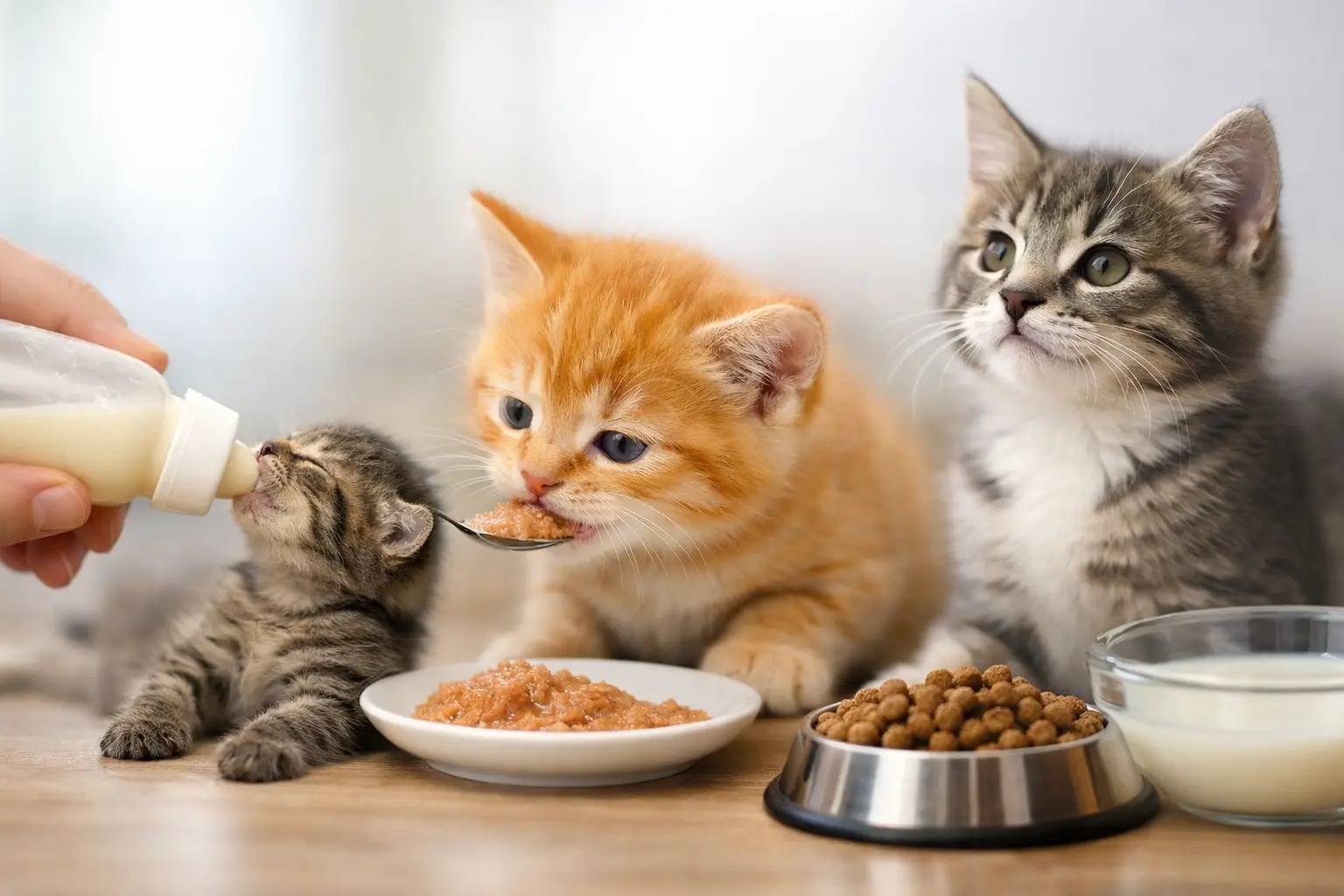
This is the weaning window. Kittens usually begin transitioning from milk to solid food around 4 weeks, though some move faster than others. Start with a soft gruel made from wet kitten food mixed with warm water or kitten formula. The texture should be easy to lap.
As the kitten gets more comfortable, gradually thicken the mixture and introduce plain wet kitten food. Small portions offered several times a day work best. Mess is part of the process.
8 to 12 weeks
Most kittens are fully weaned by this point and ready for a regular feeding routine. Wet kitten food, dry kitten food, or a combination can work, as long as the diet is complete and balanced for kittens. Many pet owners find that mixed feeding is practical because wet food supports hydration while dry food is convenient and easy to portion.
Kittens this age usually do well with 3 to 4 meals per day. If you are using dry food, avoid leaving out unlimited amounts without tracking intake. Free-feeding can make it harder to notice appetite changes or overeating.
3 to 6 months
Growth is still rapid, and appetite can seem enormous. This is a common age for owners to worry that they are feeding too much, but many healthy kittens really do need a surprising number of calories. The key is to follow the feeding range on the food label, then adjust based on body condition, activity, and your veterinarian’s advice.
Three meals a day is often a good fit here. If your schedule only allows for two meals, make sure portions are measured carefully and the total daily amount stays appropriate.
6 to 12 months
Your kitten may start looking more like a small adult, but nutritionally, they are usually still in kitten mode. Many cats should stay on kitten food until around 12 months, though larger breeds may mature more slowly. This is a good time to watch body shape more closely because growth may begin to level off while appetite stays enthusiastic.
Two to three meals a day usually works well. If your kitten has been spayed or neutered, ask your veterinarian whether calorie needs may shift, since some cats become less active after surgery.
How much to feed a kitten
This is the question every owner asks, and the honest answer is that it depends. Age is part of it, but so are current weight, expected adult size, food type, and energy level. A tiny 9-week-old eating canned food will need a very different volume than a 5-month-old eating calorie-dense kibble.
Start with the feeding chart on the package, but treat it as a starting point rather than a rule carved in stone. Check your kitten’s body condition every week or two. You should be able to feel the ribs under a light layer of padding, see a gentle waist from above, and notice steady growth without a round, tight belly that persists beyond mealtime.
If your kitten acts hungry all day, that does not automatically mean they need more food. Fast eating, boredom, competition with other pets, or a food that is not very satisfying can all play a role. On the other hand, if a growing kitten regularly finishes meals and stays lean, a modest increase may be appropriate.
Wet food, dry food, or both?
A practical kitten feeding guide should make room for real life. Wet food is often helpful because it adds moisture, tends to be very palatable, and is easy for young kittens to chew. Dry food is convenient, less messy, and often costs less per feeding.
A mixed approach is a strong middle ground for many households. Feeding wet food at set meals and using measured dry food for another meal can offer flexibility without losing control of portions. If your kitten strongly prefers one texture, that is not automatically a problem, but variety early on can help prevent pickiness later.
If you plan to change foods, do it gradually over about 7 to 10 days. Sudden diet changes can cause diarrhea, especially in young kittens with sensitive stomachs.
Feeding schedule tips that make life easier
Consistency helps kittens feel secure and can reduce the dramatic mealtime behavior many owners see. Try to feed at roughly the same times each day. Use a shallow bowl, keep the feeding area clean, and separate kittens from other pets if they are getting distracted or rushed.
Measured feeding is usually smarter than constantly topping off the bowl. It lets you monitor appetite, which is one of the earliest signs that something may be off. A kitten that suddenly eats much less, skips meals, vomits repeatedly, or has ongoing diarrhea should be seen by a veterinarian.
Fresh water should always be available, even if your kitten eats mostly wet food.
Common feeding mistakes to avoid
One of the biggest mistakes is offering adult cat food too early. Another is giving too many treats or table scraps, which can crowd out balanced nutrition. Kittens are small, so extras add up fast.
Milk is another common issue. Many people still picture kittens happily drinking from a saucer, but most do not handle dairy well after weaning. Stick with water and complete kitten food unless your vet recommends something specific.
It is also easy to confuse a potbelly with healthy growth. Some kittens do look round after meals, but a consistently swollen abdomen can point to parasites or other health issues. If your kitten’s shape seems off, trust your instincts and ask your vet.
When to switch to adult cat food
Most kittens are ready to transition to adult food at about 12 months old. The change should be gradual, just like any diet switch. If your cat is a large breed, underweight, or has a medical condition, your veterinarian may suggest staying on kitten food a bit longer or choosing a different formula.
The goal is not to rush the switch. Kitten food supports growth, and cutting that support too early is rarely helpful. Once your cat reaches adulthood, calorie needs usually decrease, so portion control becomes even more important.
When feeding problems need veterinary help
Some feeding issues are normal during transitions, but others deserve quick attention. Contact your veterinarian if your kitten refuses food for more than one meal, has persistent vomiting or diarrhea, struggles to chew, is not gaining weight, or seems weak and unusually sleepy.
Young kittens can become dehydrated and unstable faster than adult cats. When in doubt, getting help early is the safer choice.
Feeding a kitten gets easier surprisingly fast. Once you learn your cat’s rhythm, the panic fades and the routine clicks into place. What matters most is not having a perfect schedule on day one – it is staying observant, adjusting as your kitten grows, and making each meal part of a healthy start.