

The information in this article is for educational and informational purposes only. It is not intended as veterinary advice, diagnosis, or treatment for any medical or health issue your pet may have.
Always consult a licensed veterinarian before making any decisions about your pet’s health, diet, medications, supplements, training, or care. Never disregard or delay professional veterinary advice based on content from this website.
BarkleyAndPaws.com and its authors assume no responsibility or liability for any errors, omissions, or outcomes resulting from the use of this information.
Going back to work after months at home is a jolt for dogs who’ve gotten used to their humans being around. Suddenly, their routine changes, and you might see barking, chewing, or even accidents cropping up.
The good news is that separation anxiety can be reduced through consistent training that teaches dogs to feel calm and confident when left alone.
Training for separation anxiety isn’t a straight line. Most dogs need gradual practice over time—nobody gets it perfect on the first try.
The key is starting small and building up the amount of time your dog can handle being alone. With the right approach, you can help your pet adjust to home-alone time without all the drama.
This guide dives into practical training methods for dogs struggling with separation. From recognizing the signs of anxiety to creating a step-by-step plan, these strategies are here to help everyone feel a bit more at ease about heading back to work.
Key Takeaways
- Dogs with separation anxiety need gradual training that slowly increases the time they spend alone
- Teaching dogs to stay calm in a crate or special spot helps build confidence when owners leave
- Staying calm during departures and returns keeps dogs from picking up on your nerves
Understanding Dog Separation Anxiety
Separation anxiety in dogs is a serious behavioral condition where a dog feels extreme distress when separated from their favorite person. It’s a different beast from just missing you for a bit.
What Is Separation Anxiety in Dogs
Separation anxiety is a panic response that shows up when a dog is left alone or away from their main human. It’s not just boredom or a little whining.
Dogs with real separation anxiety feel distress that’s closer to a panic attack. Their brain flips into fear mode, and they honestly can’t help it. This isn’t about bad manners or ignoring commands.
It can hit dogs at any age, any breed, any background. Puppies sometimes get it, but it often pops up in adults after big changes. Separation anxiety isn’t the result of disobedience or lack of training, so it’s not something you can “discipline” away.
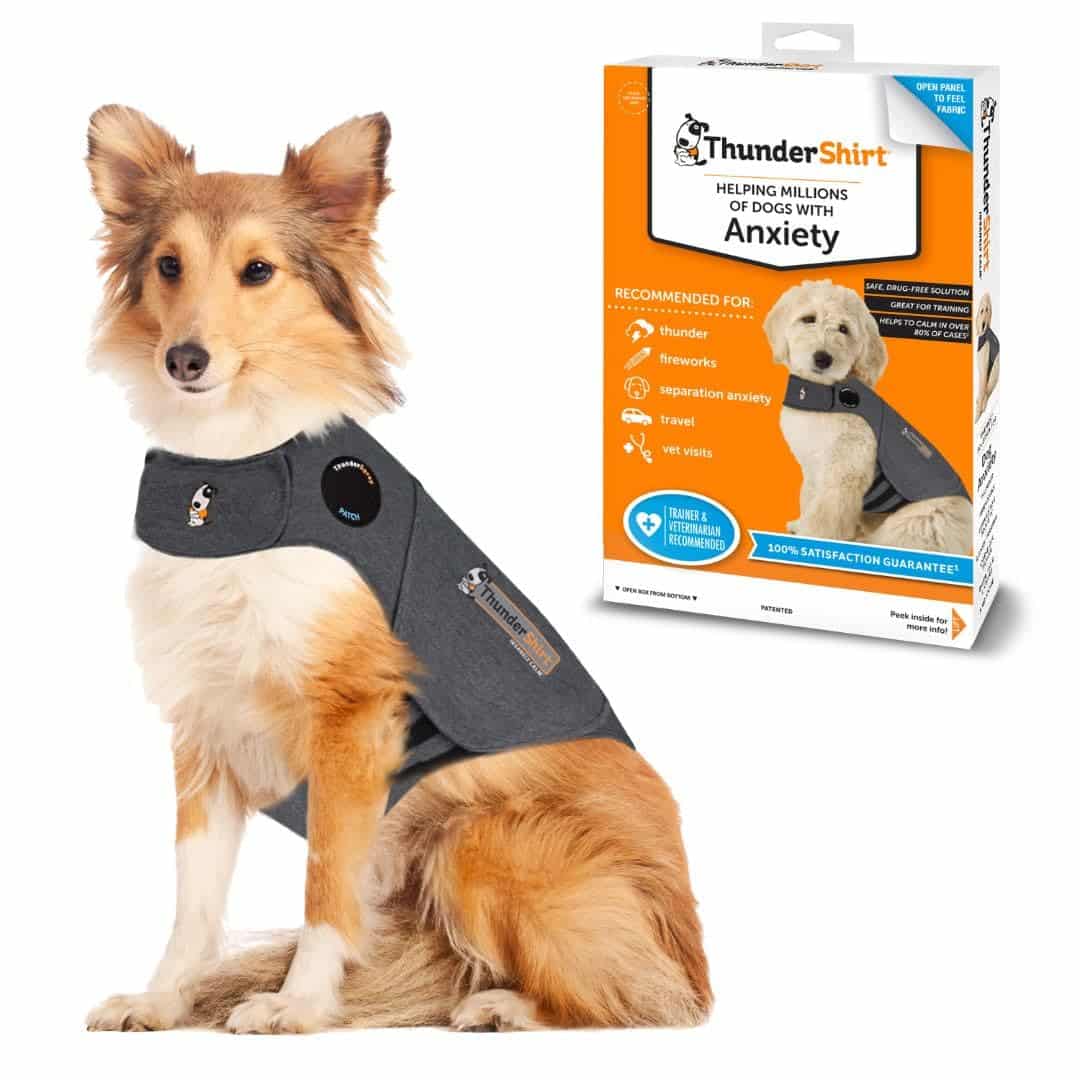
Anxiety Relief Calming Vest
Signs and Symptoms to Watch For
Signs of separation anxiety in dogs show up as both behaviors and physical symptoms, and they usually kick in when you’re about to leave or already gone.
Behavioral signs include:
- Excessive barking, howling, or whining
- Destructive behavior focused on doors and windows
- Pacing or circling in repetitive patterns
- Trying to escape from the house or crate
- Shadowing you from room to room
Physical symptoms include:
- Inappropriate elimination (urinating or pooping inside)
- Heavy drooling or panting
- Lip licking and yawning when they’re not tired
These things usually start within minutes of you leaving. Some dogs even get anxious as soon as you grab your keys or put on shoes—they know what’s coming.
Separation Anxiety Versus Normal Behavior
Normal alone-time behavior is a whole different story. A dog who’s just adjusting might whine a little or look bummed, but they settle down fast.
Dogs without separation anxiety can nap, entertain themselves, or just chill until you’re back. Sure, they’ll be excited when you walk in, but there’s no panic behind it.
With separation anxiety, the panic doesn’t fade—it sticks around or even gets worse the longer you’re gone. There’s no settling down, just stress on repeat.
Puppy separation anxiety can be trickier to spot. Puppies naturally want company and might fuss when alone, but true anxiety is all about escalating panic instead of gradual acceptance.

Anxiety Reducing Pheromone Collar, Releases Pheromones for 30 Days, Helps Calm During Loud Noises and Separation, 3 Count
Common Causes and Triggers
Lots of things can set off separation anxiety in dogs. Changes in routine or household structure are big culprits.
Common triggers include:
- Moving to a new home
- Switching up your work schedule (like heading back to the office)
- Losing a family member or pet
- Extended together time—think vacations or lockdowns
- Bad experience while alone
Some dogs pick up separation anxiety after being rehomed or adopted. They might worry about being left again, especially if it’s happened before.
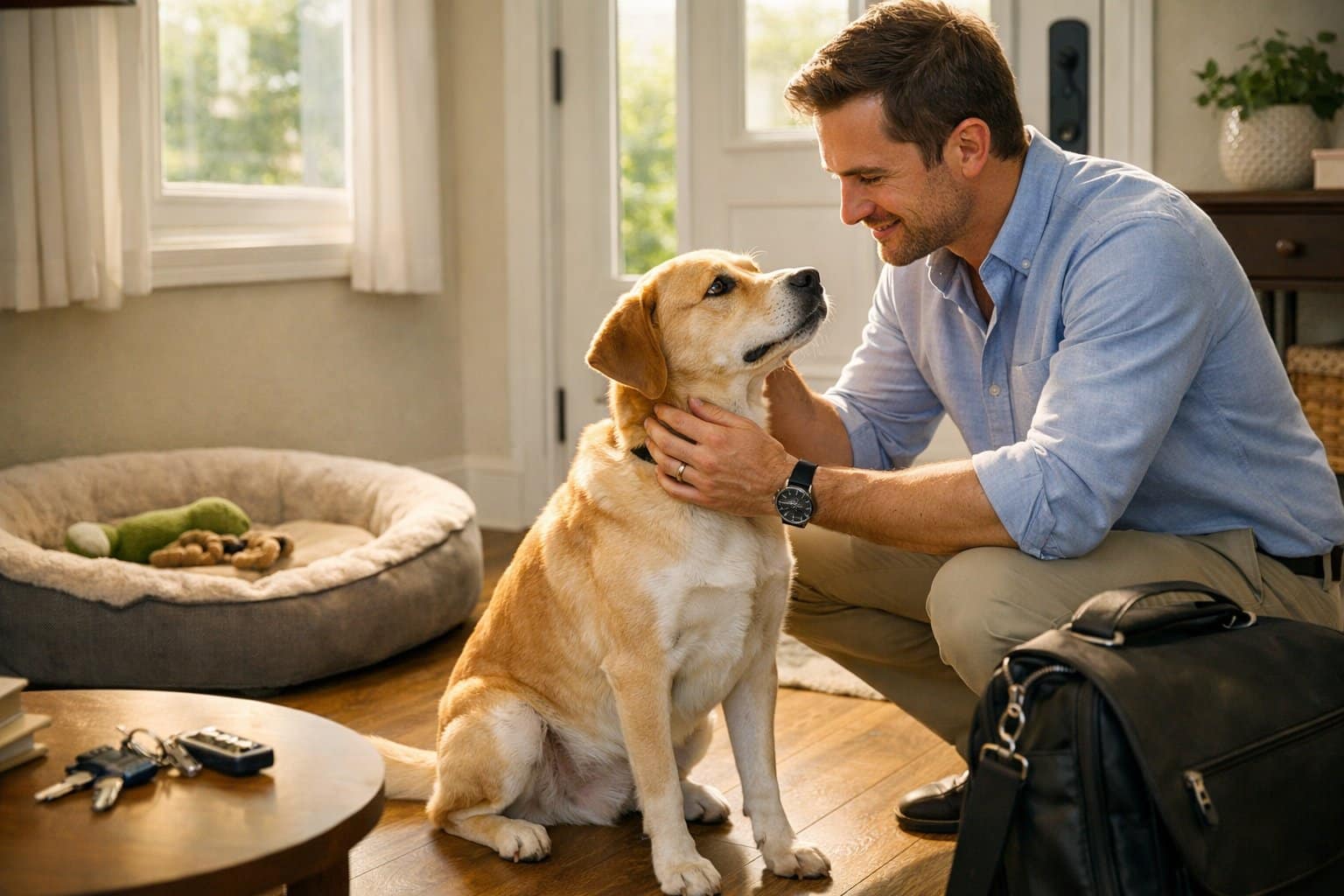
Even little things like grabbing your bag or hearing keys jingle can tip off anxious dogs. They’re quick to connect those cues with being left behind, and their stress ramps up before you’re even out the door.
Preparing Your Dog for Your Return to Work
Starting prep early gives your dog a better shot at handling the new schedule without a meltdown. Routines, safe spaces, and enough exercise—these are your transition basics.
Re-establishing or Building New Routines
Dogs love predictability, so setting a steady schedule before you go back to work eases their stress. Try syncing feeding, walks, and play with your future work hours.
Gradual prep beats sudden changes. Start practicing the new routine at least two or three weeks before your first day back.
Wake up at the same time, follow your “workday” pattern, and let your dog get used to it. The more familiar it feels, the less scary it’ll be.
Key routine elements include:
- Morning wake-up time
- Feeding schedule
- Walk or exercise times
- Quiet or alone time
- Evening wind-down and bedtime
Practice leaving for short stretches and slowly work up to longer absences. Start with five minutes, then ten, then an hour. Keep your comings and goings low-key—no big fuss, just in and out like it’s no big deal.
Creating a Safe and Comfortable Space
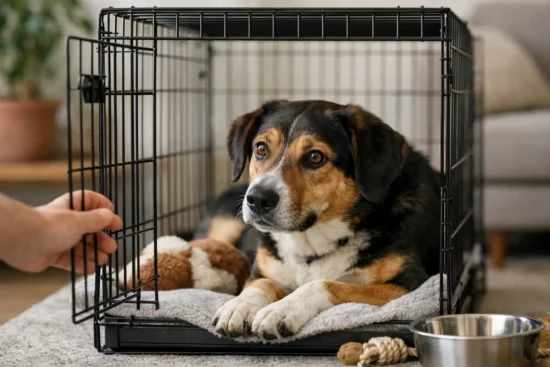
A designated area where your dog feels secure can make alone time less stressful. Crate training gives them a cozy den that helps with anxiety and stops destructive habits. Just don’t use it as punishment.
Make it appealing—think soft bedding, favorite toys, and special treats they only get there. Something like a peanut butter Kong or puzzle feeder can keep them busy during that first tough hour alone.
If crates aren’t your dog’s thing, a small room or penned-off area works too. Keep water handy and remove anything dangerous. Some dogs chill out with an item that smells like you, like an old t-shirt.
Space requirements:
- Room to stand, turn, and stretch out
- Good airflow and comfy temperature
- No cords or hazards within reach
- Optional: calming music or white noise
Daily Exercise and Mental Enrichment
Physical activity before you leave helps your dog burn off energy and stay calmer. A 30- to 45-minute walk or play session in the morning does wonders. Give them 15-30 minutes to settle down before you walk out.
Mental workouts matter too. Puzzle toys, training sessions, and enrichment games keep their brains busy and boost confidence. Practicing sit-stay or down-stay can encourage calmness.
Midday breaks can really help, especially for long days. Doggy daycare offers play and company while you’re gone. Or maybe a walker or family member can pop by for a bathroom break and a little exercise.
Enrichment ideas:
- Rotate toys so they don’t get bored
- Hide treats around their space
- Offer safe chew toys
- Do a quick 10-15 minute training session daily
Recognizing Separation Anxiety in Your Dog

Dogs with separation anxiety have a pretty recognizable pattern—it’s more than just a sad goodbye. Spotting these behaviors and knowing your dog’s limits can help you put together a realistic training plan for your return to work.

Relieve Separation Anxiety, Stress Barking and Chewing, and the Fear of Fireworks and Thunderstorms (60 Day Supply)
Behavioral Clues Before and After Departure
Signs of separation anxiety in dogs often start before an owner even leaves the house.
Some dogs follow their owner from room to room, pace nervously, or start whining when they spot departure cues like keys or shoes. It’s almost like they know what’s coming and want to stop it.
Pre-departure signs include:
- Excessive drooling or panting
- Trembling or shaking
- Attempts to block doorways
- Refusing food or treats
After you’re out the door, anxious dogs often ramp things up.
They might bark or howl for ages, scratch at doors or windows, or go to town on your furniture or shoes.
House soiling can happen even with dogs that are usually reliable. Some will only go near exits or windows, which feels oddly specific, but it’s a thing.
Other signs: excessive self-grooming, or pacing so much they wear a path in the carpet—classic chronic stress stuff.
Using Technology to Monitor Your Dog
Pet cameras are honestly a game changer for figuring out what your dog does after you leave.
These devices show whether your dog chills out after a few minutes or stays worked up for hours (which, let’s be real, you might not want to know, but it’s important).
Video monitoring lets you see the timeline of anxious behaviors. Some dogs panic the second you leave, others take a while to unravel, and a few settle for a bit before the anxiety creeps back in.
Audio features are handy too—you can hear barking, whining, or howling that you’d otherwise miss. Two-way talk is a bit hit-or-miss: sometimes your voice helps, sometimes it just confuses them more.
Motion alerts can let you know if your dog is up to something unusual. And if you record the footage, you can track progress or share it with a vet or trainer if you’re stuck.
Determining Your Dog’s Threshold
A dog’s threshold is basically the max time they can be alone before anxiety kicks in. Finding your dog’s threshold takes a bit of trial and error, but it’s worth it.
Start with super short absences—like 30 seconds. Gradually bump it up while keeping an eye out for any stress. If your dog is good for five minutes but falls apart at seven, you’ve found the sweet spot (for now).
Signs the threshold has been exceeded:
- Rapid breathing or panting
- Dilated pupils
- Flattened ears
- Lowered body posture
Keep training sessions below this threshold to avoid making things worse. If your dog can handle 10 minutes but not 15, stick to 8-10 minute absences for a while.
Honestly, some dogs start with a threshold of mere seconds, while others can go 20 or 30 minutes before showing signs of stress. It really depends on the dog and their past experiences.
Separation Anxiety Training Plans and Methods
Training methods for separation anxiety are all about helping dogs feel okay when they’re alone. This usually means gradual exposure and positive experiences.
The idea is to slowly build up your dog’s tolerance for being alone, making sure they start to associate your leaving with good things.
Gradual Desensitization Techniques
Gradual desensitization means exposing your dog to the anxiety-triggering situation in baby steps. Start with very short separations, just a few seconds, while you’re still visible.
You might step outside for 5-10 seconds, then come back before your dog gets worried. Over time, you slowly increase how long you’re gone. If your dog gets anxious, scale it back and take it slower.
Key steps in gradual desensitization:
- Begin with micro-absences (5–30 seconds)
- Return before anxiety shows up
- Increase duration in small steps
- Practice several times a day
- Track progress in a journal (even a messy one)
Progress isn’t always steady—sometimes you move forward, sometimes you take a step back. Patience is the name of the game here.
Systematic Desensitization Explained
Systematic desensitization is a little different—it targets the pre-departure cues that set your dog off. Dogs can get worked up just from seeing you grab your keys or put on shoes.
This approach breaks down your leaving routine into single steps. You might pick up your keys, set them down, and repeat that over and over while staying home. It’s a bit tedious, but it works.
Once your dog stops reacting to one cue, you combine them—maybe shoes and keys together, but still not actually leaving yet.
Systematic desensitization works alongside behavior modification for lasting change. You’ll need to practice daily, even if you don’t have plans to leave that day.
Counter-conditioning Through Positive Associations
Counter-conditioning is all about changing your dog’s feelings about being alone. Instead of dreading it, they start to look forward to it because it means something good is coming.
Lots of trainers suggest giving special treats or toys that only appear when you leave. Stuffed Kongs or puzzle feeders are popular—they keep your dog busy and distracted.
Effective counter-conditioning rewards:
- High-value treats (think cheese, chicken, or fancy chews)
- Interactive puzzle toys
- Long-lasting chews or frozen goodies
- Maybe calming music or white noise
Take these special items away when you get home. That way, your dog starts to anticipate your departures instead of fearing them. Positive reinforcement techniques encourage calm behavior during these sessions.
Timing is crucial, though. The reward needs to show up before your dog starts to freak out. If you wait until they’re already distressed, you might reinforce the wrong behavior.
Customizing the Separation Anxiety Training Plan
No two dogs are exactly alike, so each one needs a plan that fits their anxiety level and what sets them off. A customized approach considers your dog’s background, breed quirks, and current stress.
Start by figuring out your dog’s baseline tolerance. Some panic after 30 seconds, others are okay for 10 minutes. Understanding the dog’s anxiety level helps you know where to begin.
Document your dog’s reactions during practice. Jot down when anxiety starts—this helps you adjust the plan as you go. Video monitoring can catch things you’d otherwise miss.
The plan should fit your life, too. If you’re home a lot, your approach will look different than someone who works long hours. Puppies often make faster progress than older dogs with long-standing habits.
For tough cases—think self-harm or major destruction—a certified separation anxiety trainer is a smart move. They can help when the basics just aren’t cutting it.
Effective Training Strategies for Success

Training a dog with separation anxiety isn’t just about following steps—it’s about using the right techniques for your dog’s quirks. You need to target pre-departure behaviors, structure your practice, and set realistic goals. Progress comes with consistency, but don’t expect miracles overnight.
Addressing Pre-Departure Cues
Dogs get wise to your leaving routine. Picking up keys, putting on shoes, grabbing a coat—these can all trigger panic before you’ve even opened the door.
Try practicing these actions at random times without actually leaving. Pick up your keys, put them down, walk around in your shoes, whatever works. This is what desensitization looks like in real life.
Another trick: keep departures low-key. No big goodbyes, no extra cuddles, no eye contact—just slip out like it’s no big deal. The goal is to make leaving boring and normal.
Key pre-departure practices:
- Practice trigger actions randomly through the day
- Keep departures calm and matter-of-fact
- Skip the drawn-out goodbyes
- Mix up your departure routine so it’s less predictable
Implementing Training Sessions
Gradual desensitization is the backbone of separation anxiety training. Start small—leave for 30 seconds, come back before your dog gets upset.
Increase the time slowly: one minute, then three, then five. If your dog stays calm, great. If not, dial it back next session.
A certified separation anxiety trainer can really help if things aren’t improving. They’ll tailor the plan to your dog’s specific triggers.
Training session structure:
- Start with absences under a minute
- Only increase when your dog consistently does well
- Try for 3–5 sessions daily
- Keep it short so you don’t overwhelm your dog
Managing Setbacks and Progress Plateaus
Progress is rarely smooth. Your dog might handle 10-minute absences one day, then fall apart the next. It’s frustrating, but totally normal.
If you hit a setback, shorten your absences to a point where your dog was still comfortable. Build up again from there. No shame in taking a step back.
Plateaus happen, too—sometimes your dog just won’t budge past a certain timeframe for weeks. Working with professionals can help troubleshoot stubborn spots.
Things like changes in the household, disruptions in your schedule, or even your dog not feeling well can set you back. Keeping notes can help you spot patterns and tweak your approach.
Management and Support During Training
Dogs need the right setup to make separation anxiety training work. The right equipment, calming aids, and sometimes professional support can really make a difference.
Crate and Confinement Options
Crate training can play a role in a separation anxiety plan—if the dog already thinks of the crate as a safe spot. Some dogs really do find a crate comforting when left alone. But if your dog’s already anxious, forcing them into a crate can just crank up the stress.
The crate needs to be big enough for your dog to stand, turn, and stretch out. Tuck it in a quiet corner, away from doors and windows—less action, fewer triggers. Toss in bedding that smells like home, and keep the door open at first so your dog can come and go.
Some pups seem to prefer a bigger area, like a kitchen or bedroom. Baby gates can set boundaries but don’t feel as restrictive. Really, it’s about figuring out what your dog can handle without freaking out.
Keep an eye out for signs like frantic drooling, escape attempts, or tearing things up—if you spot those, it’s time to rethink the setup.
Interactive Toys and Calming Tools
Puzzle toys and food-dispensing gadgets are handy for short absences. They’re especially useful right after you leave, when your dog’s anxiety hasn’t peaked yet.
Stuff a Kong with treats or frozen peanut butter and you might get a solid 15-30 minutes of distraction. Sometimes, that’s all you need.
There’s also the Thundershirt—it’s like a gentle hug for your dog. It’s not magic, but some dogs genuinely seem to relax with that steady pressure. Worth a shot, as long as you fit it right.
Background noise helps too. A white noise machine, calming music, or even just the TV can drown out those outside sounds that set your dog off. And honestly, tossing in an old t-shirt that smells like you? Not a bad idea.
If you’re curious about calming supplements or pheromone diffusers, talk to your vet. But those should support gradual training—not replace it.
When to Involve a Certified Professional
For really tough separation anxiety, you’ll want a certified applied animal behaviorist or veterinary behaviorist on your side. These folks know their stuff and can put together a plan tailored to your dog.
If your dog’s breaking things, hurting themselves, or you’re just not seeing progress after weeks of work, it’s time to get help. Dogs that panic the moment you step out the door? That’s a case for an expert.
Sometimes, a veterinary behaviorist will suggest anti-anxiety meds. Pairing medication with behavior work often gets better results for severe cases. Certified Separation Anxiety Trainers can even help remotely if you can’t find someone local.
Your regular vet can rule out health issues that look like anxiety. Pain, cognitive decline, or other medical problems can make dogs act distressed, too.
Frequently Asked Questions
Dog owners heading back to work hit all sorts of snags with separation anxiety—choosing the right training, figuring out if meds are needed, or knowing when to call in a pro.
What are the most effective strategies for mitigating a dog’s separation anxiety when the owner returns to work?
The best results come from gradual desensitization and consistent training. Start by leaving your dog for just 30 seconds, then bump it up to a minute, three minutes, five, and so on.
Crate training can help build confidence. Feed your dog in the crate and kennel them for 45-60 minutes daily, but only reward calm behavior.
Mental exercise before you leave is underrated. A 15-30 minute walk or training session can help take the edge off before alone time.
Try to keep departures boring. No dramatic goodbyes, no last-minute pets—just slip out. It’s not easy, but it helps your dog see leaving as no big deal.
Which home remedies can help alleviate a dog’s separation anxiety?
Creating a safe space can give your dog some peace of mind. Whether it’s a crate or a cozy room, familiar smells and comfy bedding make a difference.
Food puzzles and interactive toys channel nervous energy into something productive. It’s not a miracle cure, but it definitely helps.
Your mood matters, too. Dogs pick up on our energy, so staying chill when you come and go can help lower their stress.
Leaving a radio or TV on can make things feel less empty and mask outside noises that set your dog off.
What are the common behaviors exhibited by dogs with separation anxiety at night, and how can they be addressed?
At night, anxious dogs might pace, whine, or scratch at the door. Sometimes they’ll pant or refuse to settle in their spot.
Teaching a “place” command can help—your dog learns to stay put for 20-30 minutes at a stretch, which can translate to better nighttime habits. More info on that here.
Keeping a consistent bedtime routine helps set expectations. Try to stick to the same schedule for feeding, exercise, and bathroom breaks each night.
Crate training overnight can provide a sense of security—if your dog sees the crate as their bedroom, not a punishment, they’re much more likely to settle down.
How can you prevent the development of separation anxiety in dogs while transitioning from working at home to an office?
Prevention is all about teaching independence early. If your dog follows you everywhere, they’re not learning to be okay on their own—it’s just setting up trouble later.
Threshold drills at doors teach patience and lower anxiety triggers. A little practice can go a long way.
Even if you’re home all day, practice leaving your dog alone in another room or their crate for short periods. It helps avoid a sudden shock when your schedule changes.
Mix affection with structure. Don’t just give attention on demand—wait until your dog’s calm or has completed a command. It’s a subtle shift, but it matters.
What techniques should be avoided when dealing with a dog suffering from separation anxiety?
Don’t avoid leaving altogether. Skipping outings or canceling plans just reinforces the anxiety.
Skip the dramatic hellos and goodbyes. Touching, talking, or making eye contact during these moments only signals that departures are a big deal.
Punishing anxious behavior doesn’t fix the root problem. Dogs can’t just “snap out of it” because they’re scolded.
And try not to comfort your dog when they’re whining or acting needy—it’s easy to accidentally reward the very behavior you want to change.
Are there any medications recommended for dogs experiencing severe separation anxiety, and what should owners consider before using them?
Veterinarians sometimes prescribe anti-anxiety meds for dogs when the anxiety gets really severe. They tend to work best if you pair them with some sort of behavioral training, not just as a magic fix.
Selective serotonin reuptake inhibitors (SSRIs) and tricyclic antidepressants are the most common choices. These need a few weeks to really kick in, and you have to give them regularly—skipping doses isn’t helpful.
It’s smart to talk to your vet about professional behavioral support along with the medication. Training helps tackle the underlying issue, while meds can take the edge off during those first tough weeks.
Side effects depend on the medication and the dog. You might see changes in appetite, a bit of lethargy, or maybe some tummy troubles, but these usually settle down after a little while.
Veterinary check-ins are important to make sure the meds are actually helping. Sometimes the dose needs tweaking as your dog adjusts or as training progresses.