



Spring storms can turn your calm pet into a shaking, panting bundle of nerves. Many pets experience genuine fear during thunder, lightning, and heavy rain, which can lead to destructive behavior, excessive barking, or hiding for hours.
You want to help your furry friend feel safe without resorting to heavy sedation or prescription medications.
Natural supplements containing ingredients like chamomile, L-theanine, valerian root, and hemp can reduce your pet’s storm anxiety within 30 to 45 minutes of administration. These natural supplements that help calm storm-anxious pets work by supporting your pet’s ability to cope with stress without making them drowsy or altering their personality.
The right supplement can make the difference between a pet who trembles through every spring storm and one who rests peacefully despite the weather.
Choosing the best natural anxiety supplement means understanding which ingredients work, how quickly they take effect, and which formulations suit your pet’s specific needs.
This guide walks you through the top natural options, what to look for in quality products, and how to use them effectively during spring storm season.
Key Takeaways
- Natural calming supplements with chamomile, L-theanine, valerian root, and hemp can reduce storm anxiety in 30 to 45 minutes
- Combining supplements with environmental changes like safe spaces and white noise creates the most effective anxiety relief
- Choose products with clear ingredient lists, proper dosing guidelines, and formulations made in facilities that follow safety standards
Understanding Storm Anxiety in Pets
Storm anxiety affects many pets through physical and behavioral changes triggered by atmospheric pressure shifts, static electricity, and loud noises.
Dogs and cats can develop this fear response due to both inherited traits and learned experiences.
Key Signs and Symptoms
Your pet may show symptoms of storm anxiety through physical and behavioral changes.
Common physical signs include trembling, panting, drooling, and dilated pupils. Your dog might pace restlessly or refuse to settle in one spot.
Behavioral changes often become more obvious as the storm approaches. Your pet may hide under furniture, in closets, or in bathrooms.
Some dogs engage in excessive barking or whining that continues throughout the storm. Destructive behavior like scratching doors, chewing furniture, or trying to escape can occur in severe cases.
You might notice your pet starts showing these signs before the storm arrives. Many animals can sense changes in barometric pressure or detect the smell of rain before humans notice anything unusual.
Impact of Spring Storms on Pet Behavior
Spring storms bring unique challenges for anxious pets. These storms often arrive suddenly and produce intense thunder, lightning, and rapid weather changes.
Your pet may become more sensitive during spring because storms happen more frequently during this season.
The unpredictability of spring weather can make dog anxiety worse. Your pet cannot prepare for storms that develop quickly.
Multiple storms in a short period can intensify fear responses over time.
Static electricity buildup during spring storms may contribute to your pet’s discomfort. The electrical charge in the air can create an unpleasant tingling sensation on your pet’s coat and skin.
Genetic and Environmental Triggers
Some breeds show higher rates of storm anxiety than others. Herding breeds, sporting dogs, and hounds often display more fear responses to storms.
Your pet’s genetics can make them more prone to developing anxiety disorders.
Environmental factors play an equally important role. A traumatic experience during a storm can create lasting fear.
If your pet was alone during a severe storm or got hurt while scared, they may develop stronger anxiety responses.
Your reaction to storms affects your pet’s behavior too. Pets pick up on human anxiety and stress.
If you act nervous during storms, your pet may learn to associate storms with danger. It’s a strange feedback loop, honestly.
The Role of Routine and Environment
Your pet’s daily routine provides a sense of security and predictability. Disruptions caused by storms can trigger stress responses.
Maintaining consistent feeding times, walks, and play sessions helps reduce baseline anxiety levels. It’s not always easy, but it does help.
The physical environment in your home matters during storms. Pets naturally seek den-like spaces where they feel protected.
Access to interior rooms away from windows reduces exposure to lightning flashes and thunder sounds. Creating a designated safe space before storm season begins gives your pet a reliable retreat.
This area should contain familiar items like bedding, toys, and water. The location should be in a quiet part of your home with minimal exposure to storm sounds and sights.
Top Natural Calming Supplements for Spring Storm Anxiety
Several types of natural supplements can help pets manage storm-related anxiety through different mechanisms. Some work by promoting relaxation through nutritional support, while others use calming scents or beneficial bacteria to reduce stress responses.
Calming Chews and Treats
Calming chews for dogs typically contain ingredients like L-theanine, chamomile, or melatonin that promote relaxation during storms. L-theanine works within 30-60 minutes and has strong evidence for reducing acute stress in dogs.
For a 50-pound dog, you’ll want 100-200 mg of L-theanine before the storm hits. Most calming treats and supplements also include B vitamins and magnesium, which support neurotransmitter production.
However, many commercial products contain synthetic vitamins in low doses that may not provide therapeutic benefits. Check labels for actual ingredient amounts rather than just proprietary blends.
The best calming chews avoid fillers like maltodextrin and corn syrup, which cause blood sugar spikes that can worsen anxiety. Look for products with whole-food ingredients and verified potency.
Give these treats 30-90 minutes before storms arrive for maximum effectiveness.
Pheromone Diffusers and Sprays
Dog-appeasing pheromone (DAP) products mimic the calming scent mother dogs produce for their puppies. These diffusers plug into outlets and release synthetic pheromones that help dogs feel secure during storms.
Studies show they reduce anxiety-related behaviors in about 70% of dogs. You should place diffusers in the room where your dog spends most time during storms.
The effects build over 2-4 weeks of continuous use, so start before storm season begins. Sprays offer a portable option you can apply to your dog’s bedding or a bandana 15 minutes before wearing.
Pheromone products work best when combined with other calming strategies. They don’t sedate your pet but rather create an environment that feels safer.
Herbal and Plant-Based Solutions
CBD oil has gained attention for managing dog anxiety during storms. Doses of 1-5 mg per 10 pounds of body weight, given 30-60 minutes before storms, can help reduce fear responses.
Choose third-party tested products with 0.3% THC or less. Chamomile and valerian root are traditional calming herbs found in many natural remedies for storm anxiety.
Chamomile works through gentle sedation, while valerian affects GABA receptors in the brain. Individual dogs respond differently to these herbs, so test them during calm periods first.
Passionflower and lemon balm offer additional plant-based options. These herbs work best for mild to moderate anxiety rather than severe storm phobias.
Always follow product dosing instructions and avoid combining multiple sedating herbs without veterinary guidance.
Probiotic-Based Calming Supplements
Probiotics support the gut-brain connection, which influences anxiety levels in dogs. About 70-80% of serotonin production happens in the gut, making digestive health crucial for emotional regulation.
Specific strains like Lactobacillus and Bifidobacterium have shown calming effects in research. Dog anxiety supplements with probiotics take 4-6 weeks to produce noticeable changes in behavior.
They work by improving gut microbiome balance, which affects neurotransmitter production and stress hormone regulation. These supplements complement other calming strategies rather than providing immediate storm relief.
Look for products containing at least 1 billion CFUs per dose with multiple bacterial strains. Probiotic supplements work best when given daily rather than just during storms, building long-term stress resilience in your dog.
Leading Brands and Formulations to Consider
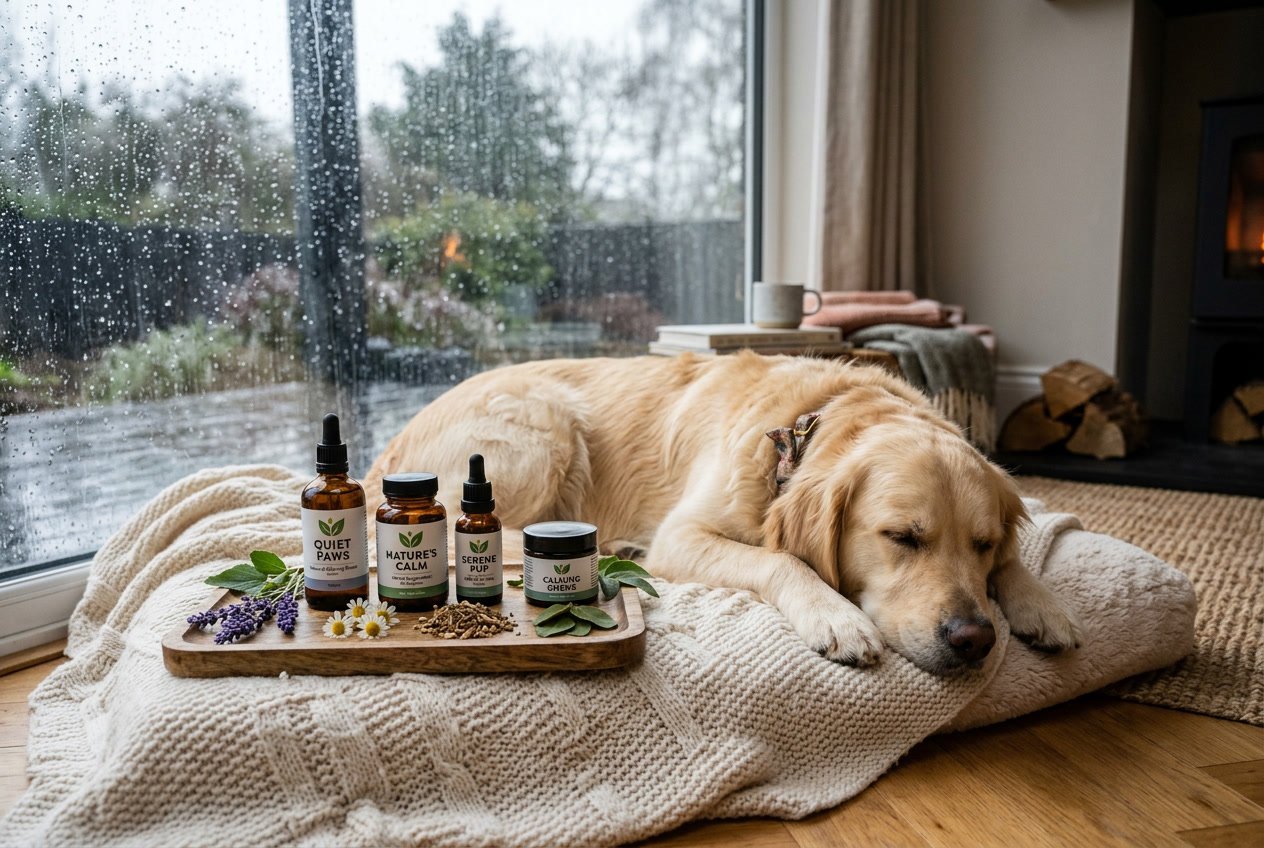
Several trusted manufacturers have developed calming supplements specifically designed to help pets manage storm-related anxiety.
These products combine research-backed ingredients like L-theanine, colostrum, and probiotics in formulations that address different aspects of stress response.
NaturVet Quiet Moments Calming Aid
NaturVet Quiet Moments offers soft chews that blend several calming ingredients in a treat-like format. Thiamine supports nervous system function, and ginger helps soothe upset stomachs that sometimes tag along with anxiety.
Give these chews about half an hour before a storm is expected. The soft texture makes them easy to break apart for smaller dogs or just hand over as-is.
This calming aid is often listed among the vet-recommended calming supplements for anxious pups. It contains melatonin, which encourages relaxation but doesn’t knock your pet out—so they stay calm, yet alert.
VetriScience Composure and Colostrum Calming Complex
VetriScience Composure uses a three-ingredient strategy. There’s Colostrum Calming Complex, L-theanine, and thiamine, all working together to help dogs chill out during stressful weather.
The Colostrum Calming Complex brings bioactive proteins to the table, helping manage stress responses. L-theanine, which you’ll find in green tea, encourages calm behavior without making your dog sleepy.
You can use VetriScience Composure daily or just before storms. The chews usually start working within 20-30 minutes and last for a few hours. Plus, the NASC certification means quality and safety are checked by a third party.
Purina Pro Plan Veterinary Supplements and Calming Care
Purina Pro Plan Veterinary Supplements takes a different route with its Calming Care probiotic blend. This daily powder uses a specific strain of beneficial bacteria to support the nervous system through the gut-brain connection.
Unlike quick chews, Purina Pro Plan Calming Care needs daily use for about six weeks before you’ll see full results. The probiotic strain BL999 has even been studied in clinical trials for anxiety-related behaviors in dogs.
Just sprinkle the powder over your dog’s food once a day. If your pet gets anxious every time the weather turns, this science-backed formulation might be a good fit for long-term balance.
Advanced Ingredients: Suntheanine and Melatonin
Suntheanine is a purified, more potent form of L-theanine. This patented ingredient boosts alpha brain wave activity, encouraging a calm, alert state without actually sedating your dog.
Supplements with Suntheanine usually kick in within 30-45 minutes. Your pet stays aware but doesn’t react so strongly to thunder or flashes. It seems to work even better when paired with other calming ingredients.
Melatonin does double duty as a sleep aid and an anxiety buffer. It helps regulate your dog’s internal clock and can blunt stress responses during unpredictable storms. Doses range from 1-6 mg, depending on weight, but always check with your vet before starting anything new.
How to Choose the Right Natural Anxiety Supplement
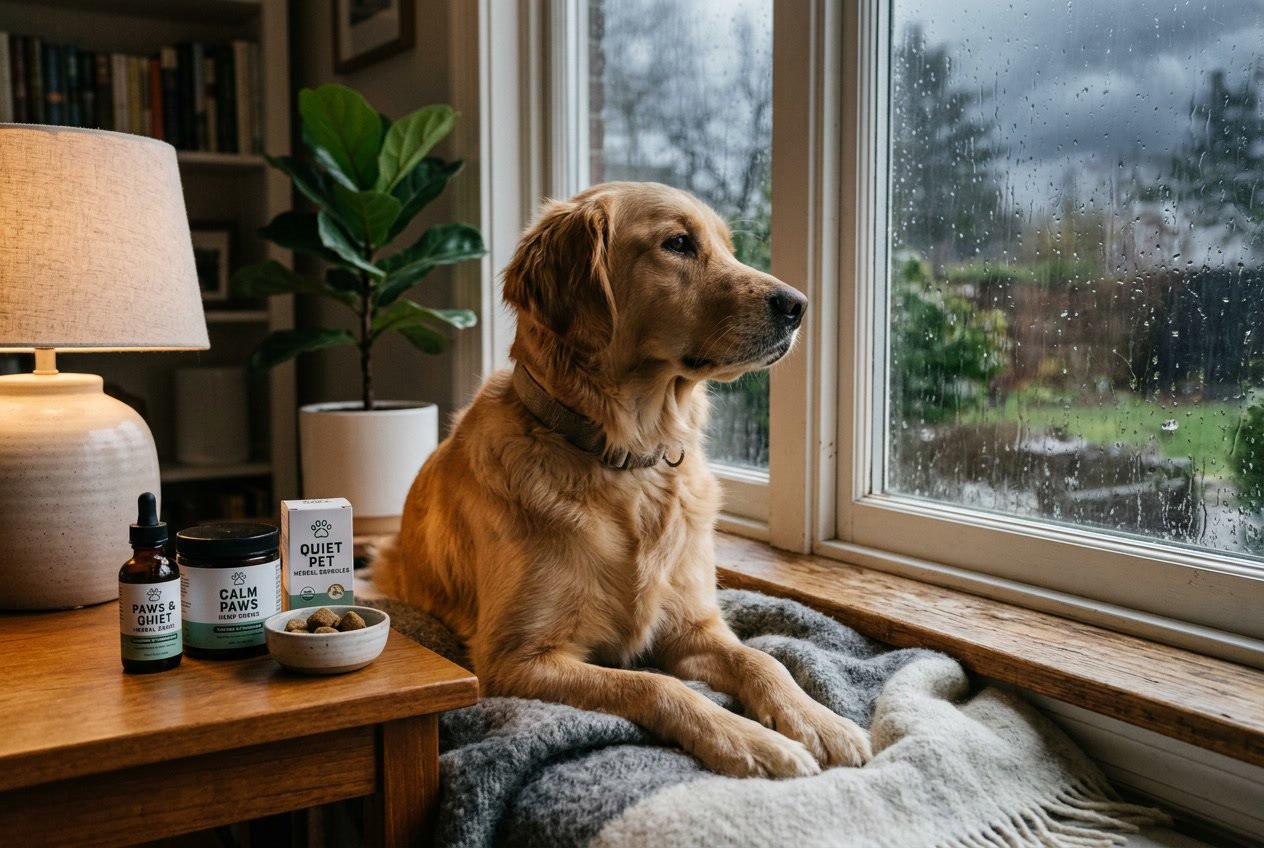
Quality ingredients, product form, advice from your vet, and honest customer reviews are your best guides to picking effective calming chews for spring storm season.
Ingredient Quality and Safety
Choose supplements with clear labels and exact ingredient amounts. Look for details like “magnesium glycinate” instead of just “magnesium,” or the specific percentage of valerian root extract.
Third-party testing is a big plus. Groups like NASC (National Animal Supplement Council) check for quality and safety. Batch testing results should confirm the product matches the label and is free from heavy metals or pesticides.
Skip supplements with artificial dyes, flavors, or fillers. Dogs don’t need fake colors or preservatives that might cause sensitivities. Natural preservatives like vitamin E are a safer bet.
It’s worth checking where ingredients are sourced. Brands that share sourcing info are usually more transparent. Organic or sustainably harvested herbs are less likely to carry pesticides and often have stronger active compounds.
Choosing Between Different Product Forms
Chews are easy and usually tasty, but they might contain binders or sweeteners. They’re handy for dogs who like treats and need quick calm before storms, usually kicking in within 30-60 minutes.
Liquids and tinctures get absorbed faster—sometimes in just 15-30 minutes. You can mix them into food or give by mouth, which is nice if your dog turns their nose up at chews.
Powders are flexible for dosing and mix well into meals, plus they’re often cheaper per serving. The catch? Some dogs notice the powder and refuse their food.
Capsules give you exact dosing with no extras, but only if your dog will swallow pills. If not, you can open capsules and mix the contents with food.
Think about what your dog prefers and what fits your routine. Supplements work best with training—not as a magic fix all on their own.
Consulting Your Veterinarian
Book a vet visit before you start any new supplement. Your vet can rule out health issues that look like anxiety, such as thyroid problems or pain. Sometimes anxious behaviors come from physical discomfort, not just nerves.
Let your vet know about any meds or health conditions. Some supplements interact with prescriptions or can worsen certain issues. For instance, valerian root doesn’t always play nice with sedatives, and some herbs can affect the liver.
Vets can help you find the right dose based on weight, age, and what triggers your dog’s anxiety. Starting low and increasing slowly is usually safest.
Ask your vet about pairing supplements with training or behavior modification. They might even recommend a veterinary behaviorist for a more complete plan.
Reading Product Reviews and Feedback
Look for reviews from owners whose dogs have storm-specific anxiety. Broad anxiety feedback doesn’t always apply to thunder phobia. It helps to know how quickly a product worked and how long it lasted.
Pay attention to reviews from people with dogs similar in size or breed to yours. Something that works for a tiny terrier might need a different dose for a big retriever.
Focus on patterns in negative reviews rather than single complaints. If lots of people mention stomach upset or no effect, that’s worth noting. A couple of bad experiences might just be outliers.
Check the date on reviews. Companies sometimes change formulas, so recent feedback is more relevant than stuff from a year ago.
Dig into the details, not just star ratings. Reviews that describe behavior changes and timing are way more helpful than a quick “worked great!” Video reviews showing before-and-after results can be a goldmine.
Non-Supplement Natural Strategies for Storm Anxiety
Physical pressure wraps can lower your dog’s stress response during storms. A safe space and some background noise help block out scary sounds, letting your dog rely on their instincts for comfort.
Thundershirts and Calming Wraps
A Thundershirt gives gentle, steady pressure around your dog’s body, kind of like swaddling a baby. This triggers the parasympathetic nervous system, making your dog feel more secure.
It’s best to put the wrap on before the storm starts—try for 20-30 minutes ahead if you can.
The fit should be snug but not tight. You want to be able to slip two fingers under the wrap. Even pressure across the chest and back is key.
Some dogs relax right away with a Thundershirt or safe space. Others need a few tries before you notice much difference.
Creating a Safe Environment
Your dog will appreciate a quiet, enclosed spot to hide from thunder and lightning. Closets, bathrooms, or a crate covered with blankets can work well.
Pick an interior room without windows if possible. Basements are great for muffling thunder and blocking flashes.
Stock the space with your dog’s favorite bed, toys, and maybe an unwashed shirt that smells like you. Familiar objects help ease their nerves.
Keep the safe spot open at all times so your dog can go there on their own. Forcing them in or out usually just makes things worse.
Sound Therapy and Calming Music
Background noise helps mask the sudden booms of thunder. White noise, fans, or calming music made for dogs are all good options.
Classical and reggae music have actually been shown to reduce stress in dogs. The steady beats help drown out the unpredictable storm sounds.
Start playing music before the storm rolls in, and keep the volume moderate. You’re aiming for consistent sound, not total silence.
Some people use audiobooks or TV as background noise. Just avoid anything with sudden loud moments that could startle your dog all over again.
Integrating Calming Supplements Into Your Pet’s Routine
Getting results from calming supplements is all about timing, consistency, and making sure your dog’s diet and activity levels are on point too.
Timing and Dosage
Try giving calming supplements for dogs 30-60 minutes before a storm if you know it’s coming. Some act fast, while others need daily use for weeks to really take effect.
Stick to the dosage on the label based on your dog’s weight. Don’t double up, even if a storm is especially intense.
For dogs with frequent storm anxiety, daily supplements are usually more effective than just dosing during bad weather. Keeping a steady level in their system makes a difference. Ask your vet if daily or situational use is best for your pet.
If you miss a dose, give it when you remember—unless it’s almost time for the next one. Don’t give two doses at once to play catch-up.
Monitoring Results and Adjusting
Keep an eye out for any shifts in your pet’s anxiety behaviors during the first couple of weeks after starting a supplement. You might notice less pacing, panting, hiding, or destructive antics during storms—hopefully, anyway.
Jot down a quick log for reference:
- Storm date and severity
- Behaviors observed
- Duration of anxiety symptoms
- Any side effects
Some pets seem to chill out after just a few doses. Others? They need a little more time and consistency before you see a difference.
If nothing’s changed after about four weeks of daily use, it’s time to talk to your vet about tweaking the dose or maybe switching products. Don’t just keep waiting and hoping.
If your pet shows weird symptoms like being way too sleepy, vomiting, or not wanting to eat, stop the supplement right away. Rare, but worth taking seriously—call your vet if it happens.
Supporting Anxiety Reduction With Diet and Exercise
Getting your pet moving really does help lower their baseline anxiety. Try giving your dog a longer walk or an extra play session before storm season hits—helps burn off some of that nervous energy.
Stick to regular meal times. Skipping meals or feeding at random hours just adds to their stress, and honestly, who needs that?
Don’t give a huge meal right before a storm. Anxious pets plus a full belly can mean digestive messes you don’t want to clean up.
Other things you can do:
- Offer puzzle toys with treats when the weather’s calm
- Keep a predictable daily routine
- Set up a cozy safe space for stormy days
- Try white noise or calming music to block out thunder
Regular exercise paired with natural pet anxiety medications usually works better than just supplements alone. A tired, well-fed pet who’s used to a routine is less likely to freak out when the weather turns ugly.
Frequently Asked Questions
Natural supplements don’t work the same for every pet, and picking the right one means knowing what ingredients are in there, how safe they are, and how to dose them. Most calming compounds take anywhere from half an hour to a few weeks to kick in.
What are the top-rated natural supplements to calm pets during stormy weather?
Calming chews and treats are definitely crowd favorites for storm anxiety. They usually pack a bunch of calming ingredients into a treat that’s easy to give.
NaturVet Quiet Moments, for example, uses melatonin, ginger, and L-Tryptophan to help dogs relax when thunder rolls in. Zesty Paws Calming Chews have Suntheanine and Ashwagandha—both known for easing stress.
There are also hemp-based treats out there. BARK&SPARK Advanced Calming Hemp Treats combine hemp oil and melatonin to tackle separation anxiety and storm jitters.
Bach RESCUE Remedy PET Dropper is a liquid made from flower essences. You just add it to their food or water when things get wild outside.
Which ingredients should I look for in a natural anxiety supplement for my pet?
Common calming ingredients include chamomile, valerian root, L-theanine, and lavender. They’re known for relaxing pets without knocking them out.
L-theanine is an amino acid that helps your pet chill without making them groggy. Valerian root acts as a gentle sedative—handy for those extra-nervous pups.
Melatonin’s good for regulating sleep and can take the edge off restlessness. Ashwagandha, an adaptogen, helps pets cope with stress in a more balanced way.
Hemp oil and CBD products are getting popular for storm anxiety, too. They work with your pet’s endocannabinoid system to encourage calm.
Chamomile and lavender are gentle but effective. Ginger can settle the stomach, which is a bonus if your pet gets nauseous from nerves.
How can I tell if a natural anxiety supplement is safe and effective for my pet?
Look for stuff made in places that follow good manufacturing practices. Third-party testing? Even better—it means you actually get what’s on the label, minus the scary extras.
Double-check that it’s labeled for pets. Human supplements might have things in them that aren’t safe for animals, or the doses could be way off.
Reading reviews from other pet owners can be surprisingly helpful. Honest customer experiences give you a sense of what actually works and what side effects to watch for.
Trustworthy brands list every ingredient and the amounts. Clear dosing instructions based on your pet’s weight are a must.
Always run new supplements by your vet first. They’ll know if the ingredients are safe for your pet’s unique health situation.
What are the best practices for administering natural anxiety supplements to pets?
Try to give supplements 30 to 60 minutes before you expect a storm. That way, the calming effect can kick in before your pet starts getting nervous.
Start with the lowest dose for your pet’s weight, and only bump it up if you really need to. No sense overdoing it.
Chews and treats are usually the easiest—most dogs think they’re just snacks.
For liquids, mix them into food or water. Some pets are weirdly okay with drops straight in the mouth, but not all will go for that.
Consistency is key during storm season. Giving supplements daily helps keep anxiety in check, instead of scrambling when your pet’s already panicking.
Keep track of when you give the supplement and what happens after. Over time, you’ll figure out what works best for your pet.
How long does it typically take for natural anxiety supplements to work on pets?
Some fast-acting options work in as little as 30 to 60 minutes. Perfect if you get caught off guard by a sudden storm.
Others need daily use for a week or more before you see the full effect. They build up in your pet’s body gradually.
Results really vary by pet and how severe their anxiety is. Mild cases might respond fast, but more intense anxiety takes longer—and sometimes a higher dose.
The form matters, too. Liquids and soft chews get absorbed faster than hard tablets or capsules.
Your pet’s metabolism plays a part. Bigger pets might need more time for supplements to reach effective levels in their system.
After that first dose, watch your pet and see how they react. Noting the timing of changes will help you figure out what to expect next time.
Can I give my pet a natural anxiety supplement alongside other medications they are taking?
Always check with your veterinarian before mixing supplements and prescription meds. Some natural ingredients really can interact with drugs your pet’s already taking, and that’s not something you want to guess about.
Certain supplements might boost or reduce the effects of other medications. This could make meds less effective, or worse, bring on some unexpected side effects.
Let your vet know about every supplement, vitamin, or medication your pet gets. It’s actually a good idea to bring the product labels along to your appointment—makes it easier for your vet to see exactly what’s in everything, and the dosages too.
Some ingredients, like valerian root, can ramp up drowsiness if your pet’s already on sedatives. Others may mess with how your pet’s liver processes certain meds. It’s a bit of a puzzle.
Your vet might suggest spacing out when you give different products. That way, you can help avoid interactions but still get the benefit from both treatments.
If you notice anything weird—like your pet acting super sleepy, throwing up, or just behaving differently—after starting a new supplement with their usual meds, get in touch with your vet right away.