

The information in this article is for educational and informational purposes only. It is not intended as veterinary advice, diagnosis, or treatment for any medical or health issue your pet may have.
Always consult a licensed veterinarian before making any decisions about your pet’s health, diet, medications, supplements, training, or care. Never disregard or delay professional veterinary advice based on content from this website.
BarkleyAndPaws.com and its authors assume no responsibility or liability for any errors, omissions, or outcomes resulting from the use of this information.
The moment your dog spots a squirrel, a jogger, or another dog and suddenly forgets you exist, recall training stops feeling optional. If you are figuring out how to teach dog recall, you are really teaching one of the most important safety skills your dog will ever learn – the ability to turn away from distraction and come back to you fast, happily, and without a fight.
A reliable recall is not built by repeating “come” louder and louder. It is built by making coming to you feel consistently rewarding, clear, and worth your dog’s effort. Some dogs pick it up quickly in the living room but fall apart in the park. Others seem stubborn when they are actually confused, over-aroused, or not yet ready for the level of distraction in front of them. That distinction matters.
Why recall training matters so much
Recall is about more than convenience. It can prevent a dog from running toward traffic, disappearing on a trail, or charging up to a dog that does not want company. It also gives your dog more freedom over time, because trust and freedom tend to grow together.
For many owners, recall becomes frustrating because they only use it when the fun is about to end. If your dog hears “come” and then gets leashed, taken inside, or scolded, the cue starts to lose value. From your dog’s perspective, coming back may predict disappointment. That is one reason recall can look unreliable even when a dog understands the word.
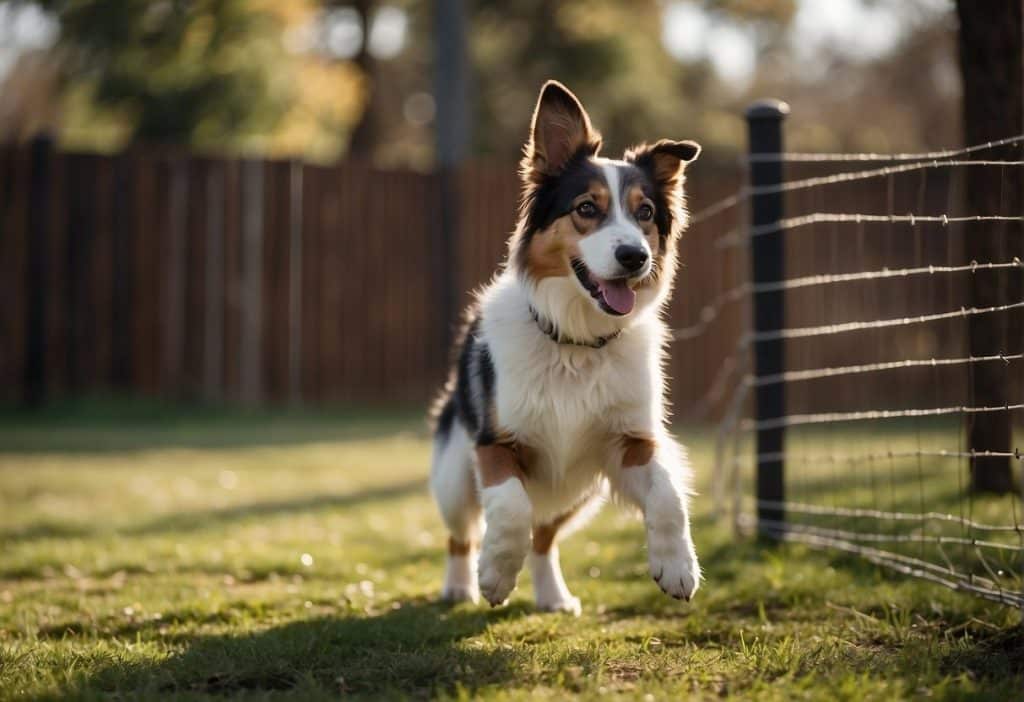
How to teach dog recall from the ground up
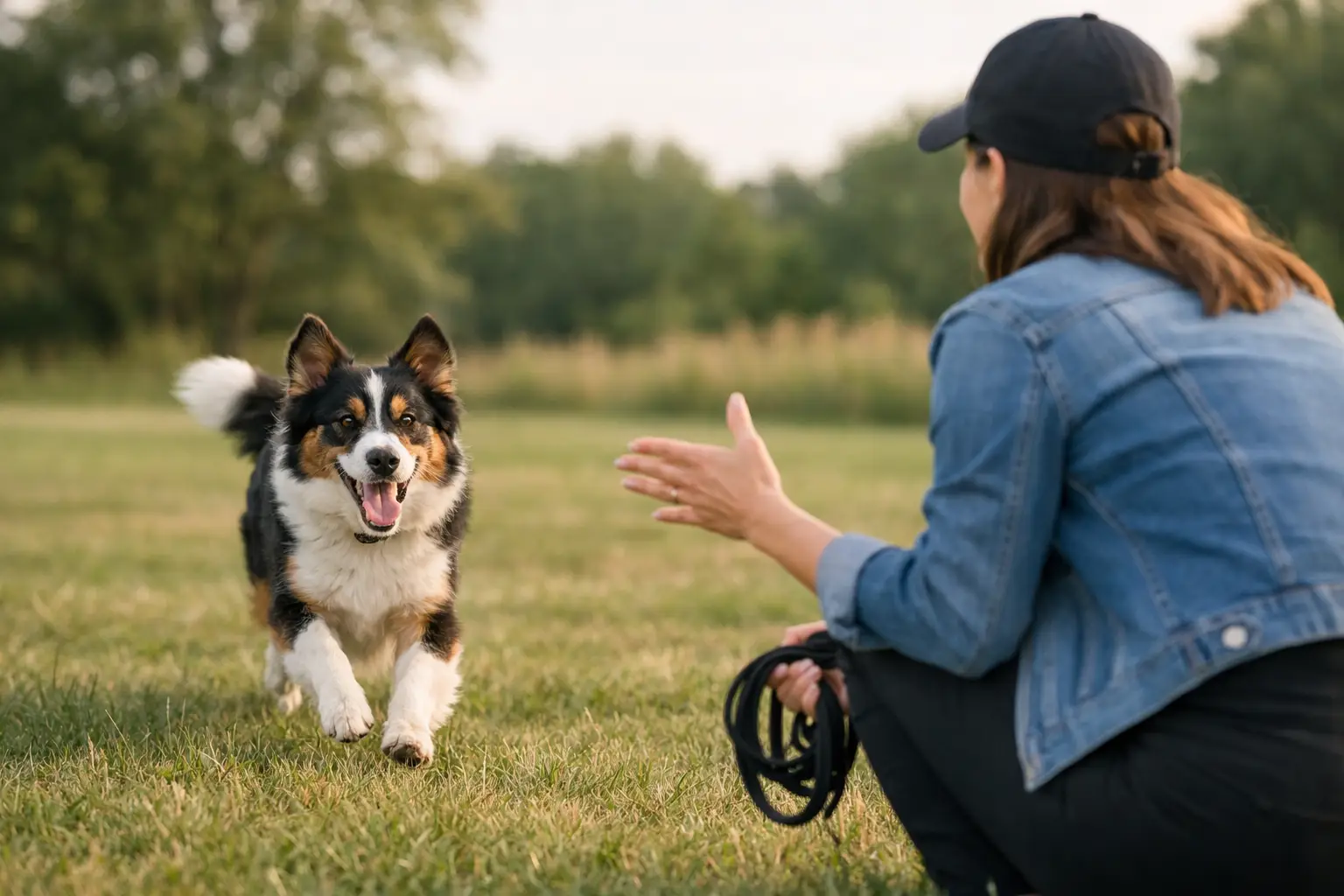
Start in the quietest place possible. For most dogs, that means indoors with no toys on the floor, no open doors, and no competing excitement. Say your dog’s name once, then your recall cue in a cheerful voice. “Come” works fine, but some owners prefer a fresh word such as “here” if “come” has already been overused.
The second your dog moves toward you, reward generously. Use treats your dog truly cares about, not the stale biscuit they ignore half the time. Small pieces of chicken, cheese, or soft training treats often work better because recall asks for a big choice. You are not just rewarding movement. You are rewarding the decision to disengage and return.
At first, keep the distance short. A few steps is enough. Back up as your dog approaches to encourage movement, then mark the success with praise and a reward. Do several short reps and stop before your dog gets bored.
Make yourself more interesting than the environment
This is where many owners get stuck. They call the dog in a flat tone while standing still, then wonder why the dog chooses a leaf, a smell, or a passing bird instead. Your body language matters. Crouch a little, move backward, smile, and sound inviting. For many dogs, energy is part of the reward.
That does not mean acting frantic every time. It means giving your dog a clear signal that coming to you is a good idea. Over time, the cue itself gains value because it has been paired with rewards, warmth, and success.
Build the cue before testing it
A common mistake is assuming a dog “knows recall” because they come inside the house. Knowing a cue in one setting is not the same as knowing it everywhere. Dogs do not generalize as neatly as people hope. Your kitchen, backyard, sidewalk, and local park may feel like entirely different classrooms.
So increase difficulty slowly. Move from one quiet room to another, then to the backyard, then to a calm outdoor area on a long line. If success drops sharply, the environment is too hard too soon. Go back a step and make it easier.
Use a long line, not blind trust
When owners ask how to teach dog recall safely outdoors, the best answer is usually a long line. A 15- to 30-foot training line gives your dog room to move while preventing the self-reward of running off. Every time a dog ignores recall and keeps chasing, sniffing, or exploring, that behavior gets reinforced.
A long line helps you protect the training process. Let your dog wander, then call once. If they turn and come, reward well. If they hesitate, you can use light guidance on the line while staying upbeat. The goal is not to drag your dog in. The goal is to prevent rehearsal of ignoring you.
This also protects your dog while their recall is still developing. Off-leash freedom should be earned in stages, not assumed because training went well three times in the yard.
Reward like it matters
Recall deserves premium pay. If your dog leaves something interesting to come back to you, the reward should feel worthwhile. For some dogs, that means food. For others, it might be a favorite toy, a game of tug, or permission to go back to exploring.
That last one is especially useful. Sometimes the best reward for coming when called is not ending the fun. Call your dog, reward them, clip the leash for a moment if needed, then release them back to sniff or play. This teaches that recall does not always mean the party is over.
If you only call your dog for nail trims, baths, crate time, or leaving the park, recall starts to carry baggage. Mix in plenty of “good deal” repetitions where your dog comes back and life stays pleasant.
Common recall problems and what they usually mean
A slow recall often means the reward is too weak, the environment is too distracting, or the cue has been repeated so often that it has lost clarity. Repeating “come, come, come” teaches your dog that the first cue is optional. Say it once, then help the dog succeed.
A dog who comes halfway and stops may be conflicted. They want the reward, but something else still has their attention. In that case, use better treats, shorten the distance, and train where the distraction level is lower.
A dog who avoids you after being called may have learned that coming close ends in something unpleasant. Never punish your dog for finally returning, even if they took their time. If you scold after they arrive, you teach them that getting to you is the risky part.
How to teach dog recall around distractions
Distractions should be added in layers, not all at once. Start with mild ones – a family member walking by, a toy on the ground, distant sounds outside. Then work up to busier environments with your long line still attached.
Think of distraction training as a ladder. If your dog can recall away from grass but not from another dog, that is useful information. It does not mean they are being bad. It means you found the next training level.
In tougher situations, increase your distance from the distraction. A dog can often succeed at 50 feet before they can succeed at 10. That is still real progress.
Should you use an emergency recall?
Yes, if you train it properly. An emergency recall is a special cue used only for high-stakes moments, such as a gate left open or a dropped leash. Because it is reserved for urgent situations, it should be paired with exceptionally high-value rewards every single time.
Choose a word or phrase you do not use casually. Practice it occasionally in easy settings, then deliver a jackpot reward when your dog reaches you. Keep it rare so it stays powerful.
What about stubborn breeds, rescue dogs, or puppies?
It depends more on the individual dog than the label, but those factors can shape the timeline. Puppies are often eager but easily distracted and still learning impulse control. Rescue dogs may need time to bond and feel secure before training really clicks. Independent breeds may need more strategic reinforcement and more patience, not harsher handling.
Progress is rarely linear. Some days your dog will look brilliant, and the next day a blowing plastic bag will outrank you. That does not mean the training failed. It means recall is a living skill that needs practice in different places, with different rewards, and at the right level of difficulty.
What matters most is consistency. If your dog learns that coming to you is safe, rewarding, and clear, recall gets stronger. If they learn that the cue is repeated, negotiable, or followed by frustration, it gets weaker.
The habits that make recall last
Keep practicing even after your dog seems reliable. Call them randomly around the house. Reward surprise check-ins on walks. Occasionally call them away from mild distractions and pay well for it. Real-life reliability comes from maintenance, not one successful weekend.
It also helps to protect the cue itself. If you know your dog is too far gone in the moment – sprinting toward another dog, nose-deep in a thrilling scent trail, or panicking – avoid using the cue if you cannot reinforce it. Go get them safely if possible. Preserving the meaning of your recall word is part of good training.
At Barkley and Paws, we tend to think of recall as less of a command and more of a relationship habit. Your dog is learning that choosing you is rewarding, predictable, and safe. When that lesson sinks in, the response starts to feel less like obedience and more like trust.
If your dog is not perfect yet, that is normal. Reliable recall is one of the hardest behaviors to proof because the world keeps trying to outbid you. Stay patient, keep the reward history strong, and make returning to you the best choice your dog gets to make that day.