

The information in this article is for educational and informational purposes only. It is not intended as veterinary advice, diagnosis, or treatment for any medical or health issue your pet may have.
Always consult a licensed veterinarian before making any decisions about your pet’s health, diet, medications, supplements, training, or care. Never disregard or delay professional veterinary advice based on content from this website.
BarkleyAndPaws.com and its authors assume no responsibility or liability for any errors, omissions, or outcomes resulting from the use of this information.
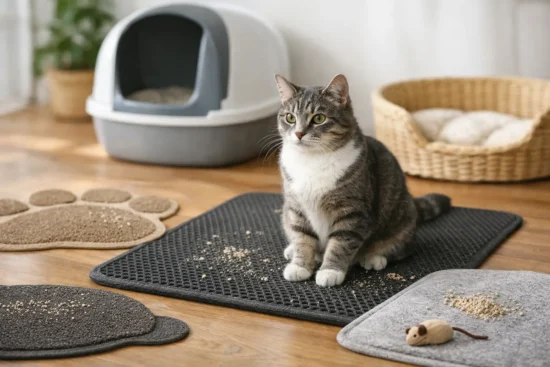
A litter box can be spotless, your cat can be perfectly healthy, and you can still end up stepping on stray granules in the hallway at 6 a.m. That is why the best cat litter mats are less of a luxury and more of a sanity-saving tool for many cat households. The right one catches litter before it spreads, protects your floors, and makes cleanup faster without bothering your cat.
What makes the best cat litter mats worth buying?
Not every litter mat works the same way, and that is where many cat owners get disappointed. A mat might look large enough online, but if the surface is too flat or too stiff, litter can still bounce right over it. Another may trap litter well but slide across the floor every time your cat launches out of the box.
The best cat litter mats solve a very specific problem. They create enough texture and surface area to catch litter from paws, while still feeling comfortable enough that your cat will walk across them. That balance matters more than flashy design.
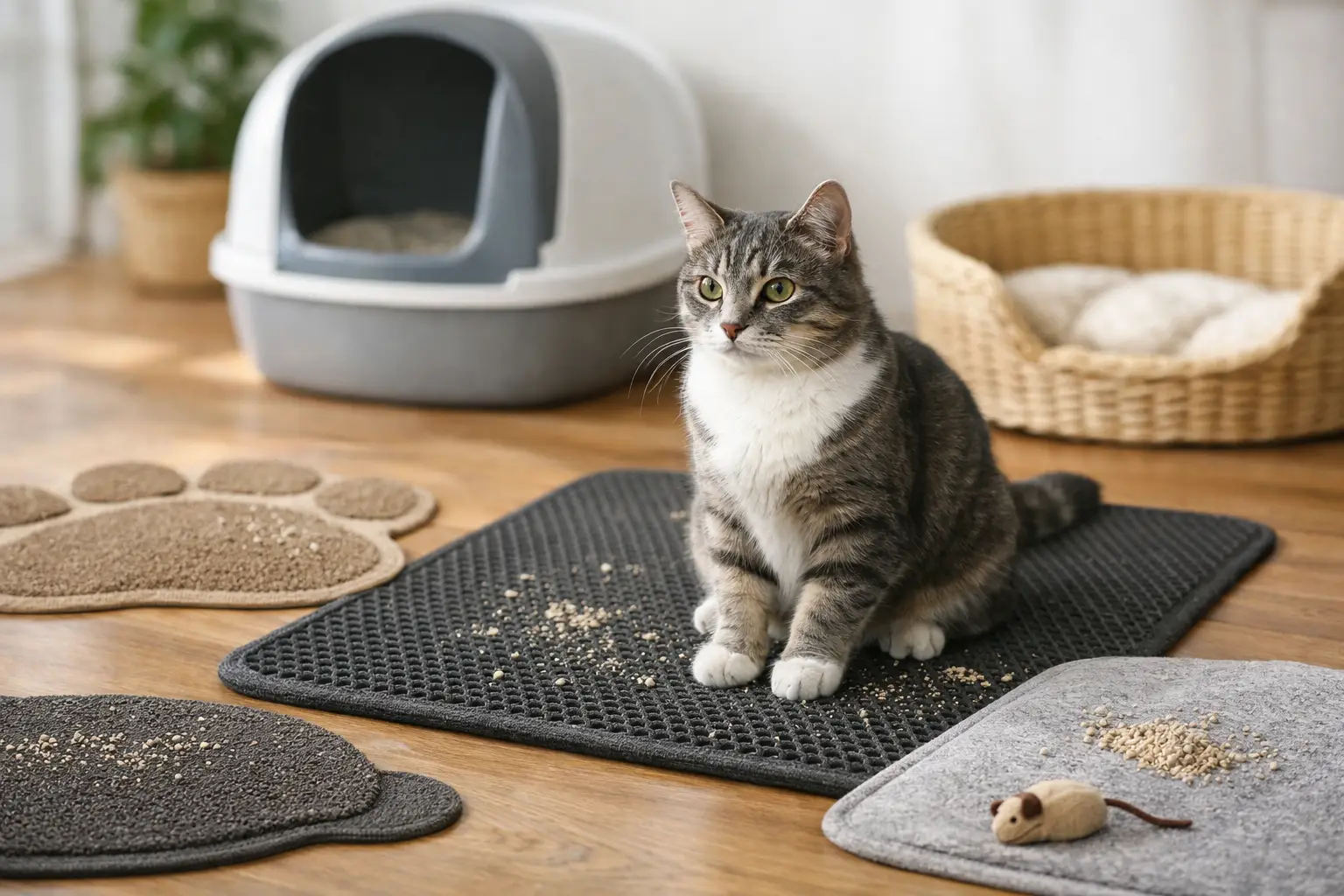
Material plays a big role here. Soft mesh, rubberized grooves, and honeycomb layers each trap litter differently. Some mats are designed for quick vacuuming, while others let you pour captured litter back into the box. If your cat is older, declawed, or simply picky about textures, comfort can matter just as much as trapping power.
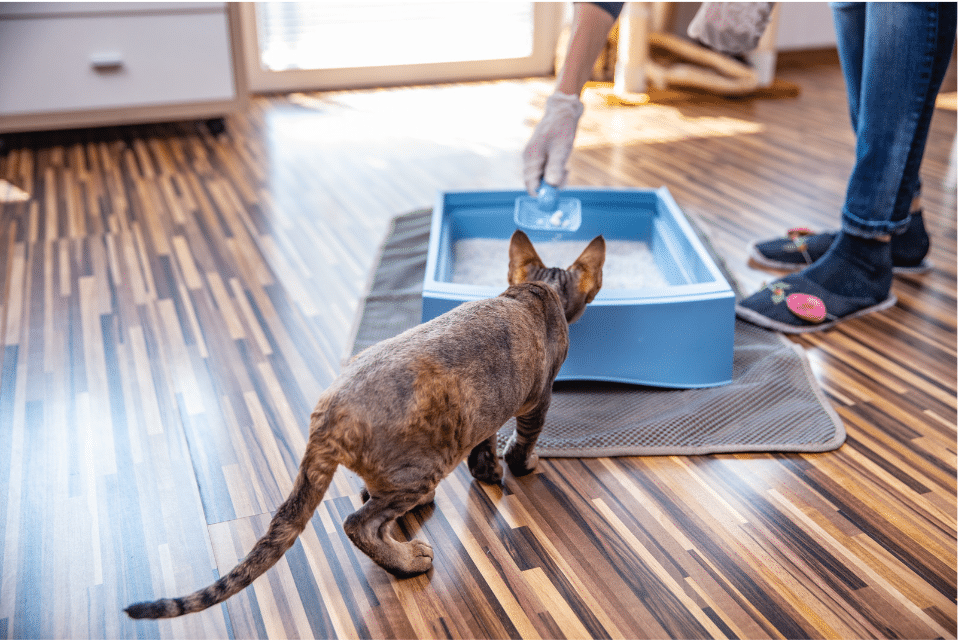
Best cat litter mats by type
Honeycomb double-layer mats
These are popular for a reason. The top layer usually has hexagon-shaped holes that let litter fall through to a lower waterproof layer. You can then pick up the mat and pour the litter back into the box or trash.
This style works especially well with lightweight clay litter and smaller granules that tend to cling to paws. It is also a strong choice if you want a cleaner-looking setup, since the trapped litter is hidden between layers instead of sitting on the surface. The trade-off is that some cats dislike the slightly springy feel underfoot, and deep cleaning can take a bit more effort if dust builds up between layers.
Textured rubber or PVC mats
These mats use coils, grooves, or raised ridges to knock litter loose from your cat’s paws. They tend to be durable, easy to shake out, and well suited for busy homes where convenience matters.
If your main goal is daily practicality, this type is often the easiest to live with. It usually cleans up fast with a vacuum or quick rinse. The downside is that trapped litter remains exposed on the surface, so the mat may look messy sooner, especially with dusty litter.
Soft fabric-topped mats
Some cats refuse to step on rough textures, and that is where softer mats can help. These may use microfiber or gentle synthetic surfaces to catch fine litter while staying paw-friendly.
They are a good fit for sensitive cats, seniors, or cats recovering from paw irritation. The compromise is that they generally do not trap large amounts of litter as aggressively as more structured mats. For a low-tracking cat, though, comfort may be the smarter priority.
Waterproof utility mats
If your issue is not just litter but also occasional urine spray or messy box exits, a waterproof mat with a raised edge can be a smart choice. These are less about hiding litter and more about floor protection.
They are especially useful under open litter boxes or in homes with kittens, seniors, or cats with mobility issues. The catch is that they can feel more like a boot tray than a soft landing area, so they are often best paired with a more comfortable top layer or placed just outside the box zone.
How to choose the right litter mat for your cat
The best cat litter mats for one home may be a poor fit for another. Start with your cat’s habits, not just the mat’s product description.
If your cat sprints out of the box and scatters litter several feet away, size matters. A small mat will not do much if your cat clears it in one step. Look for a larger footprint that extends in front of the box and, if possible, to the sides. High-tracking cats often need more runway than owners expect.
If your cat has tender paws or strong texture preferences, choose softness over aggressive trapping. Some cats will avoid a mat they dislike, which defeats the whole purpose. You want your cat to walk naturally across it, not leap over it.
Floor type matters too. On hardwood, laminate, or tile, non-slip backing is important. A mat that shifts around can be annoying for both you and your cat. On carpet, a heavier mat may stay put more easily, but cleanup can be trickier if litter gets underneath.
Litter type also changes the equation. Pellet litter behaves differently from fine clay litter, and crystal litter has its own shape and bounce. Fine litter usually does best with honeycomb or tight-texture mats, while larger pellets can be managed with broader grooves or open textures.
Features that actually matter
It is easy to get distracted by packaging claims, but a few features do most of the real work.
A waterproof or water-resistant base is worth prioritizing if your litter box setup is not perfectly tidy. Even a healthy cat can occasionally track damp litter out of the box, and a protective bottom layer helps prevent odors and staining on your floors.
Easy cleaning matters just as much as litter capture. If a mat is so awkward to empty that you avoid dealing with it, it becomes one more thing to resent. Most cat owners do best with a mat that can be shaken out, vacuumed, or rinsed in under a minute.
Low odor retention is another underrated feature. Some rubbery materials hold onto smells more than others, especially in humid spaces or covered litter box areas. A mat that stays easy to wash and dry will usually stay fresher over time.
Finally, look at the edge profile. A very thick mat can create a tripping point for older cats or nervous cats who prefer a flatter surface. Thick mats can trap more litter, but there is a comfort trade-off.
Common mistakes when buying a litter mat
One of the biggest mistakes is choosing a mat based only on appearance. A cute shape or trendy color is fine, but performance matters much more when you are sweeping daily.
Another common mistake is going too small. Many people buy a mat that matches the width of the litter box, when the real problem is the path the cat takes after leaving it. A wider landing area usually catches more litter than a perfectly aligned but tiny mat.
Some owners also expect the mat to solve every tracking problem by itself. It helps a lot, but litter tracking is also affected by box size, litter depth, litter type, and even where the box sits in the room. If the box is cramped or your cat has to jump awkwardly to exit, more litter may scatter no matter what mat you use.
How to get better results from any litter mat
Placement is half the battle. Put the mat where your cat naturally steps, not where it looks neatest. For many setups, that means extending the mat farther out from the front of the box than you first think.
It also helps to keep the litter box area calm and accessible. If the box is tucked into a cramped corner, your cat may jump out at an angle and bypass the mat altogether. A small repositioning can make the mat much more effective.
Regular cleaning keeps the mat working better too. Once litter piles up on the surface, cats can track it right back off again. A quick shakeout every few days, or more often in multi-cat homes, usually makes a noticeable difference.
If tracking is still intense, consider pairing your mat with a change in litter. Lightweight litters often scatter more, while some heavier granules stay put better. The best results usually come from combining the right mat with the right litter, not relying on one fix alone.
Which style is best for most homes?
For many households, a large honeycomb double-layer mat hits the sweet spot between cleanliness and convenience. It traps fine litter well, keeps the mess out of sight, and usually protects floors better than basic flat mats.
That said, the best choice depends on the cat. If your cat hates textured surfaces, a softer mat that catches a little less litter may still be the better option because your cat will actually use it. If you are managing heavy mess around the box, waterproof utility mats may outperform more stylish options.
The smartest approach is to think less about the single best product and more about the best match for your cat’s paws, your litter type, and your cleaning tolerance. That is usually what separates a mat that ends up in the closet from one that quietly makes daily life easier.
A good litter mat will not turn your home into a zero-granule zone, but it can cut down the daily mess enough that the floor around the litter box stops feeling like a chore waiting to happen. For most cat owners, that is a pretty worthwhile upgrade.