

The information in this article is for educational and informational purposes only. It is not intended as veterinary advice, diagnosis, or treatment for any medical or health issue your pet may have.
Always consult a licensed veterinarian before making any decisions about your pet’s health, diet, medications, supplements, training, or care. Never disregard or delay professional veterinary advice based on content from this website.
BarkleyAndPaws.com and its authors assume no responsibility or liability for any errors, omissions, or outcomes resulting from the use of this information.
That hairball on the rug and the surprise claw snag on your sweater are often the first signs that cat grooming at home needs a better routine. The good news is that most cats do not need spa-level treatment. They need short, calm, predictable care sessions that respect their tolerance, coat type, and health.
For many pet owners, grooming feels harder with cats than dogs because cats are quick to object. They twist, bolt, or turn a basic brushing session into a debate. But when you approach grooming in small pieces, it becomes less about restraint and more about maintenance. That shift matters because regular grooming can reduce loose fur, help you catch skin issues early, and make your cat more comfortable day to day.
Why cat grooming at home matters
Cats are excellent self-groomers, but that does not mean they are fully self-sufficient. Long-haired cats can develop mats in hard-to-reach areas, older cats may struggle to groom well because of arthritis or weight gain, and even short-haired cats benefit from help during shedding seasons. Home grooming also gives you a chance to notice fleas, dandruff, ear debris, lumps, or tenderness before they become bigger problems.
There is a balance here. Too little grooming can lead to tangles and excess shedding, but too much grooming can stress your cat and irritate the skin. The goal is not a perfect-looking coat every day. It is a healthy coat, trimmed nails, and a cat that does not associate your hands with unwanted wrestling.

What you need before you start
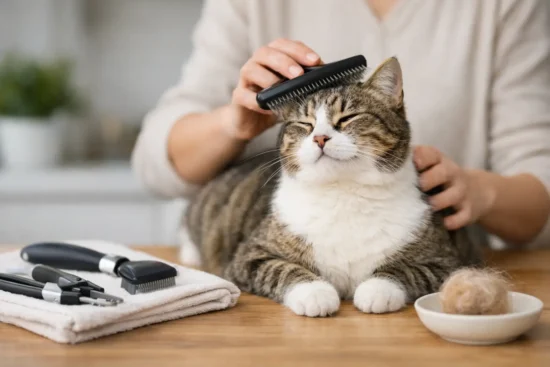
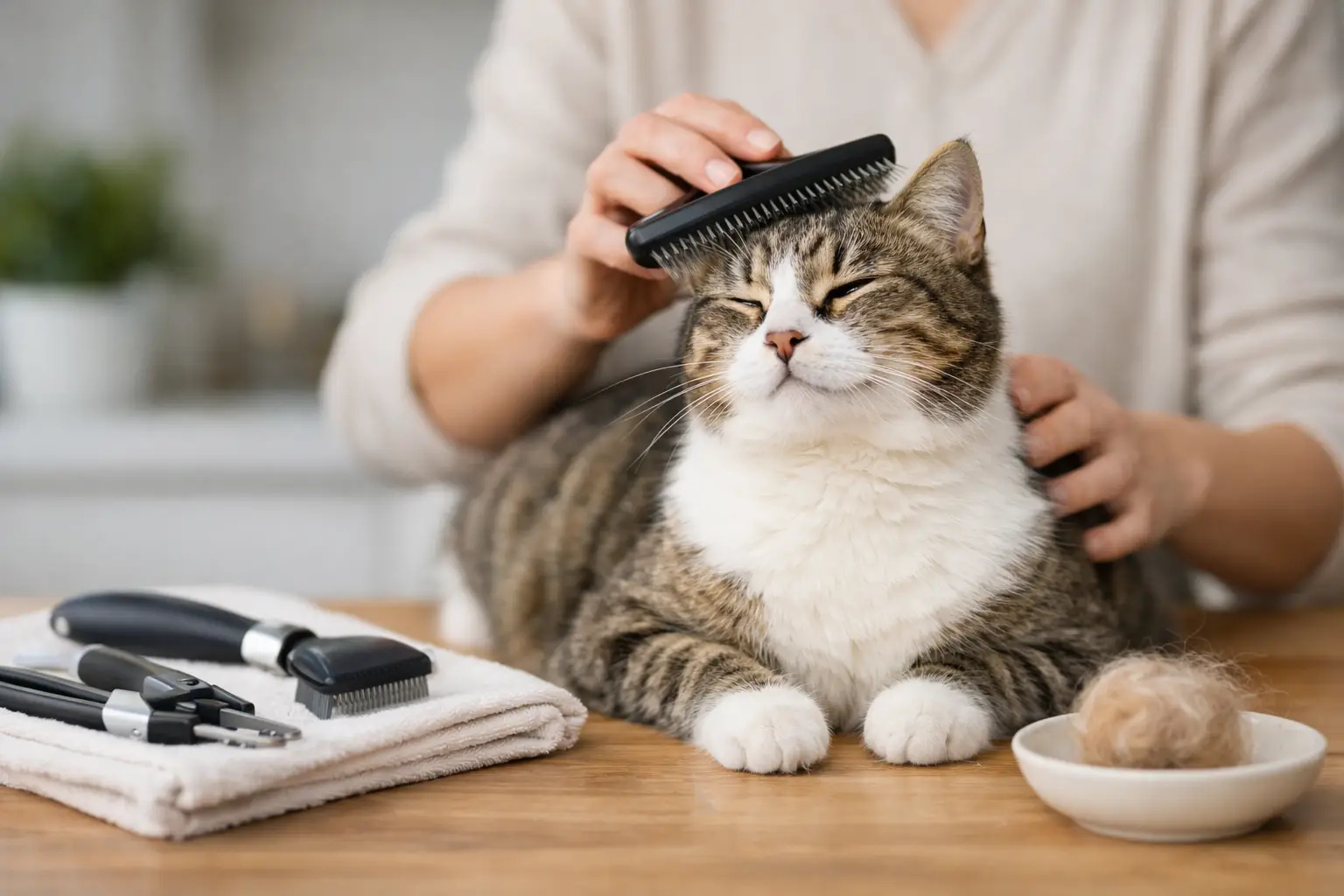
A good home setup is simple. Most owners do well with a soft slicker brush or metal comb, cat nail clippers, a towel, cotton pads, and cat-safe wipes for small cleanups. If your cat has a thick undercoat, a de-shedding tool can help, but use it carefully. Overusing those tools can pull healthy hair and irritate sensitive skin.
It also helps to choose the right moment. Grooming a playful, zooming cat is usually a losing battle. Aim for a time when your cat is naturally calm, such as after a meal or nap. Keep sessions short at first – sometimes two minutes is enough. A calm exit is better than pushing until your cat is upset.
Brushing your cat without making it a fight
Brushing is the part of cat grooming at home that gives the biggest payoff for the least effort. It reduces loose fur, can cut down on hairballs, and helps prevent mats before they tighten. But technique matters just as much as frequency.
Start with areas many cats already enjoy being touched, such as the cheeks, neck, or along the back. Use light pressure and follow the direction of hair growth. If you hit a tangle, do not yank. Hold the fur near the skin to reduce pulling and gently work through it with a comb. If the mat is tight, close to the skin, or your cat objects strongly, it is safer to stop than to force it.
Short-haired cats often do well with brushing once or twice a week, though many benefit from more during spring and fall shedding. Long-haired cats usually need more regular attention, often several times a week or even daily in friction areas like the belly, armpits, and behind the legs. A Persian and a domestic shorthair simply do not need the same routine, and that is where many owners get frustrated. What works for one cat may be excessive or inadequate for another.
When and how to bathe a cat
Most indoor cats rarely need a full bath. That surprises first-time owners, but it is usually true. Baths are most useful when a cat gets into something sticky, greasy, or unsafe to lick, or when a medical issue leaves the coat soiled. Some hairless breeds also need more regular skin care because oil builds up on the skin rather than being absorbed by fur.
If your cat does need a bath, preparation matters more than speed. Trim nails ahead of time if possible, place a towel or non-slip mat in the sink, and use lukewarm water. Wet the coat gradually, avoiding the face, and use a cat-specific shampoo. Human shampoos and many dog shampoos can be too harsh.
Rinse thoroughly. Leftover shampoo can irritate the skin and make the coat feel worse, not better. Afterward, wrap your cat in a towel and blot rather than rub. Some cats tolerate a low, cool dryer from a distance, but many do not. For most cats, a warm room and patient towel drying are the better choice.
Nail trims are usually easier than you think
Nail trimming makes many owners nervous, but it often gets easier once you stop aiming to do all four paws in one sitting. Press gently on the toe to extend the claw, and clip only the sharp hooked tip. Avoid the pink quick, which contains blood vessels and nerves.
If your cat pulls away, take a break. One paw today and another tomorrow still counts as success. For many households, a trim every two to four weeks is enough, though active cats who use scratching posts heavily may need less frequent trims. Senior cats often need more help because they may not wear their nails down as effectively.
Front nails usually need the most attention. Dewclaws, if present, are especially important to check because they do not contact scratching surfaces the same way. When they overgrow, they can curl uncomfortably.
Ears, eyes, teeth, and the small details
Grooming is not only about fur. A quick weekly look at the ears, eyes, and mouth can catch issues early. Ears should look relatively clean and pale pink inside, without a strong odor or heavy dark debris. A little wax can be normal, but redness, head shaking, or coffee-ground-like discharge deserves a vet visit.
For the eyes, use a damp cotton pad to wipe away minor discharge from the corners, using a fresh area of the pad for each eye. Tear staining can be more noticeable in some cats, but persistent squinting, redness, or thick discharge is not something to manage with home grooming alone.
Teeth are often the most overlooked part of routine care. Even if your cat will not tolerate full tooth brushing right away, getting them used to gentle lip lifts and mouth handling is a useful start. Bad breath, drooling, and dropping food can point to dental disease rather than simple grooming issues.
What not to do during cat grooming at home
The biggest mistake is forcing too much, too fast. Cats remember rough handling. If every session ends in panic, future grooming gets harder, not easier. Short sessions, treats, and stopping before your cat reaches full protest usually work better than trying to finish everything at once.
Another common mistake is cutting mats out with scissors. It sounds practical, but cat skin is thin and easy to nick because it tents up into the mat. Severe matting is a job for a groomer or veterinarian, especially if the skin underneath is irritated.
Be careful with wipes, sprays, and deodorizers too. Products made for people can contain ingredients that are too harsh or unsafe if licked off the coat. When in doubt, less is better.
Signs your cat needs professional help
Home grooming has limits, and knowing those limits is part of good care. If your cat has severe matting, greasy skin, parasites, sores, pain when touched, or extreme fear and aggression around handling, a professional groomer or veterinarian may be the safer choice. Some grooming resistance is behavioral, but some of it is physical. A cat with arthritis, dental pain, skin allergies, or obesity may be telling you that grooming hurts.
You should also get help if you notice sudden coat changes, bald patches, excessive dandruff, or overgrooming. Those can point to allergies, stress, parasites, or medical issues rather than a simple need for more brushing.
Building a routine your cat will accept
The best grooming routine is the one you can actually maintain. That might mean brushing for three minutes on the couch every other evening, trimming two nails at a time, and doing a quick ear and coat check on weekends. It does not need to be elaborate to be effective.
Consistency usually matters more than intensity. Cats thrive on predictability, and grooming becomes much easier when it feels like a familiar part of life rather than a surprise event. If your cat is especially sensitive, pair grooming with something positive every single time – treats, praise, or a favorite resting spot afterward.
At Barkley and Paws, we tend to see the same pattern with home care: owners do better when they lower the pressure and focus on steady habits. Your cat does not need perfection. They need gentle handling, the right tools, and a routine that keeps comfort ahead of cosmetics.
A calm brush, a quick claw trim, and a careful look at the coat can do more for your cat than an occasional marathon grooming session ever will.